Jeep Wrangler 4 Tire Rotation Pattern For Even Wear and Longer Tire Life

Proper tire rotation is essential on a Jeep Wrangler because it’s a true 4×4 built for uneven terrain, off-road articulation, and mixed on-road use.
The way a Wrangler distributes weight, steers, and delivers torque means the front and rear tires wear very differently. If you don’t rotate them correctly and regularly, you’ll experience uneven tread wear, steering vibration, road noise, and even unnecessary strain on the drivetrain.
This complete guide explains the correct Jeep Wrangler 4 Tire Rotation Pattern for a Wrangler, when to use each one, and how to do the rotation safely whether you drive daily on highways or spend weekends on trails.
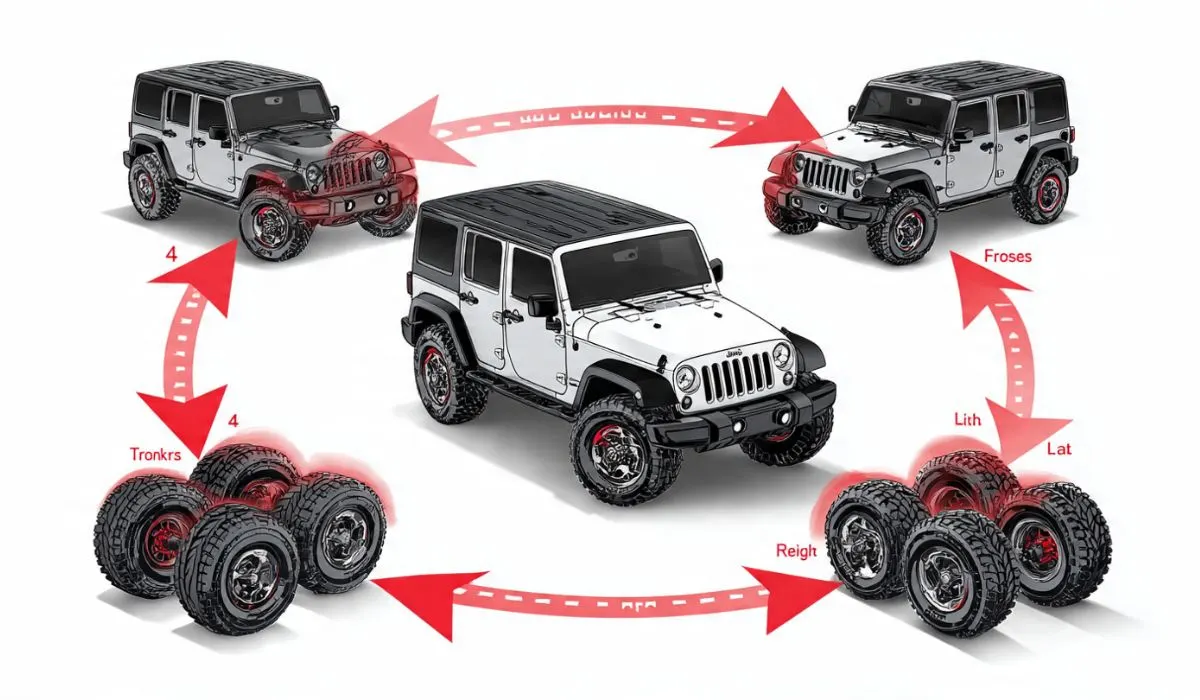
Why Tire Rotation Matters More on a Jeep Wrangler:
Vehicles like the Jeep Wrangler use solid axles, large all-terrain tires, and a 4×4 system designed for traction in mud, sand, rocks, and snow. These characteristics cause:
- Faster front tire wear from steering and braking
- Irregular tread wear from off-road articulation
- Extra stress on tires during 4×4 engagement
- Cupping and feathering if tires stay in one position too long
Regular rotation keeps tread wear even and preserves ride quality.
How Often Should You Rotate Wrangler Tires?
For most Wrangler owners:
- Every 8,000–10,000 km for daily driving
- Every 5,000–7,000 km if you off-road frequently
- After long trail trips or rock crawling weekends
Large all-terrain and mud-terrain tires wear unevenly much faster than highway tires.
Identify Your Tire Type:
Before choosing a rotation pattern, check whether your tires are:
- Non-directional (most all-terrain and mud-terrain tires)
- Directional (have an arrow showing rotation direction)
Most Wrangler tires are non-directional, which allows cross-rotation patterns that balance wear better.
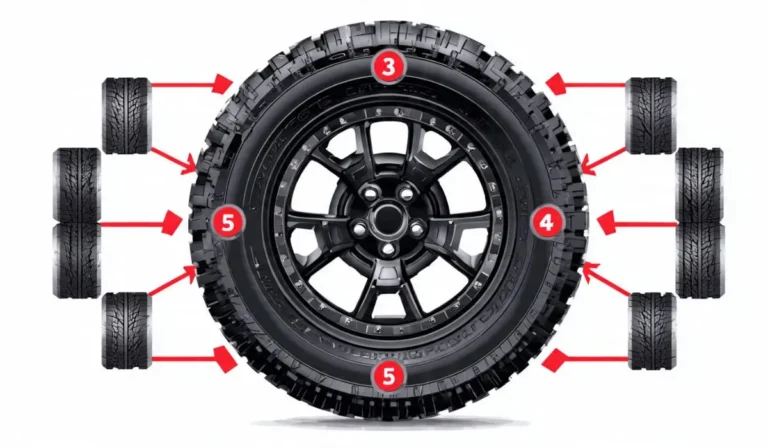
The Best 4-Tire Rotation Pattern for Jeep Wrangler (Forward Cross):
This is the most recommended pattern for Wranglers with non-directional tires.
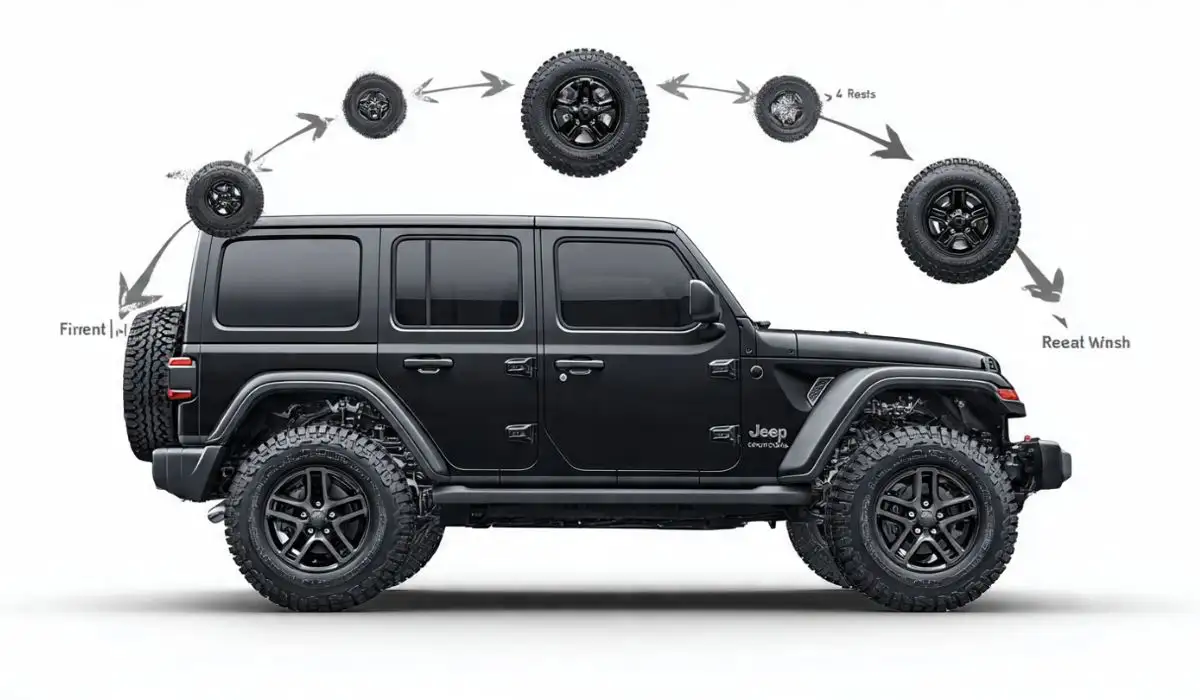
How the Forward Cross Pattern Works
- Front left → Rear right
- Front right → Rear left
- Rear left → Front left
- Rear right → Front right
Front tires cross to the opposite rear. Rear tires move straight forward.
Why This Pattern Is Ideal
Front tires on a Wrangler wear on the outer shoulders due to steering angles and weight distribution. Crossing them to the rear evens out that wear pattern quickly.
Read Next: 5 Tire Rotation Pattern 4×4 | Vehicles to Extend Tire Life
Alternative Pattern: X-Pattern Rotation:
Another excellent choice for non-directional tires.
How It Works
- Front left ↔ Rear right
- Front right ↔ Rear left
All tires switch diagonally.
When to Use It
Use this pattern if:
- Wear is already uneven
- You notice vibration or feathering
- Tires have spent too long without rotation
This pattern aggressively balances tread wear.
Pattern for Directional Tires (Front-to-Rear):
If your Wrangler has directional tires:
- Front left ↔ Rear left
- Front right ↔ Rear right
Tires stay on the same side of the vehicle.
Directional tread must roll in one direction for proper water evacuation and traction.
Why Front Tires Wear Faster on a Wrangler:
Because of:
- Steering angle and scrubbing
- Heavy front axle weight (engine and drivetrain)
- Braking forces
- Off-road turning stress
Without rotation, front tires may wear twice as fast as rear tires.
Symptoms That Your Wrangler Needs Rotation:
Watch for:
- Steering wheel vibration at 60–80 km/h
- Road noise getting louder
- Uneven tread blocks
- Feathered edges on front tires
- Vehicle pulling slightly to one side
These are early signs of uneven wear.
What Happens If You Don’t Rotate Wrangler Tires:
Skipping rotations can lead to:
- Premature tire replacement
- Rough ride quality
- Reduced off-road traction
- Stress on differentials and transfer case
- Expensive drivetrain wear
Wranglers are especially sensitive because of their 4×4 system and solid axles.
Tools Needed to Rotate Tires at Home:
You can rotate tires yourself with:
- Hydraulic jack
- Jack stands
- Lug wrench
- Torque wrench
Always tighten lug nuts to factory torque specs.
Pro Tip: Check Tread Depth Before and After:
Use a tread gauge. Ideally, all four tires should be within 2 mm tread difference.
If the difference is larger, use the X-pattern to correct it faster.
Off-Road Driving Changes Wear Patterns:
Rock crawling, sand driving, and mud trails cause:
- Chunking of tread blocks
- Edge wear
- Sidewall stress
Rotate immediately after major off-road trips to prevent permanent uneven wear.
Balancing and Alignment Matter Too:
If you rotate but still feel vibration:
- Check wheel balance
- Check alignment
- Inspect suspension components
Wranglers with lift kits often wear tires unevenly without proper alignment.
Rotation Pattern Quick Reference:
| Tire Type | Best Pattern |
|---|---|
| Non-directional | Forward Cross |
| Uneven wear present | X-Pattern |
| Directional tires | Front-to-Rear |
Why Equal Tire Size Matters on a Wrangler:
The Wrangler’s 4×4 system expects equal tire diameter. Uneven wear causes:
- Drivetrain compensation
- Heat buildup in transfer case
- Premature component wear
Rotation prevents this issue.
Should You Include the Spare Tire?
Many Wrangler owners perform a five-tire rotation. But if you’re doing a four-tire rotation only, be consistent and rotate on schedule.
How Rotation Improves Tire Life:
Proper rotation can extend tire life by 30–40% on a Wrangler. That’s a major cost saving, especially with expensive all-terrain tires.
Common Mistakes Wrangler Owners Make:
- Waiting 20,000 km between rotations
- Using the wrong pattern
- Ignoring directional arrows
- Not checking tire pressure after rotation
Final Thoughts:
Tire rotation on a Jeep Wrangler is not just routine maintenance—it’s essential for performance, safety, and protecting your 4×4 drivetrain. Using the forward cross or X-pattern regularly keeps wear even, reduces vibration, and extends tire life significantly.
Rotate your tires every 8,000–10,000 km, check tread depth, and choose the correct pattern based on your tire type. Your Wrangler will ride smoother, grip better off-road, and save you money in the long run.
FAQs:
1. How often should I rotate tires on a Jeep Wrangler?
Every 8,000–10,000 km for normal driving, or 5,000–7,000 km if you off-road frequently or run aggressive all-terrain/mud-terrain tires.
2. What is the best rotation pattern for most Wrangler tires?
For non-directional tires, the forward cross pattern is ideal because it balances front shoulder wear caused by steering and braking.
3. When should I use the X-pattern instead?
Use the X-pattern if you already have uneven wear, vibration, or feathering. It equalizes tread wear more aggressively.
4. What if my Wrangler has directional tires?
Use a front-to-rear rotation on the same side. Directional tread must keep its rolling direction for proper traction and water evacuation.
5. Can skipping rotations affect the 4×4 system?
Yes. Uneven tire diameters can make the drivetrain compensate constantly, adding stress to the transfer case and differentials.
6. Do off-road trips change how often I should rotate?
Yes. After major trail runs (rocks, sand, mud), rotate sooner to prevent permanent uneven wear from edge chunking and sidewall stress.
7. Should I check tread depth before rotating?
Absolutely. All four tires should be within 2 mm of each other. Larger differences mean rotation is overdue.
8. Is it safe to rotate Wrangler tires at home?
Yes, if you use jack stands and a torque wrench and follow the correct pattern for your tire type.