Can You Mix Regular And Mid Grade Gas | Complete Expert Guide

Can You Mix Regular And Mid Grade Gas?
If you’ve ever pulled into a gas station and wondered whether you can mix regular and mid-grade gasoline, you are not alone. Many drivers accidentally mix fuel types or deliberately do it to save money or avoid running on empty.
The good news is that in most modern vehicles, mixing regular (87 octane) and mid-grade (89–90 octane) gas is generally safe. However, understanding how it affects engine performance, fuel efficiency, and long-term engine health is important.
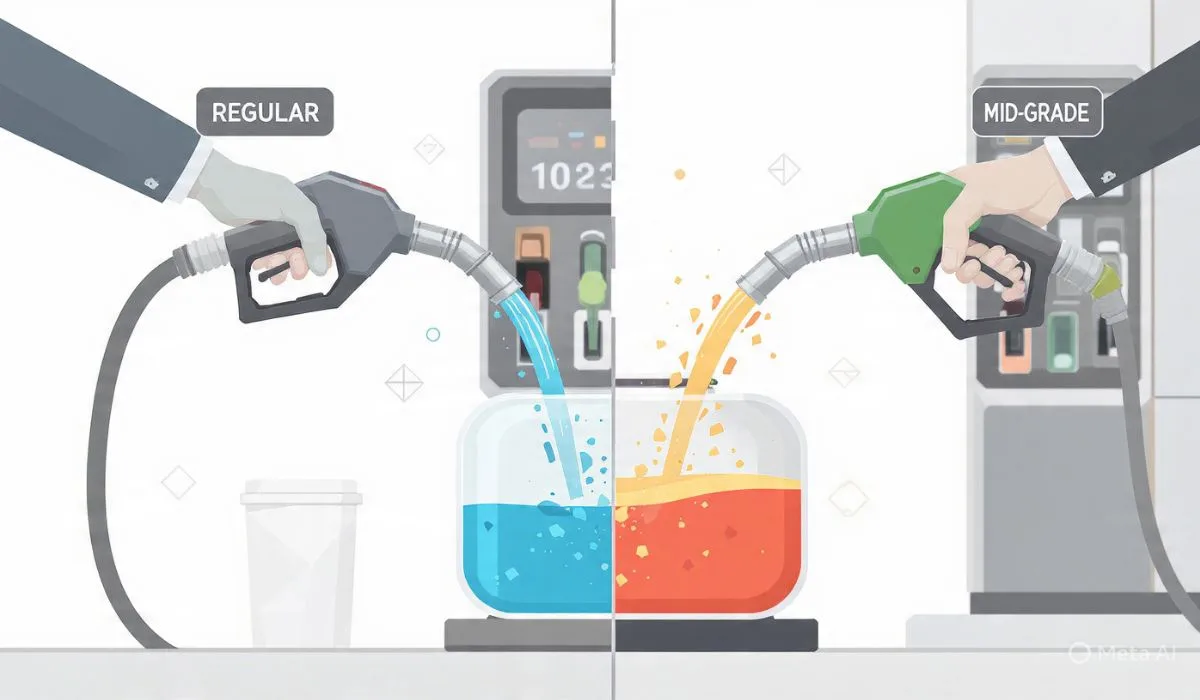
Gasoline Grades (Simple Explanation):
Before answering whether mixing is safe, you need to understand what fuel grades actually mean.
What is octane rating?
Octane measures a fuel’s resistance to knocking or pinging during combustion.
Common fuel grades in most countries
- Regular: 87 octane
- Mid-grade: 89–90 octane
- Premium: 91–93 octane
Higher octane does NOT mean more power—it means better resistance to engine knocking.
What Happens When You Mix Regular and Mid-Grade Gas?
The simple answer
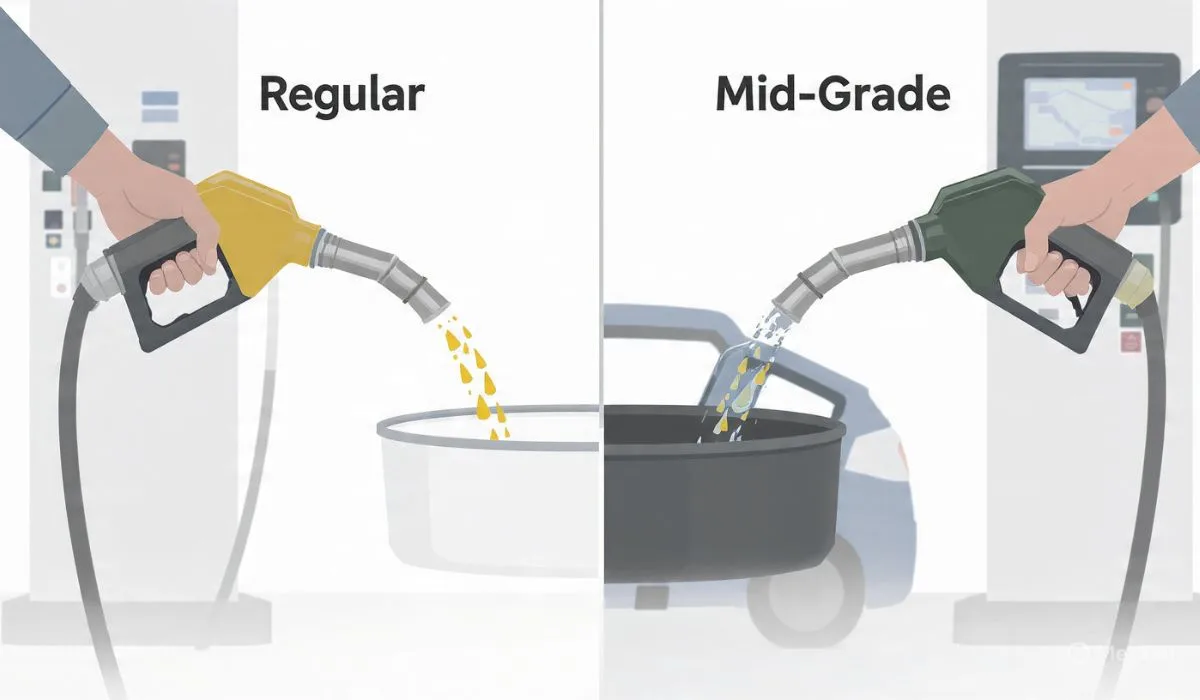
Yes, you can mix them. The fuel will blend in your tank and create an average octane level.
Example calculation
If you mix:
- Half tank regular (87)
- Half tank mid-grade (89)
Your effective octane becomes roughly 88.
The engine simply burns the mixed fuel as one blended grade.
Read Next: What Does It Mean When Engine Light Is On
Is Mixing Gasoline Safe for Your Engine?
In most modern cars: YES
Modern engines are designed with:
- Knock sensors
- ECU fuel adjustment systems
- Adaptive ignition timing
These systems automatically adjust to different fuel qualities.
When it is safe
- If your car recommends regular or mid-grade
- If you accidentally mixed fuels
- If you are topping off the tank
When caution is needed
- High-performance engines requiring premium fuel
- Older vehicles without knock sensors
How Your Engine Reacts to Mixed Fuel:
Role of the ECU (Engine Control Unit)
The ECU constantly adjusts:
- Ignition timing
- Air-fuel ratio
- Combustion efficiency
When fuel octane changes slightly, the ECU adapts automatically.
Knock sensor protection
If lower-quality fuel causes knocking, the sensor:
- Detects vibration
- Adjusts timing
- Prevents engine damage
This is why mixing fuels is usually not dangerous.
Does Mixing Regular and Mid-Grade Gas Affect Performance?
Slight differences may occur
You might notice:
- Slightly reduced acceleration
- Minor changes in engine smoothness
- Small variation in fuel economy
But in most cases
For everyday driving:
- No noticeable difference
- Normal engine operation
- Safe combustion process
Fuel Economy Impact of Mixing Gas:
Does mixing reduce mileage?
Usually not significantly. However:
- Lower octane than recommended → slight efficiency drop
- Higher octane than required → no real benefit
Key takeaway
Your engine is optimized for a specific octane level. Mixing slightly adjusts performance but does not dramatically change fuel economy.
When Mixing Gas Can Be Beneficial:
Emergency situations
If mid-grade is unavailable:
- Mixing prevents running on empty
- Keeps engine running safely
Cost flexibility
Some drivers mix fuels intentionally:
- To balance cost and performance
- To avoid paying for premium fuel
Seasonal use
In some climates, fuel blending helps maintain consistent performance.
When You Should NOT Rely on Mixing Fuel:
High-performance engines
Cars that require premium fuel:
- Turbocharged engines
- Sports cars
- Luxury vehicles
These engines rely on high-octane fuel for:
- Optimal timing
- Boost pressure control
- Engine protection
Using lower fuel than required repeatedly can cause:
- Engine knocking
- Reduced performance
- Long-term damage
Myth 1: Mixing Gas Damages Your Engine:
The truth
Mixing regular and mid-grade fuel does NOT damage engines in modern vehicles.
Why this myth exists
Older engines without knock sensors:
- Could not adjust timing
- Were more sensitive to fuel changes
Modern engines are much smarter.
Myth 2: Mid-Grade Is Always Better Than Regular:
Reality check
Mid-grade is NOT universally better.
- If your car is designed for regular fuel → mid-grade gives no benefit
- If your car is designed for mid-grade → regular may reduce performance
The best fuel is always what your manufacturer recommends.
Real-World Example:
A common scenario: A driver accidentally fills half a tank with regular fuel in a mid-grade recommended car. The car continues to run normally, with no warning lights or noticeable issues.
This happens because the ECU automatically adjusts ignition timing to prevent knocking. The driver may not notice any change unless pushing the engine hard.
How Fuel Mixing Works Inside the Tank:
Physical blending process
Fuel mixes instantly in the tank due to:
- Liquid movement
- Engine fuel circulation
- Pump mixing
Result
The engine does not burn separate fuels—it burns a homogeneous mixture.
What About Fuel Additives?
Some drivers believe additives change fuel grade.
Reality
- Most additives clean injectors or improve combustion
- They do NOT significantly change octane rating
Signs Your Engine Doesn’t Like the Fuel Mix:
Although rare, watch for:
- Engine knocking under acceleration
- Reduced power
- Rough idle (in older cars)
- Check engine light (rare cases)
If these occur consistently, stop mixing and follow manufacturer fuel recommendations.
Best Practices for Fuel Usage:
Always follow manufacturer recommendation
Check:
- Fuel cap label
- Owner’s manual
Avoid unnecessary mixing in performance cars
- Stick to required octane
- Avoid long-term experimentation
Keep fuel system clean
- Use quality fuel
- Replace fuel filter as recommended
- Avoid contaminated fuel stations
Does Mixing Fuel Affect Engine Longevity?
Short-term
No significant effect in modern vehicles.
Long-term
Consistent use of lower-than-required fuel may:
- Increase carbon buildup
- Slightly reduce engine efficiency
- Stress ignition timing systems
But occasional mixing is safe.
Environmental Impact of Mixed Fuel:
Mixed fuel combustion is still:
- Properly burned
- Within emission standards
- Controlled by ECU systems
So environmental impact remains minimal.
Step-by-Step Guide: What To Do If You Mixed Fuel:
Step 1: Don’t panic
Modern engines handle it well.
Step 2: Continue driving normally
No need to drain tank.
Step 3: Refuel normally next time
Use recommended grade moving forward.
Step 4: Monitor performance
Watch for unusual engine behavior (rare).
Expert Recommendation:
Automotive experts generally agree:
- Mixing regular and mid-grade fuel is safe
- Occasional mixing does not harm engines
- Long-term fuel consistency is still best
FAQs: Can You Mix Regular and Mid-Grade Gas?
Can mixing regular and mid-grade gas damage my engine?
No, in modern cars it is safe and will not damage the engine.
What happens if I mix different octane fuels?
The result is an average octane level between the two fuels.
Will mixing fuel affect performance?
Only slightly, and usually not noticeable in daily driving.
Is mid-grade gas worth it?
Only if your car manufacturer recommends it.
Can I mix gas all the time?
Occasional mixing is fine, but always follow manufacturer guidelines.
Does mixing fuel improve mileage?
No, it does not improve fuel economy.
What should I do if I accidentally mix fuels?
Just continue driving normally and refuel with recommended fuel next time.
Last Call:
So, can you mix regular and mid-grade gas? Yes—you absolutely can in most modern vehicles without worrying about engine damage.
Your car’s engine management system is designed to handle small variations in fuel octane and adjust automatically for safe operation.
However, the key takeaway is this: always follow your manufacturer’s recommended fuel type for best long-term performance and efficiency. Mixing fuel is safe in emergencies or occasional situations, but consistency is always the best practice for engine health.