How Much Coolant Should Be In The Reservoir When Hot | Complete Expert Guide

If you’ve ever checked your car’s coolant reservoir after driving and noticed the level is higher than before, you might wonder: how much coolant should actually be in the reservoir when the engine is hot?
This is a common concern because coolant naturally expands with heat. What looks like “too much” coolant when hot is often completely normal.
Understanding coolant levels is important because incorrect assumptions can lead to:
- Overfilling the system
- Engine overheating concerns
- Misdiagnosing cooling system problems
- Unnecessary repairs
This guide explains exactly how coolant behaves when hot, what levels are normal, and when you should worry.
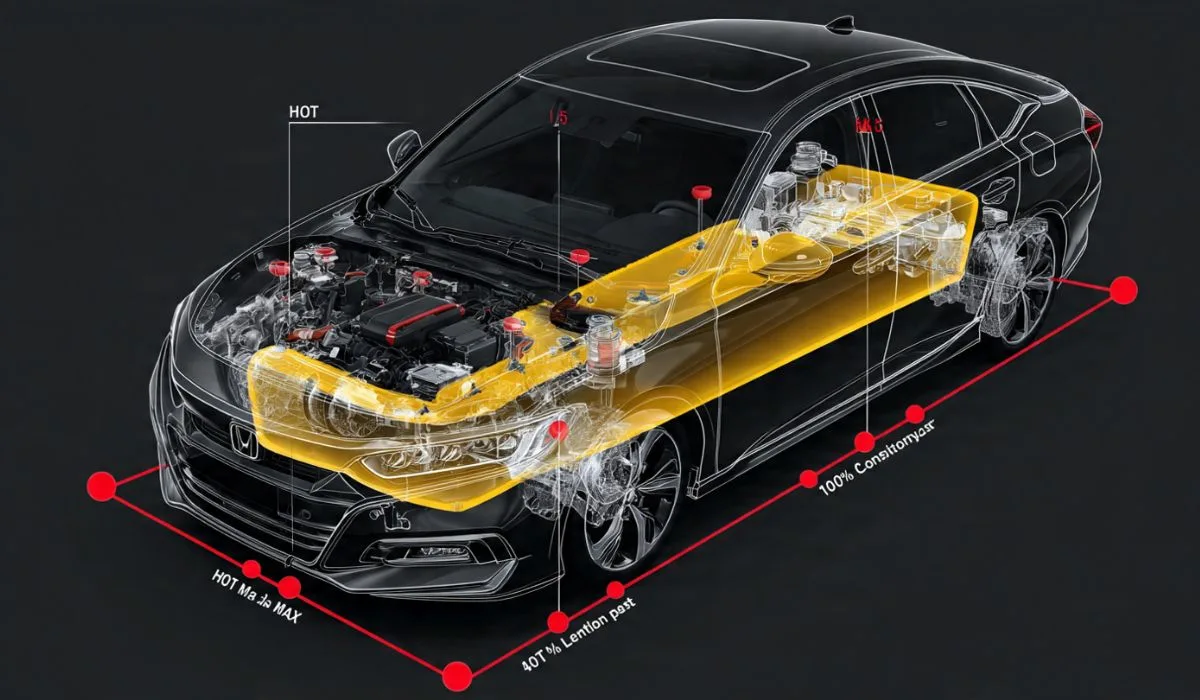
How the Coolant System Works:
What is engine coolant?
Coolant (also called antifreeze) is a liquid mixture that:
- Prevents engine overheating
- Protects against freezing
- Transfers heat from engine to radiator
Main components of the cooling system
- Radiator
- Coolant reservoir (overflow tank)
- Water pump
- Thermostat
- Cooling fans
- Engine passages
Why Coolant Levels Change When Engine Gets Hot:
Thermal expansion explained simply
When coolant heats up:
- It expands in volume
- Pressure increases in the system
- Extra coolant flows into reservoir
When the engine cools:
- Coolant contracts
- It returns back into the radiator
Key takeaway
A rising coolant level in the reservoir when hot is normal behavior, not a problem.
Where Should Coolant Be When Engine Is Hot?
Normal hot level
When the engine is fully warmed up:
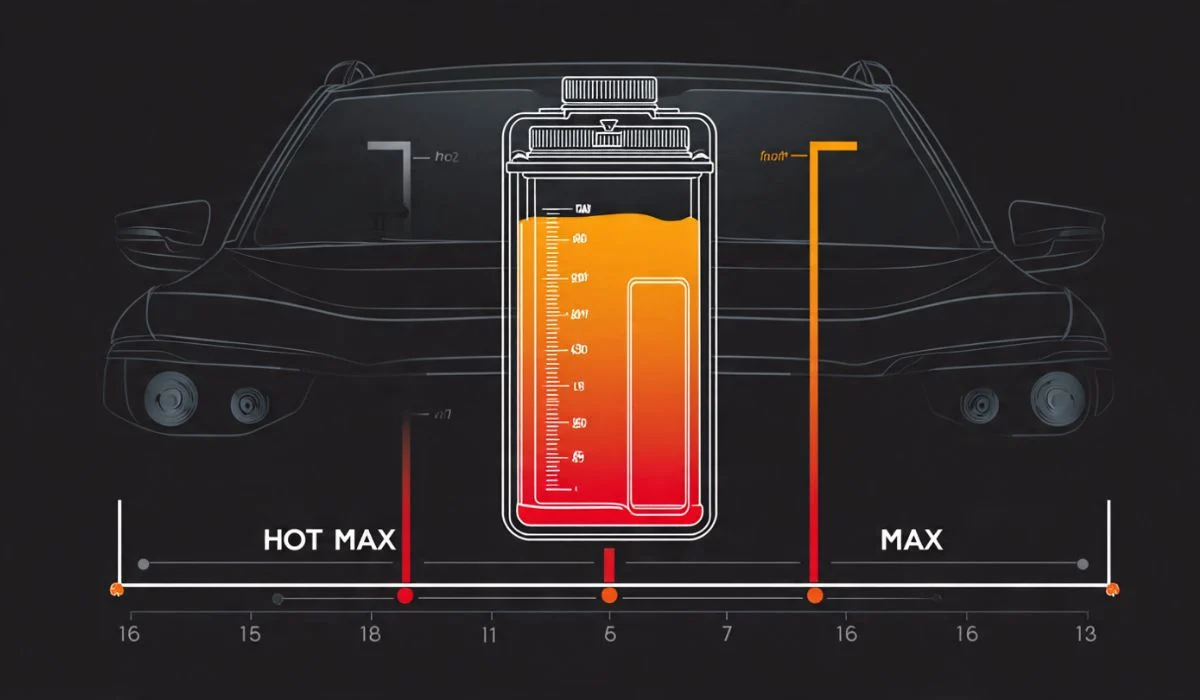
- Coolant should be between “LOW” and “FULL” (or “MIN” and “MAX”) marks
- It may rise slightly above the cold level
Important rule
The reservoir is designed to:
- Store excess coolant when hot
- Return coolant when engine cools
So a higher level when hot is expected.
Cold vs Hot Coolant Levels (Very Important Difference):
Cold engine (before starting)
- Coolant should be at or near the “MIN” or “COLD” mark
- This is your reference level
Hot engine (after driving)
- Level rises due to expansion
- Should stay within safe range
- May approach or slightly reach “MAX” line
What Is the Correct Coolant Level When Hot?
Ideal condition
When fully warmed:
- Level should be near “MAX” line
- But NOT overflowing
- Not excessively above reservoir markings
Normal variation
Small differences are normal depending on:
- Engine temperature
- Driving duration
- Outside weather
- Cooling system pressure
What Happens If Coolant Is Too High When Hot?
Possible causes
- Overfilling reservoir when cold
- Expansion beyond normal range
- Pressure cap malfunction
- Air trapped in system
Risks of overfilled coolant
- Coolant overflow
- Pressure buildup
- Hose stress
- Reduced system efficiency
What Happens If Coolant Is Too Low When Hot?
Signs of low coolant
- Level below MIN line
- Engine overheating
- Heater not working properly
Causes
- Coolant leak
- Evaporation (rare in modern systems)
- Faulty radiator cap
- Internal engine issues
Why You Should NEVER Open Coolant Cap When Hot:
Dangerous pressure warning
When engine is hot:
- Cooling system is pressurized
- Opening cap can cause hot coolant spray
- Risk of severe burns
Safe rule
Always wait until engine is fully cooled before opening any coolant cap.
How the Coolant Reservoir Actually Works:
Closed system design
Modern cars use a sealed system where:
- Radiator and reservoir are connected
- Pressure is controlled by radiator cap
- Expansion is automatically managed
Reservoir function
It acts as:
- Overflow storage
- Return tank
- Expansion buffer
Normal Coolant Behavior Cycle:
Step-by-step process
- Engine heats up
- Coolant expands
- Excess flows into reservoir
- Engine cools down
- Coolant returns to radiator
This cycle repeats every drive.
Signs of Coolant System Problems:
Warning indicators
- Constant low coolant level
- Frequent overheating
- White smoke from exhaust
- Sweet smell under hood
- Visible leaks
Coolant Expansion Range (What Is Normal?)
Typical expansion rate
Coolant can expand by:
- 5% to 10% in volume when hot
What this means
A noticeable rise in reservoir level is expected and normal.
Read Next: Honda Awd Tire Rotation Pattern | Complete Expert Guide
Common Mistakes Drivers Make:
1. Checking coolant only when hot
This leads to incorrect conclusions.
2. Overfilling reservoir
This causes overflow when engine heats up.
3. Using wrong coolant mixture
Incorrect ratio affects expansion and boiling point.
4. Ignoring small leaks
Even slow leaks lead to overheating over time.
How to Properly Check Coolant Level:
Step-by-step method
- Turn off engine
- Wait at least 30–60 minutes
- Ensure engine is cool
- Check reservoir level
- Compare to MIN/MAX marks
Proper Coolant Fill Level When Cold:
Recommended level
- Slightly below MAX line when cold
- Never above MAX when cold
This ensures safe expansion during driving.
What If Coolant Keeps Rising Too Much When Hot?
Possible causes
- Overfilled system
- Faulty radiator cap
- Head gasket issues (serious)
- Blocked radiator flow
What to do
- Inspect coolant cap
- Check for leaks
- Monitor temperature gauge
Role of Radiator Cap in Coolant Control:
What it does
- Maintains pressure
- Controls flow between radiator and reservoir
If it fails
- Coolant may overflow
- Pressure imbalance occurs
- Engine overheating risk increases
Real-Life Example:
A driver notices coolant rising above MAX when hot and assumes overheating. After inspection, mechanic finds the system was simply overfilled during last service. After correcting the level, coolant behavior returns to normal.
This shows that coolant expansion is often misunderstood, not malfunctioning.
Expert Insight:
Automotive experts agree:
- Coolant level rising when hot is normal thermal expansion
- Reservoir is designed to handle this change
- Only extreme overfilling or loss indicates a problem
Proper diagnosis requires checking both cold and hot conditions.
Preventing Coolant System Issues:
Regular maintenance tips
- Check coolant monthly
- Replace coolant every 2–5 years
- Inspect hoses for cracks
- Monitor engine temperature gauge
Best coolant practices
- Use manufacturer-recommended coolant type
- Maintain correct 50/50 mixture (coolant + distilled water)
- Avoid mixing incompatible coolants
FAQs: Coolant Level When Hot
How much coolant should be in the reservoir when hot?
It should be between MIN and MAX marks, usually near the MAX line.
Is it normal for coolant level to rise when engine is hot?
Yes, coolant expands when heated and rises in the reservoir.
Should coolant be full when hot?
No, it should not overflow—only reach safe marked levels.
Why does coolant overflow when hot?
Usually due to overfilling or a faulty radiator cap.
Can low coolant cause overheating?
Yes, low coolant reduces heat transfer and can overheat the engine.
Should I check coolant when engine is hot or cold?
Always check when the engine is cold for accurate reading.
What is the normal coolant expansion rate?
Typically around 5–10% volume increase when hot.