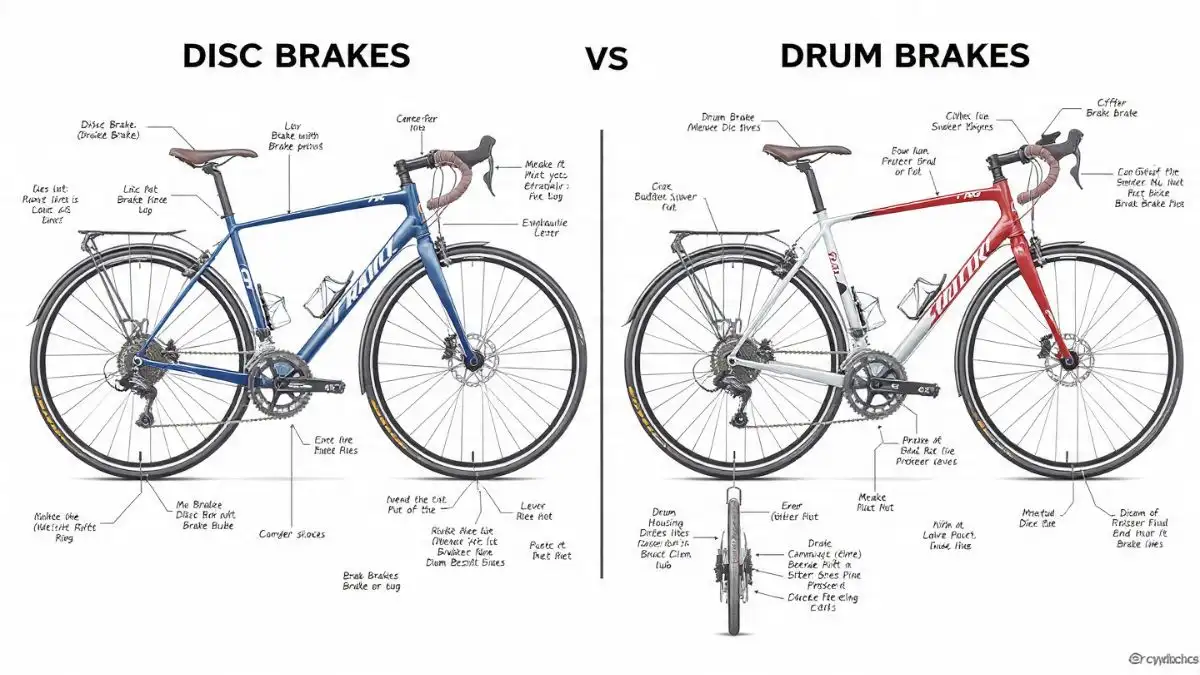
Which Is Better Disc or Drum Brakes in bikes | Pros, Cons & Comparison

When choosing a motorcycle or commuter bike, one of the most important safety features to understand is the braking system. You’ll often see two options: disc brakes and drum brakes. Both stop your bike—but they do it in very different ways.
This beginner-friendly guide explains how each system works, their pros and cons, and which one is better for your riding style, road conditions, and budget.
Popular bike makers like Honda, Yamaha Motor Company, and Bajaj Auto offer models with either or both types, depending on the segment.
What Is a Brake System in a Bike?
Brakes convert the bike’s motion into heat through friction, slowing the wheels safely. The better the brake manages heat and friction, the safer and smoother the stop.
What Are Drum Brakes?
A drum brake is an older, enclosed system.
How It Works (Step-by-Step)
- You press the brake lever/pedal.
- Brake shoes expand inside a round drum.
- Friction slows the wheel.
All parts sit inside a metal drum attached to the wheel.
What Are Disc Brakes?
A disc brake is an open system with a visible metal disc (rotor).
How It Works (Step-by-Step)
- You press the brake lever.
- Brake pads squeeze a spinning disc.
- Friction slows the wheel.
This system is exposed to air, allowing better cooling.
Key Differences at a Glance
| Feature | Drum Brake | Disc Brake |
|---|---|---|
| Design | Enclosed drum | Open disc rotor |
| Heat dissipation | Poor | Excellent |
| Braking power | Moderate | Strong |
| Performance in rain | Reduced | Reliable |
| Maintenance | Low cost | Slightly higher |
| Weight | Heavier | Lighter |
| Modern usage | Budget bikes | Most modern bikes |
Braking Performance: Which Stops Faster?
Disc brakes provide faster and more controlled stopping because they cool quickly and maintain friction even during repeated braking.
Drum brakes can lose efficiency when they heat up (called brake fade).
Performance in Rain and Mud:
This is where disc brakes clearly win.
- Drum brakes trap water and mud inside.
- Disc brakes throw off water quickly because they’re open.
For wet roads, disc brakes are safer.
Maintenance and Cost:
Drum brakes are cheaper to repair and maintain. Parts are simple and last long.
Disc brakes require:
- Pad replacements
- Occasional rotor checks
- Brake fluid maintenance (in hydraulic systems)
But the safety benefit often outweighs the extra cost.
Weight and Handling:
Disc brake systems are lighter. Less weight on the wheel improves handling and control, especially at higher speeds.
Heat Management (Very Important)
Braking creates heat. If heat can’t escape:
- Braking power reduces
- Parts wear faster
Disc brakes release heat easily. Drum brakes trap it.
Which Brake Is Used Where?
Most bikes today use:
- Front wheel: Disc brake
- Rear wheel: Drum brake (in budget models)
Why? The front brake does most of the stopping work.
Effective Tips for Choosing Between Disc and Drum:
- If you ride in city traffic daily → choose disc.
- If you ride in rainy or muddy roads → choose disc.
- If you want low maintenance and low cost → drum is acceptable.
- For highway riding → disc is strongly recommended.
- For beginners → disc offers more confidence.
Authoritative Safety Recommendations:
Road safety organizations emphasize effective braking systems:
- National Highway Traffic Safety Administration highlights proper brake performance as critical for rider safety.
- American Automobile Association advises regular brake checks for all vehicles.
- Manufacturers like Honda and Yamaha Motor Company increasingly equip bikes with front disc brakes as standard.
Common Problems to Watch:
| Issue | Drum Brake | Disc Brake |
|---|---|---|
| Brake fade | Common | Rare |
| Noise | Rare | Sometimes squeal |
| Water effect | High | Low |
| Pad/Shoe wear | Slow | Moderate |
Riding Feel and Control:
Riders often report:
- Drum: softer, slower response
- Disc: sharp, immediate response
This difference can matter in emergency braking.
When Drum Brakes Are Still a Good Choice:
Drum brakes are fine if:
- You ride at low speeds
- Your bike is 100–125cc commuter
- Budget is a major concern
- You ride mostly on dry roads
When Disc Brakes Are the Better Choice:
Disc brakes are ideal if:
- You ride above 40–50 km/h regularly
- You ride in traffic
- You ride in rain
- Safety is your top priority
FAQs:
Are disc brakes safer than drum brakes?
Yes, especially in emergency and wet conditions.
Do disc brakes wear out faster?
Pads wear faster than drum shoes, but are easy to replace.
Why do many bikes still use rear drum brakes?
To reduce cost while keeping good front braking power.
Do drum brakes last longer?
Yes, but with less performance.
Which is better for beginners?
Disc brakes offer better control and confidence.
Can drum brakes overheat?
Yes, causing brake fade.