How A Car Engine Works Step By Step | A Beginner-Friendly Guide

how a car engine works can feel intimidating at first. But once you break it into simple parts and a clear process, it becomes surprisingly logical. This beginner-friendly guide explains the basics using plain language, practical examples, and trusted references so you can build real understanding—not just memorize terms.
Most modern cars use an internal combustion engine (ICE). In this system, fuel burns inside the engine to create power that turns the wheels. Whether you drive a sedan, SUV, or pickup, the core idea is the same.
What Is an Internal Combustion Engine?
An internal combustion engine is a machine that converts fuel energy into mechanical motion by burning fuel inside a metal chamber.
The most common design in passenger cars is the four-stroke gasoline engine. This design is used widely by manufacturers like Toyota, Honda, and Ford Motor Company because it is reliable, efficient, and relatively simple.
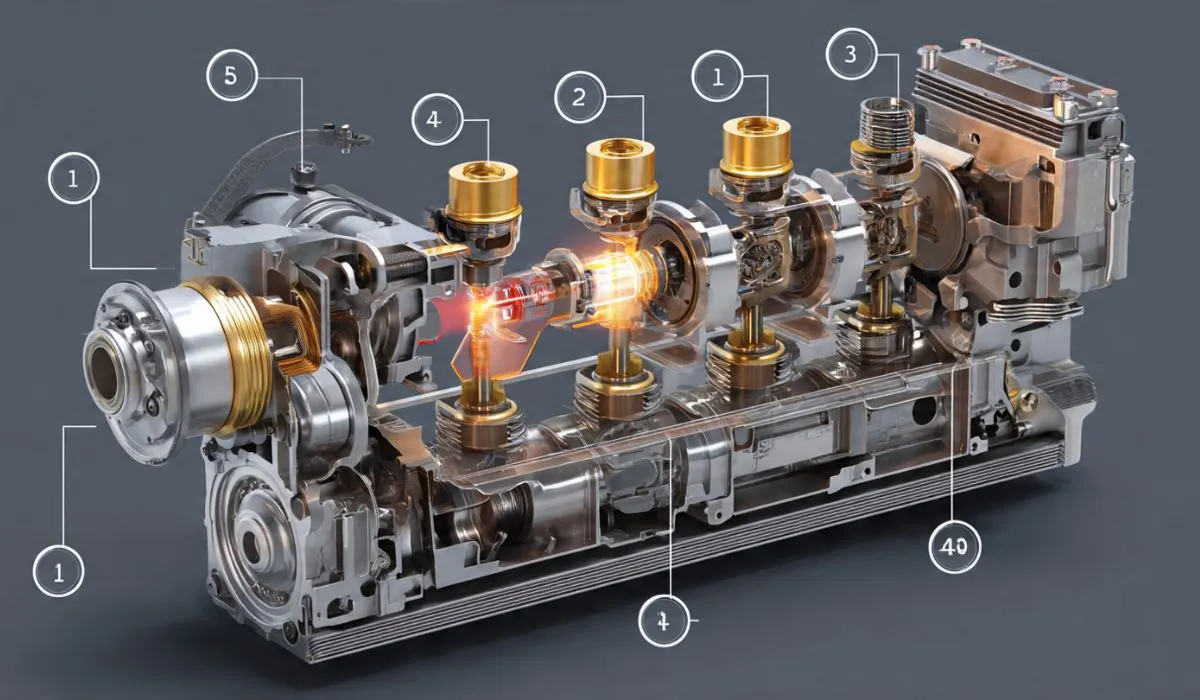
The Main Parts of a Car Engine (In Simple Terms)
Before learning the process, know the key parts:
- Cylinder – The chamber where fuel burns.
- Piston – Moves up and down inside the cylinder.
- Crankshaft – Converts up-down motion into rotational motion.
- Spark plug – Ignites the fuel-air mixture.
- Valves – Let air/fuel in and exhaust out.
- Camshaft – Controls valve timing.
- Fuel injector – Sprays fuel into the cylinder.
- Timing belt/chain – Synchronizes crankshaft and camshaft.
These parts work together like a perfectly timed team.
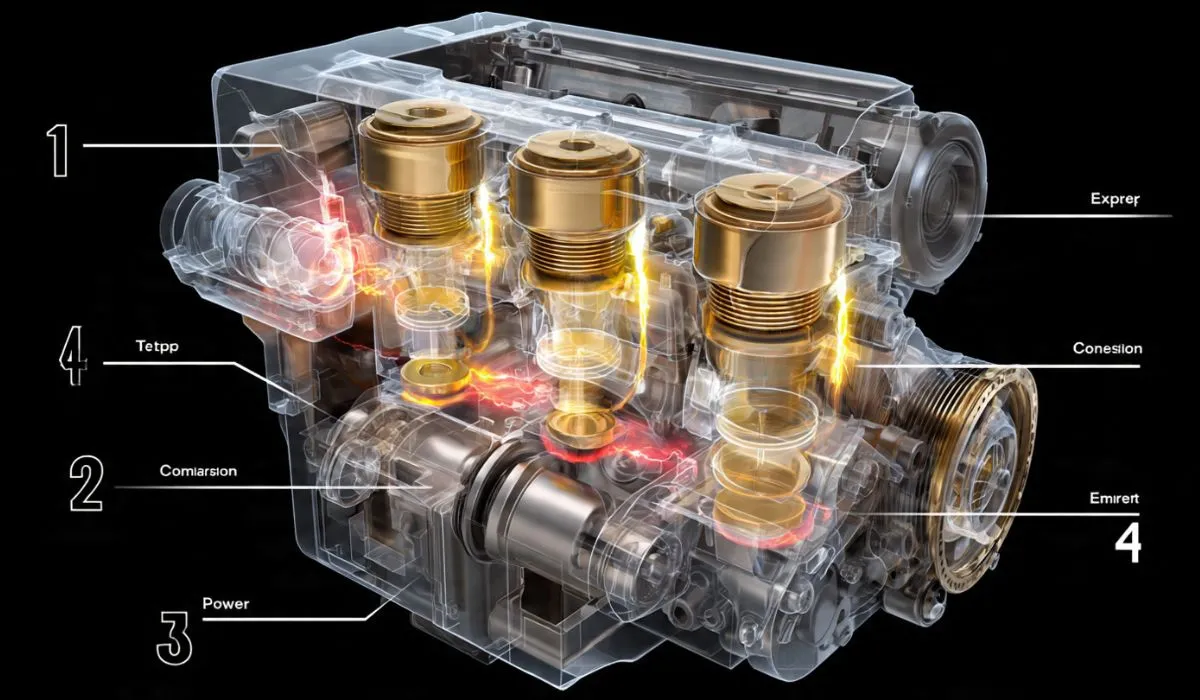
The 4-Stroke Engine Cycle (The Heart of How an Engine Works):
The four strokes are: Intake → Compression → Power → Exhaust.
1) Intake Stroke
- The intake valve opens.
- The piston moves down.
- Air and fuel enter the cylinder.
Think of this like filling a syringe.
2) Compression Stroke
- Valves close.
- The piston moves up.
- The mixture gets squeezed tightly.
Compression makes the explosion more powerful.
3) Power Stroke
- The spark plug fires.
- The mixture explodes.
- The piston is forced down hard.
This is where power is created.
4) Exhaust Stroke
- Exhaust valve opens.
- Piston moves up.
- Burned gases exit the cylinder.
Then the cycle repeats—thousands of times per minute.
How Motion Reaches the Wheels:
The piston’s up-down motion turns the crankshaft. The crankshaft connects to the transmission, which sends power to the wheels.
So the chain looks like this:
Fuel burns → piston moves → crankshaft spins → transmission turns → wheels rotate
What Happens When You Turn the Key (or Press Start):
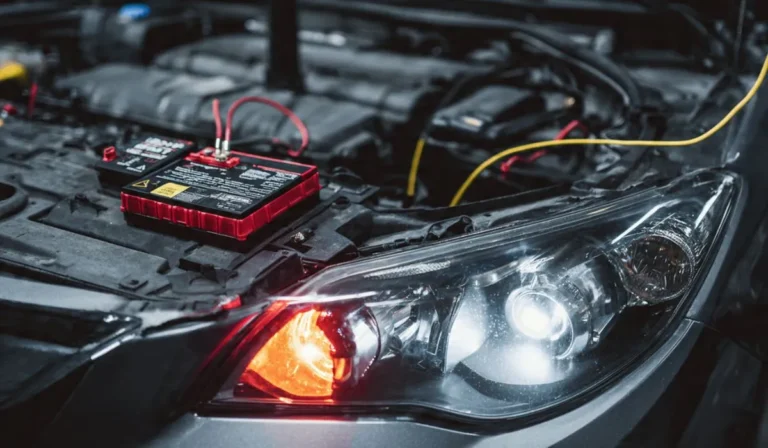
- Battery powers the starter motor.
- Starter turns the crankshaft.
- Fuel pump sends fuel.
- Air enters through the intake.
- Spark plug ignites mixture.
- Engine begins running on its own.
After this, the engine keeps cycling without help from the starter.
Read More: Why Is My Car Cranking
Why Engines Have Multiple Cylinders:
Cars don’t rely on just one cylinder. Most engines have 3, 4, 6, or 8 cylinders.
More cylinders mean:
- Smoother power delivery
- More power
- Less vibration
A 4-cylinder engine is common in small cars, while V6 and V8 engines are used in larger vehicles.
Role of Engine Oil (Critical for Survival):
Engine oil:
- Lubricates moving parts
- Reduces friction
- Prevents overheating
- Cleans internal parts
Without oil, an engine can fail in minutes.
Role of the Cooling System:
Fuel explosions create extreme heat. The cooling system uses:
- Coolant
- Radiator
- Water pump
This prevents overheating and engine damage.
Fuel + Air Ratio (Why It Matters):
The engine needs the correct air-fuel mixture. Too much fuel or air reduces efficiency.
Modern cars use sensors and an ECU (engine control unit) to maintain the perfect ratio automatically.
Spark Plug Timing and Engine Timing:
The spark must happen at the exact right moment. This is controlled by the timing system.
If timing is off:
- Engine loses power
- Fuel economy drops
- Engine may misfire
Simple Analogy to Remember:
Think of the engine like a human heart:
- Fuel = food
- Air = oxygen
- Spark = heartbeat
- Exhaust = waste removal
It’s a continuous life cycle.
Effective Tips to Keep Your Engine Healthy:
- Change engine oil on schedule.
- Use the correct fuel type.
- Check coolant levels.
- Replace air filters regularly.
- Don’t ignore warning lights.
- Warm up briefly before driving hard.
- Service spark plugs as recommended.
These small habits can add years to engine life.
Authoritative Recommendations:
Automakers and safety organizations emphasize regular maintenance:
- National Highway Traffic Safety Administration recommends routine checks for engine safety.
- American Automobile Association advises timely oil changes and filter replacements.
- Owner manuals from brands like BMW and Hyundai Motor Company provide precise service intervals tailored to each engine.
Following manufacturer guidelines is always best.
Common Engine Problems Beginners Should Know:
| Problem | Cause | Symptom |
|---|---|---|
| Overheating | Low coolant | Temperature warning |
| Misfire | Bad spark plug | Rough engine |
| Knocking | Wrong fuel | Metallic noise |
| Oil leak | Worn gasket | Oil under car |
| Poor mileage | Dirty air filter | High fuel use |
Why Modern Engines Are More Efficient:
Thanks to technology:
- Fuel injection is precise
- Sensors optimize performance
- Computer controls improve timing
This leads to better mileage and lower emissions than older engines.
FAQs:
What makes the piston move?
The explosion of the air-fuel mixture pushes it down.
How many times does this happen?
Thousands of times per minute while driving.
Why is engine oil so important?
It prevents metal parts from grinding and overheating.
What happens if a spark plug fails?
The engine misfires and loses power.
Is diesel engine the same?
The principle is similar, but diesel engines don’t use spark plugs.
Can an engine run without coolant?
No. It will overheat quickly and may be permanently damaged.
Final Thoughts:
A car engine is not magic. It’s a beautifully timed machine where fuel, air, spark, and motion work together in a repeating cycle.
Once you understand the 4 strokes, the rest becomes easy to visualize. With proper care, modern engines can run smoothly for hundreds of thousands of kilometers.
Learning this foundation helps you:
- Understand your car better
- Maintain it properly
- Save money on repairs
- Drive with confidence