Will Mixing Premium And Regular Gas Mess Up Your Car | Complete Expert Guide

Many drivers face this situation at the pump: your car requires premium fuel, but regular gas is cheaper and readily available. Sometimes you might even mix both accidentally or intentionally.
This leads to a very common question: Will mixing premium and regular gas mess up your car?
The short answer is: in most modern vehicles, no—it will not immediately damage your engine. However, there are important details you need to understand about engine performance, long-term effects, and manufacturer recommendations.
This guide breaks everything down using real automotive principles so you can make informed decisions without risking your engine.
Premium vs Regular Gas (Simple Explanation):
To understand mixing fuel, you first need to understand what separates premium and regular gasoline.
What is octane rating?
Octane is a measure of a fuel’s resistance to knocking (pre-ignition inside the engine).
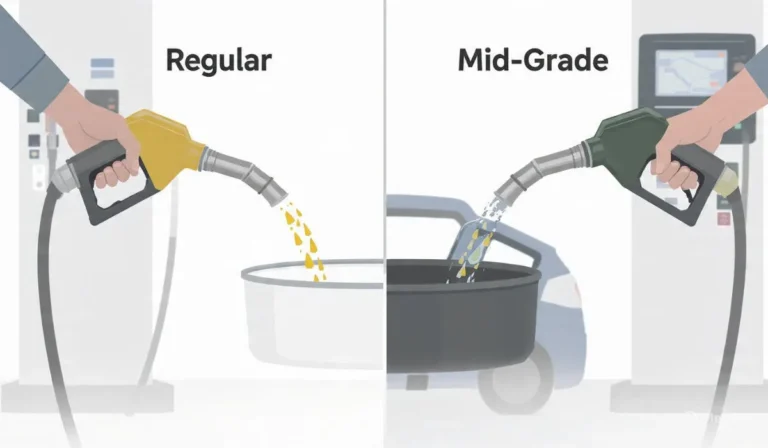
- Regular gas: usually 87 octane
- Mid-grade gas: 89–90 octane
- Premium gas: 91–93 octane
Important fact
Higher octane does NOT mean more power. It means better resistance to knocking in high-compression engines.
Why Some Cars Require Premium Gas:
High-performance engines
Cars that require premium fuel often have:
- Turbochargers
- High compression ratios
- Advanced ignition timing
- Performance tuning
Why premium matters
These engines operate under higher pressure. Lower octane fuel can cause:
- Engine knocking
- Reduced performance
- Heat buildup
- Long-term engine stress
What Happens When You Mix Premium and Regular Gas?
The simple truth
Yes, you can mix them safely in most cases.
When you mix fuels:
- The octane level averages out
- The fuel blends inside the tank
- The engine burns a combined mixture
Example
- Half premium (93) + half regular (87) = ~90 octane fuel
The engine does not separate fuels—it treats it as one blended fuel.
Will Mixing Premium and Regular Gas Damage Your Engine?
In modern vehicles: NO
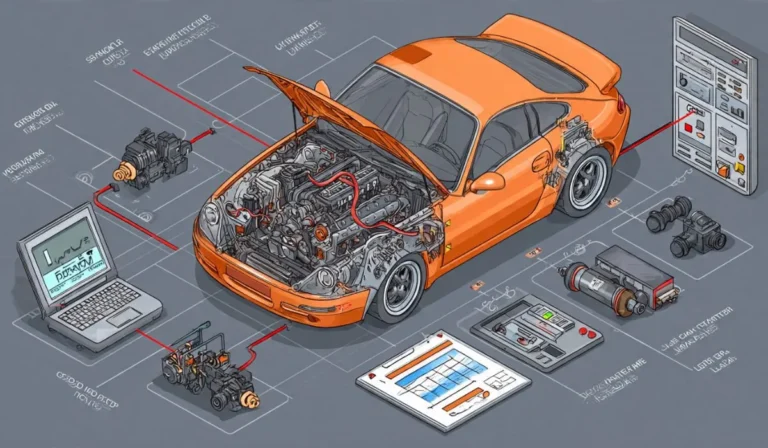
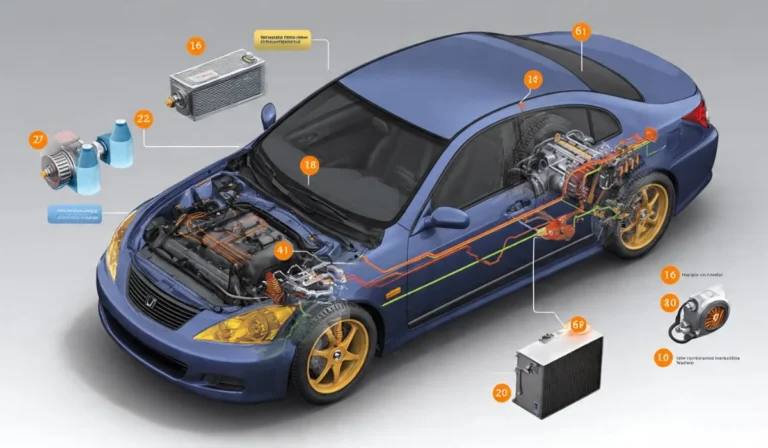
Most modern engines include:
- Knock sensors
- ECU adaptive timing
- Fuel adjustment systems
These systems automatically adjust engine behavior based on fuel quality.
What the ECU does
If lower octane fuel is detected:
- Ignition timing is adjusted
- Combustion is stabilized
- Engine protection is activated
This prevents immediate damage.
How Your Car Reacts to Mixed Fuel:
Role of knock sensors
These sensors detect abnormal combustion (knocking) and adjust engine timing.
ECU adaptation
The ECU responds by:
- Retarding ignition timing
- Adjusting fuel injection
- Reducing engine stress
Result
The car continues to run safely, even with mixed fuel.
Read Next: How To Mechanically Reduce Fuel Consumption In Cars | Expert Guide
Does Mixing Premium and Regular Gas Affect Performance?
Yes, but usually slightly
You may notice:
- Slight reduction in acceleration
- Minor fuel economy changes
- Slight difference in engine smoothness
Why this happens
If your engine is designed for premium fuel, lowering octane slightly reduces optimal combustion efficiency.
Fuel Economy Impact of Mixing Gas:
What to expect
- Small decrease in mileage (if engine requires premium)
- No major change (if engine is designed for regular fuel)
Key point
The ECU compensates, but cannot fully restore performance if fuel quality drops below recommendation.
When Mixing Fuel Is Completely Safe:
Safe situations
- Emergency refueling when premium is unavailable
- Occasional mixing during travel
- Topping off tank with different grade
Why it’s safe
Modern engines are built to handle fuel variability within limits.
When Mixing Fuel Can Be a Problem:
High-performance vehicles
Cars that strictly require premium fuel may experience:
- Reduced performance
- Slight knocking under load
- Loss of acceleration efficiency
Long-term repeated mixing below requirement
- Increased engine strain
- Carbon buildup over time
- Reduced efficiency
Myth: Mixing Premium and Regular Gas Ruins Engines:
Reality
This is a common misconception.
- Occasional mixing does NOT damage engines
- Modern ECU systems prevent harm
- Problems arise only with consistent under-fueling in premium-required engines
Myth: Premium Gas Always Makes Your Car Faster:
Truth
If your car is designed for regular fuel:
- Premium fuel gives no performance gain
- No extra horsepower is unlocked
Only engines tuned for high octane benefit from premium fuel.
Real-Life Example (Practical Experience):
A driver using a turbocharged vehicle that requires premium fuel accidentally fills half a tank with regular gas. The car continues to run normally, with no warning lights or immediate issues.
However, during hard acceleration, slight hesitation is noticed. After refueling with full premium gas, performance returns to normal.
This shows how mixing affects performance temporarily but does not cause damage.
How Fuel Mixing Works Inside the Tank:
Physical behavior
Gasoline blends instantly because:
- It is a liquid mixture
- Fuel pump continuously circulates fuel
- No separation occurs between grades
Result
The engine always receives a uniform blended fuel.
Engine Types and Their Sensitivity to Fuel Mixing:
Naturally aspirated engines
- Less sensitive
- Usually fine with mixing
Turbocharged engines
- More sensitive to octane levels
- Require consistent fuel quality for best performance
High compression engines
- Most dependent on premium fuel
- Mixing may slightly reduce efficiency
Signs Your Car Is Not Happy With Mixed Fuel:
While rare, watch for:
- Engine knocking under acceleration
- Reduced throttle response
- Slight hesitation at high RPM
- Decreased fuel economy
If these symptoms appear consistently, revert to recommended fuel type.
What Automakers Recommend:
Manufacturer guidelines always matter most
Car manufacturers specify fuel requirements based on:
- Engine design
- Compression ratio
- Performance tuning
Key rule
- If premium is recommended → use premium for best results
- If regular is recommended → premium gives no benefit
Long-Term Effects of Mixing Premium and Regular Gas:
Occasional mixing
- No significant impact
- Safe for engine
- No mechanical damage
Frequent mixing below recommendation
- Reduced efficiency
- Slight carbon buildup
- Possible performance loss in performance engines
Environmental Impact of Fuel Mixing
Mixed fuel does not significantly affect emissions because:
- ECU still controls combustion
- Catalytic converter processes exhaust
- Fuel is still fully burned
Best Practices for Fuel Usage:
Follow manufacturer recommendation
Always prioritize your owner’s manual.
Avoid unnecessary fuel switching
Consistency helps engine tuning stability.
Use high-quality fuel stations
Avoid contaminated or low-quality fuel sources.
Monitor performance
Pay attention to engine behavior after fuel changes.
Step-by-Step Guide If You Accidentally Mixed Fuel:
Step 1: Don’t panic
Modern engines handle this safely.
Step 2: Continue driving normally
No need for immediate action.
Step 3: Refuel correctly next time
Return to recommended fuel type.
Step 4: Observe engine behavior
Watch for unusual symptoms (rare).
Expert Insight:
Automotive engineers and mechanics generally agree:
- Mixing premium and regular gas is safe in modern vehicles
- Damage only occurs when consistently using lower-than-required octane
- ECU systems are designed to adapt to fuel variations
Trustworthy automotive guidance always emphasizes manufacturer specifications over fuel myths.
FAQs: Will Mixing Premium and Regular Gas Mess Up Your Car?
Will mixing premium and regular gas damage my engine?
No, in modern vehicles it will not cause damage.
What happens if I mix premium and regular gas?
You get a blended fuel with an average octane level.
Can I switch between premium and regular gas?
Yes, but performance may vary depending on engine design.
Is it bad to use regular gas in a premium car occasionally?
Occasionally, it is usually safe but not recommended long-term.
Does mixing fuel affect mileage?
It can slightly reduce mileage in premium-required engines.
Will my car run slower if I mix fuel?
Possibly a little, especially under heavy acceleration.
Should I always use premium if recommended?
Yes, for best performance and engine protection.