When to Replace Car Tires | Complete Expert Guide to Safety, Wear Signs, and Timing

Car tires are one of the most important safety components in your vehicle, yet they are often ignored until something goes wrong. Worn-out tires don’t just reduce performance—they directly increase the risk of skidding, blowouts, poor braking, and loss of control, especially in wet or emergency conditions.
Many drivers ask: When should I replace my car tires? The answer is not just based on mileage. It depends on tread depth, age, driving conditions, and visible damage.
This guide will help you understand exactly When to Replace Car Tires using real-world signs and expert automotive standards.
Why Replacing Car Tires on Time Is Critical for Safety:
Tires are your only contact with the road
Each tire has a contact patch roughly the size of your palm. That small area is responsible for:
- Braking
- Steering
- Acceleration
- Road stability
Worn tires increase risk dramatically
Old or damaged tires can cause:
- Longer braking distance
- Hydroplaning on wet roads
- Reduced grip in corners
- Tire blowouts at high speed
Even small wear differences can affect safety significantly.
How Long Do Car Tires Last?
Average lifespan
Most car tires last:
- 40,000 to 80,000 km (25,000 to 50,000 miles)
- 3 to 6 years depending on usage
But this varies based on:
- Driving style
- Road conditions
- Tire quality
- Maintenance habits
- Climate exposure
The Most Important Factor: Tread Depth:
What is tread depth?
Tread is the grooved surface of your tire that grips the road.
Legal minimum vs safe minimum
- Legal limit: 1.6 mm (varies by country)
- Recommended safety limit: 3 mm or higher
Why tread matters
Tread channels water away from the tire. When it wears down:
- Wet grip decreases
- Hydroplaning risk increases
- Braking becomes less effective
Simple Tread Wear Test (Coin Method):
How to check at home
Insert a coin into the tread:
- If you can see most of the coin → tire is worn
- If part is hidden → tire is still usable
Professional method
Mechanics use tread depth gauges for precise measurement.
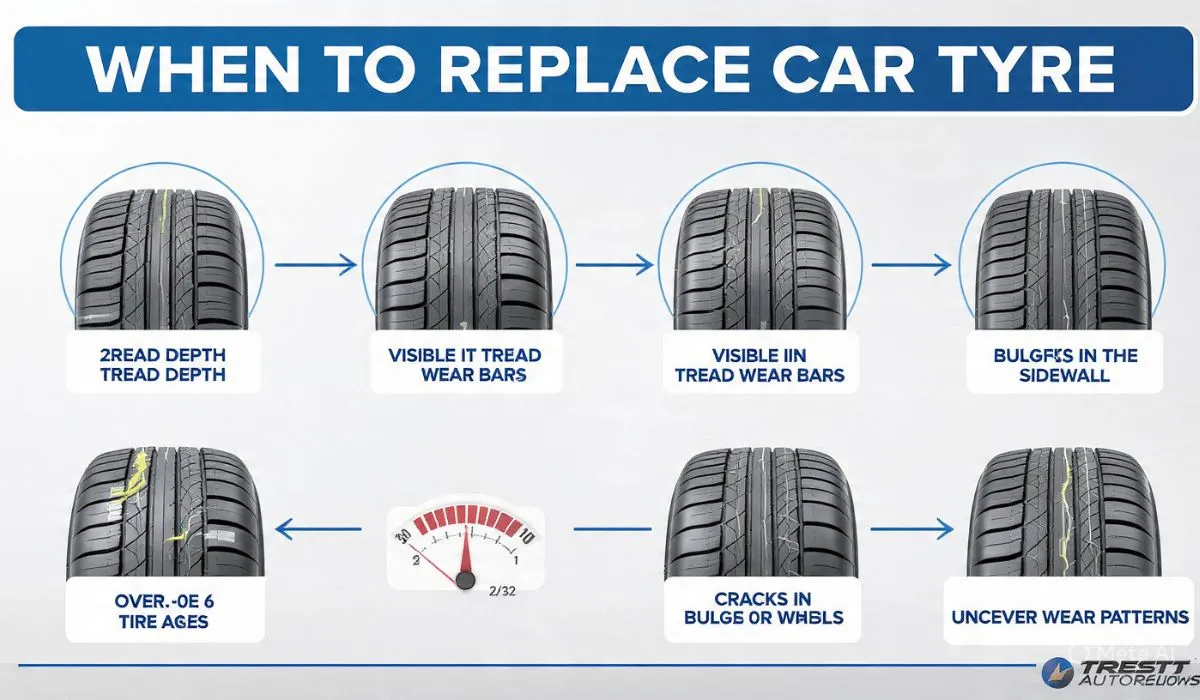
7 Clear Signs You Need to Replace Your Tires
Let’s break down the most important warning signs.
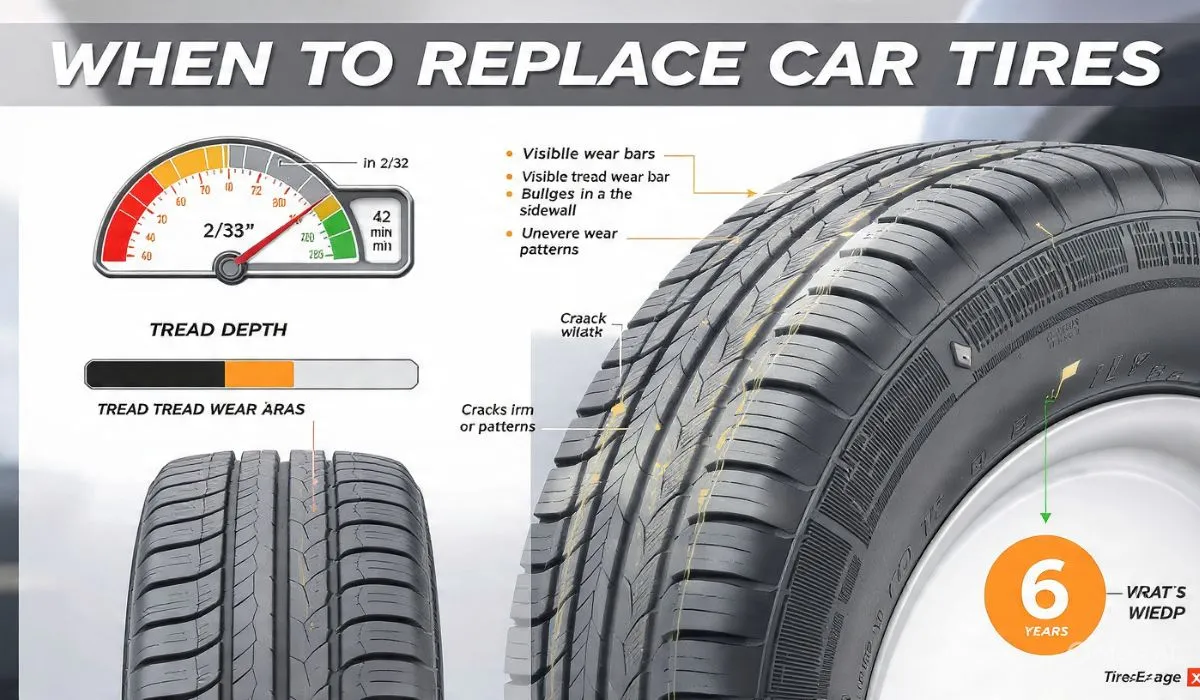
1. Low Tread Depth
If tread is below 3 mm:
- Grip is reduced
- Wet braking performance drops
- Replacement is recommended
Read Next: What do the 3 numbers mean on tire size | Complete Expert Guide
2. Cracks on Tire Sidewall
What causes cracks?
- Aging rubber
- Sun exposure (UV damage)
- Low-quality storage conditions
Why it’s dangerous
Cracks can lead to:
- Sudden blowouts
- Air leaks
- Structural failure
3. Bulges or Blisters
What they mean
A bulge indicates internal tire damage.
Causes
- Hitting potholes
- Road impacts
- Weak internal structure
Danger level
Extremely high risk of tire burst. Replace immediately.
4. Uneven Tire Wear
Common patterns
- Inner edge wear
- Outer edge wear
- Center wear
What it indicates
- Misalignment
- Improper inflation
- Suspension issues
Uneven wear reduces safety and indicates deeper mechanical issues.
5. Vibration While Driving
What it means
Excessive vibration can indicate:
- Tire imbalance
- Internal tire damage
- Uneven tread wear
If vibration increases with speed, inspection is necessary.
6. Tire Age (Even If Tread Looks Fine)
Important fact
Rubber degrades over time even if unused.
Recommended replacement age
- 6 years: inspection required
- 10 years: replace regardless of condition
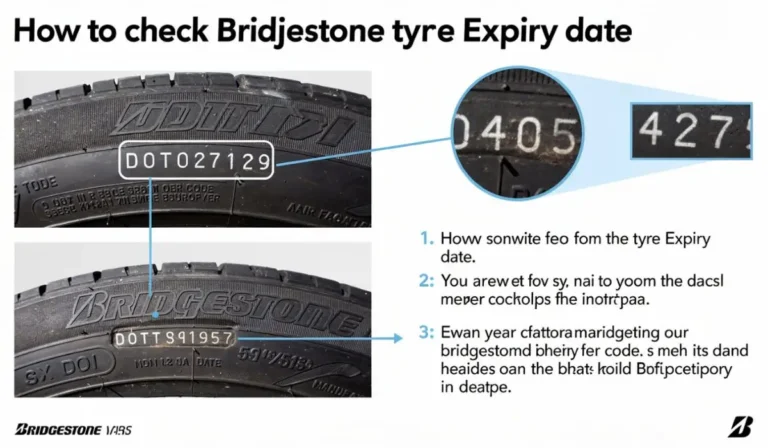
How to check tire age
Look for DOT code on sidewall.
Example: DOT 3219
- 32 = week
- 19 = year (2019)
7. Frequent Air Pressure Loss
What it means
If your tire loses air regularly:
- Slow leaks may exist
- Valve stem damage
- Internal punctures
Constant refilling is a warning sign.
How Driving Conditions Affect Tire Life:
City driving
- Frequent braking reduces tread life
Highway driving
- More even wear but heat buildup
Rough roads
- Faster damage and sidewall stress
Hot climates
- Rubber degrades faster
How Tire Type Affects Replacement Timing:
Summer tires
- Better performance
- Wear faster in hot conditions
All-season tires
- Balanced lifespan
- Moderate durability
Winter tires
- Soft rubber wears faster in warm weather
Tire Maintenance Tips to Extend Life:
1. Maintain correct air pressure
- Underinflation → faster wear
- Overinflation → uneven wear
2. Rotate tires regularly
Rotate every:
- 8,000–10,000 km
3. Wheel alignment
Misalignment causes uneven wear patterns.
4. Balanced wheels
Prevents vibration and uneven stress.
What Happens If You Don’t Replace Worn Tires:
Ignoring tire replacement can lead to:
- Blowouts at high speed
- Hydroplaning accidents
- Loss of braking control
- Increased fuel consumption
- Damage to suspension system
Tires are a critical safety component, not just a maintenance item.
Real-Life Example:
A driver continues using tires with visible tread but ignores small cracks on the sidewall. During a highway trip, the tire bursts due to internal weakness caused by aging rubber.
This shows that visible tread alone is not enough to determine tire safety.
Expert Recommendation:
Automotive experts agree:
- Tread depth alone is not sufficient for safety judgment
- Age, damage, and wear patterns must all be considered
- Preventive replacement is safer than waiting for failure
Trusted mechanics always recommend replacing tires early rather than pushing limits.
Step-by-Step Tire Replacement Decision Guide:
Step 1: Check tread depth
If below 3 mm → consider replacement.
Step 2: Inspect sidewalls
Look for cracks, bulges, or cuts.
Step 3: Check tire age
If older than 5–6 years → inspect carefully.
Step 4: Monitor driving behavior
Vibration, noise, or poor grip = warning signs.
Step 5: Consult a professional
When in doubt, get a mechanic inspection.
Choosing Replacement Tires Wisely:
Check manufacturer recommendation
Always match:
- Size
- Load index
- Speed rating
Consider driving needs
- Daily commuting → comfort tires
- Highway driving → durability-focused tires
- Performance driving → high-grip tires
FAQs: When to Replace Car Tires
How do I know when my car tires need replacing?
Check tread depth, sidewall condition, age, and driving behavior.
Can tires last 10 years?
Technically yes, but they are unsafe beyond 6–10 years.
Is tread depth the only factor?
No, age and damage are equally important.
What is the safest tread depth?
3 mm or more is recommended for safety.
Can I replace just one tire?
It is better to replace tires in pairs or full set for balance.
Do worn tires affect fuel economy?
Yes, they increase rolling resistance and fuel consumption.
What is the most dangerous tire problem?
Bulges or sidewall cracks, as they can cause sudden blowou