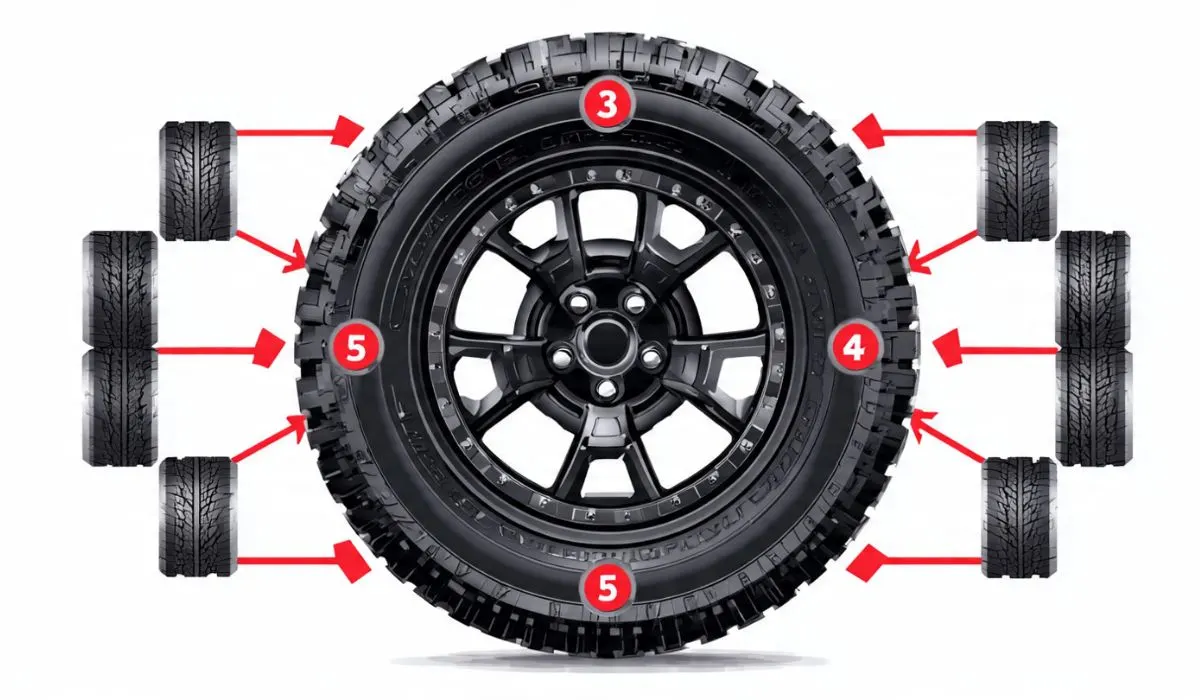
5 Tire Rotation Pattern 4×4 | Vehicles to Extend Tire Life
 ByAliza
Tire rotation is one of the most important yet overlooked maintenance tasks on a 4×4 vehicle. Unlike two-wheel-drive cars, a 4×4 sends power to all four wheels. That means each tire works harder, wears differently, and must be rotated correctly to prevent uneven wear, vibration, drivetrain stress, and costly replacements.
If you own a 4×4 SUV, pickup, or off-road vehicle, understanding the correct tire rotation pattern is essential. Using the wrong pattern can actually shorten tire life and harm components like the transfer case and differential.
This guide explains the five proper tire rotation patterns for 4×4 vehicles, when to use each one, and how to rotate your tires safely.
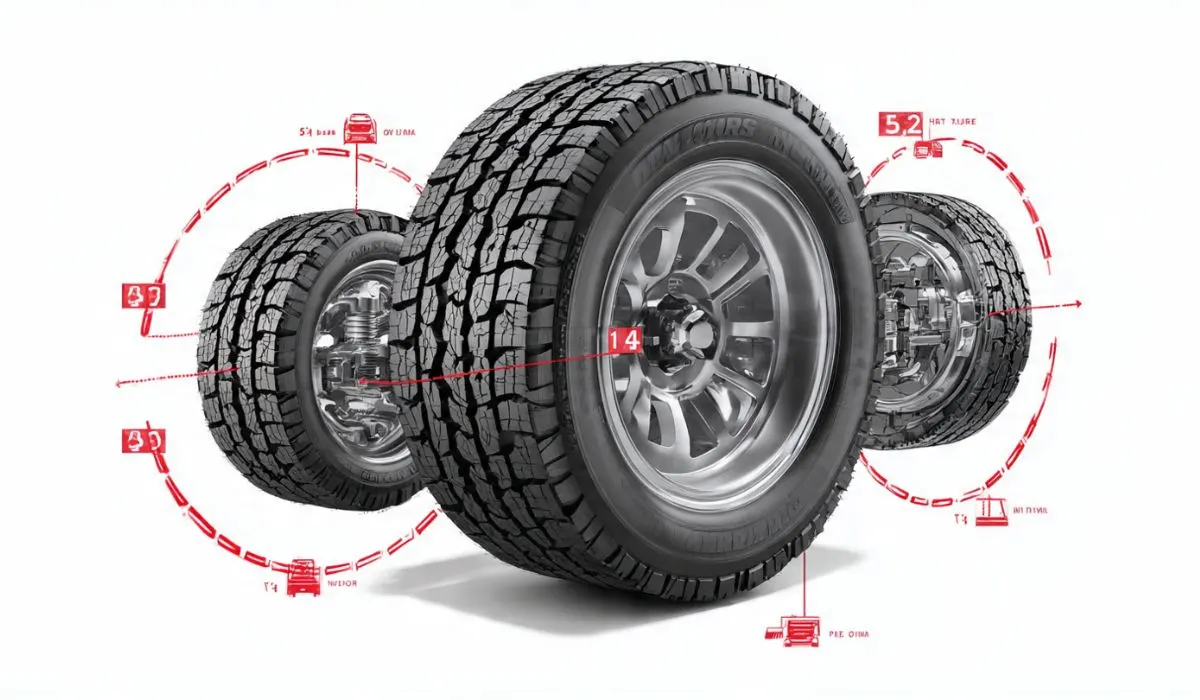
Why Tire Rotation Is Critical for 4×4 Vehicles:
In 4×4 systems, all tires must remain as equal as possible in:
- Tread depth
- Diameter
- Wear pattern
Even small differences force the drivetrain to compensate. On vehicles like the Toyota Land Cruiser, Jeep Wrangler, and Ford Ranger, uneven tires can lead to:
- Transfer case strain
- Premature differential wear
- Vibration at speed
- Reduced traction off-road
Rotating tires every 8,000–10,000 km keeps wear even and extends tire life significantly.
Before You Choose a Rotation Pattern:
First, identify your tire type:
- Directional tires – Tread designed to roll one way only
- Non-directional tires – Can rotate in any direction
- Staggered setup – Different tire sizes front and rear (rare on 4×4)
- Full-size spare available – Some 4×4s include matching spare
The correct pattern depends on these factors.
Pattern 1: Forward Cross (Most Common for 4×4)
Best for: Non-directional tires, part-time and full-time 4×4
How it works:
- Front left → Rear right
- Front right → Rear left
- Rear left → Front left
- Rear right → Front right
This pattern crosses the front tires to the rear and moves rear tires straight forward.
Why it works well:
Front tires wear faster due to steering and braking. Crossing them to the rear balances shoulder wear.
Read Next: Can You Mix Regular And Mid Grade Gas | Complete Expert Guide
Pattern 2: Rearward Cross
Best for: Vehicles where rear tires wear faster (towing/off-road use)
How it works:
- Rear left → Front right
- Rear right → Front left
- Front left → Rear left
- Front right → Rear right
This is the reverse of the forward cross.
Why use it:
If you frequently tow or carry heavy loads, rear tires wear more. This pattern compensates for that.
Pattern 3: X-Pattern
Best for: Non-directional tires with even wear needs
How it works:
- Front left ↔ Rear right
- Front right ↔ Rear left
All tires cross diagonally.
Why it’s effective:
Provides maximum wear equalization across all four corners.
Pattern 4: Front-to-Rear (For Directional Tires)
Best for: Directional tires that cannot change rolling direction
How it works:
- Front left ↔ Rear left
- Front right ↔ Rear right
Tires stay on the same side of the vehicle.
Important:
Directional tread must rotate the same way to function properly in rain and mud.
Pattern 5: Five-Tire Rotation (Including Full-Size Spare)
Best for: 4×4 vehicles with matching full-size spare like the Toyota Fortuner or Mitsubishi Pajero
How it works:
- Spare → Rear right
- Rear right → Front right
- Front right → Rear left
- Rear left → Front left
- Front left → Spare
This keeps all five tires wearing evenly.
Why this is excellent:
Extends the life of the entire set by 20% and ensures the spare is never brand new compared to worn tires.
When to Rotate 4×4 Tires:
Rotate every:
- 8,000–10,000 km for normal driving
- 5,000–7,000 km for off-road use
- After long off-road trips
- After heavy towing periods
Uneven terrain accelerates uneven wear.
Signs Your 4×4 Tires Need Rotation:
- Steering vibration
- Uneven tread depth front vs rear
- Road noise increasing
- Pulling to one side
- Feathering on tread edges
What Happens If You Don’t Rotate:
Failure to rotate causes:
- Premature tire replacement
- Strain on transfer case
- Poor fuel economy
- Unsafe traction in mud/sand
- Expensive drivetrain repairs
Can You Rotate Tires Yourself?
Yes, if you have:
- Jack and jack stands
- Lug wrench
- Torque wrench
Always torque lug nuts to manufacturer specs.
Common Mistakes to Avoid:
- Rotating directional tires incorrectly
- Forgetting the spare when it matches
- Mixing worn and new tires on 4×4
- Skipping rotations for 20,000+ km
Rotation Pattern Quick Reference:
| Tire Type | Best Pattern |
|---|---|
| Non-directional | Forward Cross / X-Pattern |
| Rear wear (towing) | Rearward Cross |
| Directional | Front-to-Rear |
| Full-size spare | Five-tire rotation |
Why 4×4 Systems Are Sensitive to Tire Differences:
4×4 drivetrains expect equal rolling diameter. If one tire is more worn:
- It spins faster
- Drivetrain compensates constantly
- Heat builds in transfer case
This is why even 2–3 mm tread difference matters.
Pro Tip: Measure Tread Depth:
Use a tread gauge. All four tires should be within 2 mm of each other on a 4×4.
Final Thoughts:
Tire rotation on a 4×4 is not optional maintenance. It is essential for tire life, safety, and drivetrain health. Choosing the correct rotation pattern based on your tire type ensures even wear and prevents costly repairs.
Rotate regularly, follow the correct pattern, and include the spare if possible. Your tires will last longer, your ride will be smoother, and your 4×4 system will thank you.
FAQs:
1. How often should I rotate tires on a 4×4?
Every 8,000–10,000 km for normal use, or 5,000–7,000 km if you do frequent off-road driving or towing.
2. Can I use the same rotation pattern as a 2WD car?
Not always. 4×4 vehicles are more sensitive to tread differences, so cross patterns (like Forward Cross or X-Pattern) are often preferred for non-directional tires.
3. What if my tires are directional?
Use a front-to-rear pattern on the same side. Directional tires must keep their rolling direction to work properly.
4. Should I include the spare tire in rotation?
Yes, if it’s a full-size matching spare. A five-tire rotation helps all tires wear evenly and extends overall tire life.
5. What happens if I don’t rotate my 4×4 tires?
You risk uneven wear, vibration, poor traction, and possible strain on the transfer case and differentials.
6. How do I know which tires are wearing faster?
Check tread depth with a gauge. If front and rear tread differ by more than 2 mm, rotation is overdue.
7. Can uneven tires damage the 4×4 system?
Yes. Different tire diameters force the drivetrain to compensate constantly, which can cause premature wear.
8. Is it safe to rotate tires at home?
Yes, if you use proper tools (jack stands and torque wrench) and follow the correct pattern for your tire type.