13 Car Cleaning Tips for Rainy Days: How to Keep Your Vehicle Clean and Protected

Rainy weather can make keeping a car clean surprisingly difficult. Even after washing your vehicle, a short drive through wet roads can leave mud, water spots, road grime, and dirt covering the exterior. Rainwater can also carry dust and environmental contaminants that settle on the paint, windows, wheels, and other surfaces.
However, maintaining a clean vehicle during the rainy season is not just about appearance. Regular cleaning helps prevent dirt buildup, protects exterior surfaces, improves visibility, and keeps the interior more comfortable.
Whether you drive through city streets, muddy roads, or busy highways, a few practical cleaning habits can make a noticeable difference.
The good news is that you do not need expensive detailing equipment or professional car washes to maintain your vehicle. With suitable cleaning products, basic tools, and a consistent routine, you can protect your car throughout the wet season.
This guide covers practical car cleaning tips for rainy days, including exterior washing, interior protection, window care, tire cleaning, water spot removal, and long-term vehicle maintenance.
Car Cleaning Tips for Rainy Days: How to Keep Your Vehicle Clean and Protected:
1. Rinse Your Car After Driving Through Rain
Rainwater may look clean, but it can carry dust, mud, road grime, and other contaminants. When water evaporates, some of these materials remain on the vehicle’s surface.
Leaving accumulated dirt on the paintwork for long periods can make cleaning more difficult and may contribute to surface damage.
How to Rinse Your Vehicle Properly
-
Park your car in a safe, shaded location.
-
Use clean water to rinse loose dirt from the roof and windows.
-
Work gradually toward the lower body panels.
-
Pay extra attention to the wheel arches and lower doors.
-
Rinse mud from the rear bumper and underneath the vehicle where accessible.
Avoid wiping heavily muddy paint with a dry cloth. Small particles can scratch the finish when dragged across the surface.
For vehicles regularly driven through muddy areas, a more thorough wash after particularly dirty journeys is worthwhile.
2. Use a Microfiber Cloth to Remove Water Spots
Water spots are common after rainy weather, especially when rainwater dries on a vehicle’s paint or glass.
These marks can contain mineral deposits and airborne contaminants. Their appearance may become more noticeable on dark-colored vehicles.
The Right Way to Remove Water Marks
-
Park the vehicle away from direct sunlight.
-
Rinse away loose dirt before touching the paint.
-
Use a clean microfiber drying towel.
-
Gently wipe or blot the wet surface.
-
Use a suitable automotive water spot remover for stubborn deposits, following its instructions.
Keep separate microfiber towels for paint, glass, wheels, and interior surfaces.
Never use a dirty towel to remove water spots because trapped grit can leave scratches.
The AA recommends drying a washed vehicle with microfiber materials to reduce streaking and watermarks.
The AA+1
3. Clean Mud and Dirt from Wheel Arches
Your vehicle’s wheels and wheel arches receive a considerable amount of dirt during rainy weather.
Mud, sand, and road debris can accumulate behind the wheels, around suspension components, and along the lower body panels.
Read Next: Best Waterless Car Wash for Ceramic Coating: Top Products, Benefits, and Safe Washing Tips
Why Wheel Arch Cleaning Matters
Leaving thick mud deposits in hidden areas can trap moisture and contaminants. In regions where road salt is used, accumulated salt can also contribute to corrosion.
Use a garden hose or suitable pressure washer to rinse accessible areas. A soft wheel brush can help remove stubborn dirt from suitable surfaces.
Be careful around brake components, electrical connections, and sensitive sensors. Avoid directing high-pressure water at vulnerable parts.
A Simple Wheel Cleaning Routine
-
Rinse loose mud before using a brush.
-
Apply a wheel cleaner suitable for the wheel finish.
-
Clean the wheel face and accessible inner areas.
-
Use a separate brush for tires.
-
Rinse thoroughly.
-
Dry the wheels with a dedicated microfiber towel.
Cleaning the wheels separately helps prevent brake dust and road grime from spreading onto the vehicle’s paintwork.
4. Protect Your Car’s Paint with Wax or Sealant
Rainy weather can make dirt stick to vehicle surfaces, particularly when the paint has little protective coating.
Applying automotive wax or a suitable paint sealant can help create a protective layer that makes water and dirt easier to remove.
Benefits of Paint Protection
A suitable wax or sealant can:
-
Improve water beading.
-
Make routine washing easier.
-
Reduce dirt adhesion.
-
Enhance paint appearance.
-
Provide a temporary barrier against environmental contaminants.
However, wax does not make paint completely waterproof or prevent every type of damage.
When Should You Apply Wax?
Apply wax after thoroughly washing and drying the vehicle. Follow the product instructions regarding surface temperature, application method, and curing time.
Depending on the product and driving conditions, protection may last several weeks or months.
If you frequently drive through heavy rain, periodically inspect the paint’s water behavior and reapply protection when necessary.
5. Keep Windshields and Windows Clean
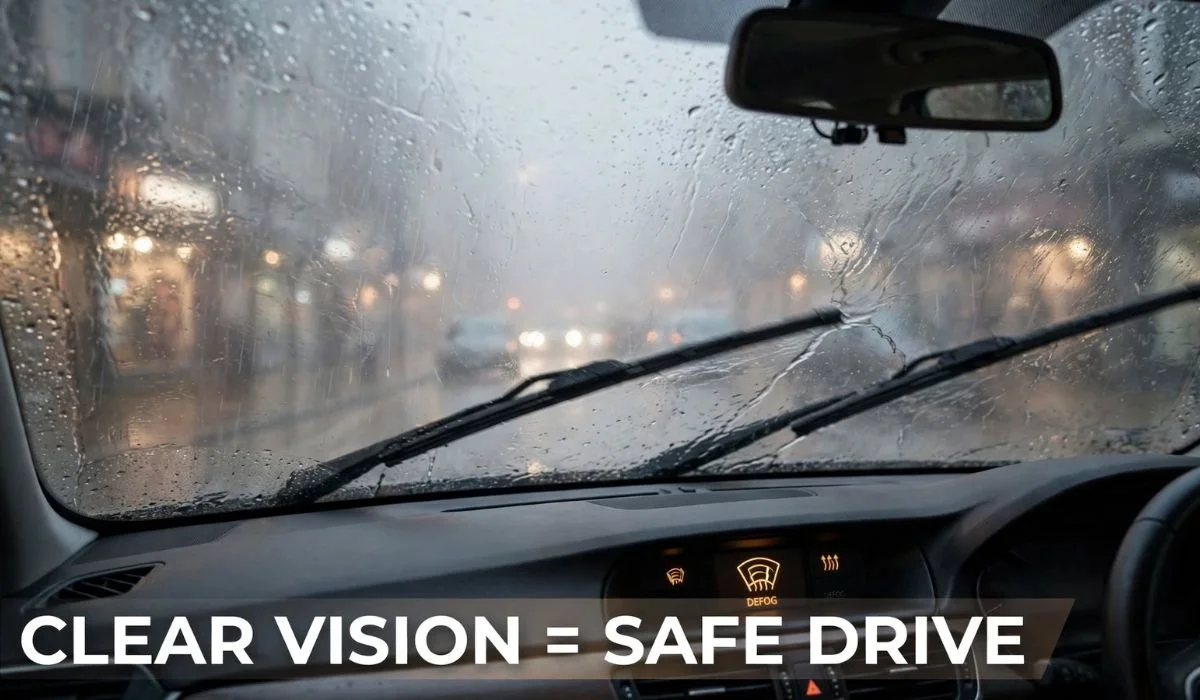
Clear windows are essential for safe driving during rainy weather. Dirt, oily residue, fingerprints, and water deposits can reduce visibility, especially when headlights from other vehicles reflect off wet glass.
Cleaning the windshield regularly can help your wipers work more effectively.
How to Clean Automotive Glass
-
Choose an automotive glass cleaner.
-
Spray it onto a clean microfiber glass towel or according to the product instructions.
-
Wipe the exterior windshield in overlapping strokes.
-
Clean the side windows and rear glass.
-
Use a separate dry microfiber towel to remove remaining streaks.
Avoid abrasive cleaning products that may damage glass surfaces or special coatings.
Do Not Forget the Inside of the Windshield
Interior glass can accumulate dust, oily film, and residue from the vehicle’s ventilation system.
Clean the inside with an automotive glass cleaner suitable for interior use. This is particularly important when fogging occurs because a dirty glass surface can make visibility problems more noticeable.
6. Inspect and Clean Windshield Wiper Blades
Even a perfectly clean windshield cannot provide good visibility if the wiper blades are worn or dirty.
During the rainy season, wipers may collect dust, mud, tree residue, and other contaminants.
How to Maintain Wiper Blades
-
Lift the wiper arms carefully when the vehicle manufacturer’s instructions allow it.
-
Wipe the rubber edges using a clean, damp microfiber cloth.
-
Check for cracks, splits, and hardened rubber.
-
Inspect the blades for uneven wear.
-
Replace damaged blades with compatible replacements.
Test the wipers using washer fluid rather than running them across a dry windshield.
If they leave streaks, chatter, or fail to clear water properly after cleaning, replacement may be necessary.
7. Prevent Mud and Water from Entering the Car Interior
Rainy weather often brings wet shoes, muddy clothing, and water droplets into the passenger compartment.
Without regular attention, moisture can accumulate in carpets and floor mats, eventually creating unpleasant odors.
Use Waterproof Floor Mats
Rubber or all-weather floor mats are useful during wet seasons because they help contain mud and water.
Choose mats designed for your specific vehicle so they fit properly and do not interfere with the pedals.
Remove them periodically, empty collected water, and clean them before reinstalling.
Clean Wet Carpets and Upholstery
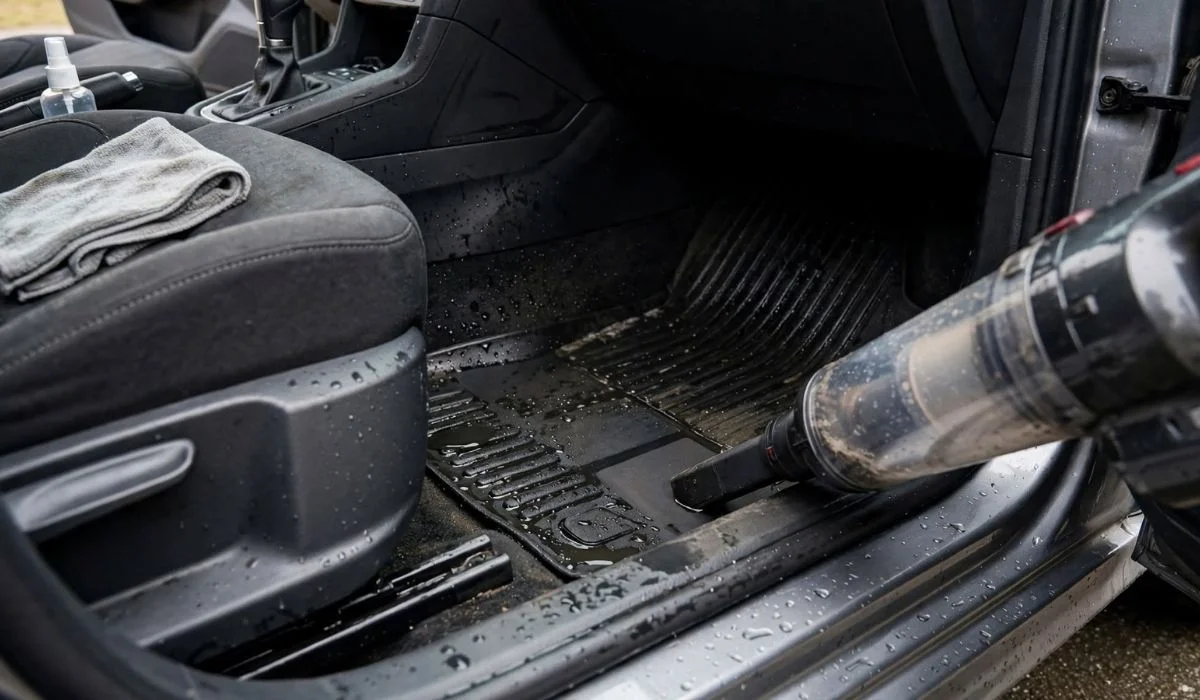
If water reaches the carpet:
-
Remove loose dirt and floor mats.
-
Blot excess moisture using an absorbent towel.
-
Vacuum using a suitable wet-dry vacuum if necessary.
-
Allow the area to dry completely.
-
Investigate any persistent moisture or musty smell.
Do not leave wet mats inside a closed vehicle for several days. Proper drying and ventilation help reduce the risk of mold and unpleasant odors.
8. Clean Door Edges, Seals, and Drainage Areas
Some of the dirtiest parts of a vehicle are not immediately visible.
Door edges, rubber seals, trunk openings, and drainage channels can collect muddy water during rainy weather.
Inspect Rubber Door Seals
Wipe the rubber weatherstripping around doors and windows with a soft, damp cloth.
Check for cracks, dirt buildup, and damaged sections. Clean rubber seals help maintain a proper barrier against rainwater and outside dust.
Keep Drainage Holes Clear
Many vehicles have drainage openings designed to allow water to escape from doors, sunroof channels, and other body areas.
Blocked drains may cause water to accumulate where it should normally drain away.
Inspect accessible drainage areas and remove visible debris carefully. Avoid pushing sharp objects into narrow channels because this can damage the drainage system.
If water collects inside the vehicle or leaks through the headliner, have the drainage system inspected professionally.
9. Clean Headlights, Taillights, and Exterior Cameras
Rain reduces visibility, making properly functioning vehicle lights especially important.
Mud, dust, and road grime can accumulate on headlights, taillights, mirrors, and parking cameras.
A Quick Lighting and Camera Inspection
-
Wipe headlight lenses with a clean microfiber cloth.
-
Remove dirt from taillight covers.
-
Clean side mirrors and their surrounding surfaces.
-
Check reverse cameras for mud and water residue.
-
Inspect parking sensors for visible dirt buildup.
Use products appropriate for plastic lenses and sensitive electronic components.
Do not use abrasive cleaners on camera lenses. If the manufacturer recommends a particular cleaning method, follow that guidance.
Clean cameras and sensors are important because accumulated dirt or moisture can interfere with certain driver-assistance features.
NHTSA Static+1
10. Dry Your Car Before Parking It for Long Periods
Allowing a vehicle to remain covered in muddy rainwater can leave marks and allow contaminants to accumulate.
After washing, use clean microfiber towels to dry the exterior, particularly around areas where water collects.
Areas That Deserve Extra Attention
-
Door handles and door edges.
-
Side mirrors.
-
Window corners.
-
Trunk openings.
-
Fuel filler door.
-
Wheel rims.
-
Lower body panels.
If possible, park in a covered, well-ventilated area.
Avoid covering a wet vehicle with a tight car cover because trapped moisture and friction can damage the paint or encourage corrosion.
Hyundai’s vehicle care guidance also emphasizes keeping drainage openings clear and avoiding damp, poorly ventilated storage conditions.
Hyundai Owner’s Manual+1
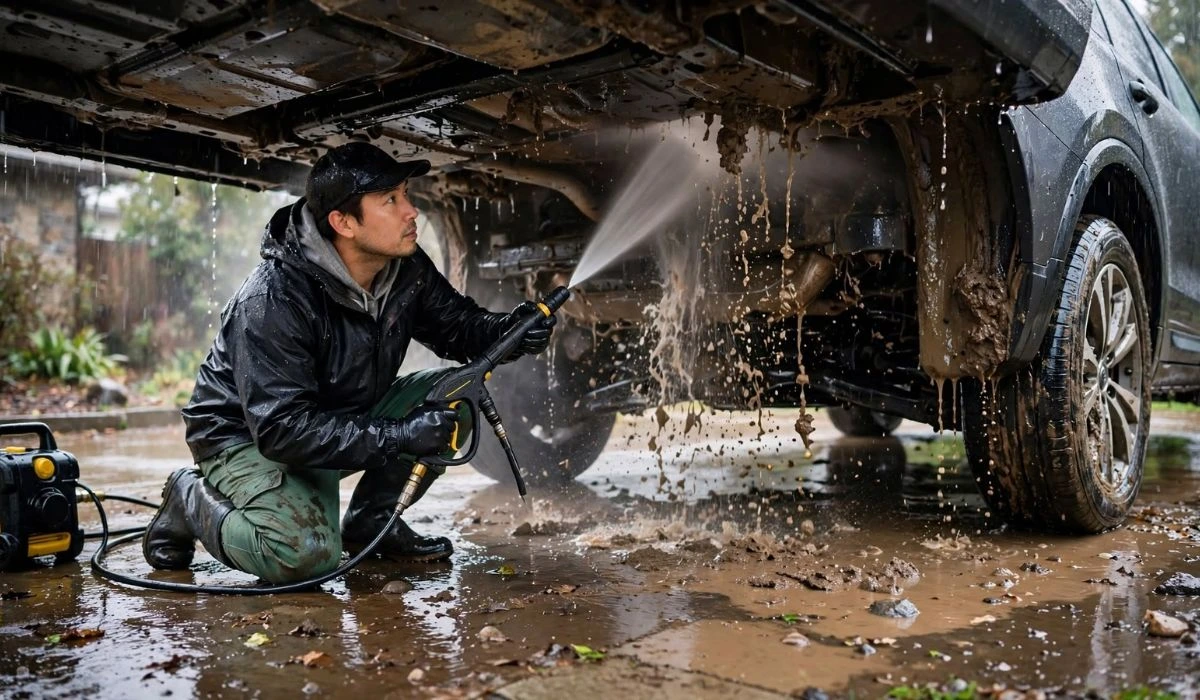
11. Remove Mud and Dirt from the Undercarriage
The underside of your vehicle is frequently exposed to muddy water, road debris, and moisture. Although this area is easy to overlook, cleaning it is an important part of rainy-season vehicle care.
How to Clean the Undercarriage
Use an appropriate undercarriage wash or a gentle water spray to remove accumulated mud from accessible areas.
Pay attention to:
-
Wheel wells and fender liners.
-
Lower chassis areas.
-
Accessible suspension components.
-
Underside body panels.
-
Areas where mud frequently collects.
Avoid spraying directly into electrical connectors, sensitive components, or engine air intakes. If your vehicle has extensive mud buildup, consider professional underbody cleaning.
12. Keep an Emergency Car Cleaning Kit
Keeping a few cleaning supplies inside your vehicle can make rainy-day maintenance easier.
You do not need a large collection of detailing products. A small storage bag containing essential items is usually sufficient.
What Should Your Cleaning Kit Include?
| Item | Purpose |
|---|---|
| Microfiber towels | Removing water and dust |
| Small glass cleaner | Cleaning windows |
| Interior cleaning wipes | Removing light interior dirt |
| Soft detailing brush | Cleaning small areas |
| Compact trash bags | Collecting muddy waste |
| Absorbent towel | Drying wet surfaces |
| Disposable gloves | Keeping hands clean |
Store cleaning products securely and avoid leaving aerosol cans or other temperature-sensitive products in a hot vehicle.
13. Follow a Simple Rainy-Season Car Cleaning Routine
A consistent cleaning schedule is easier to maintain than waiting until your vehicle becomes heavily covered in mud.
You can organize your cleaning activities into three simple routines.
After Driving in Heavy Rain
-
Rinse visible mud from the exterior.
-
Clean headlights and taillights.
-
Inspect windshield wipers.
-
Remove wet items from the interior.
-
Check floor mats for collected water.
Once a Week
-
Wash the exterior using automotive shampoo.
-
Clean wheels and wheel arches.
-
Wipe door edges and rubber seals.
-
Clean windows and mirrors.
-
Vacuum interior carpets.
-
Check for unusual moisture or odors.
Once a Month
-
Inspect paintwork for scratches and stains.
-
Check drainage openings.
-
Inspect tires and accessible underbody areas.
-
Examine weatherstripping.
-
Review paint protection.
-
Check for signs of corrosion or persistent water leaks.
Adjust this schedule according to your driving conditions and the vehicle manufacturer’s recommendations.
Common Car Cleaning Mistakes to Avoid During Rainy Weather
Some cleaning habits can unintentionally damage your vehicle or make maintenance more difficult.
Using Dirty Towels on Paintwork
A towel containing sand, grit, or dried mud can scratch the paint. Always use clean microfiber materials.
Applying Household Detergents
Strong household cleaners may remove protective wax or damage certain exterior finishes. Use automotive cleaning products that are suitable for your vehicle.
Ignoring the Underside of the Vehicle
Cleaning only the visible body panels leaves mud and contaminants in hidden areas. Give wheel arches and accessible underbody sections regular attention.
Leaving Wet Floor Mats Inside
Wet mats can create unpleasant odors and contribute to moisture buildup. Remove and dry them regularly.
Washing in Direct Sunlight
Hot body panels can cause cleaning products and water to dry quickly, leaving streaks and spots. Choose a shaded area whenever possible.
Using High-Pressure Water Incorrectly
High-pressure water can damage sensitive seals, electrical connections, sensors, and other components when directed too closely. Follow the vehicle manufacturer’s cleaning recommendations.
Final Thoughts
Keeping your vehicle clean during rainy weather requires a little extra attention, but it does not have to become a difficult task.
Regularly rinsing muddy surfaces, cleaning wheels, drying windows, maintaining wiper blades, and protecting the interior can make a significant difference.
Pay particular attention to hidden areas such as door edges, wheel arches, drainage openings, and the undercarriage. These locations often collect moisture and dirt that are easy to overlook.
Most importantly, use appropriate automotive cleaning products and avoid aggressive cleaning methods. A simple rainy-season cleaning routine will help maintain your vehicle’s appearance, improve visibility, and support long-term exterior care.
Frequently Asked Questions (FAQs)
1. Should I wash my car after every rainy day?
Not necessarily. If your vehicle has only been exposed to light rain, a complete wash may not be needed. However, rinse away heavy mud, road grime, bird droppings, and other contaminants when they accumulate. Pay particular attention to the lower body panels and wheel arches.
2. Does rainwater damage car paint?
Rainwater itself does not automatically damage automotive paint. However, pollutants, airborne contaminants, and mineral deposits carried by rain can leave marks or contribute to surface deterioration. Regular washing and suitable paint protection help reduce these risks.
3. How do I prevent water spots on my car?
Rinse away dirt, use clean water, and dry the vehicle with a soft microfiber towel. Avoid allowing dirty water to evaporate on the paint. For stubborn mineral deposits, use an automotive water spot remover according to its instructions.
4. What is the best way to clean a muddy car?
Start by rinsing loose mud with plenty of clean water. Then wash the vehicle using automotive shampoo and a clean microfiber wash mitt. Work from the roof downward and rinse frequently to prevent dirt from scratching the paint.
5. Can I use dish soap to wash my car during rainy weather?
It is better to use dedicated car shampoo. Some household detergents can remove wax protection and may not be suitable for automotive finishes. A pH-balanced automotive shampoo is generally a better choice for routine washing.
6. How can I stop my car interior from smelling bad during the rainy season?
Remove wet floor mats, dry damp carpets, clean spilled liquids, and ventilate the interior when conditions allow. If a musty smell continues, check for hidden moisture under carpets or inside the cabin air-conditioning system.
7. Should I apply car wax before the rainy season?
Applying suitable automotive wax or paint sealant before the rainy season can make cleaning easier. These products help reduce dirt adhesion and encourage water to bead on the paint. Follow the product instructions and reapply when its protection begins to wear off.
8. How often should I clean my car’s wheels during rainy weather?
Inspect the wheels weekly and clean them whenever mud, brake dust, or road grime becomes noticeable. Vehicles driven frequently through muddy roads may need more frequent cleaning.
9. Can muddy water cause rust on a car?
Muddy water alone does not automatically cause rust, but prolonged moisture exposure combined with damaged paint, trapped dirt, and corrosive contaminants can contribute to corrosion. Cleaning hidden areas and repairing paint damage can help protect vulnerable surfaces.
10. Is it safe to wash a car while it is raining?
Yes, washing a car in light rain is generally possible if you have a safe, suitable location. However, heavy rain can make cleaning less effective by washing away products and introducing additional dirt. An overcast, dry period is usually more convenient.
11. How can I keep my windshield clear during heavy rain?
Keep the windshield clean, maintain good-quality wiper blades, and refill the washer fluid. Make sure the vehicle’s defogging and air-conditioning systems work properly. Never drive if visibility is too poor to see the road safely.
12. Should I cover my car after driving in the rain?
Ideally, allow the vehicle to dry before using a car cover. Covering a wet vehicle can trap moisture and dirt against the paint. If you must park outside, a properly fitted, breathable cover designed for automotive use is preferable.