Best Waterless Car Wash for Ceramic Coating: Top Products, Benefits, and Safe Washing Tips

Keeping a ceramic-coated car clean does not always require a traditional wash with a hose and buckets. A quality waterless car wash can help remove light dust, fingerprints, pollen, and everyday surface contamination while maintaining the vehicle’s glossy appearance.
However, choosing the right product is important. Ceramic coatings provide a protective layer, but they do not make automotive paint scratch-proof. Using the wrong cleaning solution or wiping away heavy dirt without enough lubrication can still cause swirl marks and fine scratches.
The best waterless car wash for ceramic coating should offer excellent lubrication, gentle cleaning performance, minimal residue, and compatibility with existing ceramic protection. This guide explores recommended products, essential ingredients, safe application techniques, and common mistakes to avoid.
What Makes a Waterless Car Wash Suitable for Ceramic Coating?
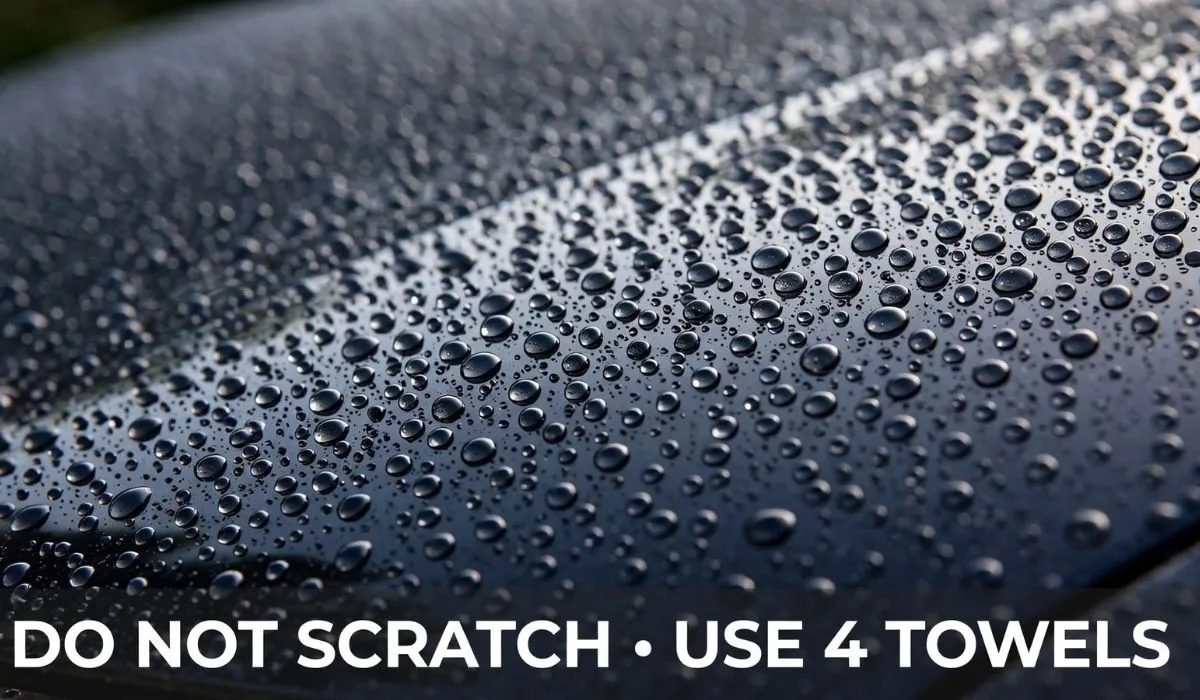
A ceramic coating creates a durable protective layer over automotive paint. It helps repel water, improves surface slickness, and makes routine cleaning easier. Nevertheless, the coating still needs proper maintenance.
A suitable waterless wash should have several important characteristics.
High Lubrication
Lubrication is one of the most important features of a waterless wash. It helps reduce friction between the microfiber towel and the vehicle’s surface while lifting light contamination.
Without enough lubrication, dirt particles can be dragged across the paint and create small scratches. Look for products specifically formulated for spray-and-wipe cleaning rather than ordinary household cleaners.
Ceramic-Coating Compatibility
The product should clearly state that it is safe for ceramic-coated vehicles. Some formulas also contain SiO2-based ingredients that can provide additional gloss and water-repellent properties.
However, a ceramic-enhanced waterless wash is not necessarily a replacement for a professional ceramic coating. Its additional protection is generally intended for maintenance and surface enhancement.
Minimal Residue
A good product should wipe away easily without leaving greasy marks, streaks, or excessive buildup.
Residue can affect the appearance of glass and paint. It may also temporarily change how water behaves on the surface, making it harder to judge the condition of the original coating.
Gentle Cleaning Agents
A coating-friendly product should clean light contamination without relying on aggressive chemicals. Always follow the product manufacturer’s directions, particularly when using concentrates that require dilution.
Best Waterless Car Wash Products for Ceramic-Coated Vehicles
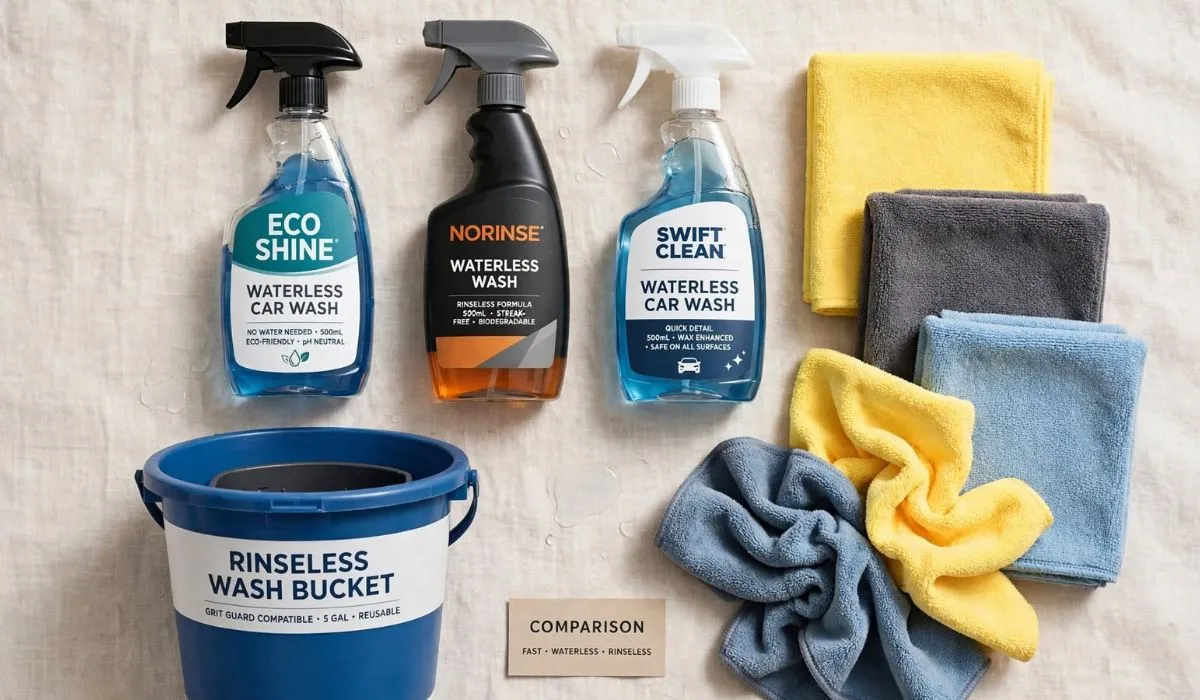
Several products are worth considering when maintaining ceramic-coated paint. The following options have different strengths, so the right choice depends on your cleaning routine and preferred finish.
1. CARPRO ECH2O – Best Overall for Ceramic Coatings
CARPRO ECH2O is a strong choice for owners who want a waterless wash specifically developed with ceramic-coated vehicles in mind.
Its SiO2 hybrid formulation combines cleaning and gloss-enhancing properties. The manufacturer describes it as suitable for ceramic-coated, waxed, and uncoated vehicles.
Key features:
- Designed to work with ceramic coatings
- SiO2-based gloss enhancement
- Lubricating cleaning formula
- Can be used for waterless and rinseless washing
- Concentrated formula that requires dilution
One advantage is its versatility. Depending on the dilution and application method, it can also be used as a detail spray or rinseless cleaning solution.
Best for: Drivers who want a coating-compatible concentrate for regular maintenance and light cleaning.
Follow CARPRO’s instructions for the correct dilution. Its recommended waterless-wash ratio is different from its rinseless-wash ratio. CARPRO product information.
Read Next: 14 Complete Car Services List: Essential Automotive Services Every Car Owner Should Know
2. GYEON Q²M EcoWash – Best Versatile Concentrate
GYEON Q²M EcoWash is another interesting option for maintaining coated vehicles. It is designed to work as a waterless wash, rinseless wash, and drying aid.
Its SiO2-enriched formula provides additional slickness and gloss, making it suitable for people who want a multipurpose detailing product.
Key features:
- Suitable for ceramic-coated and uncoated vehicles
- SiO2-enriched formulation
- Multiple cleaning applications
- Concentrated formula
- Helps improve surface slickness
The product offers different dilution ratios depending on the intended application. This makes it useful for owners who prefer to keep one concentrate for several detailing tasks.
Best for: Ceramic coating owners who want flexibility and do not always have access to a traditional washing setup.
Always use the dilution specified for the chosen application. GYEON product information.
3. Adam’s Waterless Wash – Best Ready-to-Use Option
Adam’s Waterless Wash is worth considering if convenience is more important than buying a concentrate and mixing it yourself.
Ready-to-use products are particularly useful for small cleaning jobs, such as removing light dust or refreshing a vehicle between regular washes.
Key features:
- Convenient spray-and-wipe application
- Designed for light surface contamination
- No dilution required when using the ready-to-use version
- Suitable for quick exterior maintenance when the product label confirms coating compatibility
Its main advantage is simplicity. You can keep a bottle and several clean microfiber towels in your detailing supplies for occasional touch-ups.
Best for: Drivers who prefer a straightforward waterless cleaning product without measuring dilution ratios.
4. Chemical Guys HydroGlide – Best for Ceramic-Focused Maintenance
Chemical Guys offers products designed for different vehicle protection systems. HydroGlide is an option to investigate if you want a ceramic-focused cleaning and maintenance formula.
The brand’s waterless product range also includes formulas with different protective characteristics. It is important to select the specific product intended for your cleaning method rather than assuming every spray from the same brand works identically.
Key features to check:
- Compatibility with existing ceramic protection
- Lubrication for spray-and-wipe cleaning
- Intended application method
- Whether the formula leaves additional protection
- Manufacturer instructions for painted and exterior surfaces
Best for: Owners who prefer a ceramic-focused detailing product and want to maintain a consistent product system.
Check the current label before purchasing because product names and formulations can vary across markets.
5. Meguiar’s Ultimate Waterless Wash & Wax – Best Convenient Alternative
Meguiar’s Ultimate Waterless Wash & Wax is another recognizable option for light exterior cleaning.
It combines cleaning with a wax-oriented finish. That can be useful for drivers who appreciate additional gloss, but it is worth considering whether you want a wax-containing product on top of your ceramic coating.
Key features:
- Spray-and-wipe application
- Designed for light dirt and dust
- Adds a wax-style finishing effect
- Convenient for occasional exterior touch-ups
Best for: Drivers who want a simple waterless cleaning product and do not mind an additional wax-like layer.
If your ceramic coating manufacturer recommends avoiding wax or certain finishing products, choose a compatible alternative.
Waterless Wash vs. Rinseless Wash: Which Is Better?
These two cleaning methods are often confused, but they are not identical.
A waterless wash generally comes in a spray bottle or is mixed according to a specific spray-and-wipe dilution. You apply it directly to a small section and carefully remove the loosened contamination with microfiber towels.
A rinseless wash uses a solution mixed with water, usually in a bucket or sprayer. The solution is applied using saturated wash media, allowing the surface to be cleaned without a traditional running-water rinse.
When Waterless Washing Makes Sense
Choose a waterless wash when your vehicle has:
- A light layer of dust
- Pollen or mild environmental contamination
- Fingerprints and smudges
- Light dirt from short journeys
- Minor surface marks that can be safely cleaned according to the product instructions
It is especially convenient for maintaining a relatively clean vehicle between regular washes.
When Rinseless Washing Is the Better Choice
A rinseless wash is generally more appropriate when the vehicle has moderate everyday dirt or road film.
The additional solution and saturated wash media can provide a more controlled cleaning process. However, heavily contaminated vehicles may still require a conventional pre-rinse and contact wash.
Important: Neither method should be used to wipe away thick mud, sand, heavy road salt, or gritty contamination without first removing the loose debris. Even a highly lubricated product cannot guarantee scratch-free cleaning in those conditions.
How to Use Waterless Car Wash on Ceramic Coating
The application technique is just as important as the cleaning product. Follow a careful process to reduce the risk of damaging the paint.
Step 1: Inspect the Vehicle
Check the paint before applying anything. Look for sand, mud, dried dirt, heavy road film, and other abrasive contamination.
If the vehicle is heavily dirty, choose a proper wash with a thorough rinse instead.
Step 2: Park in a Suitable Location
Work in a shaded area whenever possible. Avoid washing extremely hot panels or allowing the product to dry before wiping.
Although some products permit use in warmer conditions, the manufacturer’s instructions should determine the suitable working environment.
Step 3: Prepare Clean Microfiber Towels
Use several soft, high-quality microfiber towels. A single towel should not be used to clean the entire vehicle.
Fold each towel into sections so you can turn to a clean surface frequently. Keep separate towels for paint, glass, wheels, and lower body panels.
Step 4: Apply the Product Generously
Work on one small panel at a time. Spray enough product to lubricate the surface thoroughly.
Do not use a small amount of cleaning solution simply to make the bottle last longer. Insufficient lubrication can increase the chance of paint marring.
Step 5: Wipe With Light Pressure
Use straight, overlapping movements rather than pressing hard or scrubbing in circles.
Allow the product to loosen light contamination. Turn the microfiber towel to a fresh side after each pass.
If the towel catches, feels gritty, or the surface appears heavily contaminated, stop. Do not continue dragging the dirt across the paint.
Step 6: Buff With a Fresh Towel
Use another clean, dry microfiber towel to remove remaining product and achieve an even finish.
Check the panel from different angles to identify streaks or leftover residue.
Step 7: Repeat Carefully
Continue panel by panel, generally starting with cleaner upper surfaces and finishing with dirtier lower sections.
Avoid using paint-cleaning towels on wheels, tires, or heavily contaminated areas.
Essential Supplies for a Safe Waterless Wash
Having the right equipment makes the process easier and reduces the risk of accidental paint damage.
| Equipment | Purpose |
|---|---|
| Coating-compatible waterless wash | Loosens light contamination |
| Plush microfiber towels | Safely remove loosened dirt |
| Separate drying towel | Removes remaining moisture or product |
| Spray bottle | Applies diluted concentrate |
| Inspection light | Helps identify streaks and surface marks |
| Dedicated wheel towels | Prevents wheel contamination from reaching paint |
Choose microfiber towels with soft fibers and clean edges. Wash them according to their care instructions, and avoid fabric softeners that can reduce their absorbency.
Common Mistakes to Avoid
Even a premium waterless wash can cause problems when used incorrectly.
Washing a Heavily Dirty Vehicle
This is one of the biggest mistakes. Heavy dirt contains particles that can scratch paint when wiped. Use a conventional wash with an appropriate pre-cleaning process instead.
Reusing a Dirty Microfiber Towel
A towel that has already collected dirt can transfer contamination to another panel. Replace it frequently and use clean sides throughout the process.
Applying Too Little Product
A waterless wash depends on lubrication. Spraying too little product can increase friction and make dirt harder to remove safely.
Using Household Cleaning Products
Dish soap, glass cleaner, and general-purpose household sprays are not substitutes for automotive waterless wash products. They may leave residue or be unsuitable for the coating and surrounding materials.
Ignoring Manufacturer Instructions
Different formulas have different dilution ratios, application methods, and surface limitations. Never assume that one brand’s instructions apply to another product.
How Often Should You Waterless Wash a Ceramic-Coated Car?
There is no universal washing schedule. It depends on driving conditions, weather, parking location, and the amount of contamination on the vehicle.
For a garage-kept vehicle that receives little daily use, occasional light cleaning may be enough. A car parked outdoors or driven frequently may need more regular maintenance.
A practical approach is to inspect the vehicle before every cleaning session. Use a waterless wash only when the contamination level is appropriate.
For routine maintenance, combine occasional waterless cleaning with regular rinsing or a suitable contact wash. This helps prevent dirt and contaminants from accumulating.
Final Recommendation
For ceramic-coated vehicles, CARPRO ECH2O is a strong overall recommendation because it was developed to work with ceramic coatings and offers both waterless and rinseless cleaning applications.
GYEON Q²M EcoWash is another excellent option for drivers who want a versatile SiO2-enriched concentrate. Adam’s Waterless Wash is worth considering if you prefer a convenient ready-to-use product.
Ultimately, the best choice is not simply the spray that produces the most shine. It is the product that offers suitable lubrication, works with your existing coating, and can be applied safely.
Remember that ceramic coating does not make paint scratch-proof. Use waterless washing for light contamination, keep plenty of clean microfiber towels available, and switch to a proper wash whenever the vehicle is too dirty for a safe spray-and-wipe process.
Frequently Asked Questions
1. What is the best waterless car wash for ceramic coating?
CARPRO ECH2O is a strong option because it is designed to work with ceramic-coated vehicles. GYEON Q²M EcoWash is another suitable choice, particularly for people who want a versatile concentrate.
2. Can waterless car wash damage ceramic coating?
A compatible waterless wash should not damage a properly cured ceramic coating when used according to its instructions. However, improper wiping can create scratches or swirl marks in the coating and underlying paint.
3. Does waterless car wash remove ceramic coating?
A suitable, coating-compatible waterless wash is not intended to strip a ceramic coating. However, harsh chemicals, incorrect cleaning methods, and unsuitable products may affect the coating’s performance.
4. Can I use waterless wash every week?
Yes, if the vehicle only has light contamination and the product is suitable for frequent use. Inspect the paint before cleaning and use a proper wash when heavier dirt accumulates.
5. Is SiO2 waterless wash better for ceramic-coated cars?
SiO2-enriched products can add slickness, gloss, and temporary water-repellent characteristics. They are useful for coating maintenance, but a conventional coating-compatible cleaner can also be suitable.
6. Can I use waterless wash on car windows?
Many automotive waterless washes can be used on exterior glass, but check the product label first. Use a separate clean microfiber towel to avoid transferring dirt or leaving streaks.
7. Can I use waterless wash on wheels?
Some products allow use on exterior wheels, but wheels often contain brake dust and abrasive contamination. A dedicated wheel cleaner and separate wheel-cleaning tools are generally a better choice.
8. What is the difference between waterless wash and ceramic detail spray?
A waterless wash is designed to loosen and remove light dirt. A ceramic detail spray primarily enhances gloss, slickness, or water repellency. Some products combine both functions, but they should not automatically be treated as interchangeable.
9. Should I wash my ceramic-coated car before using a waterless spray?
Not necessarily if the vehicle has only light dust or similar contamination. If it has heavy dirt, mud, sand, or road grime, use a proper pre-rinse and wash before attempting any finishing treatment.
10. Does waterless washing improve ceramic coating durability?
Waterless washing does not make the original coating permanently stronger. Its main benefit is convenient maintenance. Consistent cleaning with suitable products can help keep the coated surface looking clean and performing as expected.