

When to Do Wheel Balancing and Alignment | Signs & Service Intervals
 ByAliza
Knowing when to do wheel balancing and alignment can help your vehicle drive smoothly, maintain proper tire wear, and handle more predictably. Although wheel balancing and wheel alignment are often mentioned together, they solve different problems. Balancing corrects uneven weight distribution in a wheel-and-tire assembly, while alignment adjusts the angles of the wheels so they meet the manufacturer’s specifications. Knowing the right time for each service can prevent minor tire and steering problems from becoming more expensive repairs.
Wheel Balancing vs. Wheel Alignment:

Before deciding when to schedule either service, it’s important to understand the difference.
Wheel balancing addresses an uneven distribution of weight around a wheel and tire. A technician uses a balancing machine to identify the imbalance and typically adds small weights to correct it.
Wheel alignment involves checking and adjusting wheel angles, commonly including camber, caster, and toe, according to the vehicle manufacturer’s specifications.
One service cannot replace the other.
What Wheel Balancing Fixes
Wheel balancing is primarily concerned with vibration caused by an unevenly distributed wheel-and-tire assembly.
A balance problem can become noticeable as vehicle speed increases.
Common symptoms include:
- Steering-wheel vibration
- Vibration through the seat or floor
- Uneven tire wear
- A noticeable shake at certain speeds
- Reduced driving comfort
What Wheel Alignment Fixes
Alignment problems affect how the wheels are positioned relative to each other and the road.
Typical symptoms include:
- Vehicle pulling to one side
- Steering wheel sitting off-center
- Uneven or accelerated tire wear
- Vehicle wandering or feeling unstable
- Tires showing unusual wear patterns
When Should You Do Wheel Balancing?
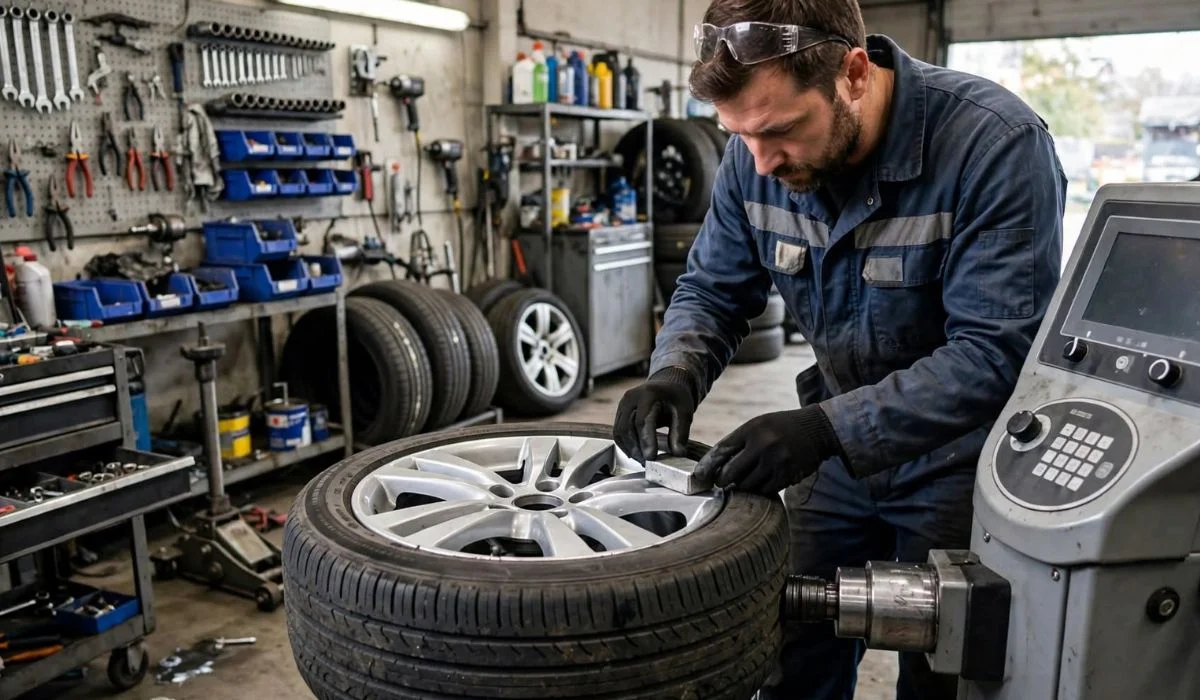
There isn’t one universal mileage interval that applies to every vehicle. Wheel balancing is often performed when new tires are installed, when a tire is repaired or remounted, or when vibration develops.
If your vehicle drives smoothly and the tires are wearing normally, routine balancing may be checked during tire service rather than performed at an arbitrary interval.
Balance the Wheels When Installing New Tires
New tires should generally be balanced as part of the installation process.
Even a new tire and wheel combination can have slight weight differences. Balancing helps distribute the assembly’s weight more evenly.
This is one of the most common times to have wheel balancing performed.
Balance After a Tire Is Removed or Repaired
Whenever a tire is removed from the wheel and then remounted, balancing may need to be checked.
This is especially relevant after certain tire repairs or when a tire has been replaced.
Ask the tire technician whether the wheel-and-tire assembly should be rebalanced after the service.
When Should You Do Wheel Alignment?
Alignment should be checked when symptoms suggest the wheel angles may be outside the manufacturer’s specifications.
Many drivers also have alignment checked after a significant impact, such as hitting a large pothole or curb.
After Hitting a Pothole or Curb
A hard impact can potentially affect suspension or steering components and alter wheel alignment.
You should consider having the alignment inspected if you notice a change in:
- Steering behavior
- Steering-wheel position
- Tire wear
- Vehicle tracking
- Handling
An inspection is particularly sensible after a severe impact.
When Installing New Tires
Installing new tires doesn’t automatically mean that an alignment is required.
However, new tires provide an excellent opportunity to check alignment, especially if the previous tires had uneven wear.
If the alignment is incorrect, a new set of tires can develop abnormal wear more quickly.
Signs You Need Wheel Balancing:
Your vehicle often gives clues when a wheel-and-tire assembly is out of balance.
Vibration at Certain Speeds
One of the classic symptoms of wheel imbalance is vibration that becomes noticeable at particular speeds.
For example, the vehicle may feel relatively smooth at lower speeds but develop a noticeable vibration as speed increases.
The exact speed at which this happens varies depending on the vehicle and the underlying problem.
Steering Wheel Shaking
If the front wheel-and-tire assemblies are out of balance, you may feel vibration through the steering wheel.
However, steering-wheel vibration can have several possible causes, so balancing should not be assumed to be the only explanation.
Vibration Through the Seat or Floor
If the vibration is felt more strongly through the seat or vehicle floor, the problem may involve a rear wheel or another component.
A professional inspection can help identify the source.
Read Next: Can a Toyota Hybrid Jump Start Another Car? What You Need to Know
Signs You Need a Wheel Alignment:
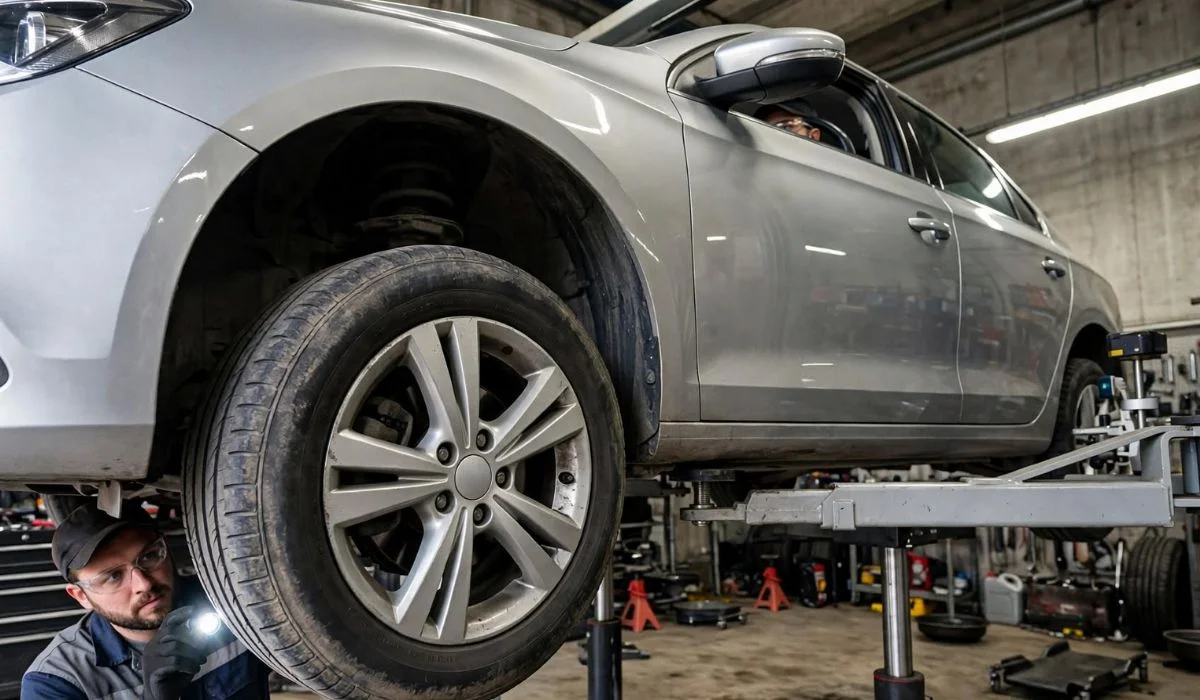
Alignment problems tend to show up differently from balance problems.
The Vehicle Pulls to One Side
If your vehicle consistently drifts or pulls toward one side on a reasonably level road, alignment may be one possible cause.
However, tire pressure differences, road crown, tire condition, and suspension problems can also cause pulling.
The Steering Wheel Is Off-Center
If you’re driving straight but the steering wheel remains noticeably tilted, the alignment may need to be checked.
A crooked steering wheel doesn’t necessarily mean that alignment is the only problem, but it is a useful warning sign.
Uneven Tire Wear
Look at your tires periodically.
If one edge of a tire is wearing considerably faster than the other, an alignment or suspension issue may be involved.
Other causes, including incorrect tire pressure, can also produce abnormal wear.
Should You Balance or Align First?
It depends on the symptoms.
If you’re experiencing a speed-related vibration, wheel balancing may be the appropriate starting point.
If the vehicle pulls, the steering wheel is off-center, or the tires are wearing unevenly, alignment inspection may be more appropriate.
Sometimes both services are needed.
When Both Services Make Sense
A vehicle can have both an imbalance and an alignment problem at the same time.
For example, if you hit a pothole hard enough to affect the wheel or suspension, you could potentially experience vibration as well as alignment changes.
In that situation, a technician may need to inspect the tires, wheels, alignment, steering, and suspension.
How Often Should Wheel Balancing Be Done?
There is no single mileage number that guarantees every vehicle needs balancing.
Instead, consider having balancing checked:
- When installing new tires
- After certain tire repairs
- When a tire is remounted
- When vibration appears
- When a wheel has been damaged
- When unusual tire wear develops
Following your tire shop’s recommendations can also help, particularly if your vehicle experiences frequent rough-road driving.
How Often Should Wheel Alignment Be Done?
Alignment intervals vary by vehicle manufacturer, driving conditions, and vehicle condition.
Some vehicles may have alignment checked periodically as part of maintenance, while others are inspected when symptoms appear or after impacts.
Your owner’s manual and service recommendations should take priority over a generic mileage rule.
Driving Conditions Matter
Frequent driving on rough roads, potholes, gravel roads, or poorly maintained streets can increase the likelihood of wheel and suspension problems.
If you regularly drive in these conditions, pay closer attention to steering behavior and tire wear.
Can Bad Alignment Damage Tires?
Yes. Incorrect wheel alignment can contribute to irregular or accelerated tire wear.
A vehicle that is significantly out of alignment may wear certain portions of the tread faster than expected.
This can shorten tire life and potentially affect handling.
Check Tire Pressure Too
Not every tire-wear problem is caused by alignment.
Incorrect tire pressure is another common reason for abnormal tread wear.
Check tire pressure regularly using the vehicle manufacturer’s recommended pressure, usually found on the driver’s door-jamb label or in the owner’s manual.
Can Unbalanced Wheels Damage the Car?
An imbalance primarily causes vibration and can make driving uncomfortable.
If ignored, persistent vibration may contribute to additional wear in tires, wheel-related components, or suspension components, depending on the severity and underlying cause.
More importantly, vibration can sometimes indicate a damaged tire, bent wheel, or another mechanical problem rather than simple imbalance.
That’s why persistent vibration deserves inspection rather than simply adding balancing weights without diagnosis.
Wheel Balancing and Alignment After Buying Used Tires
Used tires should be inspected carefully before installation.
The tire’s condition, tread depth, age, damage, and compatibility with the vehicle all matter.
After mounting used tires, the wheel-and-tire assemblies should be balanced.
An alignment check is worthwhile if the previous tires show uneven wear or if the vehicle has steering or tracking symptoms.
How to Know Which Service You Need
A simple symptom-based approach can help.
Choose Balancing Inspection for Vibration
Consider balancing when:
- The steering wheel vibrates at certain speeds
- The seat or floor vibrates while driving
- The vibration started after tire installation
- A wheel or tire was recently removed
- A wheel weight has fallen off
Choose Alignment Inspection for Tracking Problems
Consider an alignment check when:
- The vehicle pulls to one side
- The steering wheel isn’t centered
- Tires wear unevenly
- Handling feels different after hitting a pothole
- The vehicle doesn’t track straight
If you have both vibration and steering problems, ask for a complete tire, wheel, steering, suspension, and alignment inspection.
A Simple Maintenance Routine for Your Tires
You don’t need to wait for a major problem to notice what’s happening with your tires.
Check your tire pressure regularly, inspect the tread, and pay attention to changes in steering or ride quality.
When you rotate or replace your tires, ask the technician to look for abnormal wear.
Catching problems early can help prevent unnecessary tire replacement.
Final Takeaway
The best time for wheel balancing and alignment depends on what your vehicle is experiencing.
Have wheels balanced when installing new tires, after certain tire-removal services, or when vibration suggests an imbalance. Have wheel alignment checked when the vehicle pulls, the steering wheel is off-center, tires wear unevenly, or the vehicle experiences a significant pothole or curb impact.
Remember that balancing and alignment are different services. If you’re unsure which one your car needs, a professional inspection is the safest way to identify the actual cause.
FAQs
How often should I balance my wheels?
Wheel balancing is commonly performed when new tires are installed or when vibration develops. There isn’t one universal mileage interval that applies to every vehicle.
How often should I get a wheel alignment?
Follow your vehicle manufacturer’s maintenance recommendations. Alignment should also be checked when you notice pulling, an off-center steering wheel, abnormal tire wear, or after a significant impact.
Do I need alignment every time I change tires?
No. New tires don’t automatically require an alignment. However, checking alignment can be useful if the old tires showed uneven wear or the vehicle has steering symptoms.
Should I balance or align my wheels?
Choose balancing when the primary symptom is vibration, particularly at certain speeds. Choose alignment inspection when the vehicle pulls, the steering wheel is off-center, or tire wear is abnormal.
Can a bad alignment cause vibration?
It can contribute to handling and tire-wear problems, but vibration is more commonly associated with wheel-and-tire imbalance, tire problems, bent wheels, or other mechanical issues. A proper inspection is needed to identify the cause.
Can wheel balancing fix a car pulling to one side?
Usually, no. Pulling is more commonly associated with alignment, tire pressure, tire condition, road crown, or steering and suspension issues rather than simple wheel imbalance.
Do I need balancing after a tire rotation?
Not necessarily. A normal tire rotation doesn’t automatically require balancing. However, if vibration develops after rotation, the affected wheel-and-tire assemblies should be inspected.
What happens if I never balance my tires?
Persistent imbalance can cause vibration, reduce driving comfort, and contribute to irregular tire or component wear. A noticeable vibration should be investigated rather than ignored.
What happens if I don’t get a wheel alignment?
Incorrect alignment can cause uneven tire wear, poor tracking, and changes in handling. Severe alignment problems can shorten tire life and affect the vehicle’s driving characteristics.