What Is Torque vs Horsepower? Key Differences That Affect Your Car’s Performance

If you’ve ever read a car brochure or watched a vehicle review, you’ve probably heard two terms again and again: torque and horsepower. They sound technical, but the idea behind them is surprisingly simple—and understanding them helps you choose the right car for your needs.
This beginner-friendly guide explains torque vs horsepower with clear examples, step-by-step logic, and practical tips you can use in real driving situations.
The Simple Definitions:
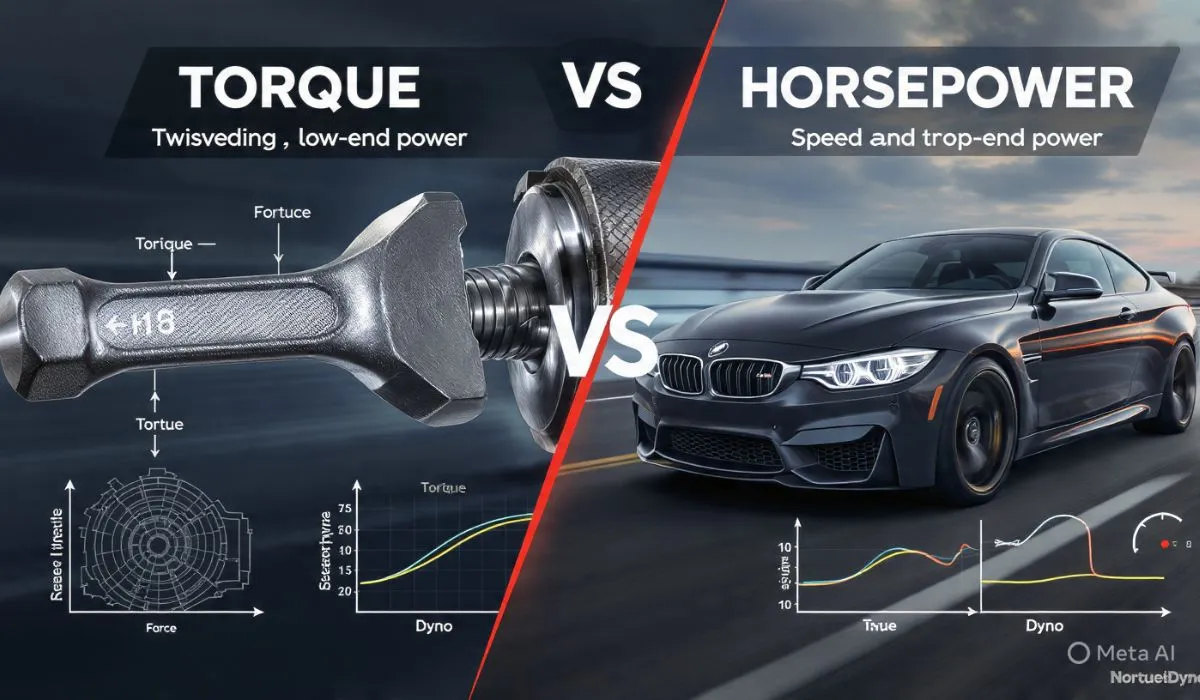
- Torque = twisting force (how strongly the engine can turn)
- Horsepower = how fast that force can be applied over time
Think of it this way:
Torque gets the car moving.
Horsepower keeps the car moving fast.
Automakers like Toyota, Honda, and Ford Motor Company publish both numbers because each tells a different part of the performance story.
What Is Torque in a Car?
Torque is measured in Newton-meters (Nm) or pound-feet (lb-ft). It describes the engine’s rotational strength at the crankshaft.
What Torque Feels Like:
- Strong pull when starting from a stop
- Easier hill climbing
- Better for towing and carrying loads
Diesel engines are famous for high torque at low engine speeds.
What Is Horsepower?
Horsepower measures how quickly the engine can apply torque over time. It’s linked to engine speed (RPM).
What Horsepower Feels Like:
- Faster acceleration at higher speeds
- Better top speed
- Strong performance on highways
Read Next: What Does ABS Mean in Cars? Anti-Lock Braking System
The Relationship Between Torque, Horsepower, and RPM:
Here’s the key formula:
Horsepower = (Torque × RPM) ÷ 5252
This means horsepower depends on:
- How much torque the engine makes
- How fast the engine is spinning
At low RPM, torque matters more. At high RPM, horsepower dominates.
Step-by-Step: How This Works When You Drive:
Step 1: You Press the Accelerator
The engine produces torque.
Step 2: The Car Starts Moving
Torque turns the wheels and gets the car rolling.
Step 3: RPM Increases
As engine speed rises, horsepower increases.
Step 4: The Car Gains Speed
Horsepower helps maintain and increase speed.
Real-World Example:
Imagine two cars:
| Car | Torque | Horsepower | Feeling |
|---|---|---|---|
| Car A | High torque, low HP | 300 Nm, 120 HP | Strong start, slow top speed |
| Car B | Low torque, high HP | 150 Nm, 200 HP | Slow start, fast at highway |
Both feel very different to drive.
Why Trucks and SUVs Focus on Torque:
Vehicles meant for towing or carrying heavy loads prioritize torque. That’s why many pickup trucks and SUVs use diesel engines.
Brands like Ford Motor Company design their trucks with high torque for pulling power.
Why Sports Cars Advertise Horsepower:
Sports cars aim for speed and acceleration at higher RPM. They highlight horsepower numbers for performance appeal.
Manufacturers like BMW often showcase high horsepower for sporty driving dynamics.
Torque vs Horsepower for Daily Driving:
| Driving Need | More Important |
|---|---|
| City traffic | Torque |
| Highway overtaking | Horsepower |
| Carrying passengers | Torque |
| Towing | Torque |
| Fast driving | Horsepower |
For most daily drivers, balanced torque and horsepower is ideal.
Petrol vs Diesel: Torque and Horsepower Difference:
- Diesel engines: High torque, lower RPM, great for load
- Petrol engines: Higher RPM, higher horsepower, smoother speed
This is why diesel cars feel powerful at low speeds.
Effective Tips When Comparing Cars:
- Don’t judge by horsepower alone.
- Check torque figure and at what RPM it’s produced.
- For city use, prioritize torque.
- For highways, ensure good horsepower.
- Test drive to feel the difference.
How Gears Affect Torque and Horsepower:
Lower gears multiply torque to help the car start moving. Higher gears allow horsepower to maintain speed efficiently.
This is why cars feel powerful in first gear but fast in fifth gear.
Authoritative Recommendations:
Trusted automotive sources emphasize understanding both figures:
- American Automobile Association advises drivers to consider torque for utility and horsepower for speed needs.
- National Highway Traffic Safety Administration highlights matching vehicle capability to driving conditions.
- Owner specifications from Toyota and Honda list torque curves and horsepower ratings to guide buyers.
Common Misunderstandings:
Myth: Higher horsepower means faster acceleration.
Truth: Torque often determines initial acceleration.
Myth: Torque doesn’t matter for small cars.
Truth: Torque improves drivability in traffic.
Simple Analogy to Remember:
Think of riding a bicycle:
- Torque = how hard you push the pedal
- Horsepower = how fast you pedal
Both together determine how you ride.
FAQs:
Which is more important, torque or horsepower?
Depends on your driving needs. City = torque, highway = horsepower.
Why do diesel cars feel more powerful?
They produce high torque at low RPM.
Can a car have high horsepower but low torque?
Yes, especially high-revving petrol engines.
What helps in towing?
Torque is most important.
What helps in top speed?
Horsepower.
Should I check both when buying a car?
Absolutely.