Why Does My Car Keep Overheating Then Going Back To Normal

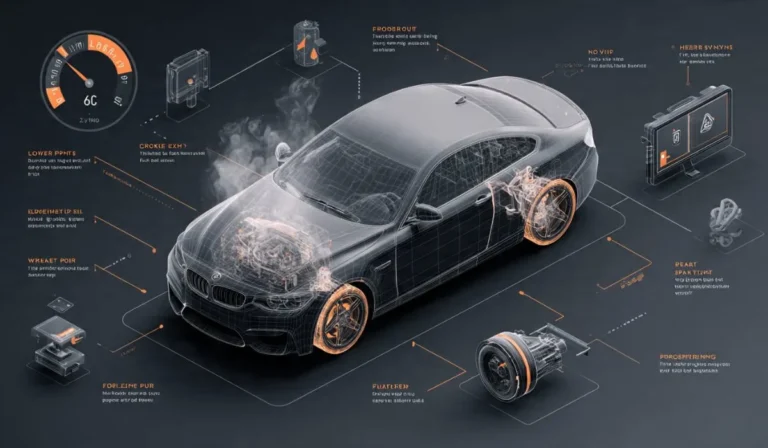
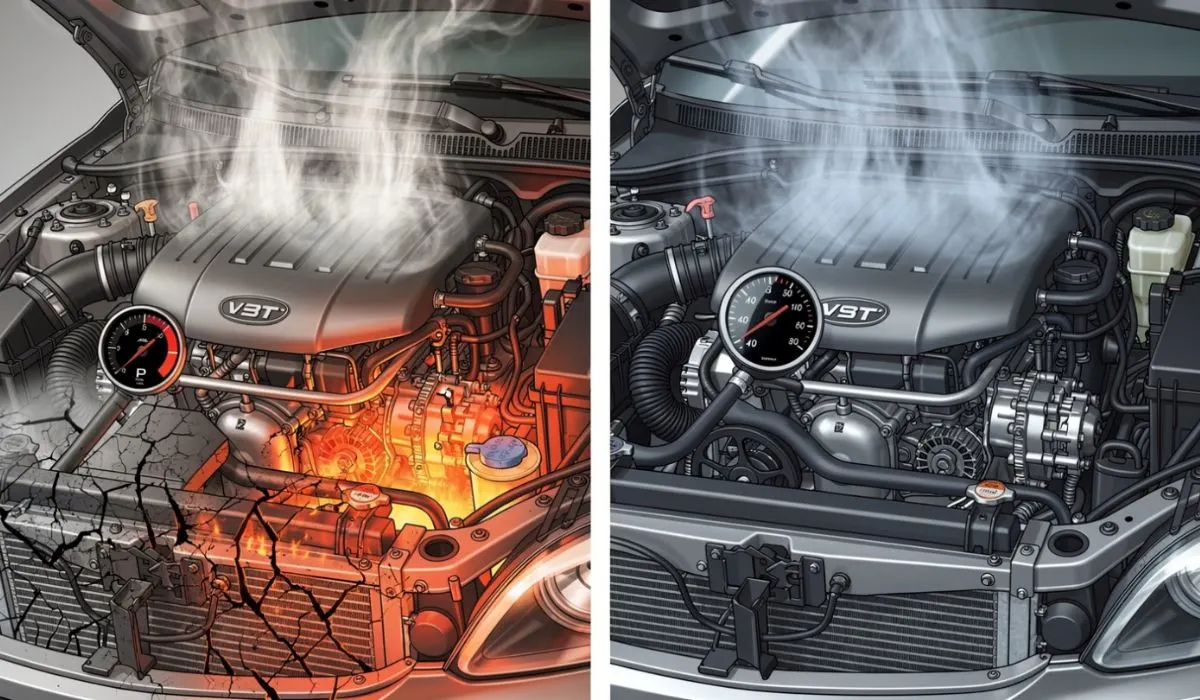
A car that overheats and then suddenly returns to a normal temperature can be confusing and frustrating. One moment the temperature gauge climbs toward the red zone, and the next it drops back to the middle as if nothing happened.
This intermittent overheating is a warning sign that something in your cooling system is not working consistently. Ignoring it can lead to serious engine damage, blown head gaskets, warped cylinder heads, or even complete engine failure.
Understanding why this happens requires knowing how your vehicle’s cooling system works and which parts may be failing intermittently rather than permanently.
In this in-depth guide, you’ll learn Why Does My Car Keep Overheating Then Going Back To Normal, how to diagnose the issue, and what to do before the problem becomes catastrophic.
How the Cooling System Is Supposed to Work:
Your engine generates extreme heat while running. The cooling system’s job is to control this heat and keep the engine at an optimal operating temperature, usually between 195°F and 220°F (90°C–105°C).
The main components include:
- Radiator
- Coolant (antifreeze mixture)
- Thermostat
- Water pump
- Radiator fan
- Hoses and passages
- Coolant reservoir
- Temperature sensor
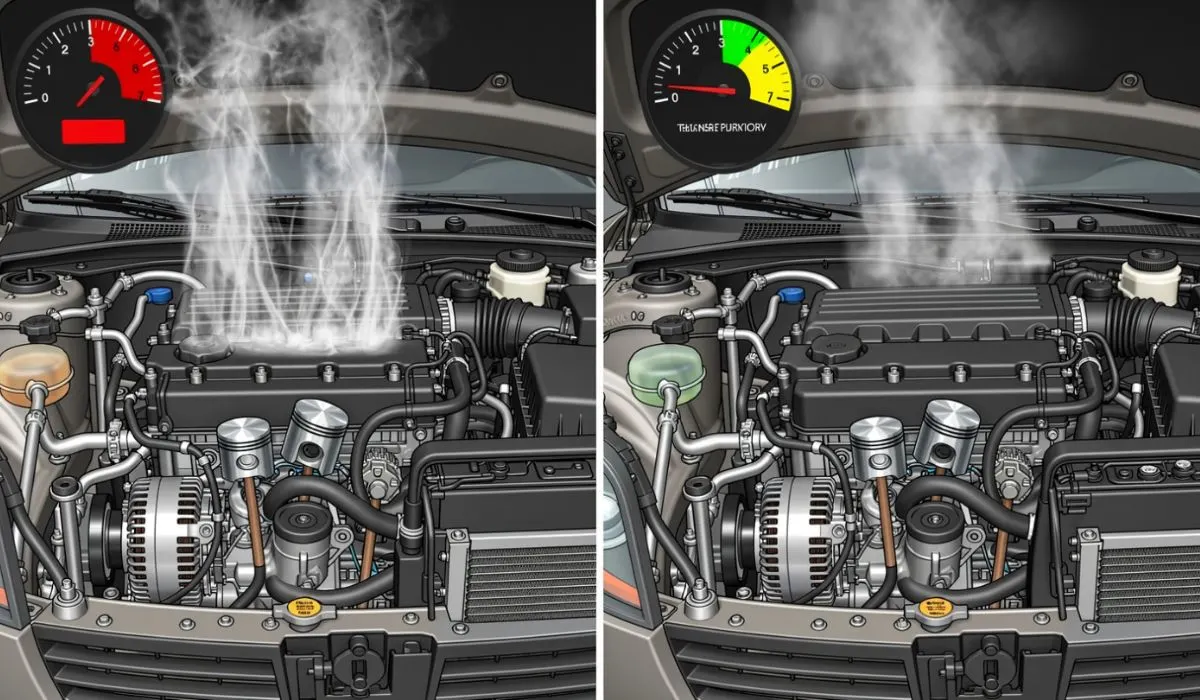
Coolant circulates through the engine, absorbs heat, travels to the radiator where the heat is released, and then returns to repeat the cycle. If any part of this process is interrupted even briefly, the temperature can spike before settling again.
Why Does My Car Keep Overheating Then Going Back To Normal:
1. Stuck or Failing Thermostat (Most Common Cause)
The thermostat controls when coolant flows from the engine to the radiator. It stays closed when the engine is cold and opens when the engine warms up.
What happens when it fails intermittently?
If the thermostat sticks closed temporarily:
- Coolant cannot reach the radiator
- Heat builds up quickly
- Temperature gauge rises
- Suddenly the thermostat opens
- Coolant rushes to the radiator
- Temperature drops back to normal
This exact pattern—overheating then returning to normal—is a textbook symptom of a sticking thermostat.
Signs:
- Temperature spikes while driving
- Heat returns to normal after a few minutes
- No coolant leaks
- Heater performance may fluctuate
2. Air Pockets in the Cooling System (Air Lock)
Air trapped inside the cooling system prevents proper coolant circulation.
Why this causes temperature fluctuation:
Air pockets move around as you drive. When air blocks coolant flow near the temperature sensor or thermostat:
- The engine overheats quickly
- Once the air bubble shifts, coolant flows again
- Temperature returns to normal
This usually happens after:
- Coolant change without proper bleeding
- Radiator or hose replacement
- Low coolant level
Air locks are a very common but overlooked cause of intermittent overheating.
3. Low Coolant Level
If coolant is slightly low, the system may work fine most of the time. But under load, during traffic, or at higher speeds, there may not be enough coolant to absorb the heat.
What happens:
- Engine heats up
- Coolant cannot keep up
- Gauge rises
- As you slow down or airflow increases, temperature drops
Check for:
- Small leaks
- Evaporation
- Leaking radiator cap
- Cracked reservoir
Even being half a liter low can cause this issue.
4. Failing Radiator Fan
The radiator fan turns on when the engine gets hot, especially when the car is not moving fast enough for natural airflow.
If the fan works inconsistently:
- In traffic, temperature rises
- Once you start driving faster, airflow cools the radiator
- Temperature drops
This creates a pattern where the car overheats in traffic but returns to normal on the highway.
Causes:
- Bad fan motor
- Faulty fan relay
- Temperature sensor problem
- Electrical wiring issue
Read Next: Where Should Your Coolant Level Be On Dashboard? A Quick Guide
5. Weak or Failing Water Pump
The water pump circulates coolant through the engine. If the pump impeller is worn or slipping, coolant flow becomes inconsistent.
What you’ll notice:
- Engine overheats randomly
- Temperature drops when RPM increases
- No visible coolant leaks
- Heater may blow cold air sometimes
This happens because the pump isn’t pushing coolant effectively at all times.
6. Clogged Radiator
Over time, rust, scale, and debris clog the radiator passages.
Result:
- Coolant cannot release heat efficiently
- Temperature rises
- Once airflow increases, radiator cools better
- Temperature falls again
You may notice overheating especially in slow driving conditions.
7. Faulty Radiator Cap
The radiator cap maintains pressure in the system. If it fails:
- Coolant may boil at a lower temperature
- Pressure fluctuates
- Temperature gauge rises and falls unpredictably
This is a cheap part that can cause big confusion.
8. Collapsing Radiator Hose
Old hoses can collapse internally when hot.
What happens:
- Hose collapses → coolant flow stops → overheating
- Hose regains shape → flow resumes → normal temperature
This is rare but very real, especially in older cars.
9. Head Gasket Beginning to Fail
This is a serious cause but can start subtly.
A small head gasket leak allows combustion gases into the cooling system.
Effect:
- Air bubbles disrupt coolant flow
- Temperature spikes
- Coolant circulation resumes
- Temperature drops
You may also see:
- Bubbling in radiator
- White smoke
- Coolant loss without leaks
- Sweet smell from exhaust
10. Faulty Temperature Sensor or Gauge
Sometimes the engine is not overheating at all. The sensor is giving false readings.
Clues:
- No boiling coolant
- No loss of power
- No smell or steam
- Gauge fluctuates wildly
A bad sensor can mimic overheating symptoms.
11. Heater Core Blockage
A partially clogged heater core can disrupt coolant flow.
- Temperature fluctuates
- Heater works inconsistently
- Cabin heat changes with gauge movement
12. Coolant Mixture Problem
If coolant is too diluted with water:
- Boiling point drops
- Temperature spikes under load
- Returns to normal when load reduces
Always use the correct 50/50 mix.
Why It Overheats Then “Fixes Itself”?
This is the key insight: the issue is not constant failure but intermittent restriction of coolant flow.
Something temporarily stops coolant from circulating, then releases.
That “something” is almost always:
- Thermostat
- Air lock
- Water pump
- Fan issue
When It Happens Matters?
| Situation | Likely Cause |
|---|---|
| In traffic, fine on highway | Radiator fan |
| Random spikes while driving | Thermostat |
| After coolant change | Air lock |
| At high RPM it cools | Water pump |
| Heater acts weird | Air pocket / heater core |
| Losing coolant | Leak or head gasket |
How to Diagnose at Home:
- Check coolant level when cold
- Look for leaks under car
- Start engine and watch radiator fan
- Feel upper radiator hose when hot (should be hot if thermostat opens)
- Turn heater on — if heat fluctuates, air pocket likely
- Watch for bubbles in radiator
When to Stop Driving Immediately:
Stop if you see:
- Steam from hood
- Temperature in red zone for more than 2 minutes
- Coolant boiling
- Sweet smell
- White exhaust smoke
Continuing to drive can destroy the engine.
Most Likely Fixes (From Cheapest to Expensive):
- Replace radiator cap
- Bleed air from system
- Replace thermostat
- Replace coolant
- Check/replace radiator fan
- Replace water pump
- Radiator flush or replacement
- Head gasket repair
Why You Shouldn’t Ignore This:
Intermittent overheating is more dangerous than constant overheating because it gives a false sense of safety. Many drivers keep driving because “it goes back to normal.” Meanwhile, small heat spikes slowly warp engine components.
By the time it overheats permanently, the damage is already done.
FAQs:
1. Is it safe to keep driving if the temperature goes back to normal?
No. Intermittent overheating still stresses the engine. Even brief spikes can warp components over time. Diagnose the cause as soon as possible.
2. What is the most common reason for this temperature fluctuation?
A sticking thermostat is the most common cause. It can block coolant flow temporarily, then open suddenly and drop the temperature.
3. Can low coolant cause overheating that fixes itself?
Yes. When coolant is slightly low, the system may cool normally at times but overheat under load or in traffic, then return to normal as conditions change.
4. Why does my car overheat in traffic but cool down on the highway?
This usually points to a faulty radiator fan. At highway speeds, natural airflow cools the radiator, masking the fan problem.
5. Could air trapped in the cooling system be the problem?
Absolutely. Air pockets (air locks) can block coolant circulation temporarily and are common after a coolant change or repair.
6. How do I know if the water pump is failing?
If the temperature drops when you rev the engine or drive faster, the water pump may not be circulating coolant properly at low speeds.
7. Can a bad radiator cap really cause overheating?
Yes. A faulty radiator cap can’t maintain proper pressure, causing coolant to boil at lower temperatures and leading to fluctuating heat readings.
8. When should I stop driving and seek help immediately?
If you see steam, coolant boiling, white exhaust smoke, or the gauge stays in the red for more than a minute, stop the engine and get professional help right away.