
Car Shaking and Check Engine Light On After Oil Change | Causes & Fixes

Experiencing car shaking and check engine light on after an oil change can be alarming, especially when the vehicle was running normally before the service. While an oil change itself is usually routine maintenance, something may have been disturbed, left loose, installed incorrectly, or coincidentally failed around the same time.
A shaking vehicle combined with a check engine light should not be ignored. The symptoms can range from a simple loose connector to an engine misfire that needs immediate attention.
The most important step is to identify why the engine is shaking and what diagnostic trouble code (DTC) caused the check engine light.
Why Is My Car Shaking After an Oil Change?

An oil change does not normally cause an engine to shake. However, several issues can appear immediately afterward.
Loose or Disconnected Electrical Connector
During maintenance, technicians may work around areas near the engine, air intake, or other components. A connector that becomes loose can interfere with a sensor or ignition-related component.
Depending on the vehicle, this can trigger the check engine light and cause rough running or shaking.
Oil Level Is Too High
Adding too much engine oil can create problems. The correct oil level is determined by the vehicle manufacturer, and it should be checked using the proper procedure on a level surface.
Overfilled oil can cause the crankshaft to contact the oil in some engines, potentially creating aeration and other engine problems. Severe overfilling should be corrected rather than ignored.
Oil Level Is Too Low
Low engine oil is another concern. If the engine does not have enough lubrication, internal components may not receive adequate oil.
A low oil level can contribute to serious engine damage, although it does not typically explain a check engine light by itself. If the oil warning light is also illuminated, shut the engine off and investigate immediately.
Wrong Oil or Incorrect Oil Filter
Modern engines are designed around specific oil specifications and filter requirements. Using the wrong oil specification or an unsuitable filter can potentially create lubrication or engine-management problems.
Always check the owner’s manual or manufacturer’s service specifications instead of relying only on oil viscosity.
What Causes the Check Engine Light After an Oil Change?
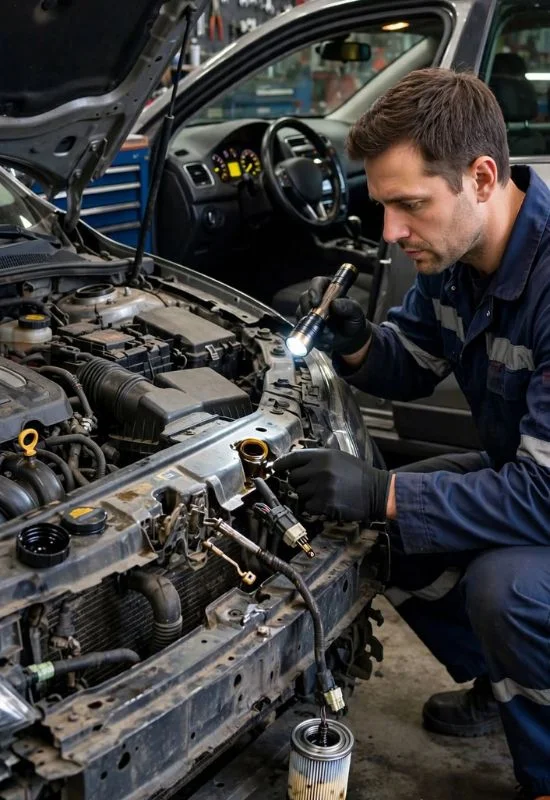
The check engine light indicates that the vehicle’s computer has detected a problem related to the engine or emissions system. It does not specifically mean that the oil change caused the problem.
A fault may have occurred coincidentally, or maintenance may have disturbed a component.
Engine Misfire
One of the most important possibilities when the vehicle is shaking is an engine misfire.
A misfire occurs when one or more cylinders fail to burn the air-fuel mixture properly. Common causes include:
- Worn or damaged spark plugs
- Faulty ignition coils
- Fuel injector problems
- Vacuum leaks
- Air-fuel mixture problems
- Certain sensor failures
- Engine compression problems
A misfire can produce noticeable shaking, especially when the vehicle is idling.
Loose Air Intake Connection
If an intake hose, clamp, or related component is loose, unmetered air can enter the engine. This can affect the air-fuel mixture and potentially cause rough running.
Inspecting the intake system can be particularly useful if the symptoms began immediately after maintenance.
Sensor or Wiring Problem
Engine sensors provide information to the vehicle’s computer. If a connector is loose, damaged, or disconnected, the computer may detect an abnormal signal and illuminate the check engine light.
The exact sensor involved varies by vehicle.
Is It Safe to Drive a Shaking Car With the Check Engine Light On?
It depends on how the check engine light behaves and how severely the vehicle is shaking.
If the Check Engine Light Is Flashing
A flashing check engine light is generally a serious warning, particularly when accompanied by strong shaking or loss of power.
A flashing light can indicate an active misfire severe enough to potentially damage the catalytic converter. Continuing to drive may make the problem more expensive.
Safely pull over when appropriate and arrange for professional diagnosis rather than continuing to drive normally.
If the Check Engine Light Is Steady
A steady check engine light can indicate a less immediate problem, but the shaking still needs attention.
If the car is running roughly, losing power, producing unusual noises, or smelling strongly of fuel, avoid unnecessary driving and have it inspected.
What to Check First After an Oil Change
If your car is shaking and the check engine light is on after an oil change, start with basic checks before assuming the engine has suffered major damage.
Check the Engine Oil Level
Park on a level surface and follow the manufacturer’s instructions for checking the oil level.
Look for an oil level that is:
- Below the minimum mark
- Above the maximum mark
- Difficult to read because the dipstick is contaminated
- Associated with visible leaks
Do not add additional oil simply because the oil level appears low without confirming the correct procedure and specification.
Look for Oil Leaks
Inspect around the oil filter and drain plug for fresh oil.
A leaking filter, drain plug, or damaged sealing surface can reduce the oil level. If you see significant leakage, stop driving and have the issue addressed.
Check for Obvious Loose Connections
With the engine off and cool, visually inspect accessible hoses, clamps, and electrical connectors around the engine bay.
Do not pull on wiring or reach near moving or hot components.
Read Next: What To Use To Clean Inside Of Car Dashboard | Best Cleaning
Why an Engine Misfire Can Make the Car Shake?
Engine shaking is often associated with uneven combustion.
A gasoline engine is designed to produce power from each cylinder in a controlled sequence. When one cylinder does not fire correctly, the engine’s rotation becomes less smooth.
The driver may notice:
- Vibration while idling
- Shaking through the steering wheel
- Rough acceleration
- Reduced engine power
- Hesitation
- Increased fuel consumption
- A check engine light
The more severe the misfire, the more noticeable the vibration may become.
How to Diagnose the Problem
The fastest way to narrow down the cause is usually to retrieve the diagnostic trouble codes stored in the vehicle’s computer.
Scan for Diagnostic Trouble Codes
An OBD-II scanner can identify stored or pending fault codes.
For example, codes beginning with P0300 can indicate random or multiple-cylinder misfires, while codes such as P0301, P0302, P0303, and P0304 can indicate a misfire detected in a particular cylinder.
However, a trouble code is a starting point for diagnosis, not automatically proof that a particular part needs replacement.
A P0301 code, for example, tells you that the computer detected a cylinder-one misfire. It does not necessarily mean the ignition coil is defective.
Compare the Timing of the Problem
Think about exactly when the shaking began.
If the car was smooth before the oil service and immediately started shaking afterward, tell the repair shop precisely what happened. This timing can help the technician inspect recently serviced areas first.
Common Problems That Can Mimic an Oil-Change-Related Issue
Sometimes the oil change is simply coincidental.
Bad Spark Plug or Ignition Coil
Ignition components can fail without warning. A faulty coil or worn spark plug can cause a misfire and significant vibration.
Vacuum Leak
A cracked hose or intake leak can alter the engine’s air-fuel mixture and cause rough idle conditions.
Fuel Delivery Problem
A restricted fuel supply, malfunctioning injector, or fuel-pressure issue can also cause an engine to run poorly.
Failing Engine Mount
A damaged engine mount can create noticeable vibration even when the engine itself is operating relatively normally.
This is an important distinction: not every shaking problem is caused by a misfire.
What If the Car Shakes Only at Idle?
If the shaking is strongest when stopped but becomes smoother as engine speed increases, several possibilities exist.
A rough idle may be associated with:
- Vacuum leaks
- Ignition problems
- Fuel delivery issues
- Dirty or malfunctioning components
- Engine mounts
- Certain sensor problems
A diagnostic scan combined with physical inspection is more reliable than guessing from the vibration alone.
What If the Car Shakes While Accelerating?
Shaking during acceleration deserves attention because it can indicate an engine misfire or another drivetrain-related problem.
If acceleration causes the check engine light to flash, reduce driving and have the vehicle diagnosed promptly.
If the shaking is accompanied by severe loss of power, unusual noises, smoke, or warning lights, stop driving when it is safe to do so.
Could an Oil Change Cause a Misfire?
An oil change itself should not normally create an engine misfire.
However, maintenance can sometimes coincide with or reveal an existing issue. In some situations, a component may be accidentally disturbed during service.
For that reason, it is reasonable to have the oil-change provider inspect the vehicle if the symptoms appeared immediately after their work.
What to Tell the Mechanic
When you take the vehicle back, provide specific information rather than simply saying that the car feels strange.
Tell them:
- The vehicle was running normally before the oil change.
- Exactly when the shaking started.
- Whether the check engine light is steady or flashing.
- Whether the engine shakes at idle, acceleration, or both.
- Whether there is loss of power.
- Whether any oil warning light is illuminated.
- Whether you noticed oil leaking underneath the vehicle.
- Whether unusual noises or smells appeared.
These details can make troubleshooting much more efficient.
How to Prevent Problems After an Oil Change
Routine maintenance is an important part of preventing avoidable problems.
Verify the Correct Oil Specification
Use the oil grade and specification recommended by the vehicle manufacturer.
The correct choice is not always determined by viscosity alone.
Confirm the Oil Level
After an oil change, verify that the oil level is within the manufacturer’s specified range.
Avoid assuming that more oil is better.
Pay Attention to New Warning Lights
A new warning light immediately after maintenance deserves investigation, particularly when accompanied by shaking, rough running, or reduced performance.
When Should You Stop Driving Immediately?
Some symptoms should be treated as urgent.
Stop driving when safe and seek professional assistance if you notice:
- A flashing check engine light
- Severe engine shaking
- Major loss of power
- Low oil-pressure warning
- Significant oil leakage
- Smoke from the engine compartment
- Loud knocking or grinding
- Strong fuel smell
- Overheating
Continuing to operate an engine under severe fault conditions can turn a relatively manageable repair into a much more expensive one.
Final Thoughts
If your car is shaking and the check engine light is on after an oil change, do not automatically assume the oil itself is the problem. The symptoms may be caused by an engine misfire, loose connection, intake issue, incorrect oil level, ignition problem, engine mount, or another unrelated fault that happened at the same time.
Start by checking the oil level and looking for obvious leaks, then have the diagnostic trouble codes scanned. If the check engine light is flashing or the vehicle is shaking severely, avoid unnecessary driving and have the car professionally inspected.
The key is to diagnose the actual cause instead of replacing parts based only on the symptoms.
FAQs
Can an oil change cause my car to shake?
An ordinary oil change should not normally cause the vehicle to shake. If shaking starts immediately afterward, check the oil level, look for leaks, and have the vehicle inspected for possible misfires or disturbed components.
Why is my car shaking and the check engine light flashing after an oil change?
A flashing check engine light combined with shaking can indicate a significant engine misfire. Because a severe misfire can damage the catalytic converter, it is safer to stop driving unnecessarily and arrange for diagnosis.
Can too much oil make a car shake?
Severe engine oil overfilling can create engine problems, although shaking is not a specific diagnostic sign of overfilled oil. Check the oil level according to the manufacturer’s procedure and correct an incorrect level promptly.
Can low oil cause the check engine light to come on?
Low oil can contribute to engine problems, but the warning light associated with low oil pressure is often different from the check engine light. If an oil-pressure warning appears, treat it as urgent.
Should I drive my car if it is shaking but the check engine light is steady?
A steady check engine light is generally less urgent than a flashing one, but significant shaking should still be diagnosed promptly. If the car has severe vibration, loss of power, overheating, unusual noises, or other warning lights, avoid driving it.
What code usually indicates an engine misfire?
Codes in the P0300 series are commonly associated with misfires. P0300 generally indicates random or multiple-cylinder misfires, while codes such as P0301 or P0302 identify a detected misfire in a specific cylinder.
Could a loose connector cause shaking after an oil change?
Yes. If a connector or related component was disturbed during service, the engine computer may detect an abnormal signal and the engine may run poorly. A diagnostic scan can help identify whether an electrical or sensor-related fault is present.
How do I know if the oil change caused the problem?
The timing can provide a useful clue, but it does not prove causation. If the vehicle was operating normally before the service and developed symptoms immediately afterward, ask the service provider to inspect their work and scan the vehicle for trouble codes.