

How To Read Tire Sizes In Inches | A Simple Guide

Reading tire sizes can seem confusing when you see combinations of numbers, letters, and measurements printed on a tire sidewall. Some tire sizes are written using metric measurements such as 225/55R17, while others use a format that describes dimensions directly in inches, such as 31×10.50R15.
Understanding tire sizes in inches is particularly useful when shopping for truck, SUV, off-road, trailer, or specialty tires. The numbers can tell you approximately how tall and wide the tire is and what wheel diameter it is designed to fit.
For example, in 31×10.50R15, the 31 represents the approximate overall tire diameter in inches, 10.50 represents the approximate tire width in inches, and 15 represents the wheel diameter in inches.
What Does an Inch-Based Tire Size Mean?
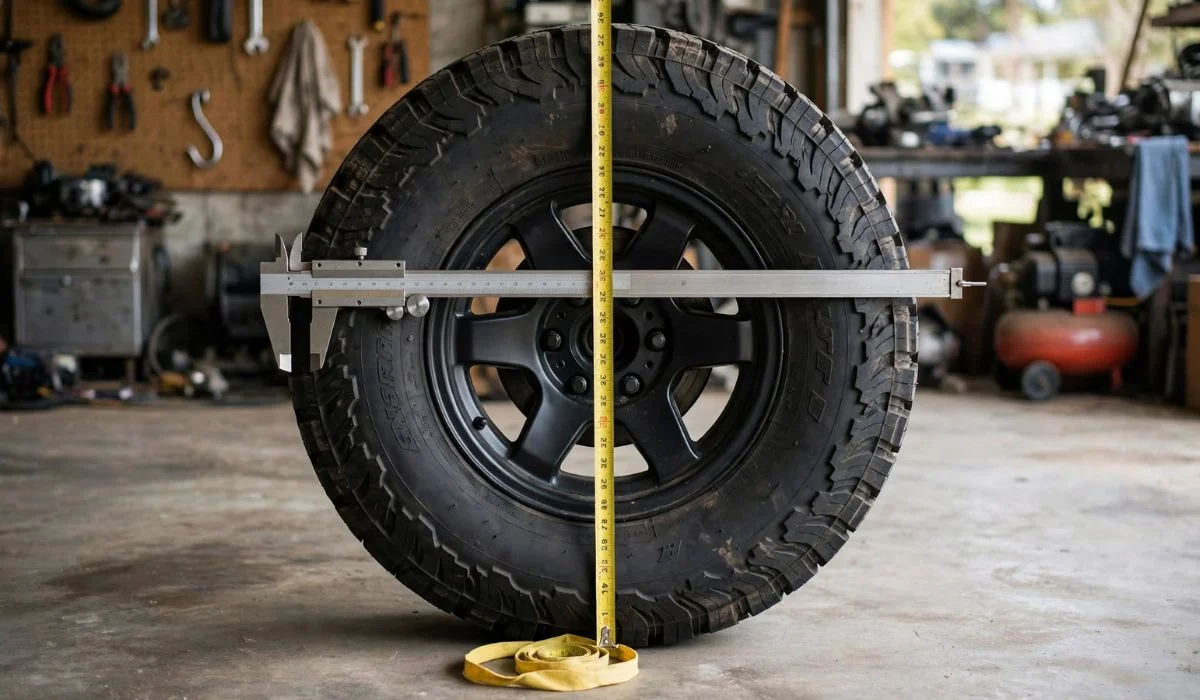
An inch-based tire size usually looks something like:
31×10.50R15
The basic measurements are:
- 31 = Approximate overall tire diameter in inches
- 10.50 = Approximate tire width in inches
- R = Radial construction
- 15 = Wheel diameter in inches
This format is different from a metric tire size such as 225/75R15.
The First Number Is Tire Height
In 31×10.50R15, the first number, 31, indicates the approximate overall diameter of the mounted tire.
That means the tire is approximately 31 inches tall from the ground to the top of the tread when properly mounted and inflated under the applicable measurement conditions.
The actual measured diameter can vary somewhat depending on the tire model, wheel width, inflation pressure, load, and measurement standards.
The Second Number Is Tire Width
The 10.50 indicates the approximate tire width in inches.
So a 31×10.50R15 tire is approximately 10.5 inches wide.
This measurement is different from the width of the tread itself. Tire section width refers generally to the tire’s maximum width from sidewall to sidewall under specified measurement conditions.
The Last Number Is Wheel Diameter
The 15 indicates the diameter of the wheel the tire is designed to fit.
Therefore, a 31×10.50R15 tire fits a 15-inch wheel.
The wheel diameter is measured across the area where the tire bead seats, not across the complete outside diameter of the wheel and tire assembly.
What Does the “R” Mean?
The letter R usually indicates radial construction.
Radial tires have reinforcing cords arranged in a radial direction relative to the wheel.
Why Radial Construction Is Common
Radial construction is widely used in modern passenger cars, trucks, SUVs, and many other vehicles because it provides a combination of durability, handling, ride characteristics, and efficiency.
Some specialty tires can use different construction types, so the complete sidewall marking is worth checking.
How to Read 33×12.50R15:
Let’s break down another common example:
33×12.50R15
It means approximately:
- 33 inches overall tire diameter
- 12.50 inches tire width
- 15-inch wheel diameter
- R = Radial construction
This tire is therefore approximately 33 inches tall and 12.5 inches wide and is designed for a 15-inch wheel.
read next: Why Does My Check Engine light Come On And Off
Compare It With 31×10.50R15
Both tires fit 15-inch wheels, but they are different sizes.
31×10.50R15
- Approximately 31 inches tall
- Approximately 10.5 inches wide
- 15-inch wheel
33×12.50R15
- Approximately 33 inches tall
- Approximately 12.5 inches wide
- 15-inch wheel
The 33-inch tire is approximately 2 inches taller and 2 inches wider in its nominal dimensions.
How to Read 35×12.50R17
Another example is:
35×12.50R17
The numbers indicate:
35 = Approximately 35-inch overall diameter
12.50 = Approximately 12.5-inch width
R = Radial construction
17 = 17-inch wheel diameter
This type of sizing is commonly seen in truck and off-road tire applications.
Are Inch-Based Tire Sizes Exactly the Size Listed?
Not always.
A tire labeled 35 inches is not guaranteed to measure exactly 35.00 inches in every application.
Why Actual Measurements Can Differ
Actual tire dimensions can vary because of:
- Tire design
- Wheel width
- Inflation pressure
- Load
- Measurement standards
- Tread design
- Manufacturing tolerances
Two tires carrying similar nominal size markings can therefore have slightly different measured dimensions.
If clearance is important, always check the tire manufacturer’s published specifications.
What Is the Difference Between Inch and Metric Tire Sizes?
The biggest difference is how the dimensions are expressed.
A metric tire might look like:
265/70R17
An inch-based tire might look like:
33×10.50R17
The metric format gives you the tire width in millimeters and the aspect ratio as a percentage.
The inch-based format generally gives the approximate overall diameter and width directly in inches.
Metric Example
For 265/70R17:
- 265 = Width in millimeters
- 70 = Aspect ratio
- R = Radial construction
- 17 = Wheel diameter in inches
Inch-Based Example
For 33×10.50R17:
- 33 = Approximate overall diameter in inches
- 10.50 = Approximate width in inches
- R = Radial construction
- 17 = Wheel diameter in inches
These are two different sizing systems, so you cannot simply substitute one set of numbers for another.
How to Convert Tire Width From Inches to Millimeters
If you want to compare an inch-based tire with a metric tire, you can convert inches to millimeters.
One inch equals 25.4 millimeters.
For example:
10.50 × 25.4 = 266.7 mm
So a nominal 10.50-inch tire width is approximately 267 millimeters.
Another Example
For a 12.50-inch tire:
12.50 × 25.4 = 317.5 mm
That is approximately 318 millimeters.
Remember that this is a mathematical conversion of the nominal measurement. It does not guarantee that a tire will have exactly that measured section width.
How to Estimate Overall Tire Diameter From a Metric Size
You can estimate the overall diameter of a metric tire using its width, aspect ratio, and wheel diameter.
For example:
265/70R17
First calculate the sidewall height:
265 × 0.70 = 185.5 mm
There are two sidewalls, so:
185.5 × 2 = 371 mm
Then convert the 17-inch wheel diameter into millimeters:
17 × 25.4 = 431.8 mm
Add them:
371 + 431.8 = 802.8 mm
Convert back to inches:
802.8 ÷ 25.4 ≈ 31.6 inches
So the calculated theoretical diameter is approximately 31.6 inches.
The actual manufacturer’s measured diameter may differ.
Why Overall Tire Diameter Matters
Overall diameter is important when changing tire sizes because it can affect several aspects of vehicle operation.
A significant change in tire diameter can influence:
- Speedometer readings
- Odometer readings
- Effective gearing
- Ground clearance
- Acceleration characteristics
- Braking behavior
- Vehicle handling
- Clearance around suspension components
Modern vehicles may also have electronic systems that depend on wheel-speed information.
Larger Tires
A larger overall tire diameter can increase ground clearance and change the vehicle’s effective gearing.
However, larger tires can also require additional clearance and may affect acceleration, steering, braking, and fuel economy.
Smaller Tires
A smaller tire can reduce ground clearance and change the effective gearing.
It can also affect speedometer calibration and vehicle dynamics if the difference is significant.
What Does Tire Width Affect?
Tire width can influence the way a vehicle feels and performs.
Wider Tires
A wider tire may provide different traction and handling characteristics, but wider isn’t automatically better.
Potential effects include changes in:
- Steering response
- Road noise
- Fuel economy
- Ride quality
- Hydroplaning behavior
- Road-groove sensitivity
- Fender and suspension clearance
The actual result depends on the tire, wheel, vehicle, alignment, road conditions, and driving style.
How to Find Your Tire Size in Inches
Look at the tire sidewall for a marking containing numbers and letters.
You might see something such as:
31×10.50R15
or
33×12.50R17
If your vehicle uses metric sizing, you might instead see something like:
275/65R18
Check the Vehicle’s Recommended Specifications
The vehicle manufacturer’s recommended tire size can usually be found on the driver’s-side door-jamb label, owner’s manual, or manufacturer’s specifications.
Don’t assume the tires currently installed are the correct original size, particularly if the vehicle has been modified.
Can You Put 33-Inch Tires on a Vehicle Designed for 31-Inch Tires?
It depends on the vehicle.
A taller and wider tire can require additional clearance around the fenders, suspension, steering components, and other parts.
Check Clearance Before Changing Size
Before installing a substantially larger tire, consider:
- Wheel offset
- Wheel width
- Suspension setup
- Fender clearance
- Steering clearance
- Suspension travel
- Tire width
- Overall diameter
- Load rating
A tire that fits while parked may still contact a vehicle component when the steering is turned or the suspension is compressed.
Don’t Forget Load and Speed Ratings
Tire dimensions are only part of the specification.
A tire may also include markings indicating its load capacity and speed rating.
Why Load Rating Matters
The tire must be capable of safely supporting the vehicle’s weight under the manufacturer’s specified conditions.
For trucks, SUVs, trailers, and heavily loaded vehicles, selecting an appropriate load rating is particularly important.
Always follow the vehicle manufacturer’s requirements and the tire manufacturer’s specifications.
Tire Size Isn’t the Same as Tread Width
A common misconception is that a tire labeled 12.50 inches wide necessarily has a 12.50-inch tread.
That’s not what the number means.
Section Width vs. Tread Width
The nominal width generally refers to the tire’s section width under specified measurement conditions.
The tread width can be narrower or otherwise different depending on the tire’s design.
That’s why two tires with the same nominal width can have noticeably different tread appearances.
A Simple Way to Remember Inch Tire Sizes
When you see:
35×12.50R17
read it as:
35 = Tire height
12.50 = Tire width
17 = Wheel diameter
The R in the middle indicates radial construction.
A useful memory trick is:
Height × Width — Wheel
This makes inch-based tire sizing much easier to understand at a glance.
Final Thoughts
Learning how to read tire sizes in inches makes shopping for tires and understanding truck or SUV specifications much easier.
A size such as 31×10.50R15 generally tells you that the tire has an approximate 31-inch overall diameter, an approximate 10.50-inch section width, radial construction, and is designed for a 15-inch wheel.
Keep in mind that nominal tire dimensions are not guaranteed to equal the exact physical measurements of every tire. Actual dimensions can vary by manufacturer, tire model, wheel width, inflation, and other conditions.
When choosing a replacement or larger tire, don’t look only at diameter and width. Check wheel compatibility, load rating, speed rating, vehicle clearance, and the vehicle manufacturer’s recommendations. Proper fitment is essential for safe and predictable vehicle operation.
FAQs
What do the numbers mean in 31×10.50R15?
The 31 represents the approximate overall tire diameter in inches, 10.50 represents the approximate tire width in inches, R indicates radial construction, and 15 represents the wheel diameter in inches.
What does 33×12.50R17 mean?
It describes a tire that is approximately 33 inches in overall diameter and 12.5 inches wide, uses radial construction, and fits a 17-inch wheel.
Are tire sizes always measured in inches?
No. Passenger-car tires are commonly labeled using metric sizing, such as 225/55R17. Inch-based sizing is common on many truck, SUV, off-road, and specialty tires.
How do I know how tall my tire is?
If the tire uses an inch-based size such as 35×12.50R17, the first number represents the approximate overall tire diameter. If the tire uses metric sizing, you can calculate an approximate diameter using the width, aspect ratio, and wheel diameter.
How wide is a 10.50 tire?
A tire marked 10.50 has a nominal width of approximately 10.5 inches. Its actual measured width can vary depending on the tire model and measurement conditions.
How many millimeters is a 10.50-inch tire?
Mathematically, 10.50 inches equals approximately 266.7 millimeters because one inch equals 25.4 millimeters.
What does R mean in an inch tire size?
The R generally means the tire uses radial construction.
Does a 35-inch tire actually measure 35 inches?
Not necessarily. The number represents a nominal size. Actual measured diameter can vary depending on the tire model, wheel width, inflation pressure, load, and measurement conditions.
Can I replace a metric tire with an inch-sized tire?
Potentially, but the replacement must be properly matched for overall diameter, width, wheel fitment, load capacity, speed rating, and vehicle clearance. The two sizes should not be considered interchangeable based only on their nominal numbers.
How do I know if a larger tire will fit my truck?
Check the tire manufacturer’s dimensions and your vehicle’s available clearance. Wheel offset, suspension configuration, steering angle, fender clearance, and suspension compression can all affect fitment.
What is the difference between 31×10.50R15 and 33×12.50R15?
Both fit a 15-inch wheel, but the 33×12.50R15 is nominally about 2 inches taller and 2 inches wider than the 31×10.50R15.
Is a wider tire better?
Not automatically. Wider tires can change traction and handling, but they may also affect fuel economy, steering feel, road noise, and vehicle clearance. The appropriate size depends on the vehicle and intended use.