

Can A Hybrid Jump Start Another Vehicle | What You Need to Know

Yes, a hybrid vehicle can sometimes jump start another vehicle, but it depends on the hybrid’s design and the manufacturer’s instructions. Unlike a conventional gasoline car, a hybrid typically has both a high-voltage battery system and a separate 12-volt battery. The 12-volt system is the part involved in a conventional jump start.
The important point is that you should never connect jumper cables to a hybrid’s high-voltage traction battery. If the owner’s manual specifically allows the hybrid to provide a jump start, you can use the designated 12-volt jump-start terminals. If the manufacturer says not to jump another vehicle, use a portable jump starter or another suitable vehicle instead.
How Hybrid Vehicles Use Two Battery Systems:
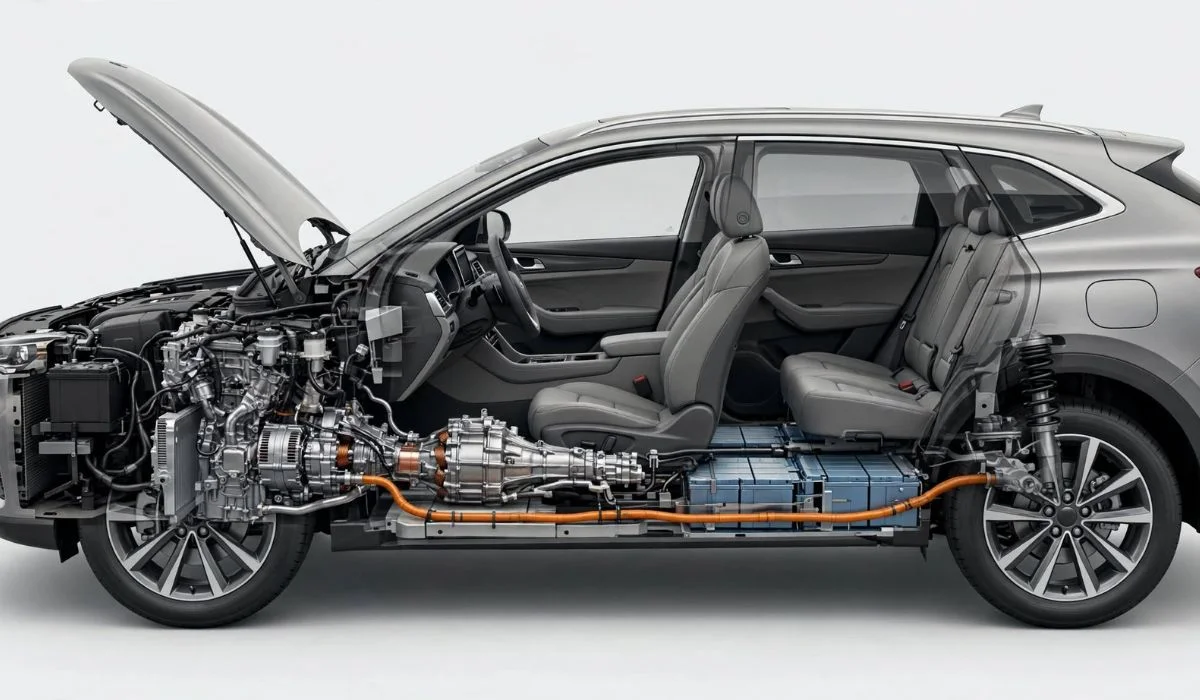
The 12-Volt Battery
Most hybrids have a conventional 12-volt battery that powers low-voltage electrical components such as lights, locks, computers, displays, and control systems.
This battery is generally similar in function to the battery found in a traditional gasoline-powered vehicle.
When you are jump starting another vehicle, the connection is made through the 12-volt electrical system, not the high-voltage hybrid battery.
The High-Voltage Traction Battery
The traction battery is completely different from the 12-volt battery.
It stores much more energy and supplies electricity to the electric motor or motors. Depending on the hybrid design, it may operate at several hundred volts.
This system is not designed for conventional jump-starting another vehicle. Attempting to access or connect to it can cause severe electrical damage or serious injury.
Can a Hybrid Jump Start a Gasoline Car?
It Depends on the Manufacturer
A hybrid may be physically capable of supplying 12-volt power to another vehicle, but that does not automatically mean the manufacturer recommends doing it.
Some hybrid vehicles have specific jump-start procedures that allow their 12-volt system to assist another vehicle. Others warn against using the vehicle to jump start another car because of concerns about electrical-system loads or potential damage.
Always check the owner’s manual before attempting it.
Why Hybrid Designs Are Different
In many hybrids, the 12-volt battery is smaller than the battery commonly used in larger conventional vehicles.
The hybrid’s electrical architecture can also be different from a normal gasoline car. The 12-volt battery may be charged by a DC-to-DC converter from the high-voltage battery rather than by a traditional alternator.
That difference is one reason you should not assume every hybrid can safely be used as the donor vehicle.
What Happens During a Hybrid Jump Start?
The 12-Volt System Provides the Initial Power
If your hybrid is approved for jump-starting another vehicle, the process normally involves connecting the cables to the appropriate 12-volt positive and negative connection points.
The hybrid’s high-voltage battery is not directly connected to the disabled vehicle.
The donor vehicle’s 12-volt system supplies current through the jumper cables, allowing the other vehicle’s starter system to receive enough power to crank its engine.
The Hybrid May Not Behave Like a Normal Donor Car
A conventional vehicle normally uses an alternator to maintain its electrical system while the engine is running.
A hybrid can use different technology to maintain its 12-volt system. Therefore, procedures such as revving the donor engine may not apply and could be inappropriate.
Follow the exact instructions provided by the hybrid manufacturer rather than relying on a traditional jump-start procedure.
How to Safely Jump Start Another Vehicle With a Hybrid
Check the Owner’s Manual First
Before connecting anything, look for instructions about:
- Jump starting another vehicle
- Using the hybrid as a donor vehicle
- 12-volt battery connections
- External battery charging
- Emergency starting procedures
If the manual specifically prohibits using the hybrid to jump another vehicle, don’t attempt it.
Locate the Correct Jump-Start Points
Some hybrids have a dedicated positive jump terminal under the hood rather than exposing the 12-volt battery directly.
The negative connection may need to be made to a designated body or chassis grounding point.
Do not guess which terminals to use. Using the wrong connection can cause electrical damage.
Connect the Cables Correctly
For a vehicle that is approved for this procedure, the general connection sequence is:
- Park both vehicles safely and switch off unnecessary electrical accessories.
- Make sure the vehicles do not physically touch.
- Connect the positive jumper cable to the positive terminal or designated jump point on the disabled vehicle.
- Connect the other positive end to the approved positive terminal on the hybrid.
- Connect the negative cable to the appropriate ground point on the hybrid as specified by the manufacturer.
- Connect the remaining negative end to an approved grounding point on the disabled vehicle.
- Start the donor system according to the hybrid’s instructions.
- Attempt to start the disabled vehicle.
- Once the disabled vehicle starts, carefully remove the cables in the reverse order.
The exact procedure can vary considerably between hybrid models, so the manufacturer’s instructions take priority.
What You Should Never Do
Don’t Touch the High-Voltage Battery
The most important rule is simple: do not attempt to use the hybrid traction battery for a jump start.
High-voltage hybrid systems can be extremely dangerous. They should only be serviced by appropriately trained technicians.
Don’t Guess the Polarity
Connecting positive and negative cables incorrectly can cause sparks, blown fuses, electronic damage, or battery damage.
Look for the manufacturer’s clearly marked terminals.
Don’t Ignore the Owner’s Manual
A procedure that is safe for one hybrid may not be recommended for another.
Even two vehicles from the same manufacturer can have different electrical-system designs.
Read next: What To Do When Check Engine Light
Can a Hybrid Jump Start Another Hybrid?
The Same Rule Applies
A hybrid may be able to assist another hybrid through its 12-volt system if the manufacturer permits it.
However, the two vehicles’ high-voltage battery systems should never be connected directly together.
If the disabled hybrid has a dead 12-volt battery, the problem may be similar to a conventional vehicle with a discharged low-voltage battery. But some hybrids have additional procedures for putting the vehicle into its operating mode after the 12-volt battery has been restored.
Why Extra Care Is Important
A hybrid that appears completely dead may simply have a discharged 12-volt battery.
Once that battery receives power, the vehicle’s electronic control systems may become operational again. The high-voltage battery itself may not be the source of the starting problem.
Is It Better to Use a Portable Jump Starter?
A Jump Pack Can Be a Safer Alternative
If your hybrid isn’t approved for jump-starting another vehicle, a portable 12-volt jump starter can be a convenient alternative.
A suitable jump pack eliminates the need to use your hybrid as the donor vehicle.
For emergencies, keeping a properly charged jump starter in the vehicle can be especially useful.
Choose the Correct Type
Make sure the portable starter is compatible with the disabled vehicle’s battery and engine requirements.
A small unit designed for compact cars may not provide enough starting assistance for a large truck or SUV.
Why a Hybrid’s 12-Volt Battery Matters
It Powers Critical Electronics
The 12-volt battery doesn’t necessarily drive the hybrid’s main electric motor, but it can be essential for turning on the vehicle’s computers and control systems.
If the 12-volt battery becomes discharged, the hybrid may not enter its normal operating mode.
This can make a hybrid appear more seriously disabled than it actually is.
A Dead 12-Volt Battery Has Different Symptoms
Depending on the vehicle, symptoms can include:
- Interior lights that are weak or completely off
- Doors that won’t unlock electronically
- A blank dashboard
- Warning messages
- No response when pressing the start button
- Electronics that turn on and then shut off
- The vehicle failing to enter its ready-to-drive mode
These symptoms can occur even when the high-voltage traction battery still has substantial charge.
What If the Hybrid Won’t Start After a Jump?
Give the 12-Volt System Time to Recover
If you’re trying to start the hybrid itself rather than another vehicle, the procedure may require leaving the external power source connected for a short period before attempting to start the vehicle.
Follow the manufacturer’s instructions.
The Battery May Have a Deeper Problem
If the hybrid starts with a jump but repeatedly needs one, the 12-volt battery may be weak or failing.
A battery that repeatedly loses charge should be tested rather than continually jump started.
Other electrical problems can also cause repeated battery discharge.
Important Safety Tips
Keep Sparks Away From the Battery
Lead-acid batteries can produce flammable gases, particularly during charging. Keep flames, cigarettes, and other ignition sources away from the battery area.
Use Proper Jumper Cables
Use cables that are in good condition, with intact insulation and secure clamps.
Damaged cables can create a short circuit or poor connection.
Stop If Something Looks Wrong
If you notice smoke, excessive heat, melting insulation, strong burning smells, or unusual sparks, stop immediately and disconnect the system only if it is safe to do so.
When in doubt, call roadside assistance or a qualified technician.
Hybrid Jump Starting vs. Conventional Jump Starting
The Main Difference
A conventional gasoline vehicle generally has a 12-volt battery and alternator supporting its electrical system.
A hybrid can have:
- A 12-volt battery
- A high-voltage traction battery
- A DC-to-DC converter
- Electric motor components
- Specialized electronic control systems
Because of this additional architecture, hybrid jump starting should never be treated exactly like conventional jump starting.
The Simple Rule to Remember
Think of the hybrid as having two separate electrical worlds:
12-volt system: potentially involved in conventional jump starting.
High-voltage system: do not connect to for jump starting.
That distinction is one of the most important safety facts for hybrid owners.
Frequently Asked Questions
Can a hybrid jump start a regular car?
Yes, some hybrids can jump start another vehicle through their 12-volt system, but only when the manufacturer specifically permits it. Check the owner’s manual before connecting jumper cables.
Can you use a hybrid’s main battery to jump another car?
No. The high-voltage traction battery should not be used for conventional jump starting. Only the manufacturer’s designated 12-volt connection points should be used when the procedure is permitted.
Will jump starting another car damage a hybrid?
It can potentially damage electrical components if the vehicle isn’t designed or approved for donor use, or if the cables are connected incorrectly. Follow the manufacturer’s instructions.
Can a hybrid jump start an SUV or truck?
The answer depends on the hybrid’s design and the manufacturer’s recommendations. Larger vehicles can also require more starting current, so a portable jump starter or appropriate roadside assistance may be a better option.
Can one hybrid jump start another hybrid?
Potentially, but only through the approved 12-volt system and only if the manufacturer allows it. Never connect the high-voltage battery systems directly.
Does a hybrid have a normal 12-volt battery?
Most hybrids have a 12-volt battery that powers low-voltage electronics and helps initialize the vehicle’s systems. Its location and specifications vary by model.
Why won’t my hybrid start even though the main battery is charged?
A discharged 12-volt battery can prevent a hybrid from powering up properly even when the high-voltage traction battery has plenty of energy.
Is a portable jump starter better for a hybrid?
A portable jump starter can be a practical alternative when the hybrid isn’t approved for donor use. It should be correctly rated for the vehicle being started.
Should you rev a hybrid while jump starting another car?
Do not assume you should. Hybrid powertrains operate differently from conventional vehicles, and the manufacturer may provide a specific procedure. Follow the owner’s manual instead.
What is the safest choice if I am unsure?
If you’re unsure whether your hybrid can safely jump start another vehicle, don’t connect the cables. Check the owner’s manual or contact the manufacturer, roadside assistance, or a qualified technician.
Final Takeaway
A hybrid may be able to jump start another vehicle, but it isn’t automatically safe simply because the hybrid has a 12-volt battery. The key is whether the manufacturer specifically allows the hybrid to act as a donor vehicle.
If permitted, use only the designated 12-volt jump-start points and follow the prescribed cable sequence. Never attempt to connect another vehicle to the hybrid’s high-voltage traction battery.
When the manufacturer’s instructions prohibit donor jump starting, a portable jump starter or roadside assistance is the safer solution.


