How To Jumpstart A Car By Yourself | Step-by-Step Guide to Safely Start Your Car With a Dead Battery

Learning how to jumpstart a car by yourself can save time when your battery suddenly dies and there is no one immediately available to help. A dead battery can happen because of leaving the headlights on, an interior light staying on, extreme temperatures, an aging battery, or an electrical problem.
The basic idea is simple: use another power source to provide enough electrical energy for the starter motor to crank the engine. However, connecting jumper cables incorrectly can damage electrical components or create sparks around the battery.
Before attempting a jump-start, make sure you have the correct equipment, identify the battery terminals carefully, and follow the connection and disconnection order.
What You Need to Jumpstart a Car Alone?
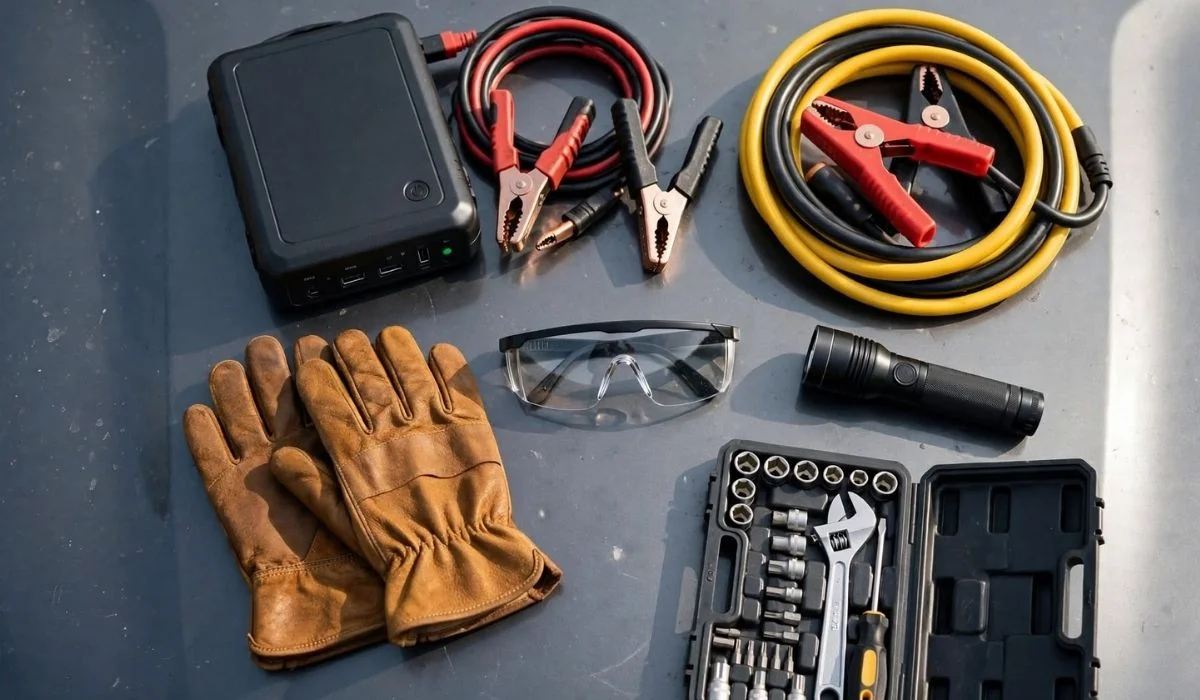
There are two practical ways to jump-start a vehicle without another person.
The first is using a portable jump starter, which is the easiest method when you are completely alone.
The second is using another vehicle. This requires a second car, so it is not technically a one-person jump-start unless someone else is available to position or operate the assisting vehicle.
For a true solo jump-start, a portable battery jump starter is the better option.
Equipment Checklist
You may need:
- Portable jump starter
- Jumper cables if using another vehicle
- Safety gloves
- Safety glasses
- Flashlight if working at night
- Vehicle owner’s manual
- Phone for emergency assistance
A portable jump starter should be appropriately rated for your vehicle’s engine size and battery type.
Before You Attempt to Jumpstart the Car
Do not immediately connect anything.
First, park safely and turn off the vehicle.
Put the transmission in Park for an automatic vehicle or Neutral for a manual transmission. Apply the parking brake.
Turn off:
- Headlights
- Radio
- Air conditioning
- Heated seats
- Interior accessories
- Phone chargers
- Other electrical equipment
If the vehicle is in an unsafe location, move to a safer area if possible before attempting the procedure.
Inspect the Battery First
Open the hood and locate the battery.
Most traditional car batteries have two terminals:
- Positive (+)
- Negative (−)
The positive terminal is commonly marked with a plus symbol and may have a red cover.
The negative terminal is usually marked with a minus symbol and may connect to the vehicle’s metal chassis.
Do Not Jump a Damaged Battery
Do not attempt to jump-start a battery that is:
- Cracked
- Leaking
- Severely swollen
- Frozen
- Showing obvious physical damage
- Producing an unusual smell or smoke
A damaged battery can present a serious safety hazard.
If the battery appears frozen, allow it to thaw naturally and have it inspected rather than attempting to force-start it.
How to Jumpstart a Car by Yourself With a Portable Jump Starter?
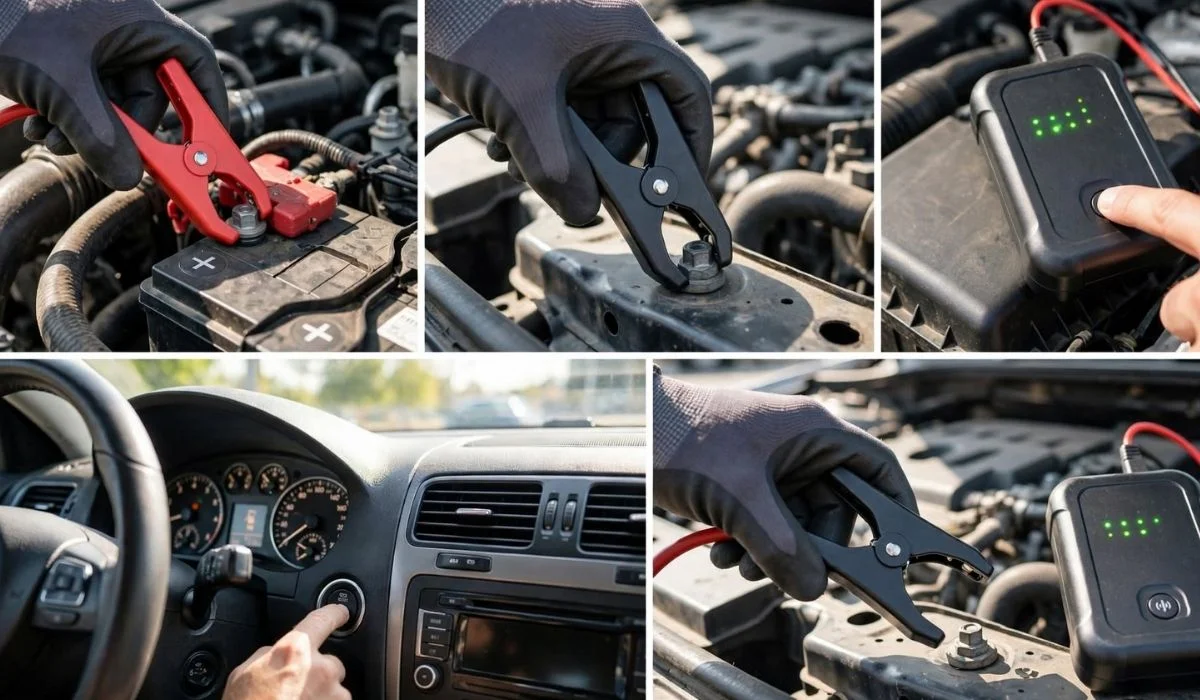
A portable jump starter is generally the simplest method for a person working alone.
Before connecting it, read the jump starter manufacturer’s instructions because connection procedures and safety features vary between models.
Step 1: Position the Jump Starter
Place the jump starter on a stable surface near the vehicle battery.
Keep the device away from moving engine components such as:
- Belts
- Pulleys
- Cooling fans
- Other rotating components
Do not place the jump starter somewhere it could fall into the engine compartment.
Step 2: Turn Off the Jump Starter
Many portable units should be switched off before the clamps are connected.
Follow the instructions printed on your specific unit.
Step 3: Connect the Positive Clamp
Attach the red positive clamp to the battery’s positive (+) terminal or the vehicle’s designated positive jump-start terminal.
Make sure the clamp has a solid connection.
Do not allow the positive clamp to touch metal parts of the vehicle.
Step 4: Connect the Negative Clamp
Attach the black negative clamp according to the jump starter manufacturer’s instructions.
For many vehicles, the recommended connection point is a suitable unpainted metal grounding point on the engine or chassis rather than directly to the negative battery terminal.
However, some vehicles specify a particular negative jump terminal.
The owner’s manual should take priority.
Step 5: Activate the Jump Starter
Turn on the portable jump starter if required.
Some modern units automatically detect the battery connection and indicate when the system is ready.
Do not bypass safety warnings unless the manufacturer specifically provides an appropriate override procedure.
Start the Vehicle
Once everything is connected correctly, get into the driver’s seat.
Try starting the engine.
Do not continuously crank the engine for a long period.
A typical attempt should last only several seconds.
If the engine does not start:
- Stop cranking.
- Wait briefly.
- Check the clamp connections.
- Confirm the jump starter has sufficient charge.
- Try again according to the manufacturer’s instructions.
If the vehicle still refuses to start after a few attempts, there may be a problem beyond a discharged battery.
Read next: When To Replace Tires Mileage | The Complete Safety & Wear Guide
What to Do After the Engine Starts
Once the engine starts successfully, do not immediately remove the clamps while the system is under load unless the jump starter manufacturer instructs you to do so.
Follow the manufacturer’s recommended removal sequence.
For many portable jump starters, the clamps are removed in the reverse order of connection.
Disconnect the Clamps Carefully
A commonly used sequence is:
- Remove the negative clamp.
- Remove the positive clamp.
- Turn off the jump starter if required.
- Store the cables and device safely.
Do not allow the clamps to touch each other while they are connected to the battery.
Let the Car Run After Jumpstarting
After the engine starts, allow it to run and, when safe, drive the vehicle normally.
Simply letting the engine idle for a short period does not necessarily restore a deeply discharged battery.
Driving allows the vehicle’s charging system to operate, but the alternator is not necessarily designed to recharge a severely discharged battery quickly.
If the battery repeatedly becomes discharged, have the battery and charging system tested.
How to Jumpstart a Car With Another Car
If you have access to another vehicle and a second person is available, jumper cables can be used.
Park the assisting vehicle close enough for the cables to reach, but do not allow the vehicles to touch.
Turn both vehicles off before making the connections.
Connect the Jumper Cables in the Correct Order
A commonly used connection sequence is:
- Connect the red cable to the dead battery’s positive (+) terminal.
- Connect the other red clamp to the assisting battery’s positive (+) terminal.
- Connect the black cable to the assisting battery’s negative (−) terminal.
- Connect the other black clamp to an appropriate unpainted metal grounding point on the disabled vehicle, away from the battery.
The vehicle manufacturer’s instructions should take priority because some cars have dedicated jump terminals or specific procedures.
Start the Assisting Vehicle
Start the vehicle with the good battery and allow it to run briefly according to the vehicle or cable manufacturer’s guidance.
Then attempt to start the disabled vehicle.
If it starts, let both vehicles remain connected briefly if the manufacturer’s instructions recommend it.
Afterward, disconnect the cables in the reverse order used for connection.
Why You Should Not Let the Jumper Clamps Touch
The jumper cables carry high electrical current.
Allowing the clamps to contact each other while connected can create a short circuit and produce sparks or heat.
Always keep the clamps separated during the entire procedure.
Common Mistakes When Jumpstarting a Car
Jump-starting is straightforward, but several mistakes can create unnecessary problems.
Connecting Positive and Negative Backward
This is one of the most serious mistakes.
Reversing polarity can cause sparks and potentially damage electrical components.
Always identify the positive and negative terminals before connecting anything.
Using the Wrong Ground Point
A painted, rusty, loose, or unsuitable metal component may provide a poor electrical connection.
Use the manufacturer’s recommended grounding location whenever one is specified.
Jumpstarting a Frozen Battery
A frozen battery should not be jump-started because the battery case or internal components may be damaged.
Get professional assistance if you suspect the battery is frozen.
Ignoring the Owner’s Manual
Modern vehicles can have sensitive electronics and specific jump-start procedures.
Some vehicles use remote battery terminals rather than connecting directly to the battery.
Always check the owner’s manual when possible.
What If the Car Makes a Clicking Sound?
A rapid clicking sound when you turn the key or press the start button commonly indicates insufficient electrical power, although other electrical or starter-related problems can cause similar symptoms.
If the car starts normally after a jump, the battery may have been discharged.
If clicking continues even with a properly connected jump starter, possible causes include:
- Weak battery
- Poor terminal connection
- Corroded battery terminals
- Starter problem
- Electrical fault
- Insufficient jump-starter power
Persistent problems require further diagnosis.
What If the Car Has No Electrical Power at All?
If the dashboard, interior lights, and other electrical systems show no signs of power, check the battery connections.
Look for:
- Loose terminals
- Heavy corrosion
- Damaged cables
- Poor ground connections
Do not aggressively manipulate damaged battery cables.
If the connections look normal but the vehicle remains completely dead, professional assistance may be necessary.
What If the Car Starts but Dies Again?
This is an important warning sign.
If the vehicle starts after a jump but soon shuts off or becomes difficult to restart, the problem may not be limited to a discharged battery.
Possible causes include:
- Failing battery
- Charging-system problem
- Alternator problem
- Loose battery connection
- Electrical drain
Have the battery and charging system tested rather than repeatedly jump-starting the vehicle.
Can You Jumpstart a Car Without Another Car?
Yes.
The easiest option is a portable jump starter designed for automotive batteries.
A charged jump pack can supply enough power to start many vehicles without requiring another car.
This makes it especially useful for:
- Solo drivers
- Road trips
- Emergency kits
- Remote locations
- Overnight parking
- Older vehicles
Always choose a jump starter compatible with your vehicle and follow its instructions.
How Long Does a Car Battery Need to Charge After a Jump?
There is no universal charging time.
A deeply discharged battery may require considerably more charging than a battery that was only temporarily drained.
The alternator can replenish some battery energy while driving, but relying on driving alone is not always the best way to recover a severely discharged battery.
If the battery was completely dead, use a suitable battery charger when appropriate or have the battery professionally tested and charged.
How to Prevent Needing Another Jumpstart
Once you have experienced a dead battery, determine why it happened.
Common causes include:
- Leaving lights on
- Leaving accessories plugged in
- An aging battery
- Extreme temperatures
- Electrical parasitic drain
- Short trips that do not sufficiently recharge the battery
- Charging-system problems
Regular battery testing can help identify a weak battery before it leaves you stranded.
Keep a Jump Starter in Your Emergency Kit
A portable jump starter can be a practical addition to a vehicle emergency kit.
Store it according to the manufacturer’s temperature and charging recommendations, and check its charge periodically.
Other useful emergency supplies include:
- Flashlight
- Reflective warning device
- Tire pressure gauge
- Basic first-aid supplies
- Phone charger
- Work gloves
When You Should Not Jumpstart the Car Yourself
There are situations where calling roadside assistance or a qualified mechanic is safer.
Avoid attempting a jump-start if:
- The battery is leaking.
- The battery is cracked or badly swollen.
- You see smoke.
- You smell burning electrical components.
- Cables are badly damaged.
- The vehicle has been involved in an accident.
- You are unsure which terminals are positive and negative.
- The vehicle’s manual specifies a specialized procedure you cannot perform.
- The car still will not start after proper jump-start attempts.
Safety is more important than getting the vehicle running immediately.
Quick Solo Jumpstart Checklist
For a portable jump starter, remember this simplified sequence:
Park safely → turn everything off → inspect battery → connect positive clamp → connect negative/ground clamp as instructed → activate jump starter → start engine → disconnect as instructed → check the charging system if necessary.
Do not rush the connection process.
Taking an extra minute to identify the terminals correctly is much safer than guessing.
Final Thoughts
Knowing how to jumpstart a car by yourself is a useful emergency skill, particularly when you carry a properly charged portable jump starter.
The most important part is not simply getting the engine running. It is making sure the battery is safe to jump, the clamps are connected correctly, and the vehicle does not have a deeper electrical or mechanical problem.
If the vehicle repeatedly needs jump-starts, treat that as a warning rather than a normal inconvenience. The battery, alternator, charging system, and electrical connections should be checked to find the underlying cause.
FAQs About Jumpstarting a Car
Can I jumpstart my car completely by myself?
Yes, if you have a suitable portable jump starter. Using another vehicle requires a second vehicle and is generally easier and safer with another person present.
Which cable goes on first when jumpstarting?
When using traditional jumper cables, the positive connection is generally made first, followed by the positive connection on the assisting battery, then the negative connection and an appropriate ground point. Always follow the vehicle and cable manufacturer’s instructions.
Can I connect the negative cable directly to the dead battery?
It depends on the vehicle and jump-start procedure. Many manufacturers recommend using a designated ground point on the disabled vehicle instead. Check the owner’s manual.
How long should I crank the car during a jumpstart?
Use short starting attempts rather than continuously cranking the engine. If it does not start after several reasonable attempts, stop and investigate the cause.
Can jumping a car damage the battery?
A correct jump-start normally does not damage a healthy battery. Incorrect polarity, improper connections, damaged batteries, or inappropriate equipment can create electrical or safety problems.
Why won’t my car start after a jump?
The battery may be too damaged or discharged, the connections may be poor, or another component may be faulty. Possible problems include the starter, alternator, battery cables, or an electrical system fault.
Should I replace my battery after a jumpstart?
Not automatically. A battery can become discharged because a light or accessory was left on. However, if the battery is old, repeatedly loses charge, or fails a battery test, replacement may be appropriate.
Can I jumpstart a car in the rain?
A jump-start can potentially be performed in wet conditions, but electrical work around a vehicle battery requires caution. Avoid standing water, follow the equipment manufacturer’s instructions, and do not attempt the procedure if conditions are unsafe.
Does driving recharge a dead battery?
Driving allows the vehicle’s charging system to replenish the battery, but a severely discharged battery may require proper charging and testing. Do not assume that a long drive has completely restored a weak battery.
What should I do if my car dies again after being jumpstarted?
Have the battery and charging system inspected. A repeated failure can indicate a weak battery, alternator problem, poor connection, or parasitic electrical drain.
How often should I charge a portable jump starter?
Follow the manufacturer’s charging and storage recommendations. Check its charge periodically, especially before long trips or during seasons when battery failures are more likely.
Is a portable jump starter better than jumper cables?
For someone who wants to handle a dead battery alone, a portable jump starter is generally more practical because it does not require another vehicle. Jumper cables remain useful when another vehicle and a safe setup are available.