How To Get Rid Of Rotten Smell In Car Overnight | Effective Ways to Remove Bad Odors Fast
 ByAliza
A rotten smell in a car can make even a short drive unpleasant. The odor may come from spoiled food, spilled drinks, wet upholstery, pet accidents, dirty floor mats, moisture trapped under carpeting, or organic material left in the trunk. The fastest way to improve the smell overnight is to find and remove the source first, then clean the affected area and use an odor-absorbing method such as baking soda or activated charcoal.
Simply spraying air freshener usually masks the smell temporarily. If the material causing the odor remains inside the vehicle, the rotten smell can return the next morning.
For an overnight solution, remove contaminated items, clean visible residue, dry damp areas, vacuum thoroughly, and leave an appropriate odor absorber inside the parked vehicle.
Why Does My Car Smell Rotten?
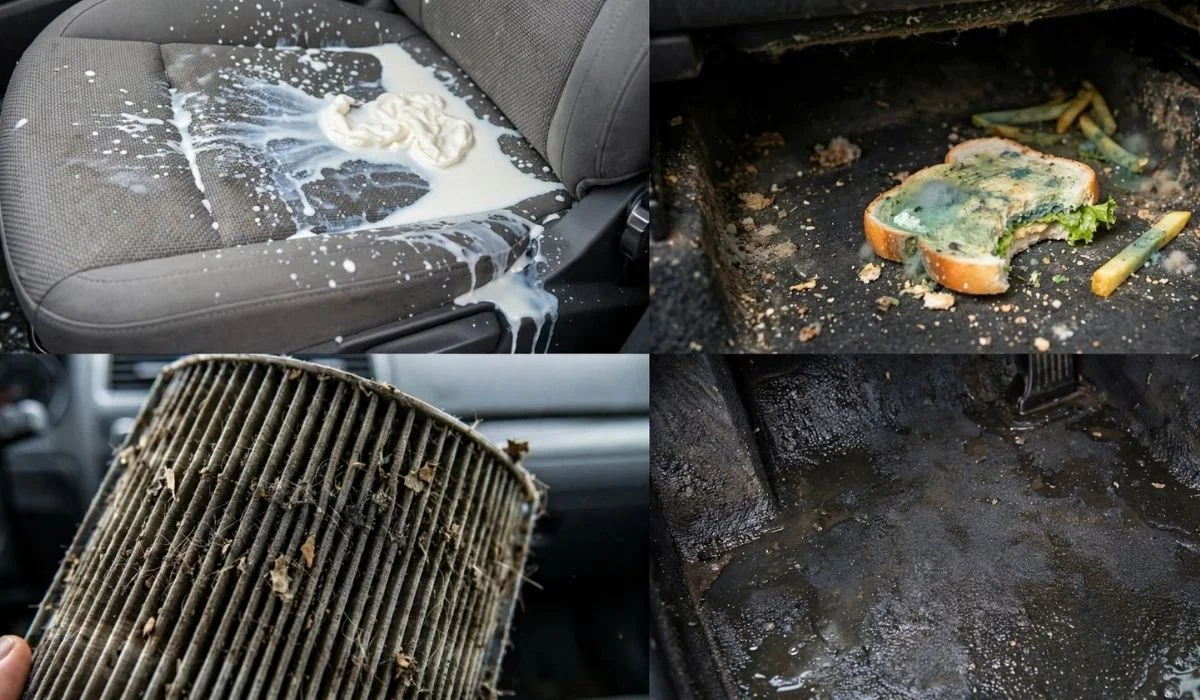
A rotten odor usually indicates that something organic has decomposed or that moisture has allowed unpleasant odors to develop.
Common causes include:
- Forgotten food
- Spilled milk
- Meat or seafood left in the car
- Wet clothing
- Damp carpets
- Pet accidents
- Food trapped under seats
- Dirty floor mats
- Water entering the cabin
- Organic debris in the trunk
- Mold or mildew
- Garbage left inside the vehicle
Rotten Food Is a Common Culprit
Food can become surprisingly difficult to locate inside a vehicle.
Check areas such as:
- Under the front seats
- Between the seats and center console
- Door pockets
- Glove compartment
- Trunk
- Spare-tire compartment
- Floor mats
- Seat gaps
A small amount of spilled food can produce a disproportionately strong odor after sitting in a warm enclosed space.
Can You Get Rid of a Rotten Car Smell Overnight?
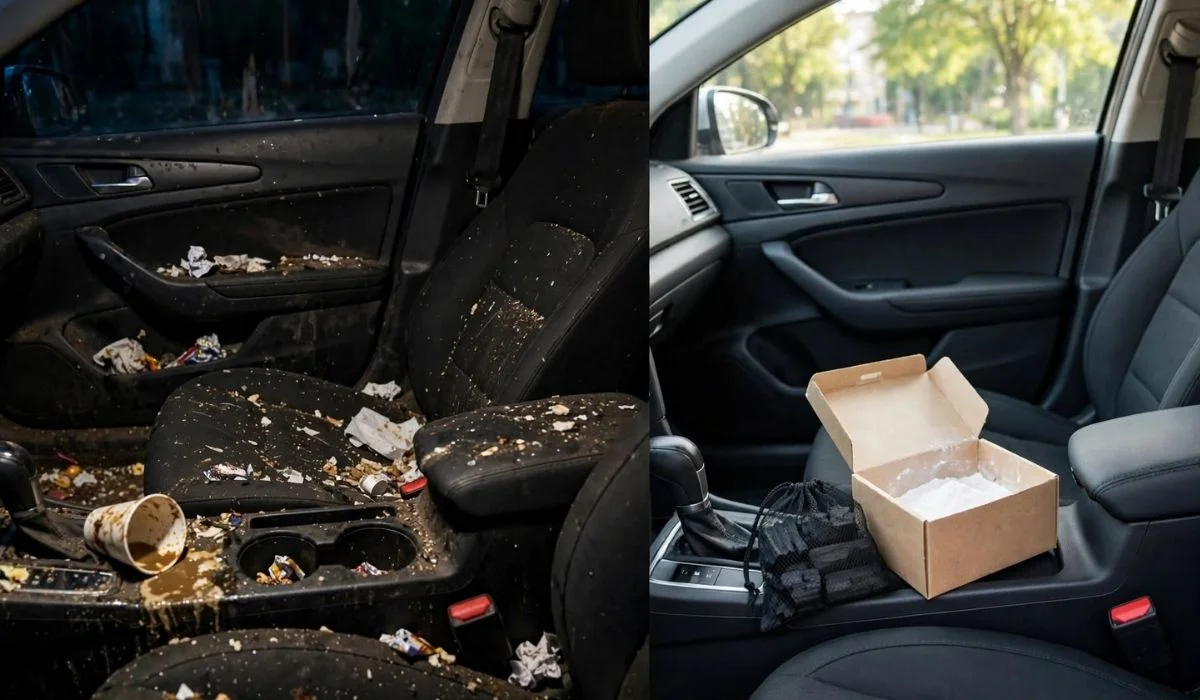
Yes, mild to moderate odors can often be significantly reduced overnight, especially when the source is removable.
However, overnight deodorizing does not guarantee permanent removal.
If the smell comes from a deeply contaminated carpet, upholstery, ventilation system, or hidden moisture problem, additional cleaning may be necessary.
The basic overnight formula is:
Remove → Clean → Dry → Deodorize → Ventilate
Step 1: Remove Everything From the Car
Start by completely emptying the vehicle.
Take out:
- Food
- Drinks
- Trash
- Shopping bags
- Clothes
- Shoes
- Pet items
- Floor mats
- Reusable containers
Don’t assume the obvious item is the only source.
Check the Trunk Carefully
The trunk is easy to overlook.
Inspect:
- Grocery bags
- Spare-tire compartment
- Cargo mats
- Side storage compartments
- Plastic bins
- Boxes
- Leaking containers
A forgotten grocery bag containing vegetables, meat, fruit, or seafood can create an extremely strong rotten smell.
Step 2: Find the Exact Source
Before applying deodorizer, search for the source systematically.
Move the front seats backward and forward.
Look underneath and between:
- Seats
- Center console
- Floor carpeting
- Seat rails
- Door pockets
Use a flashlight for dark areas.
If the odor is strongest in one particular location, concentrate your cleaning there.
Step 3: Remove Spoiled Material Safely
If you find rotten food or another decomposing organic material, remove it carefully.
Use disposable gloves if appropriate, especially when handling decomposed food or unknown biological residue.
Place the material in a sealed garbage bag and remove it from the vehicle.
Do not leave the garbage bag sitting beside the car overnight because the smell can continue spreading.
Why Source Removal Comes First
Odor absorbers can reduce unpleasant smells, but they do not replace removing decomposing material.
If a rotten item remains underneath a seat, deodorizing the cabin without removing it will rarely provide a permanent solution.
Step 4: Clean the Contaminated Area
Once the source has been removed, clean the affected surface according to its material.
For hard plastic or other washable surfaces, use an appropriate interior cleaner.
For fabric upholstery and carpeting, use a cleaner designed for automotive upholstery.
Work gently rather than aggressively scrubbing.
Step 5: Deal With Spilled Milk Immediately
Milk can be particularly problematic because it contains organic compounds that can produce strong odors as it spoils.
If milk has spilled into:
- Carpet
- Seat fabric
- Floor mats
- Seat crevices
the liquid may have penetrated beneath the visible surface.
Clean Beyond the Visible Spill
Don’t clean only the exact spot you can see.
Liquid can spread through carpet fibers and padding.
Blot excess liquid where possible, clean the affected material appropriately, and dry it thoroughly.
If milk has soaked deeply into padding, professional extraction may be required.
Step 6: Dry the Interior Completely
Moisture is one of the biggest enemies when dealing with unpleasant car odors.
After cleaning:
- Remove wet floor mats.
- Blot excess moisture.
- Allow cleaned areas to dry.
- Improve ventilation when conditions are safe.
- Use appropriate drying equipment if necessary.
Why Drying Matters
A damp enclosed environment can encourage musty odors and potentially support microbial growth.
Adding fragrance before the interior is dry may simply create a mixture of perfume and mustiness.
Step 7: Vacuum the Entire Interior
Vacuuming can remove crumbs, dirt, hair, and other particles that contribute to unpleasant smells.
Pay special attention to:
- Seat seams
- Floor edges
- Under seats
- Carpet corners
- Trunk carpeting
- Door pockets
- Center-console gaps
Use appropriate attachments so you can reach narrow spaces.
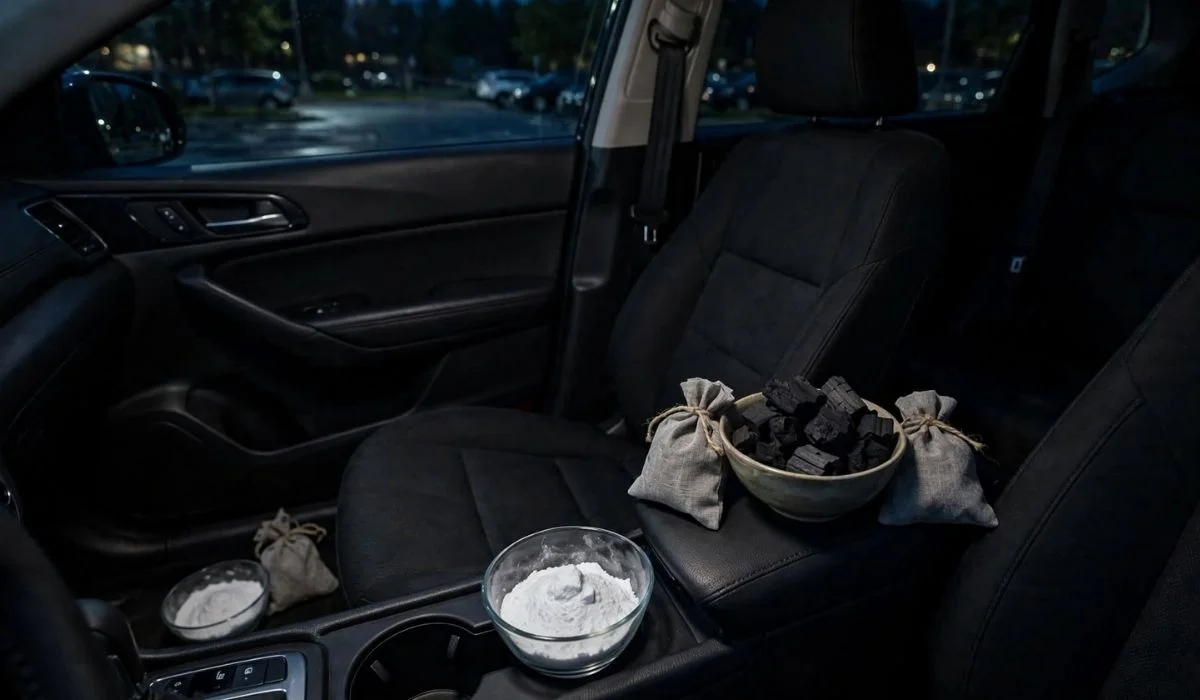
Step 8: Use Baking Soda Overnight
Baking soda can be useful as an overnight odor-control step.
Place baking soda in a shallow, stable container and leave it inside the parked vehicle.
A practical starting point is approximately:
- ½–1 cup for a small car
- More for a larger vehicle, divided into separate stable containers
Avoid scattering loose baking soda throughout the cabin.
How Long Should Baking Soda Stay in the Car?
For an overnight treatment, approximately 8–12 hours is reasonable.
If the smell is stronger, you can leave it for up to about 24 hours.
Remove the container before driving.
Step 9: Try Activated Charcoal
Activated charcoal is another popular odor-adsorbing material.
Commercial automotive charcoal odor absorbers can be placed inside the vehicle according to their instructions.
Activated carbon has a highly porous structure that allows it to adsorb various compounds from the surrounding air.
Baking Soda vs Activated Charcoal
Both can be useful, but they work differently.
| Method | Best Use | Overnight Treatment |
|---|---|---|
| Baking soda | Mild everyday odors | Yes |
| Activated charcoal | General persistent odors | Yes |
| Air freshener | Fragrance/masking | Yes, but doesn’t remove source |
| Deep cleaning | Strong contamination | Essential |
| Professional detailing | Severe or hidden odors | Sometimes necessary |
Step 10: Ventilate the Car
Once the source has been removed and cleaning is complete, ventilation can help replace stale interior air.
If the vehicle is parked in a secure location and weather conditions permit, open the doors or windows for a period of time.
Never leave a vehicle unsecured simply for ventilation.
Don’t Rely on Ventilation Alone
Fresh air can reduce the concentration of airborne odor compounds, but it won’t remove contamination trapped in fabric, carpet, foam, or other materials.
An Overnight Rotten-Smell Removal Routine
If you need a simple plan for tonight, follow this sequence.
Evening: First 30 Minutes
Remove everything from the car.
Throw away spoiled food and garbage.
Take out the floor mats.
Search under the seats and inside the trunk.
Evening: Next 30–60 Minutes
Vacuum the interior.
Clean any visible contaminated areas.
Wash appropriate removable mats.
Blot wet upholstery or carpeting.
Before Bed
Place baking soda or an appropriate activated-charcoal odor absorber inside the vehicle.
Keep the product in a stable location.
Make sure nothing interferes with the vehicle’s controls or safety equipment.
Next Morning
Remove the odor absorber.
Check the interior.
Smell the areas where the original odor was strongest.
If the rotten smell is substantially reduced, continue with normal cleaning and ventilation.
If it is still strong, investigate for hidden contamination.
What Not to Do When Your Car Smells Rotten
Some quick fixes can make the situation worse.
Don’t Just Spray Air Freshener
Air freshener can make the interior smell like a combination of rotten food and fragrance.
It does not remove the original contamination.
Don’t Ignore Wet Carpet
If the carpet remains wet, the odor may continue returning.
Find out why it became wet and dry it thoroughly.
Don’t Mix Random Cleaning Chemicals
Combining household cleaners can create dangerous chemical reactions.
Use products according to their labels and avoid experimenting with chemical combinations.
Don’t Pour Excess Water Into Upholstery
More water does not necessarily mean better cleaning.
Excess moisture can penetrate deeper into padding and make drying more difficult.
How to Remove Rotten Smell From Car Carpet
Carpet can trap odor-producing substances below its visible surface.
Start by removing the contamination.
Then:
- Vacuum loose debris.
- Apply an appropriate automotive carpet cleaner.
- Follow the product instructions.
- Extract or blot moisture as recommended.
- Allow the carpet to dry completely.
- Use baking soda or activated charcoal as a finishing deodorizing step if appropriate.
When Carpet Cleaning Is Not Enough
If the smell remains after cleaning, the contamination may have reached carpet padding underneath.
In that situation, professional extraction can be more effective than repeatedly applying household deodorizing products.
How to Get Rotten Smell Out of Car Seats
The correct method depends on the seat material.
For fabric seats, remove loose debris and use an appropriate upholstery cleaner.
For leather, use a leather-safe cleaner rather than saturating the material with water.
Don’t Overwet Car Seats
Modern car seats can contain electrical components, sensors, heating elements, and airbag-related equipment.
Avoid excessive liquid around electrical connections and seat mechanisms.
How to Remove Rotten Smell From Car Trunk
The trunk should be one of the first places you inspect.
Remove everything and check beneath the trunk floor.
Look around the spare-tire well and side compartments.
Check for Water Intrusion
If the trunk repeatedly becomes damp, the odor may be caused by an underlying water leak rather than food alone.
Potential areas to investigate include:
- Trunk seals
- Tail-light areas
- Drainage points
- Spare-tire well
- Body seams
A recurring moisture problem needs to be repaired, otherwise the smell can return.
What If the Rotten Smell Comes From the AC?
If the odor becomes stronger when you turn on the air conditioner or ventilation system, the source may not be inside the cabin itself.
Possible causes can include:
- Damp cabin air-filter areas
- Accumulated debris
- Moisture in HVAC components
- Microbial contamination
Replace the Cabin Air Filter if Needed
A dirty cabin air filter can contribute to unpleasant smells.
Check your vehicle’s maintenance recommendations to determine the appropriate replacement interval and filter type.
If the odor persists after replacing the filter, professional HVAC inspection may be appropriate.
Can Coffee Grounds Remove Rotten Smell From a Car?
Coffee grounds are sometimes used as a household odor remedy, but they are not necessarily the best choice.
They can introduce another strong smell and may create a mess if spilled.
For a clean overnight treatment, baking soda or a purpose-designed activated-carbon odor absorber is generally more practical.
Can Vinegar Remove Rotten Smell From a Car?
Vinegar has household cleaning applications, but it should not be treated as a universal automotive interior cleaner.
Its strong smell may temporarily compete with the original odor.
More importantly, different vehicle materials have different care requirements.
Use a material-appropriate automotive cleaner instead of applying acidic household solutions indiscriminately.
Read Next: How Long To Leave Baking Soda In Car | Odors and Keeping Your Car Fresh
How to Know If the Smell Is Really Gone
Don’t judge the result immediately after using a strongly scented product.
Instead, remove the deodorizer and allow the vehicle to sit for a while.
Then check:
- Cabin air
- Carpets
- Seats
- Trunk
- Under-seat areas
- Floor mats
If the rotten smell returns when the fragrance disappears, the source probably has not been completely removed.
When to Call a Professional Detailer
Professional help may be worthwhile when:
- The smell remains after thorough cleaning.
- Milk has soaked deeply into carpet padding.
- Pet urine has penetrated upholstery.
- Mold or mildew is suspected.
- Smoke odor is deeply embedded.
- Water keeps entering the vehicle.
- The odor appears to come from the HVAC system.
- The source cannot be located.
A professional detailer may use extraction equipment and specialized odor-treatment methods that go beyond household cleaning.
The Fastest Overnight Strategy
For the best chance of waking up to a noticeably fresher car, focus on the source rather than fragrance.
Tonight:
- Empty the car.
- Find and remove the rotten material.
- Vacuum thoroughly.
- Clean contaminated surfaces.
- Remove wet mats.
- Dry damp areas.
- Place baking soda or activated charcoal inside.
- Leave the car safely parked overnight.
Tomorrow:
- Remove the deodorizer.
- Ventilate the vehicle when safe.
- Inspect the original problem area.
- Repeat targeted cleaning if necessary.
Final Thoughts
Learning how to get rid of rotten smell in car overnight is less about finding a powerful fragrance and more about eliminating the contamination responsible for the smell.
For mild odors, a combination of thorough cleaning, drying, ventilation, and overnight baking soda or activated charcoal can make a noticeable difference. Strong or recurring odors require more investigation because the source may be hidden beneath carpeting, inside upholstery, in the trunk, or within the ventilation system.
The most important rule is simple: remove the source first, deodorize second. That approach gives you a much better chance of getting rid of the rotten smell instead of temporarily covering it.
FAQs
How can I get rid of a rotten smell in my car overnight?
Remove the source, vacuum the interior, clean contaminated areas, dry damp materials, and leave baking soda or activated charcoal inside the parked vehicle overnight.
What is the fastest way to remove a bad smell from a car?
Finding and removing the source is usually the fastest effective approach. Air fresheners may mask the smell but do not eliminate contaminated food, spills, moisture, or other causes.
How long should I leave baking soda in my car?
Leave contained baking soda inside for approximately 8–24 hours. Overnight is suitable for many mild odors.
Can baking soda remove rotten food smell from a car?
It can help reduce residual odors, but the spoiled food and any contaminated surface must be removed and cleaned first.
Why does my car still smell rotten after cleaning?
The odor may be coming from hidden contamination, damp carpet padding, under-seat areas, the trunk, upholstery, or the air-conditioning system.
How do I get spoiled milk smell out of my car overnight?
Remove the source, clean the affected area with a suitable upholstery or carpet cleaner, blot or extract excess moisture, and dry it thoroughly. Baking soda can be used afterward as an additional odor-control step.
Can I leave activated charcoal in my car overnight?
Yes. A commercial activated-carbon odor absorber can be left in a parked vehicle according to its product instructions.
Will an air freshener get rid of rotten smell?
Usually, it only masks or changes the perceived odor. If the source remains, the rotten smell can return once the fragrance fades.
How do I get rotten smell out of car carpet?
Remove the contamination, vacuum the carpet, use a suitable automotive carpet cleaner, extract or blot moisture as appropriate, and allow the carpet to dry completely.
What if the rotten smell comes back every morning?
A recurring odor often indicates an unresolved source such as hidden food, moisture, mold, contaminated upholstery, or an HVAC-related issue. Investigate the vehicle rather than repeatedly masking the smell.