When To Replace Tires Mileage | The Complete Safety & Wear Guide
 ByAliza
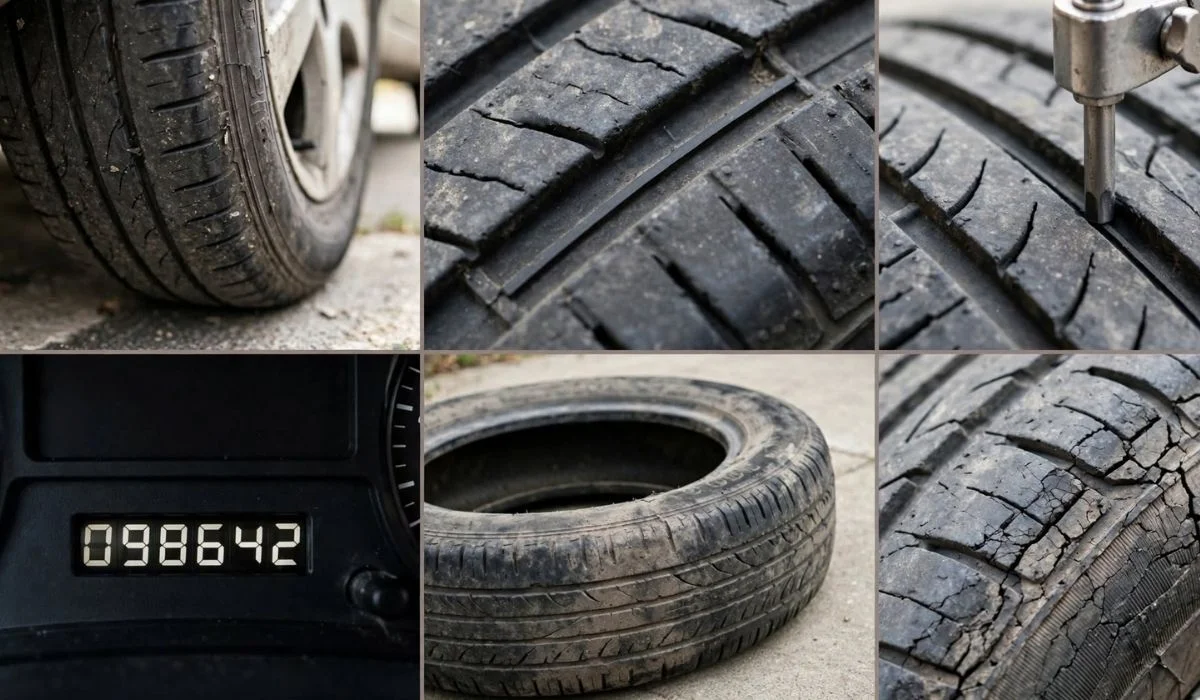
Knowing when to replace tires by mileage is important for safety, handling, braking, fuel economy, and overall driving comfort. Tires do not have one universal mileage limit because their lifespan depends on the tire type, vehicle weight, driving habits, road conditions, climate, maintenance, and how well they are stored.
As a general guideline, many passenger-car tires may last around 40,000 to 60,000 miles, while some premium or touring tires can potentially last longer. However, mileage should never be the only reason to decide whether a tire needs replacement. A tire with plenty of tread can still become unsafe because of age, cracking, uneven wear, or internal damage.
The safest approach is to consider mileage, tread depth, tire age, visible condition, and driving performance together.
How Many Miles Do Tires Usually Last?
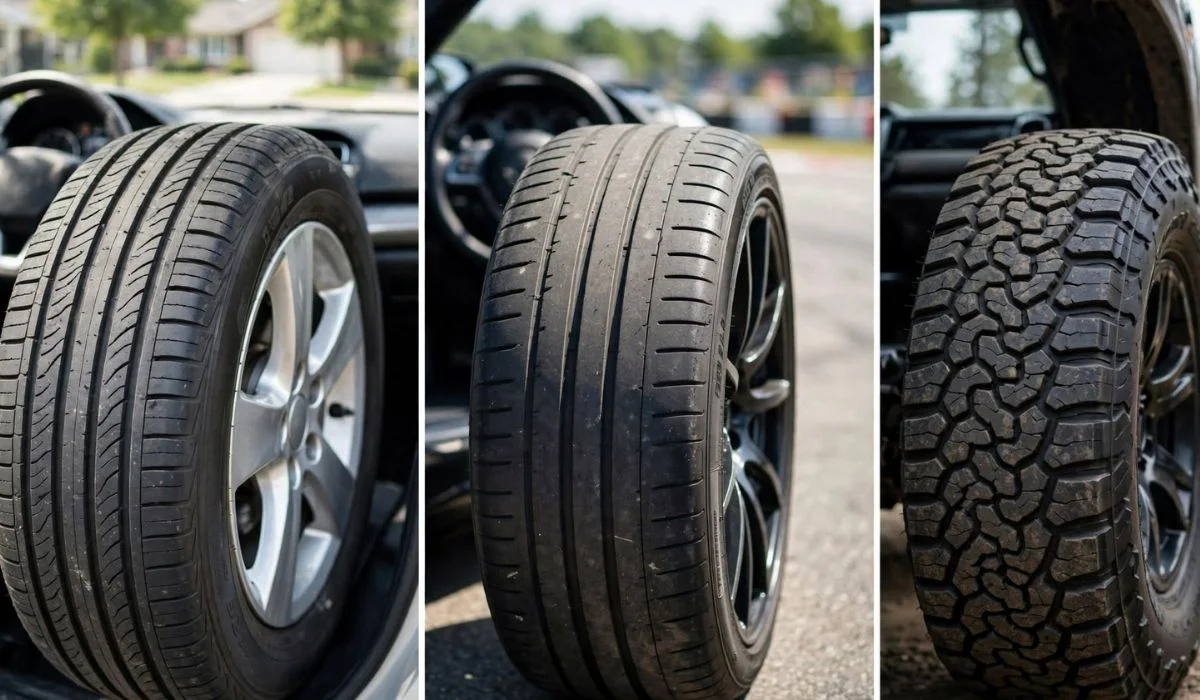
There is no exact mileage number that applies to every tire. Tire manufacturers design different models for different purposes, and each type can wear at a different rate.
A reasonable mileage range for many common passenger tires is:
| Tire Type | Typical Mileage Range |
|---|---|
| Economy passenger tires | 30,000–50,000 miles |
| Standard all-season tires | 40,000–60,000 miles |
| Touring tires | 50,000–80,000+ miles |
| Performance tires | 20,000–40,000 miles |
| High-performance tires | 15,000–35,000 miles |
| Light-truck tires | 40,000–70,000+ miles |
These numbers are estimates rather than guarantees. A tire driven mostly on smooth highways may last considerably longer than the same tire used on rough roads, underinflated, or subjected to frequent hard acceleration and braking.
Why Mileage Alone Cannot Tell You When to Replace Tires?
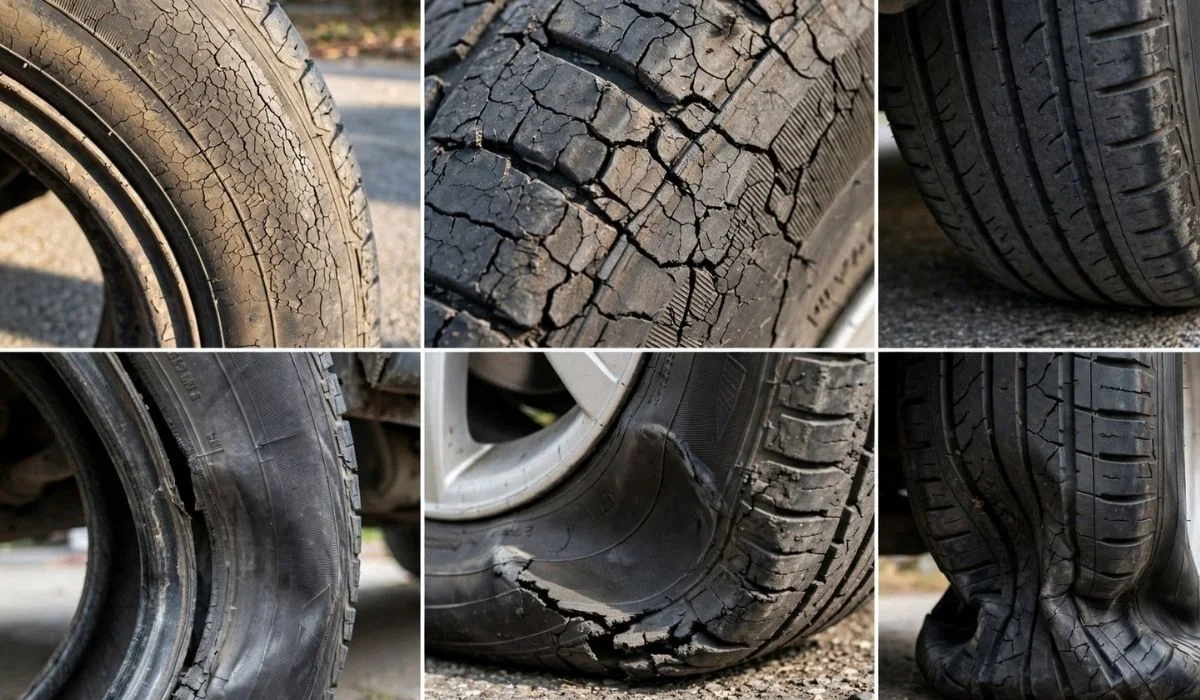
Mileage measures how far the tire has traveled, but it does not directly measure its remaining safety.
Two identical tires can have completely different conditions after 40,000 miles.
For example, one vehicle might be driven gently on highways with correct tire pressure and regular rotations. Another might be driven aggressively around town with frequent pothole impacts and poor alignment.
The second vehicle’s tires could require replacement much earlier.
Important factors include:
- Tread depth
- Tire age
- Driving style
- Tire pressure
- Wheel alignment
- Tire rotation frequency
- Road quality
- Vehicle weight
- Climate
- Storage conditions
- Tire construction
- Seasonal use
Therefore, 40,000 miles is not automatically a replacement point, just as 60,000 miles does not automatically mean a tire is still safe.
Check Tread Depth Before Replacing Tires?
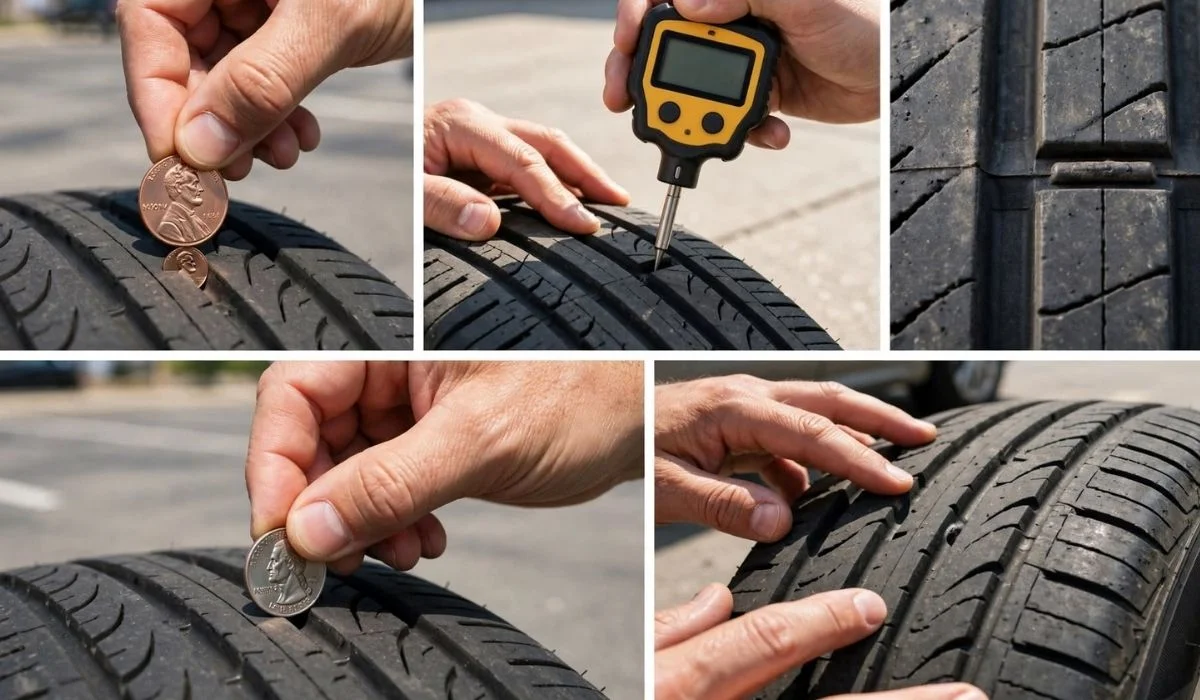
Tread depth is one of the most useful physical measurements when evaluating tire condition.
New passenger tires commonly start with substantially more tread than the legal minimum. As tread wears down, the tire gradually loses its ability to channel water and maintain traction.
In the United States, 2/32 inch is commonly used as the minimum legal tread depth, although regulations can vary by location.
For practical safety, many tire professionals recommend considering replacement before the tire reaches the absolute legal minimum, particularly when driving in heavy rain.
What Is the 2/32-Inch Rule?
At approximately 2/32 inch of remaining tread, the tire is considered worn out in many jurisdictions.
Most tires have molded tread-wear indicators located in the grooves. These bars become increasingly flush with the surrounding tread as the tire wears.
If the tread is level with the wear indicators, the tire has reached the end of its usable tread life.
Do not wait until the tread is completely smooth before replacing it.
Why Rain Makes Low Tread More Concerning
Tread grooves help move water away from the contact area between the tire and road.
As tread becomes shallow, the tire has less ability to evacuate water efficiently. This can increase the risk of hydroplaning, particularly at higher speeds or in heavy rainfall.
For drivers who regularly encounter wet roads, replacing tires before they reach the legal minimum can provide an additional safety margin.
Tire Age Matters Even If Mileage Is Low
A tire can become unsuitable for service because of age even when it has not accumulated many miles.
Rubber compounds naturally change over time. Exposure to oxygen, sunlight, heat, moisture, and temperature changes can contribute to aging.
This is why a vehicle that is driven only a few thousand miles each year should still have its tires inspected regularly.
A low-mileage tire is not automatically a young tire.
How Old Is Too Old for a Tire?
There is no single age at which every tire suddenly becomes unsafe. However, major tire organizations and manufacturers generally recommend regular inspections as tires become older.
A common industry guideline is:
- Inspect tires regularly after about 5 years of service.
- Consider replacing tires around 10 years from the date of manufacture, even if they appear to have usable tread, unless the tire manufacturer provides a different recommendation.
- Replace earlier if cracking, deformation, damage, or other deterioration is present.
Always check the tire manufacturer’s specific recommendations because tire construction and operating conditions differ.
How to Find the Tire Manufacture Date?
Look at the DOT identification number on the tire sidewall.
The final four digits generally indicate the week and year of manufacture.
For example:
2523
means the tire was manufactured during the 25th week of 2023.
This is different from the date you purchased or installed the tire.
A tire sitting in storage before installation is still aging from its manufacturing date, although proper storage can help reduce deterioration.
Signs Your Tires Need Replacement Before the Mileage Limit:
Mileage is only one piece of the puzzle. Replace or professionally inspect a tire sooner if you notice obvious signs of deterioration or damage.
1. Tread Is Extremely Low
If the tread is at or near the wear indicators, replacement is due regardless of mileage.
2. Cracks in the Sidewall
Small cracks can develop as rubber ages.
Visible cracking, particularly deep or widespread cracking, should not be ignored because the sidewall is a critical structural part of the tire.
Read next: How To Replace Windshield Wiper Blades Rubber | A Simple Step-by-Step Guide
3. Bulges or Blisters
A bulge or bubble on the sidewall can indicate internal structural damage.
This is an important warning sign because the damaged area may be more vulnerable to sudden failure.
A tire with a significant bulge should generally be replaced rather than repaired.
4. Uneven Tread Wear
Uneven wear can appear as:
- Wear on one edge
- Wear on both edges
- Center tread wear
- Cupping
- Scalloping
- Patchy wear
Uneven wear may be caused by incorrect tire pressure, alignment problems, worn suspension components, or improper rotation.
Replacing the tire without correcting the underlying problem can result in the replacement tire wearing unevenly again.
5. Frequent Loss of Air
If a tire repeatedly loses pressure, have it inspected.
Possible causes include:
- Punctures
- Valve problems
- Bead leaks
- Wheel damage
- Tire structural problems
Do not simply keep adding air without finding the cause.
6. Vibrations or Changes in Handling
New vibrations, pulling, shaking, wandering, or unusual handling can sometimes indicate tire problems.
However, these symptoms can also come from wheels, suspension, alignment, or other components, so proper diagnosis is important.
How Driving Habits Affect Tire Mileage?
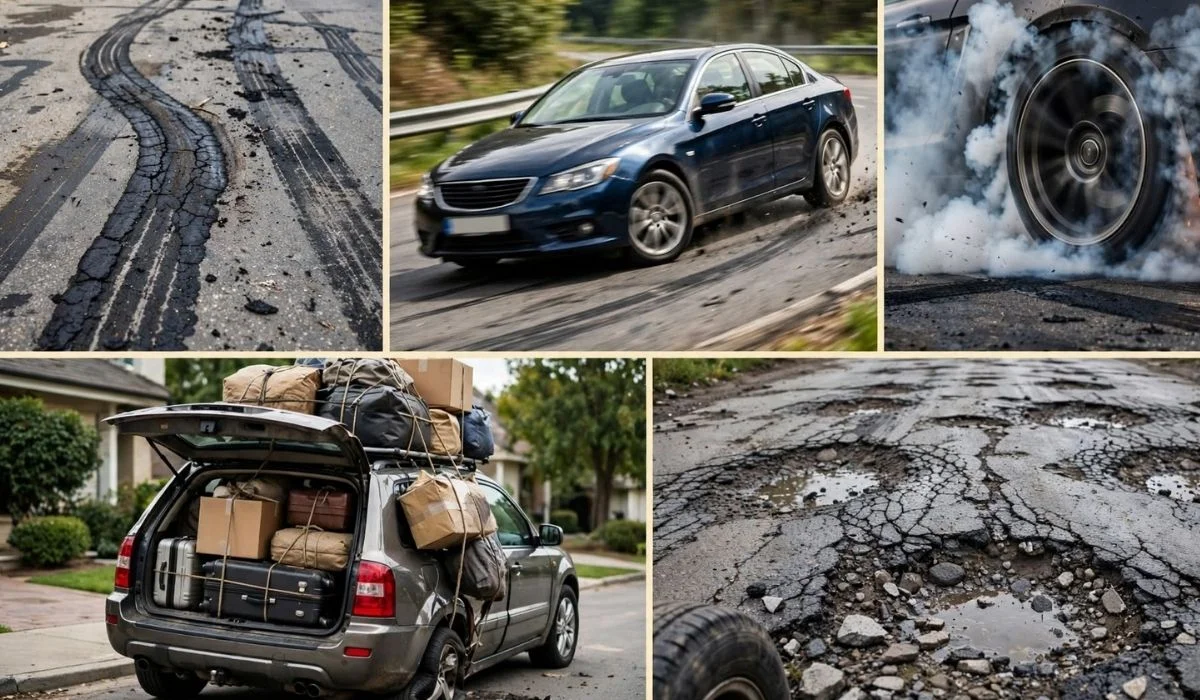
Aggressive driving can significantly reduce tire life.
Hard acceleration, sudden braking, fast cornering, and frequent high-speed driving can increase tread wear and heat buildup.
City driving can also be demanding because of frequent stops, starts, turns, and braking.
Highway Driving vs. City Driving
Steady highway driving often produces relatively consistent tread wear.
City driving tends to involve more:
- Braking
- Acceleration
- Tight turns
- Road debris
- Potholes
- Stop-and-go traffic
That does not mean highway tires always last longer, but driving patterns can have a noticeable effect on tire longevity.
Tire Pressure Has a Major Effect on Wear
Maintaining the correct tire pressure is one of the simplest ways to protect tire life.
Underinflation can increase heat buildup and cause excessive wear toward the outer edges.
Overinflation can contribute to excessive wear around the center of the tread and may affect ride quality and handling.
Check pressure when the tires are cold and use the vehicle manufacturer’s recommended pressure found on the vehicle information label or owner’s manual.
Do not automatically use the maximum pressure printed on the tire sidewall as the vehicle’s recommended operating pressure.
How Often Should Tires Be Rotated?
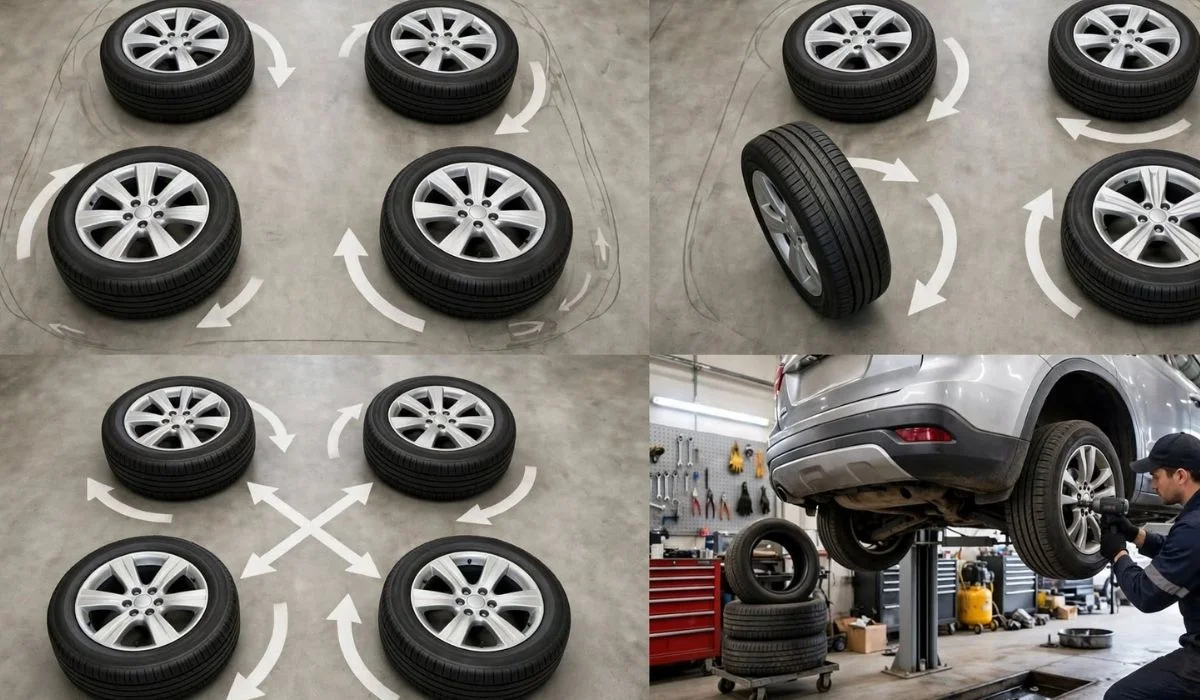
Many vehicles benefit from tire rotation at intervals specified by the vehicle or tire manufacturer, often around 5,000 to 8,000 miles.
Rotation can help distribute wear more evenly among the tires.
The correct pattern depends on:
- Front-wheel drive
- Rear-wheel drive
- All-wheel drive
- Directional tires
- Staggered tire sizes
- Tire construction
Not every tire can be rotated in every direction.
Following the manufacturer’s recommended rotation pattern can help maximize usable tread life.
Wheel Alignment Can Change Tire Lifespan
A vehicle with poor alignment can wear tires much faster than expected.
Signs of a possible alignment issue include:
- Vehicle pulling to one side
- Steering wheel not centered
- Uneven tread wear
- Rapid wear on one tire
- Vehicle feeling unstable
If a new set of tires wears unevenly within a relatively short period, check alignment and suspension components rather than assuming the tires themselves were defective.
How Weather Affects Tire Life
Temperature and climate can influence tire aging and performance.
High heat can accelerate rubber deterioration, while prolonged exposure to sunlight and ozone can contribute to cracking.
Cold weather can also affect tire pressure. Tire pressure generally decreases as temperature drops, which means seasonal pressure checks are important.
Vehicles parked outdoors for long periods may experience more environmental exposure than vehicles stored in a shaded or enclosed area.
Should You Replace All Four Tires at Once?
Ideally, replacing all four tires together can provide more consistent traction and handling, especially on vehicles with all-wheel drive.
However, the correct approach depends on the vehicle’s drivetrain, tire condition, manufacturer recommendations, and the difference in tread depth between tires.
Replacing only one tire can sometimes create a significant tread-depth difference.
What If Only One Tire Is Damaged?
If one tire is damaged, ask a qualified tire professional whether one tire can safely be replaced.
Depending on the vehicle, it may be possible to replace one tire, replace it with a tire having a closely matched tread depth, or replace a pair on the same axle.
Some all-wheel-drive vehicles have particularly strict requirements regarding differences in tire circumference or tread depth.
Always follow the vehicle manufacturer’s recommendations.
What Mileage Should You Start Checking Tires More Carefully?
There is no need to wait until 40,000 or 50,000 miles to begin inspections.
A practical maintenance approach is:
- Check tire pressure monthly.
- Visually inspect tires regularly.
- Check tread depth periodically.
- Rotate tires according to the manufacturer’s schedule.
- Inspect tires during routine oil changes or service visits.
- Pay closer attention once the tires accumulate significant mileage.
- Have older tires professionally inspected even if they have low mileage.
The exact replacement point depends on condition rather than the odometer alone.
A Simple Tire Replacement Checklist
Before deciding whether to replace your tires, check these five areas:
| Check | What to Look For |
|---|---|
| Mileage | How many miles have the tires traveled? |
| Tread | Is tread approaching the wear indicators? |
| Age | How many years since manufacture? |
| Damage | Cracks, cuts, punctures, bulges, or exposed cords |
| Wear Pattern | Even or uneven across the tread? |
If several warning signs appear at the same time, replacement becomes much more likely.
Can Tires Last 80,000 Miles?
Some tires are marketed with very high mileage warranties, and certain tires can potentially provide 70,000 or 80,000 miles under favorable conditions.
However, an advertised mileage warranty does not mean every tire will safely last that long.
Actual lifespan depends on:
- Tire model
- Vehicle
- Alignment
- Inflation
- Rotation
- Driving conditions
- Climate
- Driving habits
A tire reaching 80,000 miles should receive especially careful inspection for age and deterioration, even if the tread appears acceptable.
Can Tires Last Only 20,000 Miles?
Yes.
Performance-oriented tires, soft-compound tires, heavily driven vehicles, and tires subjected to aggressive driving may wear considerably faster.
A tire lasting 20,000 miles is not necessarily defective if it was designed for high grip rather than maximum tread life.
This is why comparing mileage between different tire categories can be misleading.
Why One Set of Tires Can Last Longer Than Another
Tire longevity is influenced by the entire operating environment.
For example, a vehicle used primarily for gentle highway commuting may get substantially more miles from its tires than the same vehicle used for frequent short trips, heavy loads, aggressive cornering, or poor roads.
Even front and rear tires on the same vehicle may wear at different rates.
Front tires often experience additional stress from steering and, on many vehicles, braking forces.
What Happens If You Keep Driving on Worn Tires?
Continuing to drive on severely worn or damaged tires can increase safety risks.
Potential problems include:
- Reduced wet traction
- Longer braking distances
- Increased hydroplaning risk
- Poor handling
- Greater vulnerability to punctures
- Increased risk of tire failure
- Uneven vehicle behavior
The consequences can become especially serious during rain or emergency braking.
Replacing tires before they become severely worn is generally safer than trying to extract every possible mile from them.
Best Way to Maximize Tire Mileage
You can often extend tire life through consistent maintenance.
Follow These Tire-Care Habits
- Maintain recommended tire pressure.
- Rotate tires according to the manufacturer’s schedule.
- Keep the wheels properly aligned.
- Avoid unnecessary hard braking and acceleration.
- Slow down for potholes and rough pavement.
- Do not overload the vehicle.
- Inspect tires for cuts and cracks.
- Check tread depth regularly.
- Replace damaged tires promptly.
- Keep valve caps installed.
- Have persistent vibration or pulling investigated.
Good maintenance cannot make an unsafe tire safe again, but it can help a healthy tire reach its expected service life.
The Bottom Line on When to Replace Tires by Mileage
For many passenger vehicles, tires commonly provide around 40,000 to 60,000 miles, but there is no universal replacement mileage.
The right time to replace tires is determined by the combination of tread depth, age, mileage, visible damage, wear pattern, and driving performance.
Do not continue using a tire simply because it has not reached a particular mileage number. Likewise, do not replace a tire solely because it has reached 40,000 miles if it is still within its recommended service life and passes a proper inspection.
When in doubt, have a qualified tire professional inspect the tires, particularly if you see sidewall cracking, bulges, exposed cords, severe uneven wear, or repeated air loss.
FAQs About When to Replace Tires Mileage
How many miles should tires last?
Many passenger tires last approximately 40,000 to 60,000 miles, but some may last less and others significantly more. Tire type, maintenance, driving habits, road conditions, and climate all affect lifespan.
Should I replace tires at 30,000 miles?
Not necessarily. A 30,000-mile tire may still have substantial usable tread, while another tire with the same mileage may already be worn or damaged. Inspect tread depth, age, and condition before deciding.
Is 50,000 miles good for tires?
Yes. Around 50,000 miles is a reasonable service life for many passenger tires. However, the tire’s condition matters more than the mileage number alone.
Can tires last 10 years?
Some tires may physically remain on a vehicle for up to 10 years, but aging requires careful inspection. Many tire organizations and manufacturers recommend considering replacement around 10 years from manufacture, even if tread remains.
How do I know if my tires are too old?
Check the tire’s manufacturing date and inspect for cracking, hardening, deformation, or other deterioration. Older tires should receive more frequent professional inspections.
What tread depth means I need new tires?
At or near 2/32 inch, tires are commonly considered worn out and should be replaced. Consider replacing earlier if wet-weather performance is important or the tire shows other signs of deterioration.
Do front tires wear faster?
They can. On many front-wheel-drive vehicles, the front tires handle steering and much of the braking and acceleration, which can result in faster wear. Rotation helps distribute that wear.
Does tire pressure affect mileage?
Yes. Incorrect inflation can cause abnormal tread wear and may shorten tire life. Maintaining the vehicle manufacturer’s recommended pressure can help promote even wear and proper performance.
Should I replace tires based on age or mileage?
Use both. Mileage measures use, while age helps identify deterioration from time and environmental exposure. Either factor can justify replacement depending on the tire’s condition and manufacturer guidance.
Is uneven tire wear a reason to replace tires?
Uneven wear can be a reason for replacement if the tire is severely worn or damaged. However, you should also determine the underlying cause, such as improper inflation, alignment problems, worn suspension parts, or inadequate rotation.
Can a tire look good but still need replacement?
Yes. Tires can develop age-related deterioration or internal problems that are not immediately obvious from appearance alone. This is why tire age, tread depth, mileage, and professional inspection all matter.
What is more important, tire age or mileage?
Neither should be considered alone. A tire with low mileage can still be too old, while a relatively new tire can become unsafe because of heavy wear or damage.
How often should I check my tires?
Check tire pressure at least monthly and inspect the tires regularly for tread wear, cracks, cuts, bulges, and unusual wear patterns. More frequent checks are appropriate before long road trips or when driving conditions are difficult.