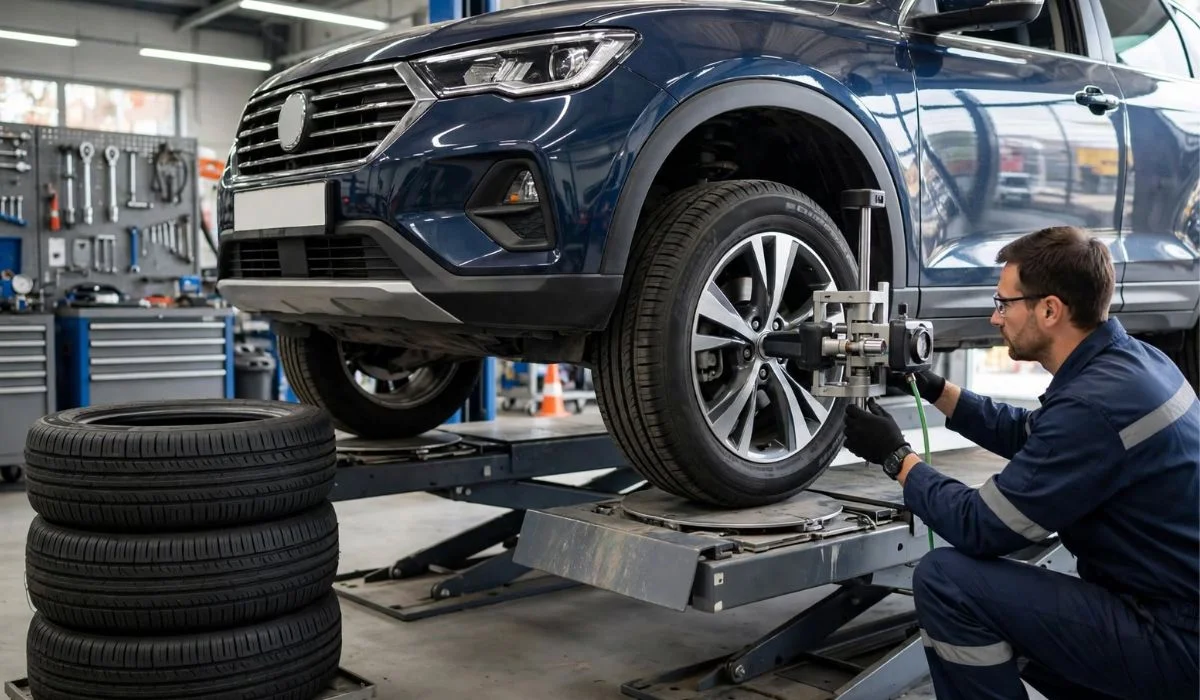
Do I Need An Alignment After Replacing Tires | When You Should Get One
 ByAliza
Replacing your tires is one of the most important maintenance jobs for your vehicle, but it often raises another question: do I need an alignment after replacing tires? The short answer is not always. Simply installing new tires does not automatically mean your wheels need an alignment.
However, a wheel alignment can be a smart idea if your old tires showed uneven wear, your vehicle pulls to one side, your steering wheel is off-center, or your suspension has recently been damaged or repaired. Since new tires are a significant investment, checking alignment can help protect them from premature and uneven wear.
Understanding when an alignment is necessary can save you money and help your new tires perform properly.
What Does a Wheel Alignment Actually Do?
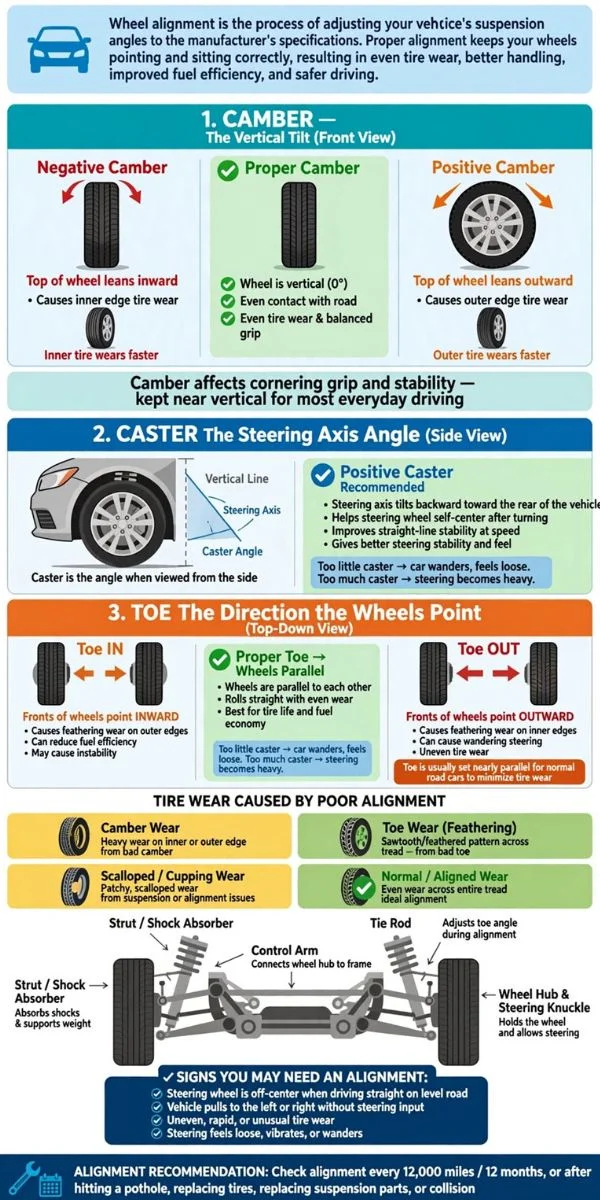
A wheel alignment adjusts the angles of the wheels so they match the vehicle manufacturer’s specifications.
Despite the name, technicians don’t normally “align” the tires themselves. Instead, they adjust suspension components that control how the wheels sit and point relative to the road and each other.
A proper alignment can help your vehicle:
- Track straight
- Maintain predictable handling
- Reduce uneven tire wear
- Improve steering feel
- Protect your new tires from premature wear
- Maintain proper contact between the tires and road
Does Replacing Tires Change Wheel Alignment?
Installing new tires generally does not change the vehicle’s alignment.
If your alignment was correct before the tire replacement, simply removing the old tires and installing new ones shouldn’t normally alter the suspension geometry.
There is, however, an important reason to consider an alignment when buying new tires: your old tires can reveal problems that aren’t immediately obvious while driving.
If the previous tires were badly worn on one edge, feathered, or showing other abnormal patterns, the vehicle may have an alignment or suspension issue.
When You Should Get an Alignment After New Tires:

You don’t necessarily need an alignment every time you purchase tires. But certain situations make an alignment highly recommended.
Your Old Tires Had Uneven Wear
One of the biggest warning signs is unusual tread wear.
Look at your old tires before they’re discarded. If one side of the tread is significantly more worn than the other, something may be affecting the way the tire contacts the road.
Common patterns include:
- Inside-edge wear
- Outside-edge wear
- Feathering
- Cupping
- Uneven wear between tires
An alignment check can help determine whether incorrect wheel angles contributed to the problem.
Your Vehicle Pulls to One Side
Does your vehicle tend to drift left or right when you’re driving on a reasonably level road?
That can be a reason to have the alignment checked.
Keep in mind that pulling isn’t always caused by alignment. Tire pressure, tire construction, road crown, brake problems, and suspension issues can also influence how a vehicle tracks.
Your Steering Wheel Is Off-Center
If you’re driving straight but the steering wheel sits noticeably turned to one side, it’s worth having the steering and alignment checked.
A crooked steering wheel can indicate that the steering and suspension geometry isn’t correctly centered.
You Hit a Pothole or Curb
A hard impact can alter suspension or steering components.
If you’ve recently hit:
- A deep pothole
- A curb
- Road debris
- A large speed bump at high speed
an alignment inspection is a good idea, especially if you notice new steering or handling symptoms afterward.
You Replaced Suspension or Steering Parts
Alignment becomes particularly important after certain suspension or steering repairs.
For example, an alignment check may be appropriate after replacing components such as:
- Tie rods
- Control arms
- Ball joints
- Steering components
- Struts
- Certain suspension links
The exact requirement depends on what was replaced and the vehicle design.
When an Alignment May Not Be Necessary:
If your vehicle has been driving normally and the old tires show even wear, an alignment may not be required simply because you’ve installed new tires.
For example, if:
- The steering wheel is centered
- The vehicle tracks straight
- The old tires wore evenly
- There was no major impact
- No suspension parts were replaced
- There are no unusual handling symptoms
there may be no reason to pay for an alignment solely because the tires are new.
A Tire Change Is Different From an Alignment
It’s useful to separate these two services.
Tire replacement involves removing old tires and installing new ones on the wheels.
Wheel alignment involves measuring and, when possible, adjusting suspension geometry.
One doesn’t automatically require the other.
The Three Main Alignment Angles Explained
When people talk about alignment, they’re usually referring to several wheel-angle measurements.
Camber
Camber describes how much the top of the wheel leans inward or outward when viewed from the front of the vehicle.
Too much positive or negative camber can contribute to uneven tire wear.
Toe
Toe describes whether the fronts of the tires point slightly toward or away from each other when viewed from above.
Incorrect toe can cause rapid tread wear and steering problems.
Caster
Caster relates to the angle of the steering axis when viewed from the side of the vehicle.
Caster has an important effect on steering stability, steering feel, and how the vehicle returns toward center after a turn.
Not every vehicle allows every alignment angle to be adjusted directly. The available adjustments depend on the vehicle’s suspension design.
Read Next: Jeep Wrangler 5 Tire Rotation Pattern | Long-Lasting Performance
Why Alignment Matters More With New Tires?
New tires start with a fresh tread surface and represent a considerable expense.
If an underlying alignment problem causes abnormal wear, that fresh tread can begin wearing incorrectly soon after installation.
Protect Your Tire Investment
Suppose your old tires were worn heavily along the inside edges because of a geometry problem.
Installing new tires without addressing the cause may result in the same wear pattern developing again.
That means you could spend money on new tires only to shorten their useful life.
Better to Check Than Assume
An alignment check doesn’t necessarily mean you need a full adjustment.
A technician can measure the vehicle and determine whether the readings fall within the manufacturer’s specifications.
If everything is within specification, you may simply have confirmation that no adjustment is needed.
Should I Get an Alignment Before or After New Tires?
Either timing can work, but checking alignment around the time of tire replacement is often convenient.
Alignment With New Tires
Having the alignment checked after installing new tires gives the technician a fresh set of tires and allows you to address any geometry issue before putting significant mileage on them.
This can be especially useful if the old tires showed abnormal wear.
What If the Alignment Is Bad Before Tire Installation?
If you already know the alignment is incorrect, correcting the issue before or during the tire replacement process can help prevent unnecessary wear on the new tires.
The best sequence can depend on the specific repair needed.
Can Bad Alignment Ruin New Tires?
Yes, an alignment problem can contribute to accelerated or uneven tire wear.
The severity depends on the type and degree of the problem.
Signs Your New Tires May Be Wearing Incorrectly
After installing new tires, periodically inspect the tread.
Watch for:
- One edge wearing faster than the other
- Feathered tread blocks
- Steering-wheel changes
- Vehicle pulling
- Abnormal vibrations
- Uneven wear between tires
Don’t wait until the tread is severely damaged before investigating.
Alignment vs. Tire Balancing: What’s the Difference?
These services are frequently confused.
Alignment concerns wheel and suspension geometry.
Balancing addresses weight distribution around the tire and wheel assembly.
A tire can be correctly balanced but the vehicle can still have poor alignment.
Likewise, a vehicle can have correct alignment while a wheel-and-tire assembly needs balancing.
Symptoms of an Alignment Problem
Typical clues include:
- Vehicle pulling
- Crooked steering wheel
- Uneven tread wear
- Steering that feels unusual
Symptoms of a Balance Problem
Common clues include vibration, particularly at certain driving speeds.
If your vehicle develops vibration immediately after tire installation, have the tire and wheel assemblies inspected rather than assuming alignment is the cause.
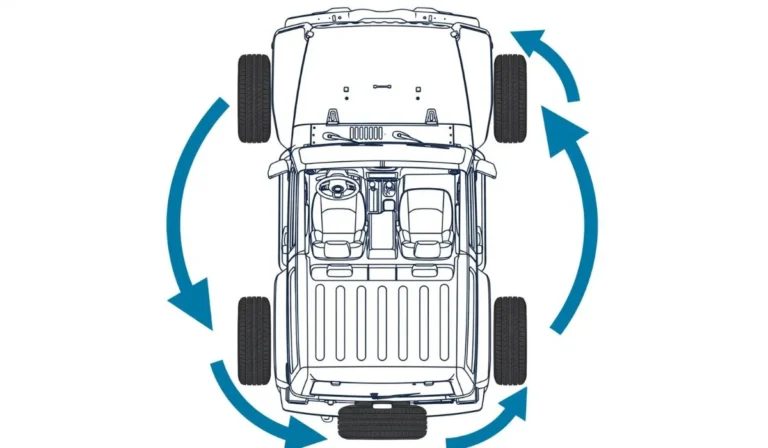
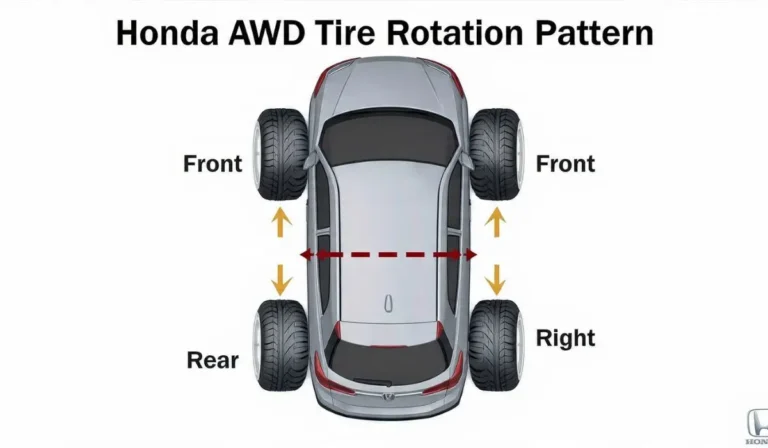
Does Tire Rotation Replace an Alignment?
No.
Tire rotation and wheel alignment serve different purposes.
Rotation changes tire positions to distribute tread wear more evenly.
Alignment checks and adjusts wheel geometry.
You May Need Both
Regular tire rotation can help reduce normal differences in wear between front and rear tires.
But rotation cannot correct incorrect toe, camber, caster, or other alignment-related conditions.
If your tires continue wearing abnormally despite regular rotations, investigate the underlying cause.
What Happens During an Alignment?
A modern alignment service generally starts with measurements of the vehicle’s wheel angles.
The Technician Measures the Wheels
Depending on the vehicle and equipment, the technician may measure:
- Camber
- Caster
- Toe
- Steering angle
- Other manufacturer-specific geometry measurements
The readings are compared with the vehicle’s specifications.
Adjustments Are Made When Possible
If measurements fall outside the acceptable range and the vehicle allows adjustment, the technician can make the appropriate corrections.
If an alignment cannot be brought into specification, there may be a worn or damaged component that needs attention.
Can I Tell If I Need an Alignment Without a Machine?
You can identify warning signs, but you can’t accurately measure alignment angles by simply looking at the vehicle.
Driving symptoms and tire wear can suggest a problem, but an alignment machine provides the actual measurements.
Don’t Rely on the Steering Wheel Alone
A centered steering wheel doesn’t guarantee perfect alignment.
Similarly, a vehicle that feels reasonably straight doesn’t necessarily mean every alignment angle is within specification.
A professional measurement is the reliable way to determine whether an adjustment is needed.
How Often Should You Get a Wheel Alignment?
There isn’t one universal mileage interval that applies to every vehicle.
Alignment requirements vary based on:
- Vehicle design
- Road conditions
- Driving habits
- Suspension condition
- Pothole impacts
- Accident history
- Tire wear
Instead of automatically paying for an alignment at every tire change, consider the vehicle manufacturer’s maintenance recommendations and your vehicle’s symptoms.
Check Alignment When Something Changes
A good rule is to consider an alignment check when you notice a new handling or tire-wear problem.
It’s also sensible after a significant pothole or curb impact or after relevant suspension repairs.
Is an Alignment Worth It With Brand-New Tires?
In many cases, yes—if there are signs that the vehicle’s geometry may be incorrect.
If your old tires wore evenly and your vehicle drives normally, you may not need an adjustment.
But if your old tires showed abnormal wear, checking alignment can be a relatively small step toward protecting a much larger tire investment.
The Smart Approach
Rather than asking, “Do new tires always require an alignment?” ask:
“Does my vehicle show evidence of an alignment problem?”
That question leads to a much more useful decision.
Quick Checklist Before Leaving the Tire Shop
After replacing your tires, check:
☐ Steering wheel is centered
☐ Vehicle tracks normally
☐ Tire pressures are set correctly
☐ Lug nuts are properly tightened
☐ No unusual vibration is present
☐ Old tires didn’t show severe uneven wear
☐ No suspension or steering problem is suspected
☐ Alignment has been checked if symptoms or wear patterns suggest a problem
Final Answer: Do I Need an Alignment After Replacing Tires?
So, do I need an alignment after replacing tires? Usually, not automatically.
Installing new tires by itself does not normally change wheel alignment. If your old tires wore evenly, your vehicle drives straight, the steering wheel is centered, and there has been no recent suspension damage or major impact, an alignment may not be necessary.
However, an alignment check is a good idea when your old tires had uneven wear, the vehicle pulls, the steering wheel is off-center, you recently hit a pothole or curb, or suspension and steering components were repaired.
When you’re investing in a new set of tires, checking the condition of the alignment can help make sure those tires wear properly and deliver the performance you paid for.
FAQs
Do new tires automatically require an alignment?
No. Replacing tires doesn’t normally change wheel alignment. An alignment is recommended when there are signs of incorrect wheel geometry or when certain suspension or steering repairs have been performed.
Should I get an alignment when I get new tires?
You don’t necessarily need one, but an alignment check can be worthwhile if the old tires wore unevenly or the vehicle has steering or handling symptoms.
How do I know if my car needs an alignment?
Common signs include uneven tire wear, pulling to one side, a crooked steering wheel while driving straight, or unusual handling. A professional measurement is needed to confirm the problem.
Can new tires fix alignment problems?
No. New tires can improve traction and ride quality, but they don’t correct incorrect suspension geometry.
Can bad alignment damage new tires?
Yes. Incorrect alignment can cause abnormal and accelerated tread wear, potentially shortening the useful life of a new set of tires.
Should I balance tires or get an alignment?
They address different problems. Balancing corrects uneven weight distribution in a tire-and-wheel assembly, while alignment addresses wheel and suspension geometry. Your symptoms determine which service is appropriate.
Does rotating tires help with alignment?
No. Tire rotation helps distribute normal tread wear, but it does not correct alignment problems.
Should I get an alignment after hitting a pothole?
It’s a good idea to have the vehicle inspected if the impact was significant or you notice pulling, steering changes, vibration, or new uneven tire wear afterward.
How long does a wheel alignment take?
The time varies by vehicle and the condition of the suspension. A straightforward alignment may be completed relatively quickly, while worn or damaged components can make the process longer.
Is an alignment necessary after replacing all four tires?
Not automatically. If the vehicle was properly aligned and the old tires wore evenly, replacing all four tires doesn’t by itself require an alignment.
Can uneven tire pressure cause a car to pull?
Yes. Differences in tire pressure can affect how a vehicle tracks and handles. Check tire pressure before assuming a pulling problem is caused by alignment.
Is an alignment check the same as an alignment adjustment?
No. A check measures the vehicle’s alignment angles. An adjustment involves changing applicable suspension settings when measurements are outside the manufacturer’s specifications.