
Why Does My Steering Wheel Shake When I Drive? Causes & Fixes

If you are wondering, “why does my steering wheel shake when I drive?”, the answer can range from a simple wheel imbalance to a more serious steering, suspension, brake, or tire problem. The speed and conditions when the shaking occurs can provide important clues.
A steering wheel that shakes only at certain speeds often points toward the wheels or tires, while shaking mainly during braking may indicate a brake-related problem. Steering or suspension components can also create vibration, especially when driving over bumps or turning.
Understanding when the shaking happens can help you identify what needs to be checked first.
Common Reasons Your Steering Wheel Shakes While Driving
Several vehicle problems can cause steering wheel vibration. Some are relatively inexpensive to fix, while others require prompt inspection.
Unbalanced Wheels
One of the most common causes is an improperly balanced wheel and tire assembly.
When a tire and wheel are not balanced correctly, the imbalance can create a repeating vibration as the wheel rotates. The shaking may become more noticeable as vehicle speed increases.
You may notice:
- Steering wheel vibration at highway speeds
- A rhythmic shaking sensation
- Vibration that becomes stronger around a particular speed
- Vibration that decreases when you slow down
A professional wheel balance can often correct this type of problem.
Tire Problems
Your tires are directly connected to the road, so any significant tire problem can affect steering feel.
Possible issues include uneven tread wear, a damaged tire, improper inflation, or internal tire damage.
A tire with a bulge, exposed cords, severe cracking, or other visible damage should not be ignored.
Why Does My Steering Wheel Shake at High Speeds?
If the steering wheel shakes primarily at higher speeds, the first areas worth checking are the tires and wheels.
Wheel Balance Issues
A wheel imbalance can become more noticeable as rotational speed increases. This is why a vehicle may feel smooth around town but develop noticeable steering vibration on the highway.
Bent Wheel
A pothole, curb impact, or road debris can bend a wheel.
Even a relatively small deformation may prevent the wheel from rotating properly. Depending on the location and severity of the damage, you may feel the vibration through the steering wheel or throughout the vehicle.
Tire Defect or Uneven Wear
A tire that has developed irregular wear or internal damage can produce vibration.
Look for:
- Cupping or scalloped tread
- Uneven tread depth
- Flat spots
- Bulges
- Cracks
- Objects embedded in the tire
A professional tire inspection is recommended if the cause is not obvious.
Why Does My Steering Wheel Shake When I Brake?

If the steering wheel shakes mainly when you apply the brakes, the braking system deserves attention.
Brake Rotor Problems
Brake rotors can develop thickness variation or other surface problems that cause vibration during braking.
You may notice the steering wheel shaking when slowing down from moderate or high speeds. Brake pedal pulsation may also occur.
However, steering wheel vibration during braking does not automatically mean the rotor is “warped.” A proper brake inspection is needed to determine the actual cause.
Uneven Brake Pad Deposits
Uneven deposits from brake pads can sometimes create braking vibration. Other brake-system issues can produce similar symptoms.
If braking feels unusual or the vehicle pulls to one side, have the braking system inspected rather than continuing to drive normally.
Why Does My Steering Wheel Shake When I Accelerate?

Vibration during acceleration can have causes that differ from vibration while cruising.
Drivetrain Problems
Depending on the vehicle, worn or damaged drivetrain components can create vibration under acceleration.
Potential causes include problems with:
- CV joints
- Driveshaft components
- Axles
- Engine or transmission mounts
Front-wheel-drive vehicles can develop vibration from worn CV joints or related components, while rear-wheel-drive and all-wheel-drive vehicles can have different drivetrain-related causes.
Engine or Transmission Mounts
Mounts help secure the engine and transmission while reducing vibration transferred to the vehicle body.
A damaged mount can cause noticeable vibration, particularly when accelerating or shifting between drive and reverse.
Why Does My Steering Wheel Shake When I Turn?
Steering wheel shaking during turns may indicate a problem with the steering, suspension, tire, or wheel assembly.
Worn Suspension Components
Suspension components help keep the wheels properly positioned while driving. Worn components can affect vehicle stability and steering response.
Potentially involved parts include:
- Ball joints
- Tie rods
- Control arms
- Bushings
- Wheel bearings
The exact cause depends on the vehicle and symptoms.
Power Steering Problems
Some vehicles use hydraulic power steering, while many newer vehicles use electric power steering.
A problem with the steering-assist system can make the steering feel abnormal, although it does not always produce the same type of vibration associated with tire imbalance.
If the steering suddenly becomes unusually heavy, seek professional inspection.
Steering Wheel Shakes When Driving Over Bumps:
If the vibration or shaking becomes worse over potholes and bumps, suspension and steering components should be considered.
Worn Tie Rod Ends
Tie rods connect steering components and help transfer steering input to the wheels.
Excessive wear can affect steering precision and may create looseness or instability.
Worn Ball Joints
Ball joints allow controlled movement between suspension components.
Significant wear can affect wheel positioning and steering behavior. Because steering and suspension components are safety-critical, suspected damage should be inspected promptly.
Read Next: Car Shaking and Check Engine Light On After Oil Change | Causes & Fixes
Could Low Tire Pressure Cause Steering Wheel Shaking?
Incorrect tire pressure can affect handling and steering feel. Although low tire pressure is not the only possible explanation for shaking, it is one of the easiest things to check.
Check the tire pressure when the tires are cold and compare the readings with the vehicle manufacturer’s recommended pressure.
The recommended pressure is generally found on the vehicle’s tire-information label or in the owner’s manual, rather than on the maximum-pressure number printed on the tire sidewall.
Can Wheel Alignment Cause a Shaking Steering Wheel?
Wheel alignment problems can affect steering behavior, tire wear, and vehicle tracking.
However, a simple alignment problem is not always the primary cause of a steering wheel that shakes at a specific speed.
Alignment issues are more commonly associated with symptoms such as:
- Vehicle pulling to one side
- Steering wheel not centered
- Uneven tire wear
- Vehicle wandering
- Changes in handling
If vibration and alignment symptoms occur together, both should be evaluated.
Could a Wheel Bearing Cause Steering Wheel Vibration?
A worn wheel bearing can sometimes contribute to abnormal vibration or steering-related symptoms.
More commonly, a failing wheel bearing may produce a humming, growling, or rumbling sound that changes with vehicle speed or during turns.
If you hear unusual noise along with steering vibration, have the wheel bearing and surrounding components inspected.
How to Find the Cause of a Shaking Steering Wheel:
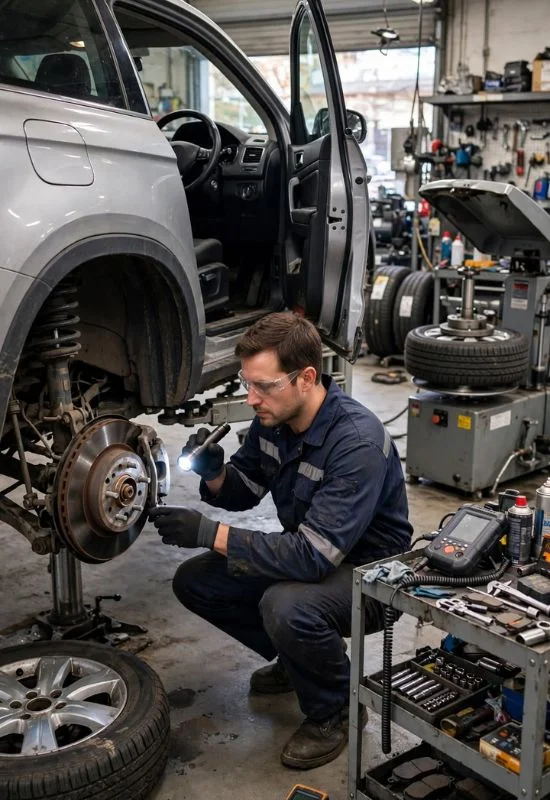
Instead of replacing parts based on symptoms alone, pay attention to when the vibration occurs.
Notice the Speed
Ask yourself whether the steering wheel shakes:
- Below 30 mph
- Around 40–50 mph
- Mainly at highway speeds
- At nearly every speed
A vibration that appears within a particular speed range can provide a useful diagnostic clue.
Notice the Driving Condition
Also determine whether the shaking happens while:
- Accelerating
- Cruising
- Braking
- Turning
- Going over bumps
- Driving on smooth roads
These details can help a technician narrow down the possibilities.
What Should You Check First?
Start with the simplest safety checks.
Inspect the Tires
Look for visible damage, uneven wear, bulges, or objects stuck in the tread.
Check tire pressure when the tires are cold.
Check the Wheels
If you recently hit a pothole or curb, mention it when having the vehicle inspected. A wheel may be damaged even when the damage is not immediately obvious.
Consider Recent Tire Work
If the shaking started after installing new tires, rotating tires, repairing a puncture, or removing and reinstalling a wheel, wheel balance and installation should be checked.
When Is a Shaking Steering Wheel Dangerous?
Not every steering vibration indicates an immediate emergency, but some symptoms require prompt attention.
Stop driving when it is safe to do so and seek professional help if you experience:
- Severe or sudden steering wheel shaking
- Loss of steering control
- A loose or wandering steering feel
- A tire with a visible bulge
- A damaged or partially separated tire
- Strong vibration after hitting a major pothole
- Grinding or clunking from the wheel area
- Vehicle pulling severely to one side
- Brake problems
- A sudden change in handling
A tire, steering, or suspension failure can create a serious safety risk.
What If the Shaking Comes and Goes?
Intermittent vibration can be harder to diagnose because the problem may depend on speed, temperature, road conditions, braking, or load.
Keep track of exactly when it happens.
For example, “the steering wheel shakes between 55 and 65 mph but stops below 50 mph” is much more useful to a mechanic than simply saying the steering wheel shakes.
Likewise, “it only happens when braking downhill” provides a valuable diagnostic clue.
Why You Should Not Ignore Steering Wheel Vibration
A vibration may start as a minor annoyance but can sometimes indicate a developing mechanical problem.
A tire imbalance may be relatively straightforward to correct, while a worn steering component or damaged tire can have much more serious consequences.
Getting the cause identified early can also help prevent additional tire wear and damage to other components.
How Much Does It Cost to Fix a Shaking Steering Wheel?
The cost varies considerably because the symptom can come from many different components.
A simple tire-pressure correction may cost nothing, while wheel balancing, tire replacement, brake work, suspension repairs, or drivetrain repairs can have very different prices.
The best approach is to diagnose the cause before approving repairs. Avoid replacing multiple parts simply because they are possible causes.
Final Thoughts
So, why does my steering wheel shake when I drive? The most common possibilities include wheel imbalance, tire problems, bent wheels, brake issues, alignment problems, worn suspension components, wheel bearings, and drivetrain faults.
The circumstances surrounding the vibration are the biggest clue. Shaking at higher speeds often points toward wheels or tires, while shaking during braking suggests the braking system should be inspected. Vibration during acceleration, turning, or over bumps can point toward drivetrain, steering, or suspension components.
Because steering and tires are directly related to vehicle safety, persistent or severe vibration should be professionally inspected rather than ignored.
FAQs
Why does my steering wheel shake when I drive at 60 mph?
A wheel or tire imbalance is one common possibility when vibration appears at highway speeds. Uneven tire wear, a damaged tire, or a bent wheel can produce similar symptoms.
Why does my steering wheel shake but the car drives straight?
The vehicle can still track straight even when a wheel or tire is producing vibration. Wheel balance, tire condition, and wheel damage are worth checking first.
Why does my steering wheel shake when I brake?
Brake-system problems can cause steering vibration during braking. Rotor thickness variation, uneven pad deposits, or other brake issues may be involved, so a proper inspection is recommended.
Can bad tires make the steering wheel shake?
Yes. Unevenly worn, damaged, improperly inflated, or internally defective tires can contribute to steering wheel vibration.
Can low tire pressure cause my steering wheel to shake?
Incorrect tire pressure can affect handling and steering feel, although it is not the only possible cause. Check all four tires against the manufacturer’s recommended cold pressure.
Why does my steering wheel shake after getting new tires?
If vibration begins after new tires are installed, wheel balance is one of the first things to check. Incorrect mounting, a damaged wheel, or a tire-related issue can also cause vibration.
Can a bad alignment cause a shaking steering wheel?
Alignment problems can cause pulling, uneven tire wear, and handling changes. They can sometimes occur alongside vibration, but a wheel or tire imbalance may be a more direct cause of speed-specific shaking.
Can a bad wheel bearing cause steering wheel vibration?
A damaged wheel bearing can contribute to abnormal vibration, although humming, growling, or rumbling noises are also common warning signs.
Is it safe to drive when the steering wheel shakes?
It depends on the severity and cause. Mild vibration should still be investigated, while severe shaking, steering looseness, tire damage, brake problems, or sudden changes in handling warrant stopping and seeking professional assistance.
How do I know if my steering wheel shaking is from the tires?
If the vibration is strongly related to vehicle speed and is most noticeable while cruising, tires and wheels are good places to begin the inspection. A professional can check tire condition, wheel balance, and wheel runout.