How Much Petrol Consumed When AC On In Standing Car | Complete Guide to Idle Fuel Consumption and AC Usage

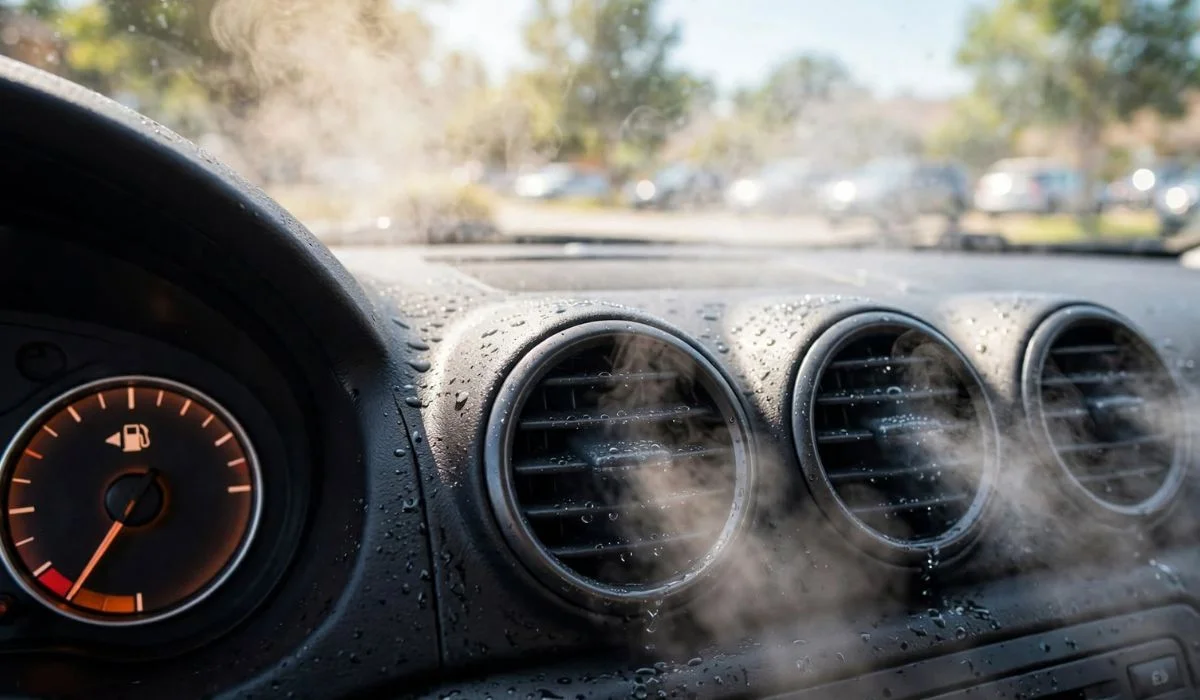
Many drivers wonder how much petrol a car uses when it is parked with the engine running and the air conditioner switched on. This is especially relevant when waiting in traffic, sitting in a parking area, resting inside the car, or keeping the cabin cool while the vehicle is stationary.
A petrol car does continue consuming fuel while idling with the AC running because the engine must remain switched on to operate the air-conditioning compressor and other systems. In many ordinary passenger cars, fuel consumption while stationary with AC can be roughly 0.6 to 1.2 liters per hour, although the actual figure varies significantly by engine size, temperature, AC system, and vehicle condition.
Understanding this consumption can help you estimate how much petrol is being used while the car is standing and decide when extended idling is worth avoiding.
How Much Petrol Does a Standing Car Use With AC?
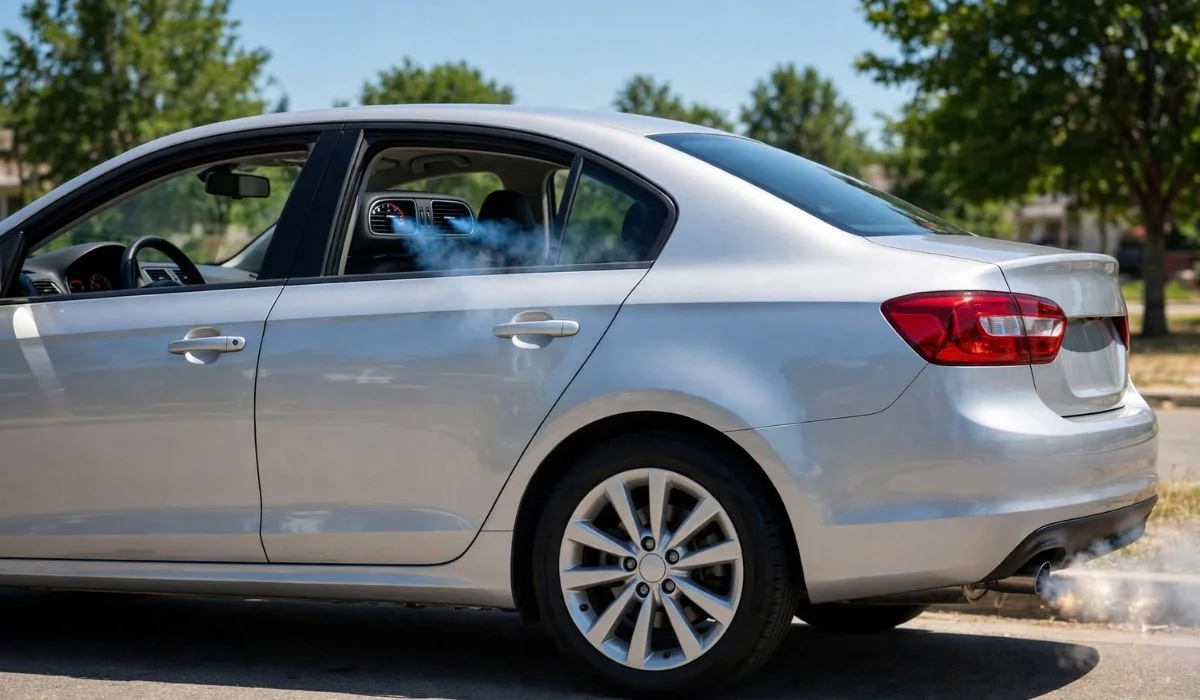
A typical petrol-powered car may consume approximately 0.6–1.2 liters of petrol per hour while stationary with the AC running.
The number is only a general estimate. A small engine may use less, while a larger engine or a vehicle operating in extremely hot weather may consume considerably more.
| Engine size | Approximate petrol use with AC |
|---|---|
| 1.0–1.3L | 0.5–0.9 L/hour |
| 1.4–1.6L | 0.6–1.0 L/hour |
| 1.8–2.0L | 0.7–1.2 L/hour |
| 2.5L+ | 1.0–1.8+ L/hour |
These figures are estimates rather than fixed specifications. The most accurate number comes from measuring your particular vehicle under real conditions.
Why There Is No Single Exact Number
Fuel consumption at idle depends on several variables, including:
- Engine displacement
- Engine design
- AC compressor type
- Outside temperature
- Cabin temperature
- AC setting
- Cooling fan operation
- Engine idle speed
- Electrical load
- Vehicle condition
- Fuel-injection system
- Whether the compressor cycles on and off
A car sitting in a cool environment may use less fuel than the same car sitting under the hot sun with the AC working continuously.
How Much Petrol Does AC Use Per Hour?
For a common petrol car, a reasonable working estimate is around 0.8 liters per hour with the AC operating.
That means a vehicle could theoretically use approximately:
- 30 minutes: 0.4 liters
- 1 hour: 0.8 liters
- 2 hours: 1.6 liters
- 3 hours: 2.4 liters
- 5 hours: 4 liters
- 8 hours: 6.4 liters
- 10 hours: 8 liters
These calculations assume a constant rate of 0.8 L/hour. Real-world consumption can be higher or lower.
Example With a 40-Liter Tank
Suppose your car has a 40-liter fuel tank and uses approximately 0.8 liters per hour while stationary with AC.
Keeping the engine running continuously for five hours could consume around 4 liters of petrol.
That is roughly 10% of a 40-liter tank, even though the car has traveled zero kilometers.
Why Does a Car Consume Petrol While Standing?

A petrol engine needs fuel to keep running even when the vehicle is not moving.
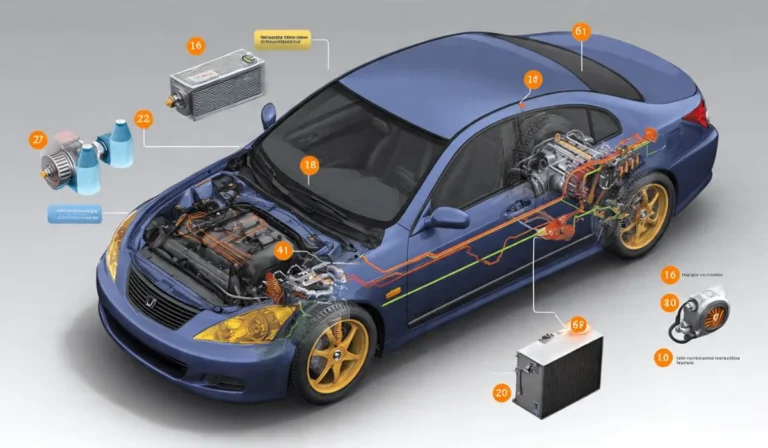
At idle, the engine continues combustion to maintain its operating speed. The engine also powers various accessories.
When the AC is turned on, the engine has additional work to perform because the air-conditioning system requires mechanical and electrical energy.
What the Engine Is Powering
Depending on the vehicle, the running engine may supply power for:
- AC compressor
- Alternator
- Cooling fans
- Water pump
- Engine-control systems
- Electrical accessories
- Other belt-driven components
The amount of additional fuel required depends on how much load these systems place on the engine.
How Much Extra Petrol Does AC Consume?
It is difficult to give one universal percentage because the AC load changes constantly.
At idle, however, switching the AC on can noticeably increase fuel consumption compared with running the engine without AC.
For example, if a particular car consumes approximately 0.5 L/hour without AC and around 0.8 L/hour with AC, the AC operation has added roughly 0.3 L/hour in that situation.
The actual difference can vary considerably.
AC Does Not Always Run at Maximum Load
Modern air-conditioning systems do not necessarily operate at maximum capacity continuously.
The compressor can cycle or vary its output depending on the vehicle’s design and cabin conditions. Once the cabin becomes cooler, the system may require less cooling than it did initially.
This means fuel consumption can fluctuate rather than remaining at one fixed rate.
Read Next: How to Change a Flat Tire
Does a Bigger Engine Use More Petrol While Idling?

Generally, a larger engine tends to consume more fuel at idle than a smaller engine, although engine design matters.
A large-displacement engine has more internal components and typically requires more fuel to maintain its operating condition.
However, engine efficiency and modern technologies can make comparisons less straightforward.
Small Engine vs Large Engine
A 1.2-liter petrol engine might consume around 0.5–0.9 L/hour with AC under certain conditions.
A larger 3.0-liter petrol engine could consume substantially more.
But these should be treated as broad ranges, not guaranteed numbers for every vehicle.
Does Outside Temperature Affect Petrol Consumption?
Yes. Hot weather can make the AC work harder.
When the cabin and interior surfaces become extremely hot, the air-conditioning system initially has to remove a large amount of heat.
The compressor and cooling fans may therefore operate more frequently or at higher loads.
Why Hot Weather Matters
Imagine two identical cars:
- Car A is parked in mild weather.
- Car B is parked under direct sunlight in very hot weather.
Car B may require more AC operation to maintain the same cabin temperature.
This can increase fuel consumption while the car is stationary.
Does Setting the AC to Maximum Use More Petrol?
Usually, maximum cooling can increase the load on the air-conditioning system, particularly when the cabin is very hot.
However, the exact effect depends on the vehicle’s AC control system.
Using a reasonable temperature setting and allowing the cabin to cool gradually can reduce unnecessary AC workload.
A Practical Approach
If the cabin is extremely hot, use the ventilation system appropriately to remove hot air initially where safe and practical. Once the cabin temperature comes down, a moderate temperature setting may reduce the cooling demand.
Does Idling With AC Damage the Car?
Occasional idling with AC is generally part of normal vehicle operation, but extended idling is not ideal.
Long periods of stationary operation can contribute to fuel consumption, engine wear, carbon deposits in some conditions, and unnecessary stress on certain components.
The effects depend on the vehicle and how well it is maintained.
Watch the Temperature Gauge
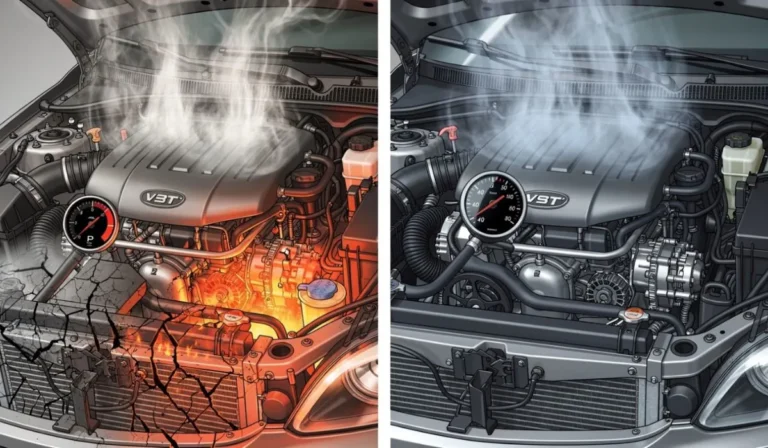
A stationary car may depend heavily on its cooling fans to remove heat because there is little natural airflow through the radiator.
If the cooling system or fan has a problem, the vehicle may overheat while idling.
Never ignore a rising temperature gauge or overheating warning.
Is It Better to Turn the Engine Off While Waiting?
If you expect to remain stationary for an extended period and it is safe and practical to do so, shutting the engine off eliminates fuel consumption during that period.
However, safety comes first.
Do not switch off the engine in situations where doing so could compromise vehicle control, visibility, climate needs, or personal safety.
What About Traffic Lights?
For a short stop at a traffic light, repeatedly switching the engine off and restarting it is generally unnecessary in vehicles that do not have an automatic stop-start system.
Modern vehicles equipped with factory stop-start systems are specifically designed to manage engine shutdowns and restarts automatically.
How Much Petrol Is Used While Parked for 8 Hours With AC?
This is a common question for drivers who spend long periods inside their cars.
If your vehicle consumes approximately 0.8 liters per hour while stationary with AC:
0.8 × 8 = 6.4 liters
So, eight hours of idling could use around 6.4 liters of petrol under that assumed consumption rate.
A vehicle consuming 0.6 L/hour would use approximately 4.8 liters, while one consuming 1.2 L/hour could use approximately 9.6 liters.
Long Idling Can Become Expensive
At first, 0.8 liters per hour may not sound significant.
But several hours of stationary AC operation can add up quickly, particularly if you do it frequently.
For someone idling with AC for two hours every day, using the 0.8 L/hour example:
2 × 0.8 = 1.6 liters per day
Over 30 days:
1.6 × 30 = 48 liters
Actual fuel costs depend on your local petrol price and the vehicle’s real consumption.
How Can You Measure Your Car’s Exact Idle Fuel Consumption?
The best way to know your vehicle’s actual consumption is to measure it.
One practical method is to start with a known fuel level, run the vehicle under controlled conditions, and measure the fuel used over a set period.
A Simple Measurement Method
You can:
- Fill the tank to a consistent level.
- Record the odometer or trip reading.
- Park in a safe, open location.
- Run the engine with AC at your normal setting.
- Record the duration.
- Refill the tank afterward.
- Calculate the fuel consumed per hour.
Because fuel-level gauges are not highly precise, measuring over a longer period can provide a better estimate.
Can the Dashboard Show Fuel Consumption at Idle?
Some newer vehicles provide instantaneous fuel-consumption information.
However, displays may behave differently when the car is stationary. Some systems show liters per hour, while others may show zero distance-based consumption because the vehicle is not traveling.
If your vehicle provides an idle fuel-consumption figure, check the owner’s manual to understand what the displayed measurement represents.
Why Manufacturer Data May Differ
Official fuel-economy ratings are generally based on standardized testing conditions.
They should not be interpreted as an exact measurement of how much petrol your car uses while parked with the AC running.
Real-world idle consumption depends on conditions that can differ substantially from laboratory testing.
Does Turning AC Off Save Petrol While the Car Is Standing?
Yes, turning the AC off generally reduces the engine load associated with air conditioning.
The exact amount of fuel saved depends on the vehicle and environmental conditions.
However, the engine will still consume petrol if it remains running because it must maintain idle operation.
Engine On Without AC
A typical petrol car might consume roughly 0.4–0.8 liters per hour without AC, depending on the engine and conditions.
With AC, the figure may increase to approximately 0.6–1.2 liters per hour.
These are broad estimates, not universal specifications.
Does a Hybrid Car Use Petrol While Standing With AC?
Hybrid vehicles work differently.
A hybrid may be able to turn the gasoline engine off while stationary and operate certain systems using the high-voltage battery. If the battery state of charge falls sufficiently, the gasoline engine may start automatically to recharge the battery or provide power.
Therefore, a hybrid can consume substantially less petrol during some stationary periods than a conventional petrol vehicle, but it does not necessarily consume zero fuel.
Why Hybrid Idle Consumption Is Different
The hybrid control system continuously decides whether the gasoline engine needs to run.
Factors such as battery charge, cabin temperature, AC demand, and vehicle operating conditions influence that decision.
Does Idling With AC Use More Fuel Than Driving?
It depends on the driving conditions.
A car sitting stationary uses fuel without covering any distance, so its fuel economy in km/L or mpg is effectively zero while stationary.
During efficient cruising, the same engine may consume fuel while traveling a significant distance.
This is why extended idling can be particularly inefficient from a distance-per-liter perspective.
The Important Difference
When driving:
Fuel is consumed + distance is covered
When idling:
Fuel is consumed + zero distance is covered
That makes prolonged unnecessary idling an easy place to reduce fuel waste.
How to Reduce Fuel Consumption While Using AC
You do not need to stop using AC completely to save fuel.
Instead, reduce unnecessary cooling demand and make sure the system is operating correctly.
Practical Fuel-Saving Tips
- Park in shade when possible.
- Use a windshield sunshade.
- Keep the AC system properly maintained.
- Replace a clogged cabin air filter when required.
- Avoid unnecessarily extreme temperature settings.
- Do not leave the engine idling for hours without a reason.
- Check that cooling fans are functioning correctly.
- Keep doors and windows closed while using AC for cooling.
- Repair refrigerant or compressor problems instead of repeatedly ignoring them.
What Mechanical Problems Can Increase Idle Fuel Consumption?
If your car suddenly starts using significantly more fuel while stationary, there may be an underlying mechanical or electrical problem.
Potential causes include:
- Dirty or faulty airflow sensors
- Engine misfires
- Faulty oxygen sensors
- Poorly functioning fuel injectors
- Cooling-system problems
- AC compressor problems
- Incorrect engine temperature readings
- Dirty air filters
- Vacuum leaks
- Excessive idle speed
- Charging-system problems
Sudden Changes Should Be Investigated
A gradual difference caused by extreme weather may be normal.
A sudden increase in fuel consumption, rough idle, unusual AC noises, warning lights, or overheating deserves professional diagnosis.
Final Takeaway
A petrol car does consume fuel when it is standing with the engine and AC running. For many ordinary cars, a useful general estimate is around 0.6–1.2 liters of petrol per hour, with approximately 0.8 L/hour being a reasonable example for calculation.
That means a car consuming 0.8 L/hour could use about 4 liters in five hours or 6.4 liters in eight hours, despite traveling zero kilometers.
The exact figure depends on engine size, AC demand, outside temperature, vehicle design, and mechanical condition. If you want the most accurate number for your own car, measure fuel usage over a controlled period or check whether the vehicle provides an idle fuel-consumption reading.
For everyday fuel savings, avoid unnecessary long-duration idling, maintain the engine and AC system properly, and investigate sudden increases in fuel consumption rather than assuming they are normal.
FAQs About Petrol Consumption While Idling With AC
How much petrol does a car use in one hour with AC on?
A typical petrol car may use approximately 0.6–1.2 liters per hour while stationary with the AC operating. Smaller engines may use less, while larger engines can use more.
Does AC consume petrol when the car is not moving?
Yes. If the engine is running, the car consumes petrol. The AC adds load to the engine, which can increase fuel consumption.
How much petrol does a car use while idling without AC?
A typical petrol car may consume approximately 0.4–0.8 liters per hour without AC, although actual consumption varies by engine and vehicle.
How much petrol will my car use if I leave the AC on for 5 hours?
If the vehicle consumes 0.8 L/hour, five hours would use approximately 4 liters. A car with a different idle rate will use more or less.
How much fuel does a car use while idling for 8 hours?
At an assumed rate of 0.8 L/hour, eight hours would consume approximately 6.4 liters. Depending on the vehicle, actual consumption could be significantly different.
Does running AC while parked waste petrol?
It can use a substantial amount of fuel during long periods because the engine consumes petrol without moving the car any distance.
Does a larger engine consume more fuel while idling?
Generally, larger engines tend to consume more fuel at idle, although engine technology and operating conditions also have a major influence.
Does turning off AC save petrol while idling?
Yes. Turning the AC off normally reduces the engine load associated with the air-conditioning system, although the engine will continue consuming fuel while it remains running.
Can low AC refrigerant increase fuel consumption?
A refrigerant problem can affect AC operation, but low refrigerant does not automatically mean the compressor will consume more fuel. A malfunctioning AC system should be diagnosed rather than repeatedly recharged without finding the cause.
Does a hybrid car consume petrol while parked with AC?
Sometimes. A hybrid may shut off its gasoline engine while stationary and use battery power, but the engine can automatically restart when needed. Actual fuel consumption depends on the hybrid system and conditions.
Is it bad to sit in a car with AC running for hours?
Extended idling is generally not ideal for fuel economy and can place unnecessary operating time on the engine and related systems. Never idle in an enclosed or poorly ventilated space because exhaust gases can be dangerous.
How can I find my car’s exact fuel consumption while parked?
Measure how much fuel is consumed over a known period under controlled conditions. Repeating the test can give you a more reliable estimate than relying on the fuel gauge alone.
Does idling use more fuel than driving?
It can be very inefficient because fuel is being consumed while the vehicle travels zero distance. Whether the total fuel used per hour is greater than during driving depends on speed, engine load, and driving conditions.
Can a faulty AC compressor increase fuel consumption?
Yes. A compressor that creates excessive mechanical resistance can place additional load on the engine and potentially increase fuel consumption.