How Do You Warm Up A Hybrid Car In The Winter | Save Fuel and Battery Life

Warming up a hybrid car in winter is very different from warming up a traditional gasoline vehicle. Many drivers are used to starting their car and letting the engine idle for 5–10 minutes on cold mornings. With a hybrid, that habit is not only unnecessary but often counterproductive.
Hybrid vehicles are designed to minimize engine idling, maximize efficiency, and rely heavily on electric power at low speeds. In freezing temperatures, the system behaves differently, and understanding how it manages heat will help you warm the car faster, protect the engine, and improve fuel economy.
This complete winter guide explains how hybrid warm-up actually works and the correct way to warm up your vehicle when temperatures drop below freezing.
How Hybrid Heating Differs From Regular Cars:
In a conventional gasoline car, cabin heat comes from hot engine coolant. You must wait for the engine to warm up before warm air blows from the vents.
In hybrids like Toyota Prius, Toyota Camry Hybrid, and Honda Insight, the vehicle may start and move using only electric power. That means:
- The gasoline engine may stay OFF at startup
- No engine heat is produced initially
- Cabin heat may take longer if you rely only on idling
- The car is designed to warm up best while driving, not sitting
This is why traditional warm-up habits don’t apply to hybrids.
What Happens Inside a Hybrid on a Cold Morning:
When you press the Start button in winter:
- The high-voltage battery powers electronics
- The engine may or may not start immediately
- The hybrid control system decides when the engine needs to run
- Cabin heat depends on engine coolant temperature or electric heaters (in some models)
Because the system prioritizes efficiency, it avoids unnecessary idling. Letting the car sit does not speed up warm-up the way it does in older vehicles.
The Correct Way to Warm Up a Hybrid Car:
Step 1: Start the Car and Wait 30–60 Seconds
Start the vehicle and give it half a minute. This allows:
- Oil to circulate
- Systems to initialize
- Windows to begin defogging
Do not sit for 5–10 minutes.
Step 2: Turn On the Defroster and Heater
Set the climate control to:
- Front defrost
- Moderate heat setting
- Fan on medium
This forces the engine to start sooner because the car detects a demand for heat.
Step 3: Begin Driving Gently
This is the most important step. Drive slowly and smoothly for the first 3–5 minutes.
Hybrids warm up fastest while moving, because:
- Engine runs under light load
- Coolant heats faster
- Cabin warms sooner
- Battery stays healthier
Why Idling a Hybrid Is a Bad Idea:
If you idle a hybrid for long periods:
- The engine may cycle on and off
- Warm-up takes longer
- Fuel economy drops
- Carbon builds up in the engine
- Battery drains faster in cold weather
Hybrids are engineered to warm efficiently under motion, not while parked.
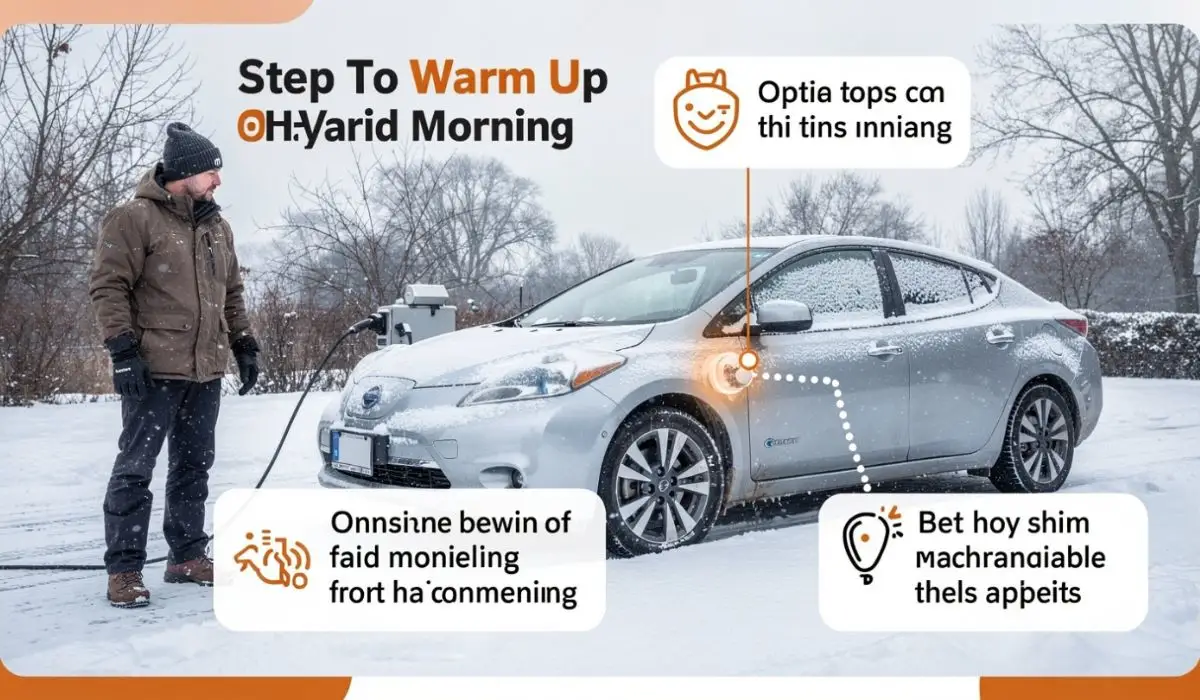
Use Remote Start the Right Way (If Equipped):
Some hybrids have remote start. Use it wisely:
- Start the car 2–3 minutes before leaving
- Turn on defroster and heat remotely if possible
- Do not remote start for 10–15 minutes
Remote start is for comfort and defrosting, not full engine warm-up.
How Long Does a Hybrid Take to Warm Up in Winter?
At temperatures below 0°C (32°F):
- 2 minutes: Engine begins warming
- 5 minutes of driving: Cabin starts getting warm
- 10 minutes: Engine reaches optimal temperature
This is faster than idling for the same time.
Battery Behavior in Cold Weather:
Cold weather affects the hybrid battery:
- Reduced power output
- Engine runs more often
- Regenerative braking less effective initially
Driving gently helps the battery and engine warm together.
Read Next: How Long Do Tires Last
Best Climate Control Settings for Faster Warm-Up:
Use this combination:
- Front defrost ON
- Temperature set to warm (not max hot)
- Fan medium speed
- Avoid seat heaters at first (draws battery power)
This encourages the engine to run and produce heat efficiently.
Should You Use EV Mode in Winter?
Avoid EV-only mode during cold starts.
EV mode:
- Prevents engine from running
- Delays heat production
- Makes cabin stay cold longer
Let the hybrid system decide when to use the engine.
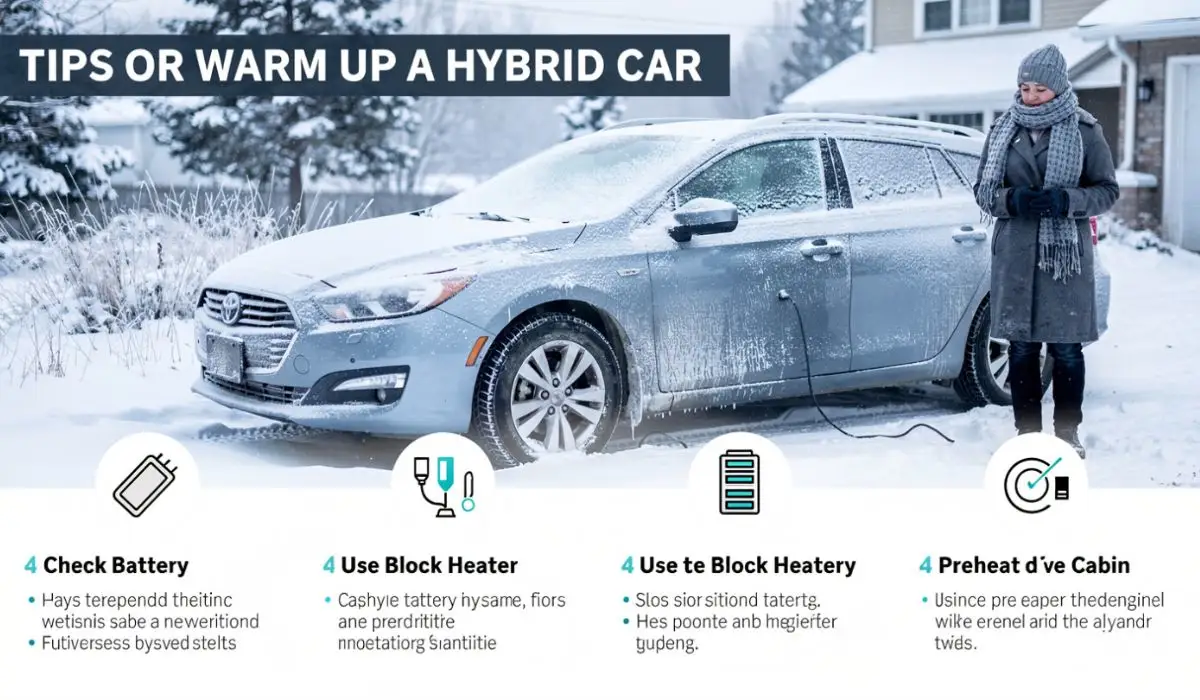
Tips to Warm Your Hybrid Faster in Winter:
- Park in a garage if possible
- Use a windshield cover overnight
- Check coolant level before winter
- Use the correct coolant mix
- Keep tires properly inflated
- Keep battery charged
Common Mistakes Hybrid Owners Make in Winter:
- Idling too long
- Using EV mode immediately
- Turning heater to max before driving
- Driving aggressively before warm-up
- Ignoring low coolant levels
Signs Your Hybrid Is Not Warming Properly:
- Heater blows cold after 10 minutes
- Temperature gauge stays low
- Engine runs constantly
- Poor fuel economy
- Windows won’t defog
These may indicate thermostat or coolant issues.
Does Warming Up Affect Fuel Economy?
Yes. Proper warm-up while driving:
- Uses less fuel
- Reduces engine wear
- Improves hybrid efficiency
- Protects the battery
Idling wastes fuel and delays optimal performance.
The Ideal Winter Start Routine (Quick Checklist):
- Start car
- Wait 30 seconds
- Turn on defrost and heater
- Start driving gently
- Avoid hard acceleration for 5 minutes
That’s it.
Why Hybrids Feel Colder Than Regular Cars at First:
Because the engine is not always running, heat is not constant at startup. This is normal behavior, not a fault.
Some newer hybrids include electric cabin heaters to solve this, but most rely on engine heat.
When to See a Mechanic:
If your hybrid:
- Never produces warm air
- Overheats in winter
- Shows warning lights
- Has fluctuating temperature
Have the cooling system and thermostat inspected.