How to Wash a Car Properly | Clean, Spotless, and Shiny Vehicle

Learning how to wash a car properly is more than spraying water over the vehicle and wiping it with a towel. The right technique helps remove dirt while reducing the risk of swirl marks, scratches, water spots, and damage to the paint.
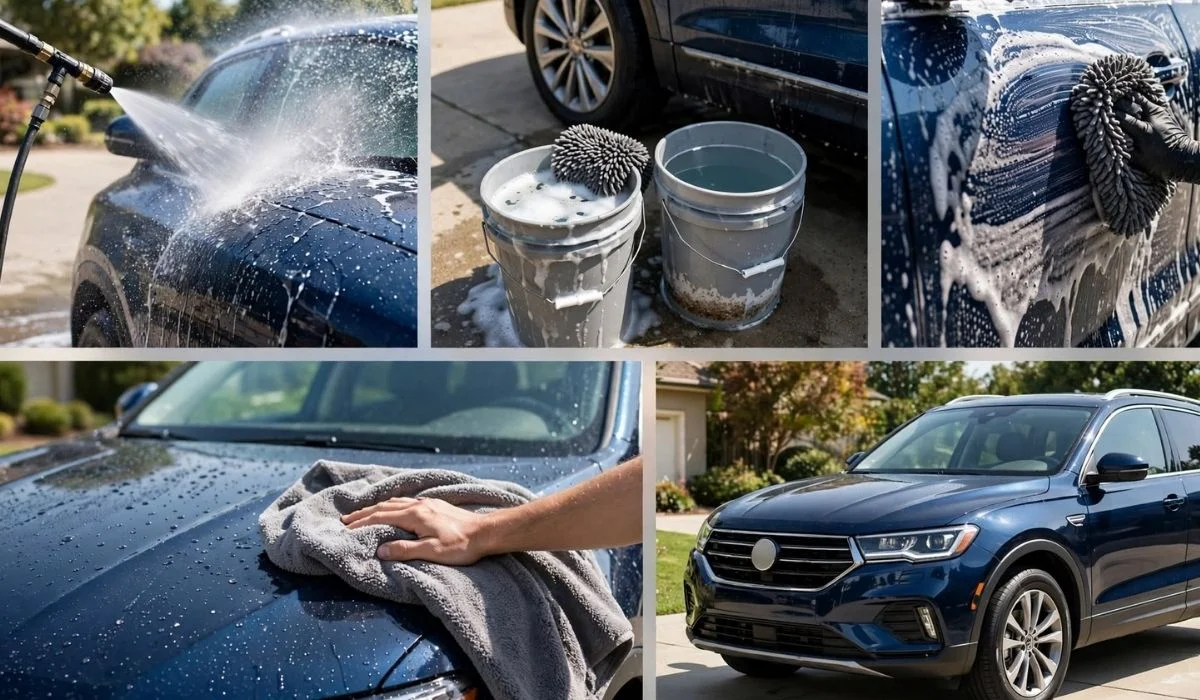
A proper car wash starts with the right location and equipment, followed by a thorough rinse, gentle washing, careful wheel cleaning, complete rinsing, and safe drying. The most important principle is simple: keep abrasive dirt away from the paint and never scrub a dry, gritty surface.
What You Need to Wash a Car Properly?
You do not need an expensive detailing setup to wash a car effectively.
Gather:
- Automotive car shampoo
- Clean water
- Two buckets
- Microfiber wash mitt
- Separate wheel brush
- Microfiber drying towels
- Hose or pressure washer
- Wheel cleaner, when appropriate
- Tire brush
- Grit guards, if available
- Glass cleaner
- Detailing brushes for tight areas
Why Use Car Shampoo?
Regular household dishwashing liquid is not the best choice for routine car washing.
Automotive shampoos are specifically formulated for vehicle surfaces and are generally designed to clean without unnecessarily stripping existing protective products.
Use a product according to its label instructions rather than assuming that more soap provides better cleaning.
Choose the Right Place to Wash Your Car:

Where you wash the vehicle matters almost as much as how you wash it.
Choose:
- A shaded area
- A cool vehicle surface
- A location with good drainage
- A place away from blowing dust
- A surface where you can safely work around the vehicle
Avoid washing a hot car under intense sunlight whenever possible.
Why Shade Is Important
Water and cleaning products can dry quickly on hot panels.
When water evaporates, minerals can remain behind as water spots. Rapid drying can also make shampoo residue more difficult to rinse away.
Remove Loose Dirt Before Touching the Paint
One of the most important rules for washing a car is rinse before you wipe.
Use a hose or pressure washer to loosen and remove:
- Dust
- Sand
- Mud
- Road grime
- Loose grit
- Bird droppings
- Other surface debris
Start at the top and work downward.
Why the Pre-Rinse Matters
A wash mitt can drag loose particles across the paint if you begin scrubbing immediately.
Rinsing first removes as much loose contamination as possible and reduces the amount of abrasive material that your mitt encounters.
Clean the Wheels First
Wheels often contain some of the dirtiest material on the vehicle.
Brake dust, road grime, mud, and metallic particles can accumulate on wheel surfaces.
Clean the wheels before washing the painted body panels.
Use a Separate Wheel Brush
Never use the same wash mitt on your wheels and paint.
A wheel brush can collect abrasive particles that you do not want anywhere near your vehicle’s paint.
Also allow wheels to cool before using cleaning products if they are hot from driving.
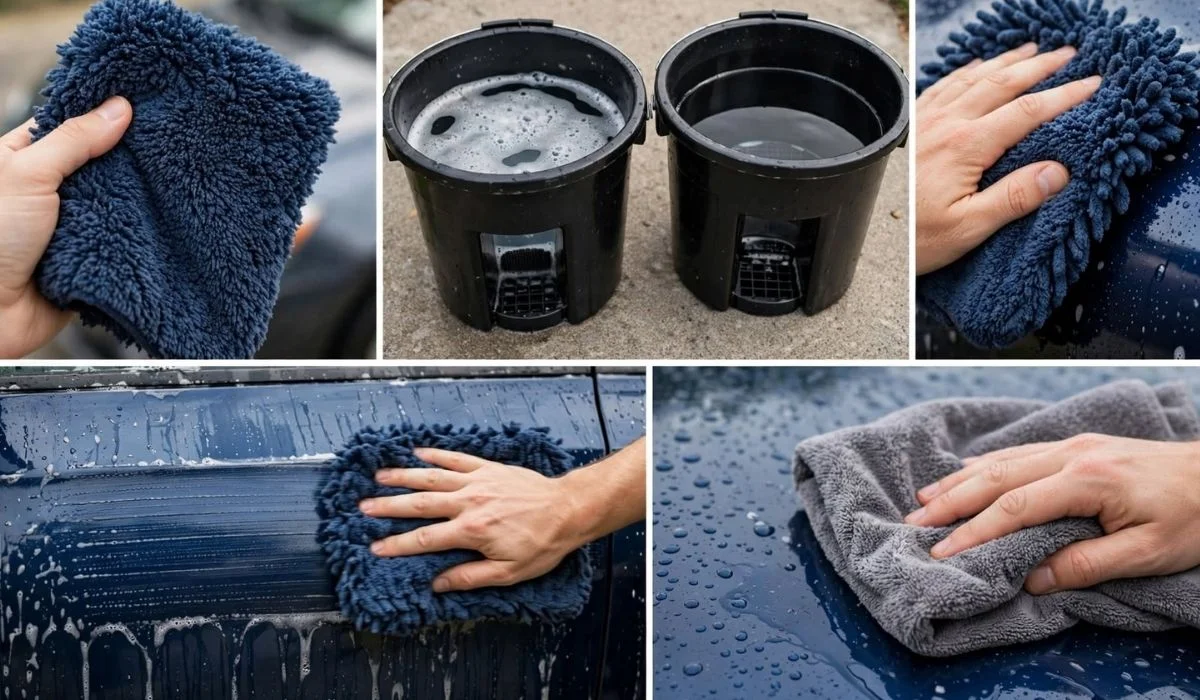
Use the Two-Bucket Washing Method
The two-bucket method is a popular way to reduce the amount of dirt transferred back onto the vehicle.
Use:
Bucket 1: Car shampoo and water
Bucket 2: Plain rinse water
Dip your wash mitt into the shampoo bucket, wash a small section, then rinse the mitt in the second bucket before returning it to the shampoo.
Add a Grit Guard if Available
A grit guard sits at the bottom of a bucket and helps keep some heavier particles away from the mitt.
It does not make washing completely scratch-proof, but it can be a useful additional precaution.
Start Washing From the Top
Once the car has been rinsed, begin with the cleanest areas.
A good sequence is:
- Roof
- Windows
- Hood
- Upper doors
- Rear panels
- Lower doors
- Bumpers
- Lower rocker panels
The bottom sections usually contain more dirt.
Why Top-to-Bottom Washing Works
Gravity naturally carries water and loosened dirt downward.
Starting at the roof and moving toward the lower panels helps prevent you from repeatedly transferring dirt from dirty areas onto cleaner sections.
Wash Small Sections at a Time
Don’t cover the entire car with shampoo before rinsing.
Work in manageable sections.
For example:
- Half of the roof
- One side window
- Half of the hood
- One or two door panels
Wash gently and rinse the mitt frequently.
Use Gentle Straight-Line Motions
Apply minimal pressure.
Let the lubrication from the shampoo help the mitt glide across the surface.
Avoid aggressive circular scrubbing.
Why Pressure Can Cause Problems
Even if your wash mitt is soft, dirt trapped inside it can act like abrasive particles.
The harder you press, the more forcefully those particles can move against the paint.
Gentle washing is safer.
Don’t Let the Car Shampoo Dry
Keep an eye on the surface while washing.
If the shampoo starts drying before you rinse it, stop and rinse the area.
This is especially important in:
- Hot weather
- Direct sunlight
- Low-humidity conditions
- Windy conditions
Rinse the Vehicle Thoroughly
After washing, rinse the entire vehicle from top to bottom.
Pay attention to:
- Mirrors
- Door handles
- Grilles
- Trim
- Wheel arches
- Panel gaps
- Around license plates
Open Doors Briefly When Appropriate
Water and soap can remain around door edges and seals.
After the main rinse, carefully open the doors and inspect these areas.
Do not allow water to sit unnecessarily around interior electrical components.
How to Wash a Car Without Scratching It?
Avoiding scratches is mostly about controlling contamination and friction.
Follow these principles:
- Rinse before washing.
- Use a clean microfiber mitt.
- Use separate wheel-cleaning tools.
- Rinse the mitt frequently.
- Use plenty of lubrication.
- Apply light pressure.
- Work from clean areas toward dirty areas.
- Never scrub dry dirt from paint.
Never Use a Dirty Sponge
A sponge that has been dropped on the ground can pick up tiny stones and abrasive particles.
If your wash tool falls onto the ground, clean it thoroughly or replace it rather than immediately putting it back on the paint.
How to Clean Bird Droppings
Bird droppings should be removed as soon as reasonably practical.
Do not aggressively scrub dried droppings.
Instead:
- Saturate the area with water.
- Allow the contamination to soften.
- Gently remove it with a clean microfiber towel or appropriate automotive cleaning method.
- Rinse the area.
Why Gentle Removal Matters
Bird droppings can contain abrasive material.
Trying to scrape or dry-scrub them can increase the risk of scratching the paint.
How to Wash Mud Off a Car
Never attack heavy, dry mud with a wash mitt immediately.
First, soak and rinse the area.
Allow water to loosen the mud before washing.
For Heavy Mud
A pressure washer can be helpful when used appropriately.
Keep the nozzle at a safe distance and avoid directing high-pressure water into:
- Electrical connections
- Damaged seals
- Sensitive trim
- Open windows
- Vulnerable components
The goal is to loosen contamination, not force water into places where it does not belong.
How to Wash Car Windows
Clean the glass after the main exterior wash or as part of your final detailing step.
Use:
- Automotive glass cleaner
- Clean microfiber glass towels
Wipe thoroughly and inspect the glass from different angles.
Avoid Using a Dirty Towel
A towel used on wheels or heavily contaminated paint should never become your glass towel.
Glass can show streaks and residue very easily.
How to Wash the Car’s Grille
Grilles often collect insects, dust, and road debris.
Use a soft detailing brush or appropriate wash mitt depending on the grille design.
Work gently around:
- Emblems
- Sensors
- Camera areas
- Small openings
- Delicate trim
Avoid forcing high-pressure water into sensitive sensors or connectors.
Read Next: Rotten Egg Smell In Car Dangerous | Health Risks, and What to Do When You Notice the Odor
How to Clean Tires and Wheel Wells:
Tires and wheel wells can hold substantial amounts of dirt.
Use dedicated tools rather than your paint-washing mitt.
Tire Cleaning
Apply an appropriate tire cleaner if needed.
Agitate gently with a tire brush.
Rinse thoroughly.
Wheel Wells
Wheel wells can accumulate:
- Mud
- Sand
- Road salt
- Leaves
- Grease
- Dirt
A suitable brush can help reach these areas.
Rinse One More Time
After the complete wash, perform a final rinse.
Make sure no shampoo remains around:
- Door handles
- Mirrors
- Grilles
- Emblems
- Panel gaps
- Window trim
Remaining soap can dry into visible residue.
How to Dry a Car Properly
Drying is an important part of learning how to wash a car properly.
Do not simply allow the car to air-dry if you are trying to minimize water spots.
Use a clean, high-quality microfiber drying towel.
Use Blotting or Gentle Wiping
For large panels, you can gently drag a suitable microfiber drying towel across the surface or blot water away.
Avoid applying heavy pressure.
Keep using clean sections of the towel as it becomes saturated.
Can You Air-Dry a Car?
Yes, but air-drying can leave mineral deposits depending on the water quality.
Hard water contains dissolved minerals.
When the water evaporates, those minerals can remain on the paint as spots.
If your local water is hard, drying the vehicle promptly becomes especially useful.
How to Prevent Water Spots
To reduce water spots:
- Wash in the shade.
- Avoid washing a hot car.
- Don’t let water dry on the paint.
- Rinse thoroughly.
- Dry promptly.
- Use clean microfiber towels.
- Consider appropriate paint protection.
What Causes Water Spots?
Water spots commonly occur when droplets evaporate and leave dissolved minerals behind.
Fresh spots may be easier to remove than older mineral deposits.
Avoid aggressively rubbing them with household abrasives.
Should You Use a Pressure Washer?
A pressure washer can make pre-rinsing more effective, especially on heavily contaminated vehicles.
However, it must be used correctly.
Pressure Washer Safety
Keep an appropriate distance from the surface.
Avoid concentrating the spray on:
- Damaged paint
- Loose trim
- Weather seals
- Cracked glass
- Decals with lifted edges
- Sensitive electrical areas
More pressure is not automatically better cleaning.
Should You Wax Your Car After Washing?
Washing and waxing are separate steps.
Wax can provide a layer of protection and may improve water behavior and appearance, depending on the product.
You do not necessarily need to wax after every wash.
When to Apply Protection
Follow the instructions for your chosen wax, sealant, or other paint-protection product.
The surface should generally be clean and appropriately prepared before application.
How Often Should You Wash a Car?
There is no single perfect schedule for every vehicle.
Washing frequency depends on:
- Weather
- Driving conditions
- Parking location
- Road dust
- Rain
- Mud
- Bird droppings
- Tree sap
- Vehicle use
A frequently driven vehicle exposed to dirt and weather will generally need washing more often than a garage-kept vehicle.
Common Car-Washing Mistakes
Washing in Direct Sunlight
Rapid drying can cause water spots and soap residue.
Using Household Dish Soap Regularly
It is better to use a product designed specifically for automotive washing.
Using One Bucket for Everything
A separate rinse bucket can help reduce dirt transfer.
Using One Mitt for Wheels and Paint
Wheel contamination can be abrasive.
Keep wheel-cleaning tools separate.
Scrubbing Too Hard
Pressure can increase friction and surface marring.
Using Old Towels
Rough or contaminated towels can damage the finish.
Washing Without Rinsing First
Dry dirt and grit can increase the risk of scratches.
Letting Soap Dry
Dried residue can be difficult to remove cleanly.
A Quick 30–45 Minute Car Wash Routine
For a moderately dirty vehicle, a basic wash can follow this sequence.
Preparation
Gather your shampoo, buckets, mitts, towels, hose, and wheel tools.
Park in shade.
Wheels
Rinse and clean the wheels and tires.
Rinse thoroughly.
Pre-Rinse
Rinse the entire vehicle from top to bottom.
Main Wash
Use the two-bucket method.
Wash the roof and upper surfaces first.
Move progressively toward the lower panels.
Final Rinse
Rinse all shampoo away.
Drying
Use clean microfiber towels.
Dry the glass, paint, mirrors, handles, and panel edges.
Final Inspection
Check for:
- Remaining dirt
- Water spots
- Soap residue
- Bird droppings
- Missed areas
What to Do After Washing
A clean vehicle can benefit from a quick inspection.
Look for:
- Stone chips
- New scratches
- Paint contamination
- Damaged trim
- Cracked lights
- Tire condition
Washing provides a good opportunity to notice small problems before they become larger ones.
How to Wash a Car in Winter
Winter washing can be especially important when roads contain salt or other contaminants.
Use a suitable car shampoo and rinse thoroughly.
Pay extra attention to:
- Wheel wells
- Undercarriage
- Lower body panels
- Mud flaps
- Wheels
Don’t Ignore the Undercarriage
Road contaminants can accumulate underneath the vehicle.
If practical and safe, use an appropriate underbody rinse or professional car-wash system designed for undercarriage cleaning.
How to Wash a Car After Rain
Rain does not necessarily mean your car is clean.
Rainwater can mix with:
- Dust
- Road grime
- Pollution
- Pollen
- Other contaminants
After the rain, inspect the vehicle.
If it remains dirty, wash it properly rather than assuming the rain cleaned it.
How to Wash a Car Without a Hose
If you don’t have access to a hose, a rinseless or waterless automotive wash product may be appropriate depending on the level of contamination.
Do not use a waterless method on a heavily muddy vehicle unless the product specifically supports that application.
When Rinseless Washing Works Best
Rinseless products can be useful for:
- Lightly dusty vehicles
- Apartment parking
- Areas with water restrictions
- Controlled maintenance washing
Follow the product’s dilution and application instructions carefully.
Final Thoughts
Knowing how to wash a car properly is mostly about using the right technique rather than buying expensive equipment. Start by rinsing away loose dirt, clean the wheels separately, use a quality automotive shampoo, wash from top to bottom, rinse the mitt frequently, and keep pressure low.
The drying stage matters just as much. Clean microfiber towels and prompt drying can help reduce water spots and unnecessary rubbing.
Most importantly, remember that car paint benefits from less friction, cleaner tools, and better lubrication. A careful wash routine can keep your vehicle looking cleaner while reducing avoidable surface damage.
FAQs
What is the correct order to wash a car?
A practical order is wheels and tires first, followed by a thorough pre-rinse, top-to-bottom body wash, final rinse, glass cleaning, and careful drying.
Should I wash my car with hot or cold water?
Cool or moderate-temperature water is generally preferable. Avoid washing extremely hot panels because water and cleaning products can dry too quickly.
Can I use dish soap to wash my car?
For routine washing, an automotive car shampoo is a better choice. It is specifically formulated for vehicle surfaces.
Should I wash my car in the sun?
It is better to wash in the shade when possible. Direct sunlight can cause water and shampoo to dry quickly and increase the chance of water spots or residue.
How often should you wash your car?
The ideal frequency depends on driving conditions, weather, parking, and contamination. Vehicles exposed to heavy dirt, mud, bird droppings, or road contaminants generally need more frequent cleaning.
Is it better to wash a car from top to bottom?
Yes. The upper sections are usually cleaner, while lower panels collect more road grime. Washing from top to bottom helps limit dirt transfer.
Should I rinse my car before washing it?
Absolutely. A thorough pre-rinse removes loose dust, sand, and grit before your wash mitt touches the paint.
Can I use the same sponge for wheels and car paint?
It is better not to. Wheels can contain abrasive brake dust and heavy road contamination. Use separate tools for wheels and painted surfaces.
How do I wash a car without scratching it?
Rinse first, use clean microfiber equipment, use plenty of lubrication, wash gently, rinse the mitt frequently, and never aggressively scrub dry or heavily contaminated paint.
Is a pressure washer safe for car paint?
Yes, when used correctly. Keep an appropriate distance and avoid directing concentrated high-pressure water at damaged paint, loose trim, seals, or sensitive components.
Should I dry my car after washing?
Yes, especially if you want to reduce water spots. Use a clean microfiber drying towel and avoid excessive pressure.
Why does my car have water spots after washing?
Water spots can occur when water evaporates and leaves dissolved minerals behind. Washing in the shade and drying the vehicle promptly can help reduce them.
Can I wash my car every day?
You can, but daily washing is usually unnecessary for most vehicles. Excessive washing with poor technique can introduce unnecessary friction and surface marring.
What is the biggest mistake when washing a car?
One of the biggest mistakes is wiping heavily contaminated or dry paint without first rinsing it. Dirt and grit can create friction and increase the risk of scratches.