How Long To Leave Baking Soda In Car | Odors and Keeping Your Car Fresh
 ByAliza
Baking soda is a simple household product often used to absorb unpleasant odors inside cars. It can be especially useful for musty smells, food odors, smoke odors, and general stale-air problems. But how long to leave baking soda in car depends on where you put it, how strong the odor is, and whether you are using dry baking soda or a baking-soda solution.
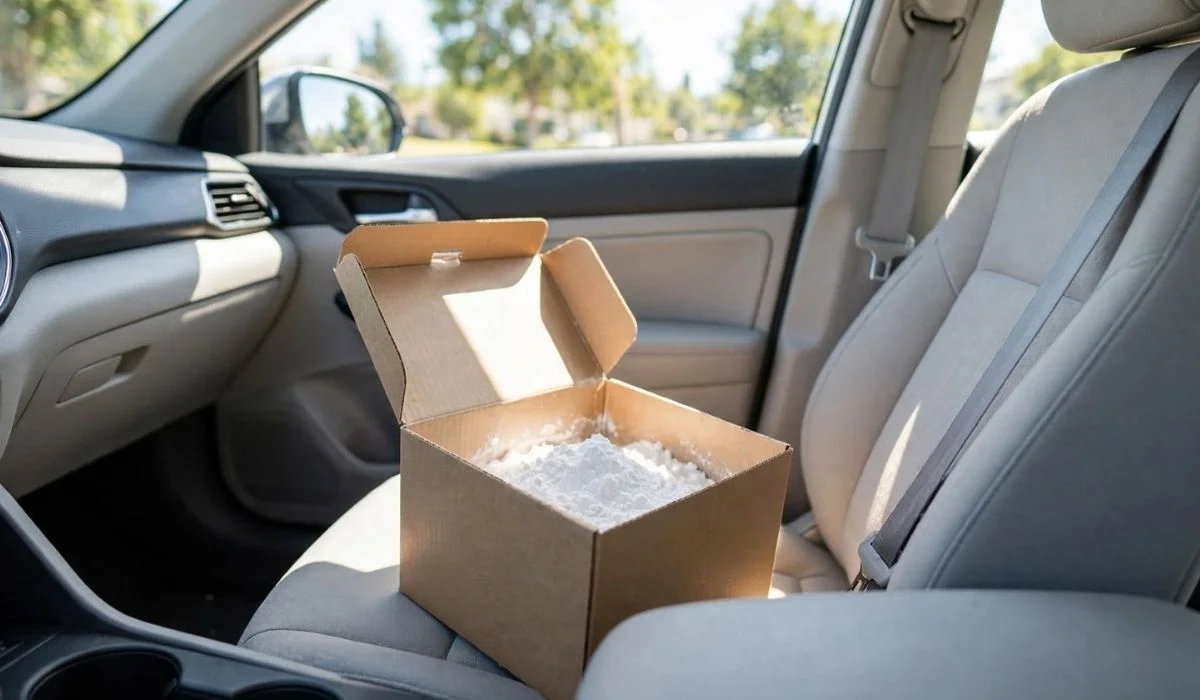
For basic odor absorption, leaving an open container or bowl of baking soda inside a parked car for several hours or overnight is usually practical. For stronger odors, it can be left for around 24 hours, provided the baking soda remains contained and the vehicle is parked safely. Baking soda is not a substitute for cleaning the actual source of a persistent odor.
How Long Should You Leave Baking Soda in Car?
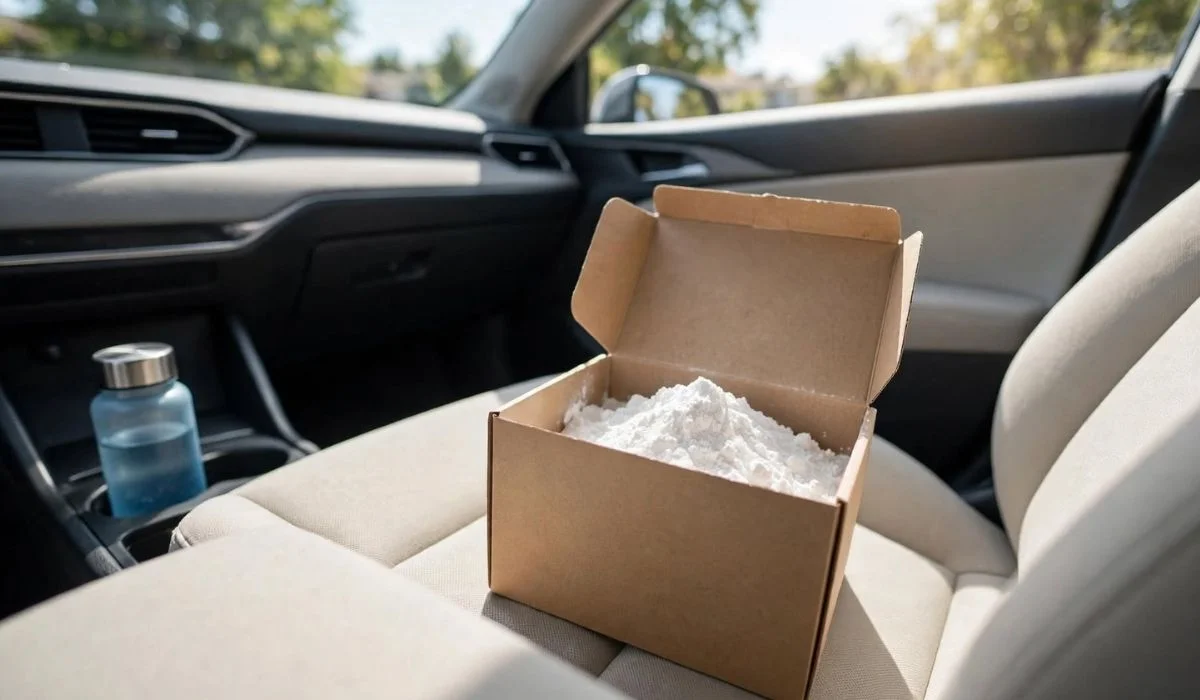
For most ordinary car odors, leave baking soda inside the vehicle for 8 to 24 hours.
A simple guideline is:
- Light odor: 4–8 hours
- Moderate odor: 8–24 hours
- Strong odor: 24–48 hours, with periodic replacement if necessary
- Persistent odor: Clean the source rather than relying only on baking soda
The longer exposure gives the baking soda more opportunity to interact with odor-causing compounds, but leaving it for several days does not necessarily make it dramatically more effective.
Overnight Is Usually Enough
If your car has a mild stale smell, placing baking soda inside overnight is a convenient option.
For example, put a small amount in a shallow, stable container and leave it in the parked vehicle overnight. The following day, remove the container and vacuum or wipe the interior if any powder has escaped.
When 24 Hours Makes Sense
A full day can be useful when the odor is more noticeable.
This can work particularly well after:
- Food spills
- Damp clothing
- Wet floor mats
- Mild smoke exposure
- General mustiness
- Pet-related odors
However, if the source remains inside the vehicle, baking soda may only temporarily reduce the smell.
Why Does Baking Soda Help With Car Odors?
Baking soda is sodium bicarbonate, a mildly alkaline compound. It is widely used for household odor control because it can interact with certain acidic odor compounds and help reduce unpleasant smells.
It is important to understand that baking soda does not simply “destroy every odor.”
Its effectiveness depends on:
- The type of odor
- The concentration of the odor
- Moisture levels
- The material holding the odor
- How much baking soda is used
- Whether the actual source has been removed
That is why baking soda may work well for some everyday smells but have limited results with deeply embedded odors.
How to Use Baking Soda in a Car?
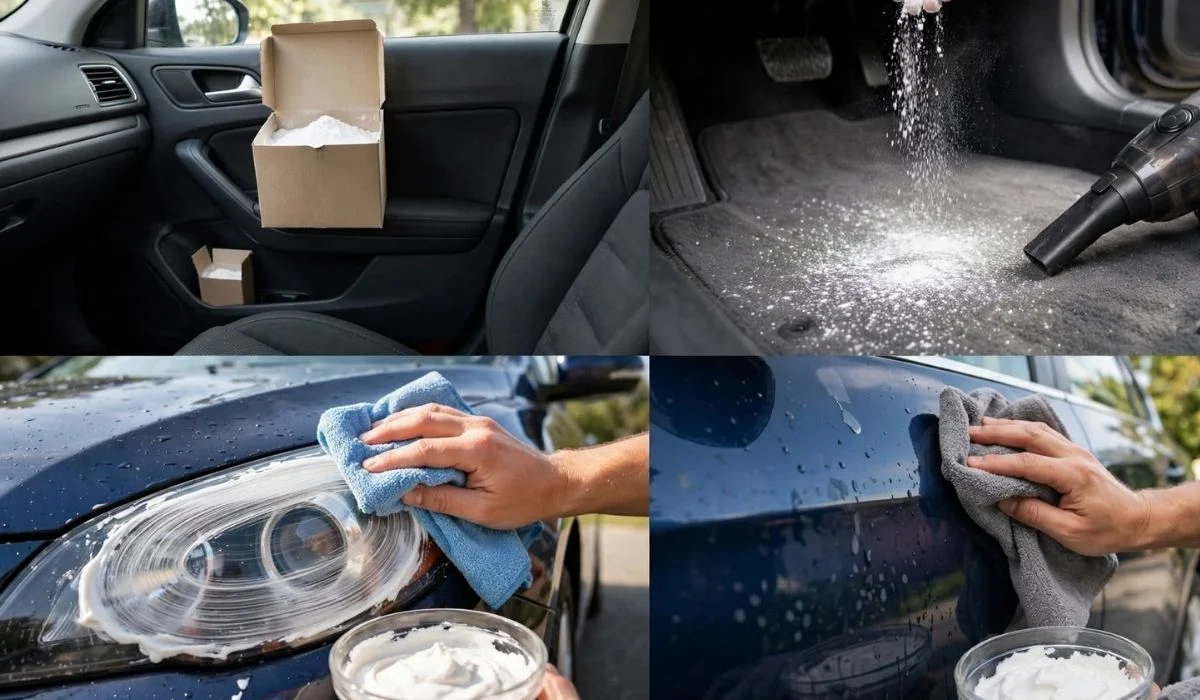
The safest approach is to use dry baking soda in a container, bowl, or breathable pouch rather than scattering loose powder throughout the vehicle.
Method 1: Open Container
Place a small bowl or shallow container of baking soda inside the car.
A practical setup is:
- Make sure the interior is dry.
- Put baking soda into a stable container.
- Place it on a flat surface.
- Keep the container away from pedals and controls.
- Close the doors and windows.
- Leave it for 8–24 hours.
- Remove it before driving.
This method makes cleanup easier because the powder stays contained.
Method 2: Baking Soda Pouch
A breathable fabric pouch can be another convenient option.
Fill a small breathable bag with baking soda and place it somewhere secure, such as an appropriate storage area.
Avoid placing any homemade pouch where it could interfere with:
- Pedals
- Steering controls
- Gear selector
- Airbag areas
- Visibility
- Seat adjustment mechanisms
How Much Baking Soda Should You Leave in a Car?
You do not need a huge quantity.
For a small car, about ½ to 1 cup of baking soda in a shallow container is a reasonable starting point for odor absorption.
For a larger vehicle, you can use more than one container.
For example:
- Small car: ½–1 cup
- SUV: 1–2 cups divided between containers
- Large vehicle: Several small containers may be more practical
The goal is to increase exposed surface area rather than creating a large pile of powder.
More Baking Soda Does Not Always Mean Better Results
Using excessive baking soda will not necessarily remove an odor faster.
If the smell comes from a contaminated carpet, seat, air-conditioning system, or spilled liquid, the underlying source needs to be addressed.
Should You Leave Baking Soda in Your Car Overnight?
Yes, leaving baking soda in your car overnight is generally a convenient way to treat mild interior odors.
An overnight period of approximately 8–12 hours gives the baking soda plenty of contact time without requiring you to leave it inside for multiple days.
Before driving, remove the container.
This is particularly useful if you notice the smell after:
- Eating inside the vehicle
- Transporting groceries
- Leaving gym clothes in the car
- Driving in rainy weather
- Carrying damp items
- Having pets in the vehicle
Can You Leave Baking Soda in Your Car for 24 Hours?
Yes, you can leave a properly contained bowl or pouch of baking soda in a parked car for about 24 hours.
There is generally little benefit to keeping an exposed container inside indefinitely.
After 24 hours:
- Remove the baking soda.
- Inspect the interior for the odor source.
- Vacuum the carpets and upholstery if necessary.
- Clean any affected surfaces.
- Air out the vehicle.
If the smell remains strong, repeat cleaning rather than simply adding more baking soda.
Read Next: Baking Soda To Clean Car Exterior | Removing Dirt, Grime, Stains, and Road Buildup
Can You Leave Baking Soda in Your Car for Several Days?
You can physically leave a contained bowl or pouch for longer, but it is usually unnecessary.
A better strategy is to check the results after 24 hours.
If there is little improvement, ask why.
The odor could be coming from:
- Wet carpeting
- Under-seat spills
- Food residue
- Mold or mildew
- Air-conditioning components
- Cigarette smoke
- Pet accidents
- Dirty floor mats
- Damp upholstery
In these situations, simply increasing the baking-soda exposure time may not solve the problem.
What Happens If You Leave Baking Soda in Car Too Long?
Nothing dramatic usually happens simply because dry baking soda remains in a container for a longer period. However, leaving it indefinitely is unnecessary and can create practical problems.
Humidity can affect the powder and cause it to clump.
An unsecured container can also tip over and spread powder throughout the interior.
Why Moisture Matters
Cars can become humid, especially when windows are closed after rainy weather.
If baking soda absorbs moisture, it may become less convenient to use and harder to clean up.
For this reason, check the baking soda periodically rather than treating it as a permanent air freshener.
Where Should You Put Baking Soda in a Car?
Location matters because the baking soda should remain stable and should not interfere with vehicle operation.
Suitable areas may include:
- A secure flat section of the floor
- A stable rear storage area
- An appropriate cargo-area surface
- A cup or container holder if the container is secure
Do not place an unsecured container near the driver’s footwell.
Never allow loose powder or containers to interfere with driving controls.
Baking Soda for Different Car Odors
Not every odor responds equally to baking soda.
Food Odors
For mild food smells, baking soda can be useful after removing leftover food and cleaning the affected area.
Leave a container inside for 8–24 hours.
Smoke Odor
Smoke odor is considerably more difficult.
It can become embedded in:
- Fabric seats
- Headliners
- Carpets
- Plastic surfaces
- Air-conditioning components
Baking soda alone is unlikely to completely eliminate a deeply embedded smoke smell.
Professional interior cleaning may be necessary.
Pet Odors
If a pet has left a smell behind, locate and clean the contaminated area first.
Baking soda can provide additional odor control, but it should not replace proper cleaning.
Musty Smells
Musty odors can indicate moisture.
Check:
- Floor mats
- Carpets
- Trunk areas
- Door seals
- Under-seat areas
- Other damp materials
If moisture continues to enter the vehicle, deodorizing alone will not solve the problem.
Baking Soda and Wet Car Carpets
Baking soda is not a substitute for drying wet carpets.
If your car interior becomes wet:
- Remove wet floor mats.
- Dry the affected areas.
- Improve ventilation.
- Use appropriate drying equipment if necessary.
- Identify the source of the moisture.
Once the surface is dry, baking soda can be used as an additional odor-control measure.
Why Drying Comes First
Persistent moisture can contribute to musty odors and potentially create conditions favorable to microbial growth.
The priority should therefore be removing moisture, not simply covering the smell.
Can You Sprinkle Baking Soda Directly on Car Seats?
It is possible to use baking soda as a fabric deodorizing method, but caution is important.
If you sprinkle it onto upholstery, use a small amount and make sure the material is compatible with the method.
Allowing it to sit for several hours can help with some odors, after which you should vacuum thoroughly.
However, avoid putting baking soda into:
- Seat belt mechanisms
- Seat tracks
- Electrical components
- Airbag openings
- Switches
- Ventilation openings
Vacuum Carefully
Use a suitable vacuum attachment and remove all visible powder.
Do not leave loose powder embedded in seams or mechanical components.
Does Baking Soda Remove Car Smells Permanently?
Not always.
Baking soda can help reduce certain odors, but permanent odor removal requires eliminating the source.
For example, if milk spills under a seat, placing baking soda in the cabin may reduce the smell temporarily. But unless the spilled liquid is properly cleaned, the odor may return.
The same principle applies to:
- Pet accidents
- Mold or mildew
- Cigarette smoke
- Rotting food
- Wet carpets
- Organic spills
Baking Soda vs Car Air Freshener
These products serve different purposes.
Baking soda is primarily used for odor absorption or neutralization, while many commercial air fresheners work by introducing fragrance that masks or modifies perceived odors.
If your vehicle smells bad, cleaning is the best first step.
A fresh fragrance should come after the source has been addressed.
How to Make Baking Soda More Effective
You can improve your results without simply using more powder.
Clean Before Deodorizing
Vacuum the interior first.
Remove:
- Food wrappers
- Trash
- Pet hair
- Dirt
- Leaves
- Damp materials
Then clean any stained or contaminated surfaces.
Increase Air Circulation
After removing the baking soda, allow fresh air into the vehicle when conditions are suitable.
Opening the doors or windows in a safe location can help exchange stale interior air.
Treat the Actual Source
If the odor comes from a specific location, concentrate your cleaning effort there.
For example, if the smell comes from the floor mat, cleaning the entire dashboard will not solve the underlying problem.
Important Safety Tips
Although baking soda is a common household product, using it in a vehicle requires some basic precautions.
- Keep it away from children and pets.
- Do not place containers where they can tip over.
- Never put anything in the driver’s footwell that could interfere with pedals.
- Keep powder away from electrical switches and vents.
- Do not intentionally inhale loose powder.
- Remove containers before driving if they are not securely stored.
- Avoid mixing baking soda with unknown household chemicals.
- Keep the vehicle properly ventilated when cleaning.
A Simple 24-Hour Baking Soda Car Routine
If you want an easy method, try this:
Evening
Remove trash and obvious odor sources.
Vacuum the interior.
Place ½–1 cup of baking soda in a stable container.
Leave the vehicle parked safely overnight.
Next Morning
Remove the container.
Check whether the smell has improved.
Vacuum or wipe any spilled residue.
Open the doors or windows briefly when it is safe and appropriate.
If the Odor Remains
Do not simply keep adding baking soda.
Inspect the:
- Carpets
- Floor mats
- Seats
- Trunk
- Under-seat areas
- Door pockets
- Air-conditioning system
Look for the source of the odor.
When Baking Soda Is Not Enough
Some odors require more than household deodorizing.
Consider professional cleaning if the vehicle has:
- Strong cigarette odor
- Extensive mold or mildew
- Persistent pet accidents
- Deeply contaminated upholstery
- Repeated water intrusion
- Severe food or liquid spills
- Odors coming from difficult-to-access areas
A professional detailer can identify and clean areas that are difficult to reach with normal household methods.
Key Takeaway
If you are wondering how long to leave baking soda in car, start with 8–24 hours for ordinary odors. Overnight is often convenient for mild smells, while stronger odors may require around 24 hours.
However, time is only one part of the process. Baking soda works best as a supporting deodorizer after you remove trash, clean spills, dry damp materials, and address the actual source of the smell.
For persistent odors, don’t keep increasing the amount of baking soda or leaving it inside indefinitely. Find the cause, clean it properly, and use baking soda as an additional odor-control step.
FAQs
How long should I leave baking soda in my car for smell?
For most mild odors, leave it for 8–24 hours. Overnight is usually a convenient starting point.
Can I leave baking soda in my car overnight?
Yes. Place it in a stable container and leave the vehicle parked safely overnight. Remove the container before driving.
Can I leave baking soda in my car for 2 days?
You can, provided it is safely contained, but there is usually little reason to leave it that long. Check the results after 24 hours and address the odor source if the smell remains.
How much baking soda should I put in my car?
About ½ to 1 cup is a reasonable starting amount for a small vehicle. Larger vehicles can use multiple small containers rather than one large, unstable container.
Does baking soda remove cigarette smell from a car?
It may help reduce some odor, but deeply embedded cigarette smoke can remain in upholstery, carpets, headliners, and ventilation components. Thorough cleaning is usually necessary.
Can I put baking soda directly on my car seats?
For compatible fabric upholstery, a small amount may be used as a deodorizing treatment and then thoroughly vacuumed. Avoid getting powder into seat mechanisms, electrical components, airbag areas, and other sensitive parts.
Does baking soda remove musty car smells?
It can help with mild musty odors, but persistent mustiness may indicate moisture. Find and eliminate the moisture source before relying on deodorizing.
Should I put baking soda in my car every day?
There is generally no need to keep baking soda in your car continuously. Use it as an occasional odor-control method and focus on keeping the interior clean and dry.
Can baking soda damage my car interior?
Loose powder can potentially create cleanup problems if it enters seams, switches, vents, or mechanical components. Keeping it contained is the safer approach.
What should I do if baking soda does not remove the smell?
Find the source of the odor. Check carpets, floor mats, seats, under-seat areas, the trunk, and other places where spills or moisture may be hidden. Persistent or severe odors may require professional detailing.