
How To Clean Fabric Car Seats Without Leaving Water Stains | Easy Step-by-Step Methods
 ByAliza
Cleaning fabric car seats can make your vehicle look and smell much better, but there is one frustrating problem: water stains. If too much water or cleaning solution is used, the fabric can dry with dark rings, uneven patches, or visible marks.
The good news is that you can clean fabric car seats without leaving water stains by controlling moisture, cleaning evenly, removing residue, and drying the upholstery properly. You do not need to soak the entire seat to remove everyday dirt and stains.
Why Do Fabric Car Seats Get Water Stains After Cleaning?
Water stains usually happen when moisture dries unevenly or when dirt and cleaning-product residue are left behind.
As water evaporates, dissolved dirt or cleaning residue can move toward the edges of a wet area. This can leave a visible ring or darker patch after the seat dries.
Common causes include:
- Using too much water
- Spraying cleaner directly onto the seat
- Cleaning only a small section
- Leaving soap residue behind
- Using dirty towels
- Allowing the seat to dry slowly
- Scrubbing one area excessively
- Using hard or mineral-rich water
- Not extracting enough moisture
The goal is to clean the fabric with controlled moisture rather than saturating it.
What You Need to Clean Fabric Car Seats:
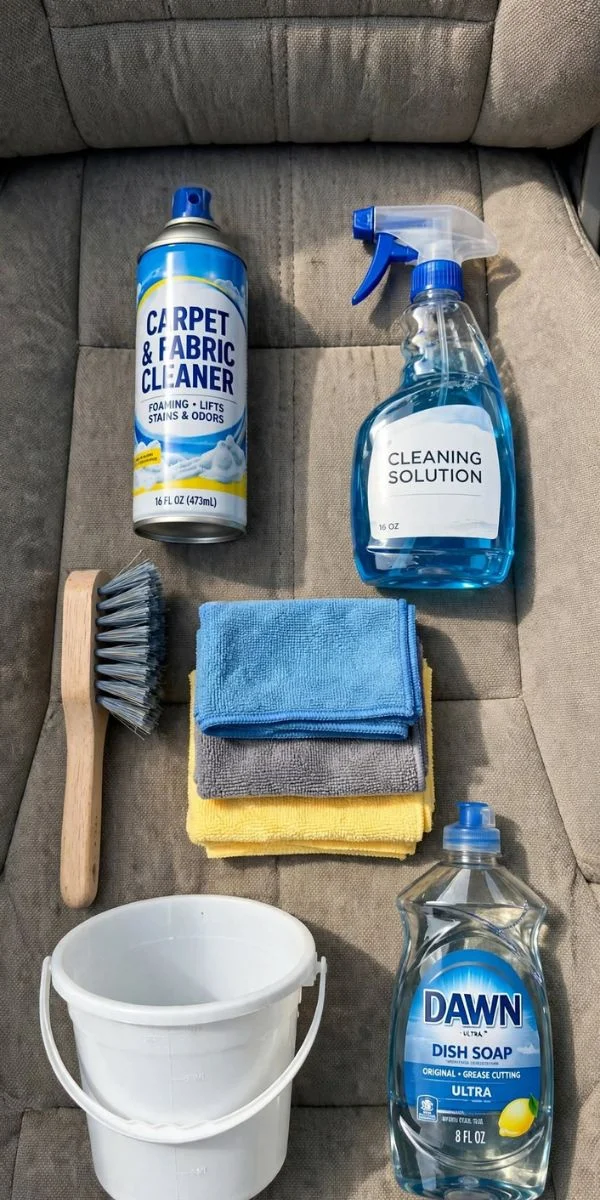
You can clean fabric seats with a relatively simple set of supplies.
- Microfiber towels
- Soft upholstery brush
- Mild upholstery cleaner
- Small bowl
- Warm water
- Spray bottle, if needed
- Clean absorbent towels
- Soft toothbrush for seams
- Baking soda for certain odors
- Fan for faster drying
Use clean towels throughout the process. A towel that already contains dirt can redistribute grime onto the seat.
Vacuum or Brush Loose Dirt First
Before using any liquid cleaner, remove as much dry dirt as possible.
If you have a vacuum, vacuum the seats thoroughly. If you do not, use a soft brush to loosen dirt and collect it manually.
Why Dry Cleaning Comes First
Adding water to loose dirt can turn it into muddy residue.
Dry brushing first reduces the amount of material that needs to be removed with a wet cleaning method. It also helps prevent unnecessary moisture from being introduced into the upholstery.
Pay attention to:
- Seat seams
- Creases
- Edges
- Under the seat
- Around seat-belt openings
- Areas where crumbs collect
Test the Cleaner Before Cleaning the Whole Seat:
Even a product marketed for upholstery may react differently with different fabrics.
Apply a small amount of cleaner to a hidden section of the seat.
Allow the area to dry completely and check for:
- Color changes
- Discoloration
- Texture changes
- Water marks
- Residue
If the test area looks normal, proceed carefully.
Use as Little Liquid as Possible
This is one of the most important rules for preventing water stains.
Do not saturate fabric car seats.
Instead of soaking the upholstery, lightly dampen a microfiber cloth or apply a very small amount of cleaner to the affected area.
The objective is to loosen the dirt without allowing large amounts of liquid to penetrate deep into the seat padding.
Clean the Entire Seat Section Evenly:

One of the biggest mistakes is cleaning only the visible stain.
For example, if you clean a small circular area in the middle of a seat, that section may dry differently from the surrounding fabric.
Blend the Cleaning Area
Instead of stopping abruptly around the stain, gently clean a larger surrounding section.
This creates a more uniform appearance as the upholstery dries.
You do not necessarily need to wet the entire seat. The key is avoiding a sharply defined wet boundary.
How to Clean Fabric Car Seats Step by Step:
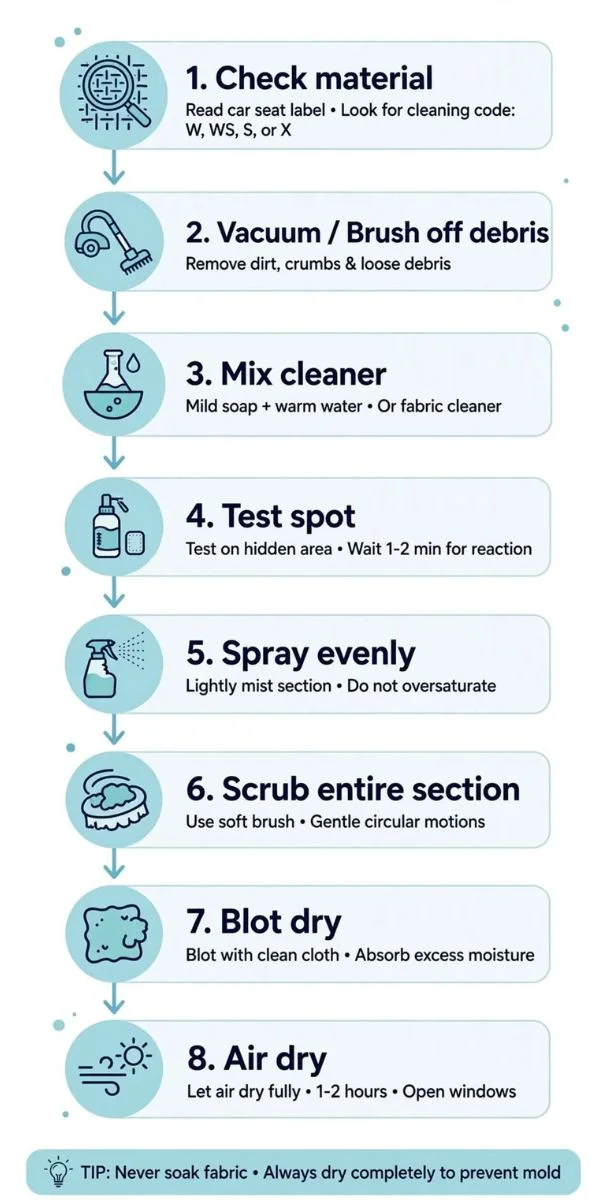
A controlled cleaning process can greatly reduce the chance of water marks.
Step 1: Remove Loose Dirt
Brush or vacuum the seat to remove dry debris.
Step 2: Prepare Your Cleaner
Use an upholstery cleaner appropriate for the fabric. If using a diluted homemade solution, keep the concentration mild.
Step 3: Apply Cleaner Sparingly
Apply the cleaner to a microfiber cloth or lightly mist the fabric if the product instructions allow it.
Avoid soaking the seat.
Step 4: Gently Agitate
Use a soft upholstery brush to work on dirty areas.
Do not aggressively scrub the fabric.
Step 5: Wipe Away Dirt and Residue
Use a clean, slightly damp microfiber towel to pick up loosened dirt and remaining cleaner.
Step 6: Blot With a Dry Towel
Press a dry absorbent towel against the fabric.
Blotting helps remove moisture without spreading the stain.
Step 7: Allow Thorough Drying
Use airflow to help the seat dry evenly.
Leave doors or windows open when safe and practical, or use a fan to improve ventilation.
Why Blotting Is Better Than Scrubbing
Scrubbing can spread moisture and dirt across a larger area.
Blotting, on the other hand, helps transfer moisture and loosened grime into the towel.
Use Several Clean Towels
A single saturated towel cannot remove much moisture.
Switch to a fresh, dry towel when the current one becomes damp.
Press firmly enough to absorb moisture without damaging the fabric.
How to Prevent Dark Rings Around Cleaned Areas:
Dark rings are often caused by moisture and dirt moving toward the boundary of a wet area.
To reduce this problem, avoid creating a small, heavily saturated circle.
Feather the Edges
When cleaning a stain, gradually reduce the amount of moisture toward the outer edge.
This creates a softer transition instead of a sharp wet line.
Afterward, blot the whole area evenly.
Don’t Spray Cleaning Product Directly Onto the Seat
Direct spraying can deliver more liquid than necessary.
It can also cause cleaner to penetrate deeply into the padding.
Spray the Cloth Instead
For many light cleaning jobs, applying a small amount of cleaner to a microfiber cloth provides better control.
This is particularly useful when cleaning around:
- Seat controls
- Seams
- Buckles
- Plastic trim
- Electrical components
Always follow the cleaner manufacturer’s instructions because some products are specifically designed to be sprayed directly onto upholstery.
Use Distilled Water for the Final Wipe
In areas with hard water, minerals can sometimes contribute to visible residue as water dries.
Using distilled water for the final light wipe can reduce mineral residue.
This is particularly useful if you repeatedly notice pale or chalky marks after cleaning.
How to Remove Existing Water Stains:
If your fabric seat already has a water ring, cleaning only the center may make the appearance worse.
Instead, lightly dampen or clean a broader section around the existing mark using an appropriate upholstery method.
Clean Beyond the Visible Ring
Work gently across the surrounding fabric rather than creating another small wet circle.
Then use clean towels to absorb as much moisture as possible.
The objective is to allow the fabric to dry uniformly.
How to Dry Fabric Car Seats Without Water Marks:
Drying is just as important as the cleaning itself.
After cleaning, use several dry towels to absorb remaining moisture.
Then increase airflow around the vehicle.
Use a Fan
A household fan can help move air across the upholstery.
Position it so air circulates around the seat rather than blowing directly at extremely close range.
Good ventilation can shorten drying time and reduce the chance of lingering moisture.
Avoid Sitting on a Wet Seat
Do not sit on freshly cleaned upholstery while it is still damp.
Pressure can push moisture deeper into the padding and slow drying.
How Long Should Fabric Car Seats Take to Dry?
Drying time varies depending on:
- Amount of water used
- Fabric thickness
- Temperature
- Humidity
- Air circulation
- Seat construction
A lightly dampened seat may dry relatively quickly, while heavily saturated upholstery can take considerably longer.
Do not judge dryness solely by the surface. If the padding underneath remains damp, additional ventilation is needed.
How to Clean Car Seats Without Soaking Them
A low-moisture approach is ideal when water stains are your main concern.
Start with dry brushing or vacuuming.
Then use a small amount of cleaner on a cloth and gently work on the dirty areas.
Follow With a Damp Cloth
Use a separate microfiber cloth with minimal clean water to remove remaining cleaning solution.
Then immediately blot the area with a dry towel.
This three-stage process—clean, rinse lightly, blot—helps keep moisture under control.
Can Baking Soda Prevent Water Stains?
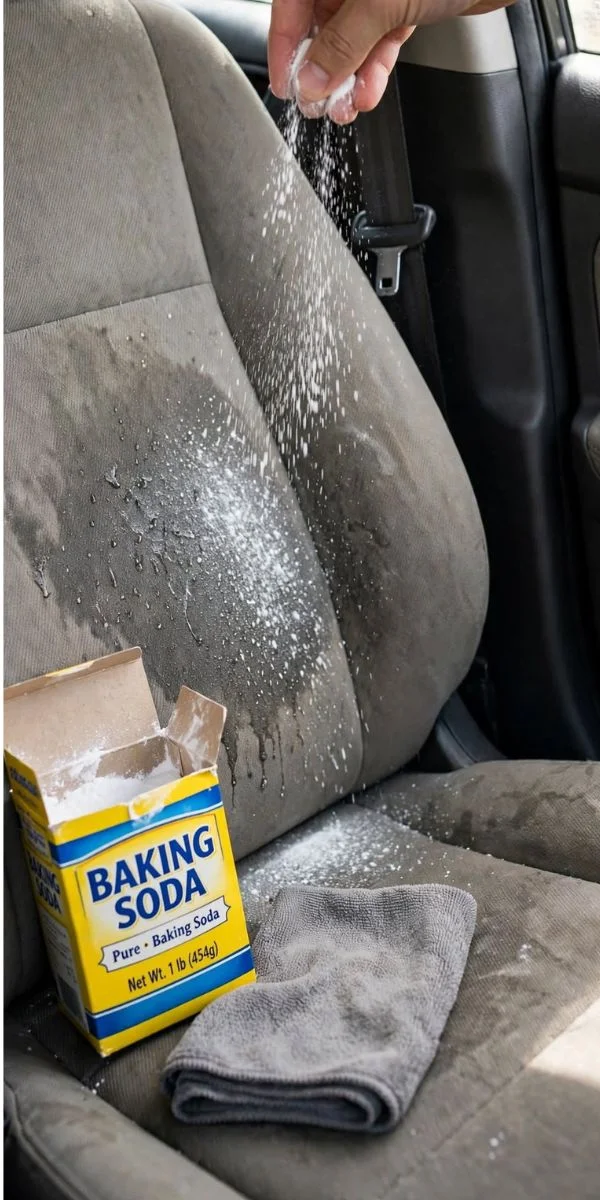
Baking soda does not prevent water stains.
It can be useful for absorbing certain odors from dry fabric, but it should not be considered a substitute for proper upholstery cleaning.
If you use baking soda, apply it lightly and remove it thoroughly.
Read Next: How To Clean Car Seats At Home Without Vacuum | Easy Step-by-Step
How to Clean Spills Without Creating Water Marks:

Act quickly when a drink spills.
Blot Instead of Rubbing
Use a clean absorbent towel to blot the liquid.
Continue using dry sections of the towel until you remove as much liquid as possible.
Then use an appropriate upholstery cleaner if necessary.
Avoid Making the Spill Area Bigger
Do not immediately flood the surrounding area with water.
Use the smallest effective amount of cleaning solution, then blot thoroughly.
Common Mistakes That Cause Water Stains
Knowing what not to do can make a major difference.
Using Too Much Water
More water does not necessarily mean better cleaning.
It can push dirt deeper into the upholstery and increase drying time.
Cleaning Only the Center of a Stain
A small wet circle can dry with a noticeable edge.
Clean and blend the surrounding area when appropriate.
Leaving Soap Behind
Cleaner residue can attract dirt and create a darker or stiff-looking patch.
Use a clean, lightly dampened cloth to remove excess residue when the product instructions call for it.
Using Dirty Towels
Dirty towels can transfer grime back onto the fabric.
Always use clean microfiber towels for the final wiping and drying stages.
Closing the Car While Seats Are Wet
Poor ventilation slows evaporation.
Keep the vehicle well ventilated while the seats dry, provided weather and security conditions allow it.
Can You Use a Hair Dryer to Dry Fabric Car Seats?
A hair dryer can provide airflow, but high heat is not ideal for many automotive materials.
If you use one, choose a cool or low-heat setting and keep it moving.
A fan is generally a gentler option because it provides airflow without concentrating high heat on one section.
How Often Should You Clean Fabric Car Seats?
The frequency depends on how the vehicle is used.
For normal daily driving, light cleaning every few weeks can help keep dirt under control.
Deep cleaning may only be necessary every few months or when major spills and stains occur.
Cleaning spills quickly is more important than following a rigid schedule.
When Should You Use Professional Upholstery Cleaning?
Home cleaning is suitable for many everyday stains, but professional cleaning can be helpful when seats have:
- Deep-set stains
- Large areas of contamination
- Strong persistent odors
- Mold or significant moisture damage
- Extensive staining
- Delicate upholstery
Professional equipment can remove moisture more effectively than basic household towels, reducing the drying challenges associated with deep cleaning.
Final Thoughts
The secret to cleaning fabric car seats without leaving water stains is controlling moisture from beginning to end. Start by removing dry dirt, use an appropriate cleaner sparingly, clean evenly, blot instead of aggressively scrubbing, and remove as much moisture as possible with clean towels.
Most importantly, do not assume that soaking the seat will produce a better result. A low-moisture cleaning method combined with good airflow is often a better approach for maintaining an even-looking fabric interior.
If a water stain is already present, avoid repeatedly wetting only the center. Cleaning and blending the surrounding area, followed by thorough drying, can produce a more uniform finish.
FAQs:
How do I clean fabric car seats without getting water stains?
Use minimal moisture, clean the area evenly, avoid creating a small saturated circle, blot with dry microfiber towels, and allow the upholstery to dry with good airflow.
Why do my car seats get water rings after cleaning?
Water rings can develop when moisture carries dirt or cleaning residue toward the edges of a wet area as it dries. Excessive water and uneven cleaning can make the marks more noticeable.
Should I wet the entire car seat to remove a stain?
Not necessarily. Use the smallest amount of moisture needed to clean the fabric. For certain stains, blending the surrounding area can help prevent a visible cleaning boundary.
Is it better to spray cleaner directly on fabric car seats?
Applying cleaner to a microfiber cloth can give you better control over moisture for many cleaning jobs. However, always follow the specific product’s instructions.
How do I dry car seats after cleaning?
Blot the upholstery with clean, dry towels and increase airflow with open doors or windows when safe. A household fan can also help circulate air around the seat.
Can I use a hair dryer on fabric car seats?
If necessary, use a cool or low-heat setting and keep the dryer moving. Avoid applying concentrated high heat to one area. A fan is generally a gentler drying option.
Can I use vinegar to clean fabric car seats?
Vinegar is not automatically suitable for every automotive fabric. A purpose-made upholstery cleaner or mild cleaning solution compatible with the seat material is a safer choice.
How do I remove an old water stain from a car seat?
Avoid repeatedly wetting only the stained center. Use an appropriate upholstery-cleaning method over a broader area, remove residue, blot thoroughly, and allow the fabric to dry evenly.
Can hard water cause marks on fabric car seats?
Minerals in hard water can contribute to residue after evaporation. Using distilled water for a final light wipe may reduce mineral deposits, although existing dirt and cleaner residue can also cause marks.
How can I clean fabric seats without soaking them?
Brush or vacuum loose dirt first. Apply a small amount of cleaner to a cloth, gently clean the upholstery, wipe away residue with minimal clean water, and immediately blot with dry towels.
How long should I wait before sitting on freshly cleaned car seats?
Wait until the upholstery and the underlying padding are completely dry. Sitting on damp seats can press moisture deeper into the material and extend drying time.