How To Clean Car Seats With Carpet Cleaner | A Simple Step-by-Step Guide
 ByAliza
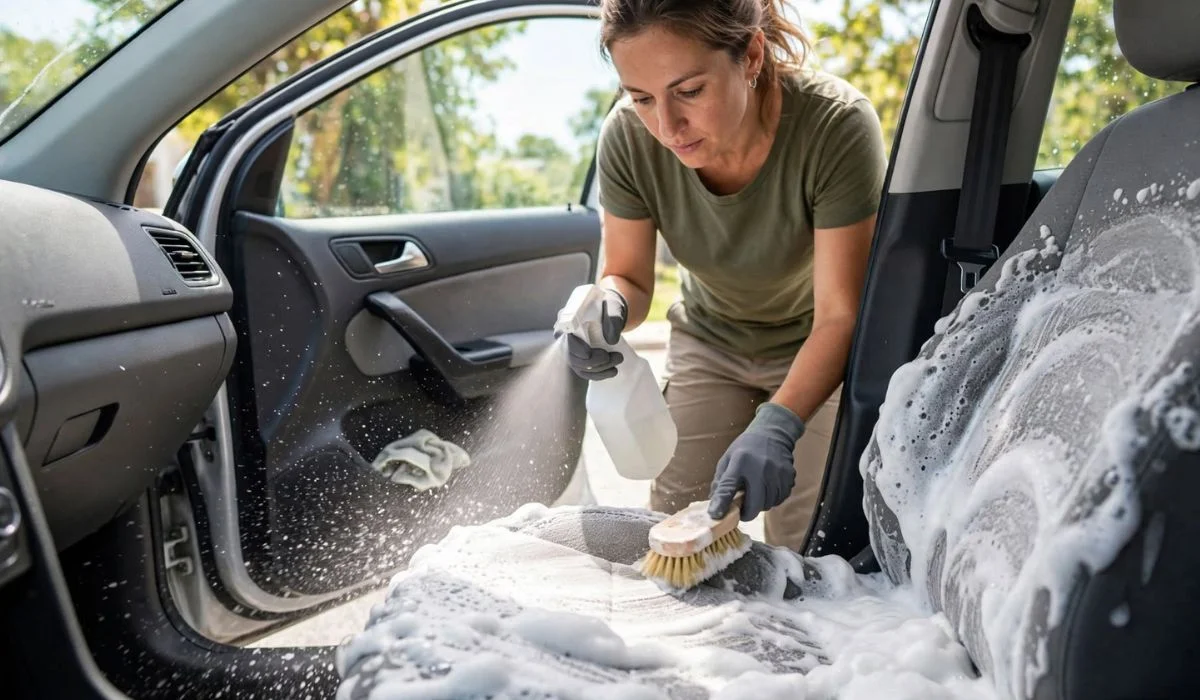
Cleaning car seats with carpet cleaner can be an effective way to remove dirt, food spills, coffee stains, and unpleasant odors from fabric upholstery. However, not every carpet cleaner is suitable for car seats, and using too much water can leave the upholstery soaked, stained, or difficult to dry.
The safest approach is to identify the seat material first, choose a compatible cleaner, use controlled amounts of moisture, and extract or blot as much liquid as possible. With the right technique, you can refresh fabric car seats without unnecessarily saturating the padding underneath.
Can You Use Carpet Cleaner on Car Seats?
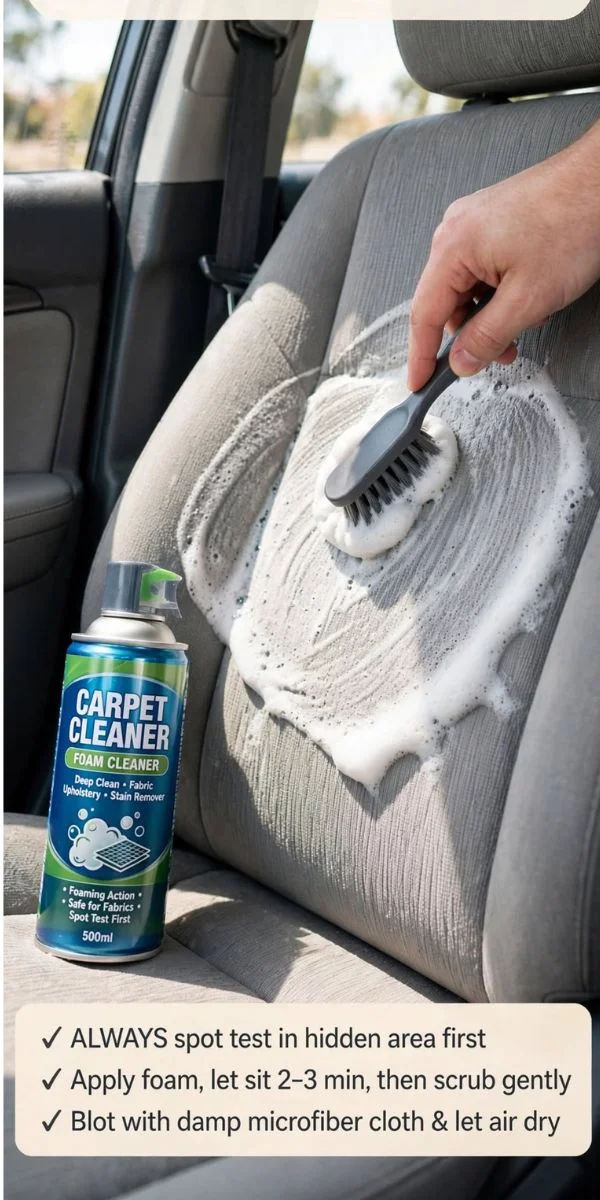
Yes, carpet cleaner can be used on many fabric car seats, provided the product is compatible with the upholstery and the vehicle manufacturer’s care instructions do not prohibit it.
Fabric automotive seats are often made from synthetic textile materials, but construction and coatings vary between vehicles.
Before cleaning, check:
- The vehicle owner’s manual
- The seat material
- The carpet-cleaner label
- Any upholstery-care instructions
- Manufacturer warnings
A carpet cleaner designed for household carpeting may be stronger than necessary for automotive upholstery, so always test it on an inconspicuous area first.
What You Need to Clean Car Seats With Carpet Cleaner?

Gather everything before starting.
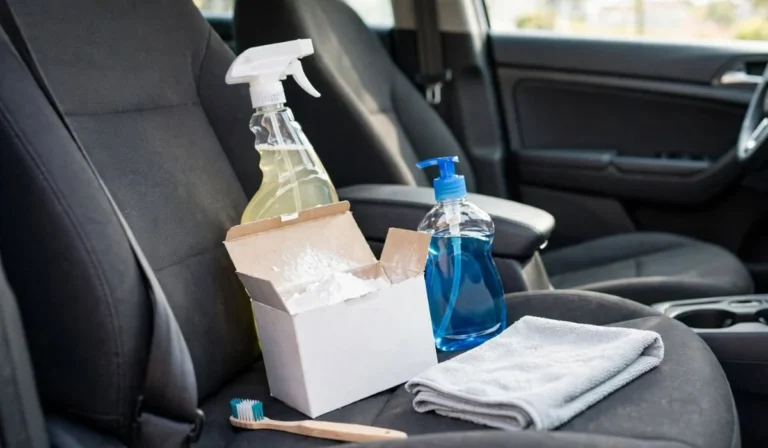
- Carpet or upholstery cleaner
- Soft upholstery brush
- Microfiber towels
- Clean water
- Spray bottle if recommended by the cleaner
- Wet/dry vacuum or extraction machine, if available
- Dry towels
- Soft toothbrush
- Fan for drying
- Gloves, if recommended by the cleaning product
You do not necessarily need a carpet-cleaning machine. A suitable carpet-cleaning solution and careful hand cleaning can work for light stains.
Check the Seat Material First
The cleaning method depends heavily on the upholstery.
Fabric Car Seats
Carpet or upholstery cleaner is generally most appropriate for fabric seats when the product specifically allows textile upholstery use.
Leather Car Seats
Do not use ordinary carpet cleaner on leather unless the manufacturer specifically states that it is suitable.
Leather has different cleaning requirements and may be damaged by products intended for carpets.
Vinyl Seats
Vinyl can often be cleaned with a damp microfiber cloth and an appropriate vinyl-safe cleaner. Carpet cleaner should not automatically be used on vinyl.
Vacuum or Brush the Seats Before Cleaning
Remove loose dirt before applying liquid cleaner.
If you have a vacuum, thoroughly vacuum the seats, seams, and crevices.
If you do not have one, use a soft brush to loosen dry dirt and collect it manually.
Why Dry Cleaning Comes First
Loose dirt can mix with cleaning solution and create muddy residue.
Removing dry debris first also reduces the amount of liquid needed later.
Pay special attention to:
- Seat seams
- Creases
- Seat edges
- Under the seat
- Around buckles
- Areas where crumbs collect
Test the Carpet Cleaner First
Never assume a cleaner is safe just because it works on household carpets.
Apply a small amount to an inconspicuous part of the seat.
Allow it to dry and inspect the fabric.
Look for:
- Color changes
- Bleaching
- Discoloration
- Stiffness
- Texture changes
- Residue
If the fabric reacts badly, do not use the product on the rest of the seat.
Read the Carpet Cleaner Instructions:
Different products have different dilution ratios, dwell times, application methods, and extraction requirements.
Follow the instructions on the specific product.
Some cleaners are concentrated and must be diluted. Others are ready to use.
Using more product than recommended does not necessarily produce a cleaner seat. Excess cleaner can leave residue and make rinsing and drying more difficult.
How to Clean Car Seats With Carpet Cleaner:

Once you’ve confirmed that the product is suitable, work systematically.
Step 1: Remove Everything From the Seats
Take out personal items, child seats where applicable, papers, bottles, and other objects.
Step 2: Remove Loose Dirt
Vacuum or brush the upholstery thoroughly.
Step 3: Prepare the Carpet Cleaner
Dilute or prepare the product exactly according to its instructions.
Step 4: Apply a Small Amount
Apply the cleaner evenly and avoid unnecessarily soaking the upholstery.
If the product permits spraying, use controlled passes rather than flooding the seat.
Step 5: Agitate Gently
Use a soft upholstery brush to work the cleaner into the fabric.
Focus on stained or heavily soiled areas.
Step 6: Allow the Recommended Dwell Time
Let the product remain on the fabric for the period specified by the manufacturer.
Do not allow it to dry completely unless the product specifically instructs you to do so.
Step 7: Extract or Blot Moisture
If you have an extraction machine, use it according to its instructions.
Without one, press clean, dry microfiber towels against the upholstery to absorb moisture.
Step 8: Rinse Only If Required
Some products require a water rinse, while others do not.
Follow the product instructions rather than automatically adding more water.
Step 9: Dry Thoroughly
Use fans and ventilation to help the seats dry completely.
How Much Carpet Cleaner Should You Use?
Use enough cleaner to treat the fabric but avoid saturating the seat.
The exact amount depends on the product, the seat material, and the level of contamination.
Why Too Much Cleaner Can Be a Problem
Excess solution can penetrate into the seat foam.
That can lead to:
- Long drying times
- Lingering odors
- Soap residue
- Water marks
- Damp padding
- Potential moisture-related problems
Controlled application is better than flooding the upholstery.
How to Remove Stains With Carpet Cleaner
Carpet cleaner can be particularly useful for common fabric-seat stains.
Coffee and Tea Stains
Blot fresh spills first.
Then apply an appropriate amount of cleaner and gently work the area with a soft brush.
Avoid aggressive scrubbing.
Food Stains
Remove solid food particles before applying cleaner.
Use a spoon or dull plastic edge to lift dried material without damaging the fabric.
Then clean the remaining residue.
Grease and Oil
Greasy stains may require a cleaner specifically formulated to handle oily contamination.
Do not automatically use extra carpet cleaner in an attempt to dissolve the grease.
Follow the product’s stain-treatment instructions.
Mud Stains
Allow heavy mud to dry before brushing away loose particles.
Once the dry material is removed, treat the remaining stain with a compatible cleaner.
How to Clean the Entire Fabric Seat:

Cleaning only one small patch can sometimes create an uneven appearance.
If the seat is generally dirty, cleaning the entire fabric panel may produce a more consistent result.
Work in Sections
Divide the seat into manageable sections.
Clean one section, extract or blot the moisture, and then move to the next.
This gives you better control over how much liquid is being used.
How to Prevent Water Stains After Using Carpet Cleaner
Water marks are often associated with excessive moisture or uneven drying.
To reduce the risk:
- Do not oversaturate the fabric
- Clean evenly
- Remove as much moisture as possible
- Use clean towels
- Avoid leaving soap residue
- Improve airflow
- Allow the seat to dry completely
Blot Instead of Scrubbing
After cleaning, press a dry microfiber towel against the upholstery.
Blotting helps pull moisture toward the towel rather than spreading it around.
Replace the towel when it becomes damp.
How to Extract Carpet Cleaner From Car Seats
Extraction is important because cleaning solution left in the fabric can attract dirt and leave residue.
If you have a wet/dry vacuum or upholstery extractor, follow its instructions for removing moisture.
No Extractor? Use Towels
You can still remove a substantial amount of moisture using absorbent microfiber towels.
Place the towel over the damp area and press down firmly.
Repeat with dry towels until little moisture transfers to the towel.
Do not aggressively rub the fabric.
How to Dry Car Seats After Carpet Cleaning:
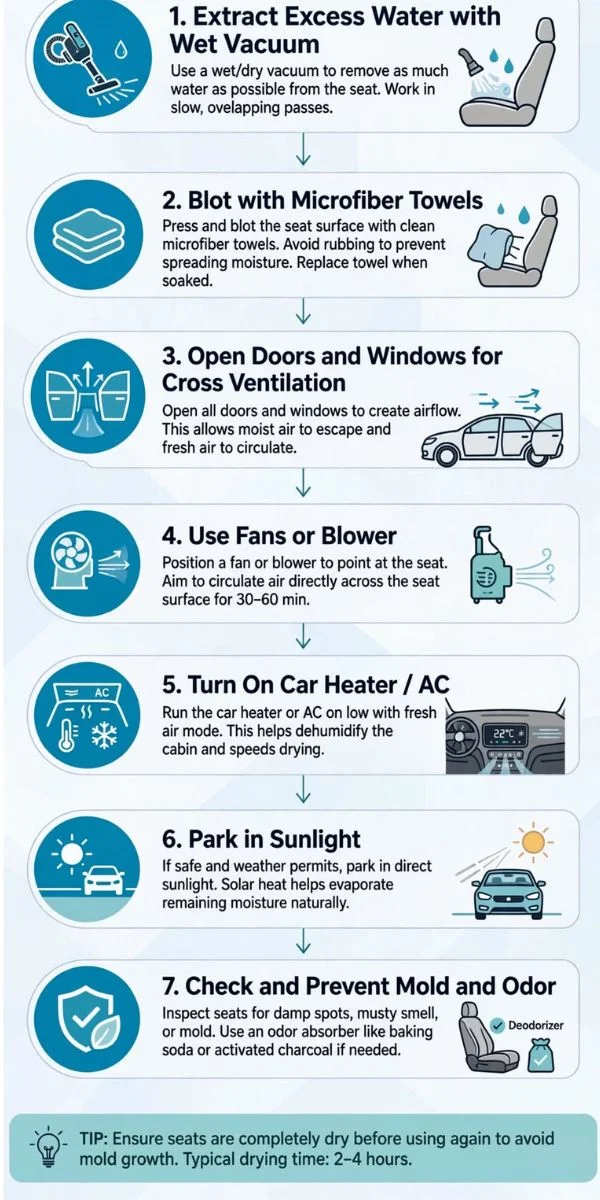
Drying is one of the most important parts of the process.
Leave doors or windows open when it is safe and practical.
Use a fan to improve air circulation around the seats.
Don’t Close the Car Too Soon
Closing the vehicle while the seats are still damp traps humid air inside.
This can significantly slow drying.
Make sure the upholstery and padding are completely dry before returning the vehicle to normal use.
Can You Use a Carpet Cleaner Machine on Car Seats?
Some carpet-cleaning or upholstery-extraction machines can be used on fabric car seats if their manufacturer says they are suitable for automotive upholstery.
A machine can help apply cleaning solution and extract dirty water more effectively than hand cleaning.
Use the Upholstery Attachment
If the machine comes with an upholstery tool, use it rather than a large carpet head when appropriate.
The smaller tool provides better control in a confined vehicle interior.
Avoid excessive water flow.
What About Heated Seats?
Heated seats require extra caution.
The heating elements are located underneath the upholstery, and excessive moisture may create problems.
Keep Moisture Controlled
Do not flood heated seats with cleaning solution.
Follow the vehicle manufacturer’s cleaning instructions and allow the seat to dry completely.
If you’re uncertain about the construction of the seat, professional cleaning is a safer choice.
What About Airbag-Equipped Seats?
Some vehicles have seat-mounted side airbags.
Because seat-mounted airbags and their wiring can be integrated into or near the upholstery, avoid excessive moisture around seams, electrical connectors, and airbag areas.
Do Not Disassemble the Seat
Do not remove seat covers or attempt to access internal components simply to clean the upholstery unless you are qualified to do so.
For heavily soiled seats with integrated airbags or complex electrical components, professional cleaning may be appropriate.
Can Carpet Cleaner Remove Car Seat Odors?
Yes, cleaning can help remove odors caused by food, drinks, dirt, and other contaminants.
However, the cleaner does not always eliminate the underlying cause.
Find the Source of Persistent Odors
If the smell returns after cleaning, inspect for:
- Spilled drinks
- Food underneath the seats
- Damp carpet
- Wet floor mats
- Pet contamination
- Moisture accumulation
A recurring musty odor may require investigating the vehicle’s ventilation and moisture sources.
Common Mistakes When Cleaning Car Seats With Carpet Cleaner
A few mistakes can turn a simple cleaning job into a difficult one.
Using Too Much Product
More cleaner is not automatically better.
Excess product can leave sticky residue and increase drying time.
Using Hot Water Without Checking Instructions
Some products have specific water-temperature recommendations. Follow the label instead of assuming hot water is always better.
Scrubbing Aggressively
Hard brushing can damage fabric fibers and change the texture of the upholstery.
Failing to Extract Moisture
Leaving dirty cleaning solution in the seat can result in residue and odors.
Not Testing the Cleaner
A product that works well on one type of fabric may discolor another.
Always perform a spot test.
How Often Should You Clean Fabric Car Seats?
For most vehicles, light maintenance can be done whenever the seats become visibly dirty.
A deeper cleaning every few months may be enough for many drivers.
More frequent cleaning may be appropriate if the vehicle regularly carries:
- Children
- Pets
- Food
- Drinks
- Outdoor equipment
Promptly cleaning spills is more important than following a strict calendar.
When Should You Avoid DIY Carpet Cleaning?
Professional cleaning may be a better option when:
- The upholstery is heavily stained
- There is mold or significant moisture damage
- The seats have unusual or delicate materials
- There are persistent odors
- The seats contain complex electrical components
- You cannot properly extract moisture
- The manufacturer’s instructions prohibit your chosen cleaner
Professional equipment can provide deeper extraction and better moisture control.
Final Thoughts
Knowing how to clean car seats with carpet cleaner can help you refresh dirty fabric upholstery without expensive detailing services. The process is straightforward: remove loose dirt, verify that the cleaner is compatible, apply it sparingly, gently agitate the fabric, extract or blot the moisture, and allow the seats to dry completely.
The biggest mistake is using too much liquid. Car seats contain padding beneath the fabric, so excessive moisture can take a long time to evaporate and may leave water marks or odors.
For leather, vinyl, heated seats, and seats with integrated electrical or airbag components, always follow the vehicle manufacturer’s care instructions. When in doubt, choose a product specifically labeled for automotive upholstery or have the seats professionally cleaned.
FAQs
Can I use carpet cleaner on fabric car seats?
Yes, many carpet or upholstery cleaners can be used on fabric car seats when the product is compatible with the upholstery. Always read the label and test a hidden area first.
Can I use a carpet-cleaning machine on car seats?
Some machines are suitable for automotive upholstery. Use the appropriate upholstery attachment and avoid excessive water. Follow the machine manufacturer’s instructions.
How do I clean car seats with carpet cleaner without soaking them?
Apply a controlled amount of cleaner, work in small sections, and extract or blot moisture promptly. Avoid flooding the fabric.
Will carpet cleaner remove coffee stains from car seats?
A suitable upholstery or carpet cleaner may help remove coffee stains, especially when treated promptly. Blot fresh spills before applying the cleaning solution.
Can I use carpet cleaner on leather car seats?
Ordinary carpet cleaner should not be used on leather unless the manufacturer specifically states that it is safe. Leather requires a compatible leather-cleaning product.
How long do car seats take to dry after carpet cleaning?
Drying time depends on how much moisture was used, the seat construction, temperature, humidity, and airflow. Good ventilation and a fan can speed up drying.
Why do my car seats look worse after cleaning?
Uneven cleaning, excess moisture, dirt being redistributed, or leftover cleaning residue can cause patches or water marks. Thorough blotting and even cleaning can help prevent this.
Should I rinse car seats after using carpet cleaner?
Only rinse if the product instructions recommend it. Adding unnecessary water can increase drying time and may push moisture deeper into the seat.
Can carpet cleaner remove bad smells from car seats?
Cleaning can remove many odors caused by surface contamination. If an odor returns, however, you may need to locate the underlying source, such as food, moisture, or a spill beneath the seat.
Can I use carpet cleaner on heated car seats?
Use extra caution with heated seats. Avoid saturating them and follow the vehicle manufacturer’s cleaning instructions because heating elements are located beneath the upholstery.
How can I prevent water stains after cleaning my car seats?
Use minimal moisture, clean evenly, remove as much liquid as possible, and dry the seats thoroughly with good airflow. Avoid creating small, heavily saturated areas.
Is professional cleaning better than using carpet cleaner at home?
Professional cleaning can provide better extraction and moisture control, especially for heavily stained or delicate upholstery. For routine dirt and minor stains, careful home cleaning can be effective.