Tubeless vs Tube Tires | Key Differences, Pros, Cons & Which Is Better

Choosing between tubeless vs tube tires can make a noticeable difference in how a vehicle, motorcycle, bicycle, or other wheeled machine performs and handles punctures. Although both tire types serve the same basic purpose of providing traction, cushioning, and contact with the road or trail, their construction is quite different. Tube tires use a separate inflatable inner tube, while tubeless tires hold air directly between the tire and the wheel rim.
The better option depends on the vehicle, wheel design, riding conditions, maintenance preferences, and the type of performance you need. Understanding the differences can help you choose the right tire setup instead of relying only on price or popularity.
What Are Tube Tires?
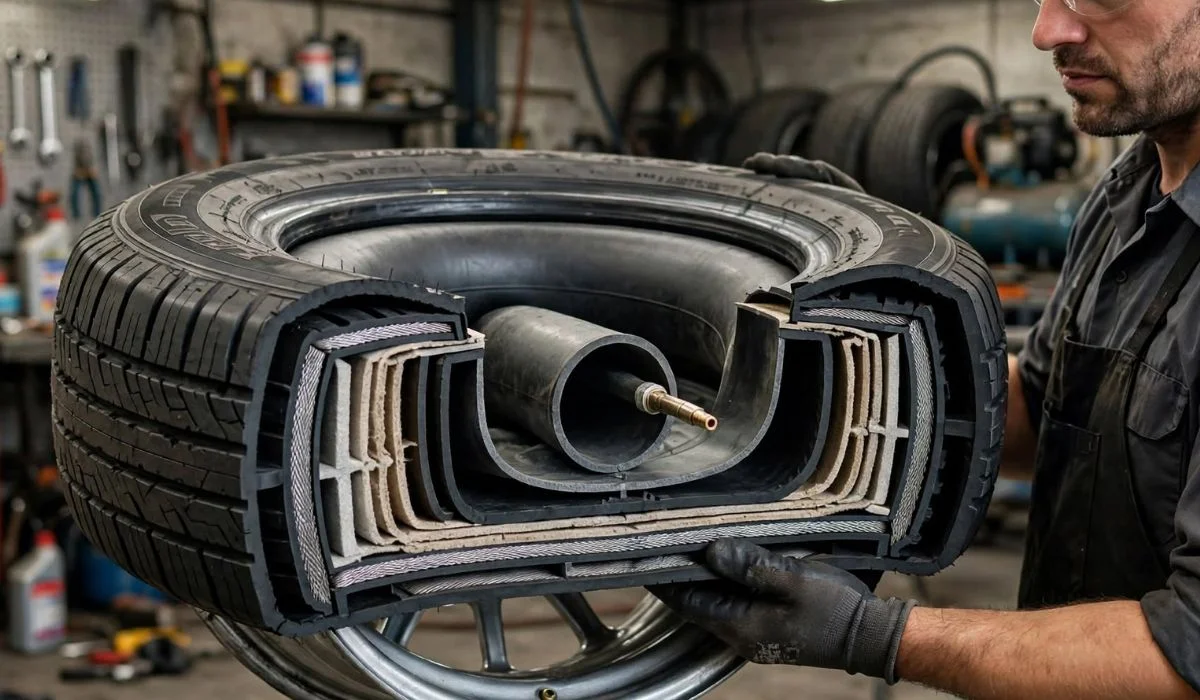
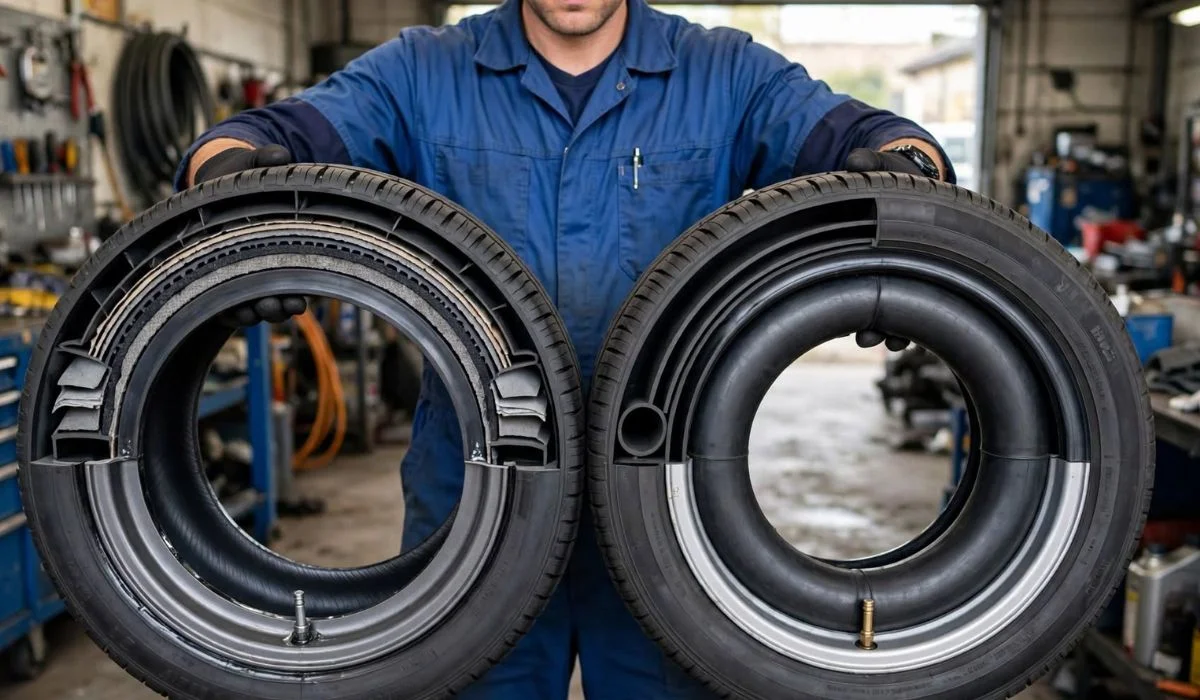
A tube tire uses a separate rubber inner tube to hold the pressurized air. The tube sits inside the outer tire and is inflated through a valve attached to the tube.
This design has been used for generations and remains common in bicycles, motorcycles, agricultural equipment, off-road applications, and some specialty vehicles.
How Tube Tires Work
A typical tube-tire setup consists of:
- Outer tire
- Inner tube
- Wheel rim
- Valve stem
When you inflate the tire, air enters the inner tube rather than the tire itself. The inflated tube pushes outward against the inside of the tire, which then provides the contact surface with the road.
What Are Tubeless Tires?
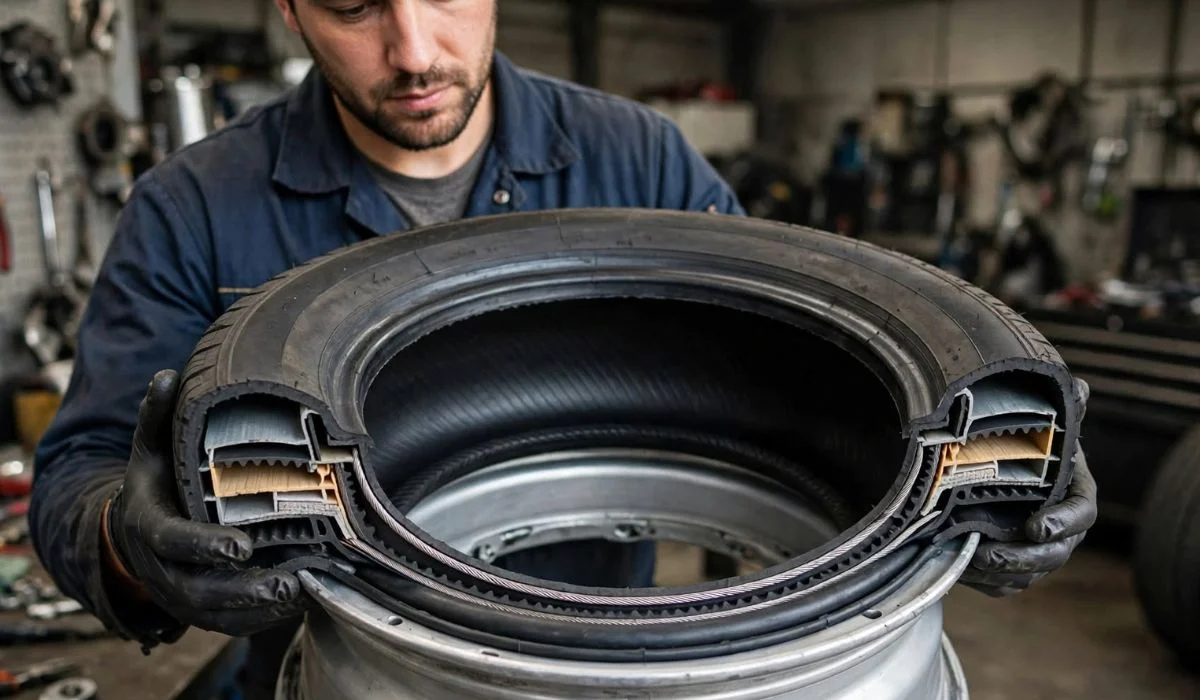
A tubeless tire does not use a separate inner tube. Instead, the tire itself forms an airtight seal against a compatible rim.
The valve is normally mounted directly through the wheel rim, and an airtight tire-and-rim assembly holds the air.
Tubeless technology is widely used on modern passenger vehicles and is also common in motorcycles, bicycles, and other applications.
How Tubeless Tires Work
A tubeless setup generally relies on:
- Tubeless-compatible tire
- Compatible wheel rim
- Airtight bead seal
- Valve stem
- Properly sealed rim
The tire bead sits tightly against the rim, creating the necessary air seal.
Tubeless vs Tube Tires: What’s the Difference?
The main difference is where the air is stored.
| Feature | Tubeless Tires | Tube Tires |
|---|---|---|
| Inner tube | No | Yes |
| Air storage | Inside the tire | Inside the tube |
| Puncture behavior | Can sometimes lose air gradually | Tube can deflate quickly |
| Installation | Can require specialized equipment | Generally straightforward |
| Puncture repair | Often possible without removing tire for certain punctures | Usually requires tube removal |
| Weight | Often lighter | Tube adds weight |
| Heat buildup | Generally lower | Tube can generate additional friction |
| Rim compatibility | Requires compatible rim | Works with tube-compatible rim |
| Maintenance | Often convenient after punctures | Tube replacement may be needed |
The exact characteristics vary according to the tire, wheel, application, and manufacturer.
Advantages of Tubeless Tires
Tubeless tires have become popular because they offer several practical and performance benefits.
Better Resistance to Certain Punctures
One major advantage is how some small punctures behave.
When a nail or similar object penetrates a tubeless tire, the object may remain lodged in the tread and slow the rate of air loss.
That doesn’t mean a tubeless tire is immune to punctures. It simply means some punctures can result in a slower loss of pressure than a punctured inner tube.
Lower Risk of Pinch Flats
Tubeless tires eliminate the conventional inner tube, so they cannot suffer from a traditional pinch-flat caused by the tube being compressed between the tire and rim.
This is particularly useful in bicycles and off-road applications where lower tire pressures may be desirable.
Advantages of Tube Tires
Tube tires remain popular for good reasons.
Simple and Familiar Design
The construction is straightforward and widely understood.
If a tube becomes damaged, it can often be removed and replaced without replacing the entire tire.
This can be particularly useful in areas where tire shops and replacement components are readily available.
Useful for Certain Wheels
Some wheels are designed specifically for tube-type tires.
In those cases, converting to tubeless isn’t simply a matter of removing the tube. The rim, tire, valve, bead, and sealing system all need to be compatible.
Tubeless vs Tube Tires for Punctures
Puncture behavior is one of the biggest differences between the two systems.
With a tube tire, a puncture through the tire can also puncture the inner tube, allowing the tube to lose air.
With a tubeless tire, the tire itself contains the air.
What Happens After a Tubeless Puncture?
A small tread puncture may sometimes be repaired using an appropriate tubeless tire repair method, depending on the tire manufacturer’s recommendations and the location and severity of the damage.
However, not every puncture is safely repairable.
Sidewall damage, large cuts, separated cords, or other serious damage may require tire replacement.
What Happens After a Tube Puncture?
If the inner tube is punctured, the tube may need to be repaired or replaced.
A damaged tube can sometimes be patched, but replacing it may be the preferred solution depending on the damage and application.
Which Is Safer: Tubeless or Tube Tires?

Neither design is automatically safer in every situation.
A properly installed and maintained tubeless tire can provide useful advantages, including potentially slower air loss from certain tread punctures.
Tube tires can also be safe when correctly matched to the wheel and maintained at the recommended pressure.
The quality of the tire, wheel condition, inflation pressure, installation, and maintenance all matter.
Tire Pressure Matters More Than Many Drivers Realize
Underinflation and overinflation can affect handling, braking, tire wear, and heat generation.
Regardless of whether the tire uses a tube, maintain the pressure recommended for the specific application.
Tubeless vs Tube Tires for Cars
For modern passenger cars, tubeless tires are overwhelmingly the standard choice.
Most modern car wheels and tires are designed as tubeless systems.
Adding an inner tube to a modern tubeless automotive tire isn’t generally recommended unless the tire or wheel manufacturer specifically approves the application.
Why Cars Use Tubeless Tires
Tubeless automotive tires offer practical advantages such as:
- Reduced weight
- Efficient heat management
- Convenient puncture repair for eligible damage
- No inner tube to replace
- Better suitability for modern wheel designs
If your vehicle was designed for tubeless tires, use the tire type specified by the manufacturer.
Tubeless vs Tube Tires for Motorcycles
Both systems can be found on motorcycles.
Some motorcycles use tubeless tires with cast or specially designed wheels, while others use tube-type tires with traditional spoke wheels.
Can You Put a Tube in a Tubeless Motorcycle Tire?
It depends on the specific tire and wheel combination.
A tube should not automatically be added to a tubeless tire simply because it appears to fit.
The motorcycle manufacturer and tire manufacturer should be consulted for compatibility.
Likewise, converting a tube-type wheel to tubeless requires more than simply removing the tube.
Read next: Does Costco Do Wheel Balancing? Services, Costs & What to Know
Tubeless vs Tube Tires for Bicycles
Both designs are widely used in cycling.
Traditional clincher bicycle tires commonly use inner tubes, while tubeless bicycle systems have become increasingly popular among mountain bikers, gravel riders, and some road cyclists.
Why Cyclists Choose Tubeless
Tubeless bicycle tires can allow riders to run lower pressures in appropriate applications while reducing the likelihood of pinch flats.
Some systems also use sealant that can automatically seal certain small punctures.
However, tubeless setups can require more careful installation and maintenance.
Tubeless vs Tube Tires: Weight Differences
A tubeless setup can be lighter than a comparable tube setup because there is no separate inner tube.
However, weight comparisons aren’t always straightforward.
A tubeless bicycle system, for example, may require sealant, rim tape, and a tubeless valve.
Does Lower Weight Always Mean Better?
Not necessarily.
Tire construction, tread design, durability, rolling resistance, wheel strength, and intended use can matter more than a small weight difference.
Choose based on the complete system rather than focusing on one specification.
Tubeless vs Tube Tires for Off-Road Driving
Tubeless tires can be particularly useful in certain off-road applications.
They can provide benefits when driving or riding over rough terrain where punctures and impacts are common.
Lower Pressure Considerations
Lower tire pressure can improve traction in some off-road situations, but the correct pressure depends on the vehicle, tire, wheel, load, and terrain.
Running too little pressure can cause bead problems, tire damage, or loss of control.
Never exceed or fall below pressure recommendations without a specific manufacturer-approved reason.
Disadvantages of Tubeless Tires
Tubeless systems aren’t perfect.
They Can Be More Difficult to Install
Getting the tire bead properly seated can require specialized tools or an air compressor.
Some bicycle and motorcycle tubeless systems can be particularly challenging to install without the right equipment.
Rim Damage Can Cause Air Leaks
Because a tubeless system depends on an airtight connection between the tire and rim, a damaged or corroded rim can cause air leakage.
A bent rim can also create sealing problems.
Disadvantages of Tube Tires
Tube tires have their own limitations.
More Components to Maintain
A tube tire has an additional component that can fail.
The tube can develop:
- Punctures
- Pinch flats
- Valve damage
- Abrasion
- Age-related deterioration
The tire itself may look fine while the tube has a problem.
More Heat and Friction
An inner tube can create friction against the inside of the tire, potentially contributing to heat generation.
The actual effect varies according to tire construction, speed, load, pressure, and application.
Which Lasts Longer: Tubeless or Tube Tires?
Neither type automatically lasts longer.
Tire lifespan depends on factors such as:
- Tire compound
- Tread design
- Driving or riding style
- Inflation pressure
- Vehicle weight
- Road conditions
- Alignment
- Storage conditions
- Maintenance
A high-quality tube tire can last longer than a poorly maintained tubeless tire, and vice versa.
Can You Convert Tube Tires to Tubeless?
Sometimes, but it depends heavily on the wheel and tire.
A proper tubeless conversion requires components designed to create and maintain an airtight system.
What a Conversion May Require
Depending on the application, conversion can involve:
- Tubeless-compatible tire
- Tubeless rim or compatible rim
- Rim tape
- Tubeless valve
- Sealant
- Proper bead seating
Never assume that any tube-type wheel can safely be converted.
Tubeless vs Tube Tires: Which Is Better?
For many modern vehicles, tubeless tires are the better practical choice because the vehicle and wheel were designed around that system.
Tube tires can still be the better option when the wheel and vehicle specifically require them or when simplicity and easy tube replacement are priorities.
Choose Tubeless If You Want
Tubeless may be preferable when you value:
- Modern vehicle compatibility
- Reduced risk of traditional pinch flats
- Potentially slower air loss from certain tread punctures
- Convenient repair options
- Lower system weight in some applications
Choose Tube Tires If You Need
Tube tires can make sense when:
- The wheel requires an inner tube
- The manufacturer specifies tube-type tires
- You regularly travel where replacement tubes are easy to obtain
- Your application is designed around tube construction
How to Maintain Tubeless Tires
Proper maintenance is essential.
Check tire pressure regularly and inspect the tread and sidewalls for damage.
If you experience repeated pressure loss, don’t simply keep adding air. Find the source of the leak.
Inspect the Wheel Too
For tubeless systems, inspect the wheel for:
- Bent sections
- Cracks
- Corrosion
- Bead-seat damage
- Valve problems
A tire may be perfectly healthy while the wheel is responsible for the air leak.
How to Maintain Tube Tires
Tube tires also need regular inspection.
Maintain the correct pressure and watch for signs of:
- Pinch flats
- Slow leaks
- Valve damage
- Tire cuts
- Tube bulges
- Uneven wear
If a tube repeatedly fails in the same area, investigate the tire and rim rather than repeatedly installing new tubes.
Final Verdict on Tubeless vs Tube Tires
When comparing tubeless vs tube tires, neither system is universally better for every application.
Tubeless tires are generally the preferred design for modern passenger cars and are increasingly common in motorcycles and bicycles. They can offer useful puncture behavior, eliminate traditional tube pinch flats, and reduce the number of components inside the tire.
Tube tires remain valuable for certain bicycles, motorcycles, agricultural equipment, and older or specialized wheel designs. They’re straightforward and can be practical where replacement tubes are readily available.
The most important rule is to use the tire and wheel configuration recommended by the vehicle or equipment manufacturer. Don’t convert between tube and tubeless systems without confirming compatibility.
FAQs
Are tubeless tires better than tube tires?
For many modern vehicles, tubeless tires are more practical because they eliminate the inner tube and can offer advantages with certain punctures. However, tube tires remain appropriate for applications designed around them.
What is the main difference between tubeless and tube tires?
A tube tire stores air inside a separate inner tube. A tubeless tire stores air directly inside the tire and seals against a compatible wheel rim.
Are tubeless tires safer?
A properly installed tubeless system can provide useful safety and performance advantages, but neither type is automatically safer in every situation. Correct pressure, tire condition, wheel condition, and installation are critical.
Do tubeless tires get punctures?
Yes. Tubeless tires can still be punctured. However, some small tread punctures may result in slower air loss or may be repairable using an appropriate repair method.
Do tube tires lose air faster after a puncture?
A punctured inner tube can lose air relatively quickly, depending on the size and location of the puncture. The rate of air loss varies with the type of damage.
Can I put a tube inside a tubeless tire?
Not automatically. Compatibility depends on the tire, wheel, application, and manufacturer recommendations. Consult the tire and vehicle manufacturer before doing so.
Can I convert tube tires to tubeless?
Some wheel and tire systems can be converted, but not all are suitable. A safe conversion requires compatible components and a properly sealed rim and tire system.
Which is better for motorcycles, tubeless or tube tires?
It depends on the motorcycle and wheel design. Many modern motorcycles use tubeless tires, while motorcycles with certain spoke-wheel designs may require tubes.
Which is better for bicycles, tubeless or tube tires?
Tubeless bicycle tires can be advantageous for off-road and performance riding because they can reduce pinch-flat risk and allow suitable lower pressures. Traditional tube systems are generally simpler and easier to repair.
Do tubeless tires require special wheels?
Yes. A tubeless tire requires a compatible wheel capable of maintaining an airtight seal. A standard tube-type wheel should not automatically be treated as tubeless-compatible.
Do tubeless tires need sealant?
Not every tubeless tire system requires sealant. Some bicycle and off-road systems use sealant to help seal certain small punctures, while other tubeless applications don’t use it.
How often should I check tubeless tire pressure?
Check tire pressure regularly according to your vehicle or equipment manufacturer’s recommendations. Tubeless tires can lose pressure gradually even without a visible puncture.
Which tire type is easier to repair?
It depends on the application and type of damage. Certain small tubeless tread punctures can be repaired without removing the tire, while tube tires may require removing the tube for patching or replacement.