Why Is My Car Steaming But Not Overheating? Causes & Fixes

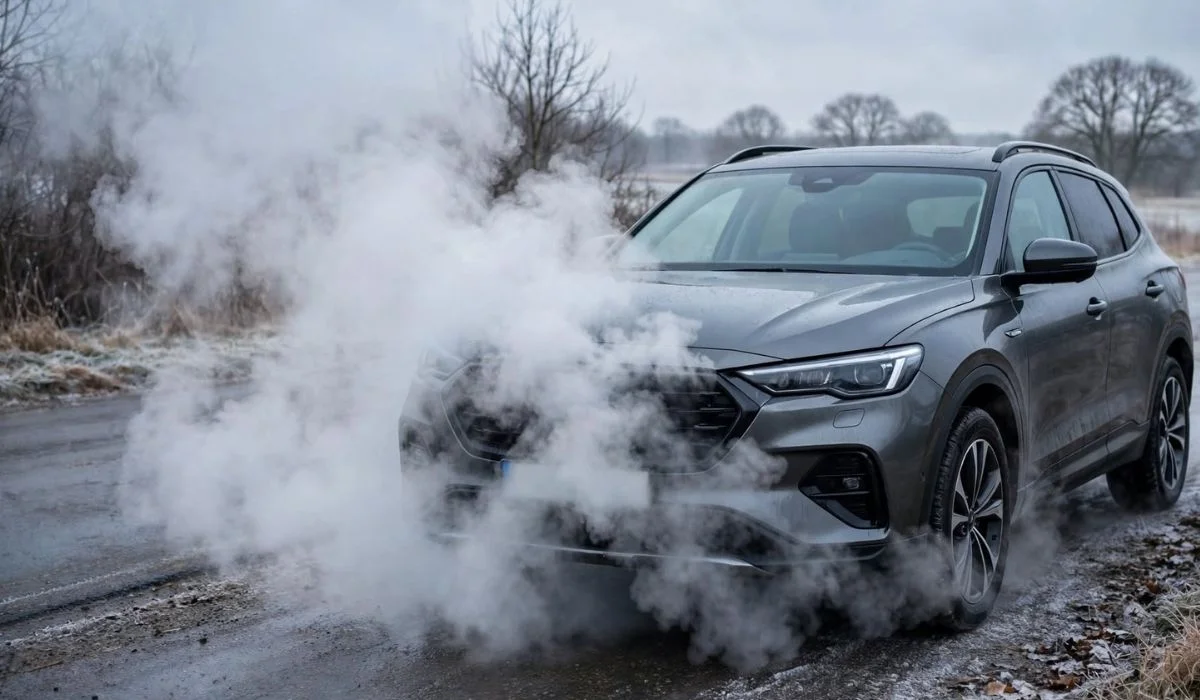
Seeing steam coming from your car can be worrying, especially when the temperature gauge still shows a normal reading. Fortunately, a car steaming but not overheating does not always mean the engine has a serious problem. Steam can come from spilled coolant, water contacting hot components, condensation, or a small leak that has not yet caused the engine temperature to rise.
However, visible steam should not be ignored. A cooling-system problem can sometimes develop before the temperature gauge gives an obvious warning.
Why Is My Car Steaming but Not Overheating?
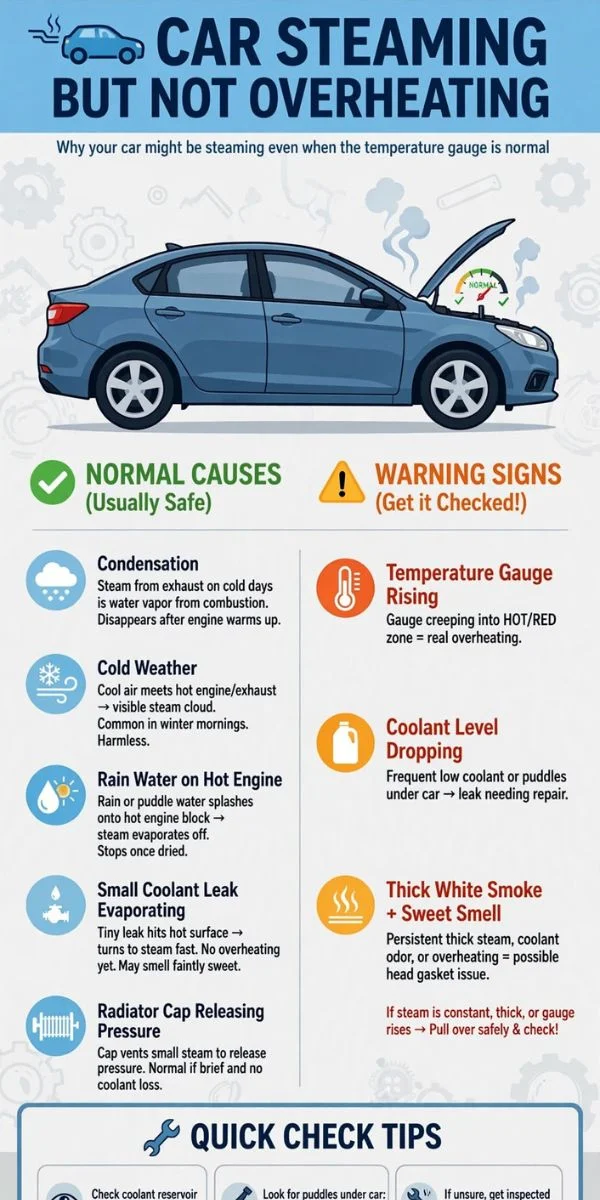
If your car is steaming while the temperature gauge remains normal, the steam may be coming from an external source rather than from an overheated engine.
The most common possibilities include:
- Coolant leaking onto a hot engine component
- Water splashing onto hot parts
- A small radiator or hose leak
- Coolant spilling during maintenance
- Condensation in cold or humid weather
- A leaking water pump
- Steam escaping from the cooling system
- A faulty radiator cap
- A minor exhaust or engine-related issue
The location of the steam is an important clue. Steam near the radiator, hoses, or front of the engine can point toward a cooling-system issue, while steam from underneath the vehicle may have a different cause.
Is It Normal for a Car to Steam Without Overheating?
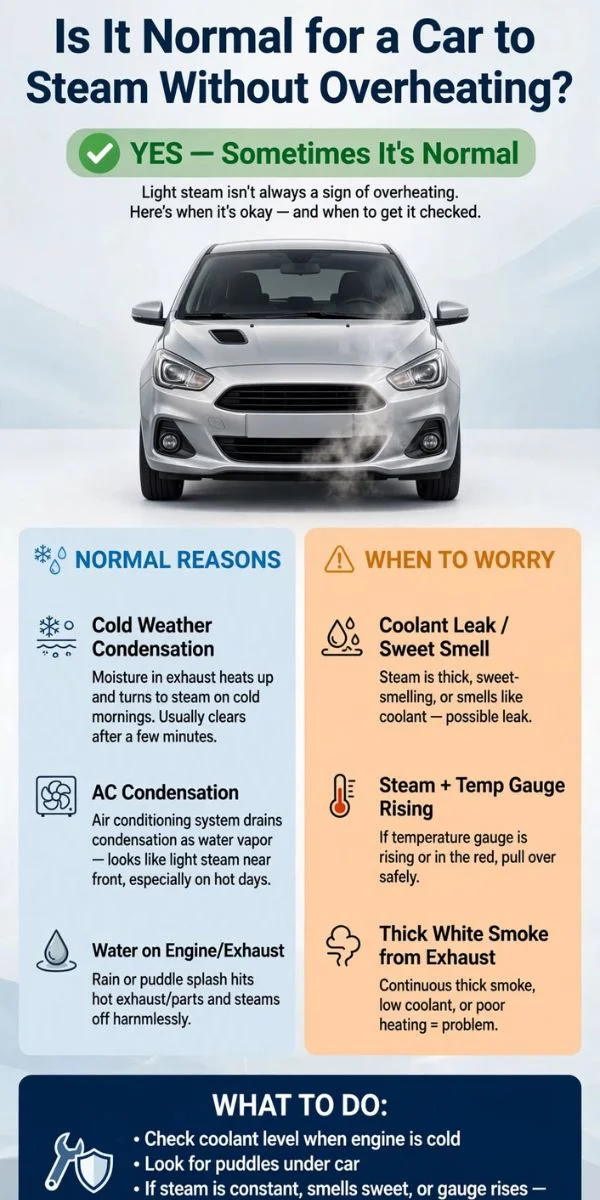
Sometimes, yes.
A small amount of white vapor can be harmless, particularly when water or condensation contacts a hot surface. For example, driving through rain or a puddle can leave water on hot engine components, creating temporary steam.
Likewise, condensation may produce vapor around certain parts of the vehicle during cold weather.
The key difference is whether the steam disappears quickly or continues to appear.
Temporary vapor that stops after a short period is generally less concerning than persistent steam accompanied by coolant loss, unusual smells, warning lights, or other symptoms.
Coolant Leaking Onto a Hot Engine
One of the most common reasons for steam without immediate overheating is an external coolant leak.
Coolant can escape from a damaged hose, radiator, thermostat housing, water pump, or gasket. When the liquid reaches a hot engine component, it can rapidly turn into vapor.
Signs of an External Coolant Leak
Look for:
- White steam under the hood
- A sweet-smelling odor
- Wet areas around hoses or the radiator
- Colored fluid underneath the vehicle
- A gradually falling coolant level
- Dampness around the water pump
- Steam appearing after the engine warms up
A coolant leak can start small and become worse as pressure and temperature increase.
Water Splashed Onto Hot Engine Components
Driving through deep puddles or heavy rain can sometimes cause temporary steam.
Water that reaches hot metal surfaces can evaporate quickly, producing a cloud that looks like smoke or coolant steam.
When Splashing Water Is Usually Less Concerning
Temporary steam is more likely to be harmless when:
- It happens immediately after driving through water
- There is no sweet coolant smell
- The temperature gauge stays normal
- The vapor quickly disappears
- There are no visible fluid leaks
- The engine continues running normally
If the steam continues after the vehicle dries, however, the cause should be investigated.
Coolant Spilled During Maintenance
If you recently topped up coolant or had work performed on the cooling system, spilled coolant may be responsible.
A small amount of coolant can remain on engine components. Once those components become hot, the leftover liquid can produce steam.
This type of steam should gradually disappear as the spilled fluid evaporates.
If it keeps returning after several drives, there may be an active leak rather than simple residue.
A Small Radiator Leak
A radiator can develop a small crack or damaged connection that releases coolant only when the system becomes pressurized.
The leak might not be large enough to cause overheating immediately.
Symptoms to Watch For
A small radiator leak may cause:
- Occasional steam
- Low coolant levels
- A sweet odor
- Wetness around the radiator
- Coolant spots beneath the vehicle
- Steam after longer drives
A radiator leak should be repaired promptly because a small leak can become a major coolant loss.
Damaged or Loose Radiator Hose
Radiator and heater hoses carry coolant through the cooling system. A cracked, loose, or deteriorated hose can allow coolant to escape.
Because the hose is exposed to heat and pressure, the leak may become more noticeable when the engine is operating.
A damaged hose can spray or drip coolant onto nearby hot components, creating steam.
Why a Hose Leak Can Exist Without Overheating
The cooling system may still contain enough coolant to keep the engine within its normal temperature range.
That does not mean the problem is safe to ignore.
If coolant continues to escape, the level can eventually fall low enough for the engine to overheat.
Faulty Radiator Cap
The radiator cap helps maintain the correct pressure inside the cooling system. If the cap is damaged or its seal has deteriorated, coolant may escape as vapor or liquid.
A faulty cap can sometimes cause:
- Coolant loss
- Steam
- Wetness around the radiator
- Cooling-system pressure problems
- Repeated need to add coolant
Never remove a radiator cap while the engine is hot. Hot coolant and steam can be under significant pressure and cause severe burns.
Water Pump Leak
The water pump circulates coolant through the engine and cooling system.
When its seal or other components begin to fail, coolant may leak around the pump. Depending on the vehicle, the leaking coolant can reach hot engine components and create visible steam.
Common Water Pump Warning Signs
Possible symptoms include:
- Coolant loss
- Steam from the engine bay
- Coolant residue near the pump
- A grinding or whining sound
- Temperature fluctuations
- Repeated need to refill coolant
A water-pump problem can eventually lead to overheating, so early diagnosis matters.
Thermostat Housing Leak
The thermostat controls coolant flow as the engine reaches operating temperature. The housing surrounding the thermostat can develop cracks or seal problems.
Coolant escaping from this area may land on hot engine components and produce steam.
The temperature gauge can remain normal initially, especially if the leak is small.
Condensation Can Look Like Steam
Not every white vapor cloud means coolant is leaking.
Condensation is common when temperatures are low or when there is significant moisture in the air. Water vapor can be particularly noticeable during startup.
Normal Condensation vs. Problematic Steam
Normal condensation typically:
- Appears briefly
- Is thin and white
- Disappears quickly
- Does not have a sweet coolant smell
- Does not cause coolant loss
- Does not continue after the vehicle warms up
Persistent vapor deserves closer attention.
Could the Air Conditioner Cause Steam?
In some situations, moisture from the air-conditioning system can create visible vapor or mist.
The A/C system removes moisture from cabin air, and condensation normally drains underneath the vehicle. Water contacting hot components can sometimes appear as steam.
If the vapor is actually coming from the engine compartment rather than the A/C drain area, however, another issue may be responsible.
Read Next: Car Smoking Under Hood And Burning Smell | Causes & Fixes
Why Is Steam Coming From Under the Hood?
Steam under the hood usually means moisture is reaching a hot surface.
The source could be:
- Coolant
- Rainwater
- Puddle water
- Condensation
- Washer fluid
- Water from a recent engine wash
- Another fluid contacting hot components
Try to determine exactly where the vapor originates without touching hot parts.
Why Does Steam Appear After I Turn the Car Off?
This can happen because some engine components remain extremely hot after the engine is switched off.
If coolant or another liquid is leaking onto those components, steam may become more noticeable immediately after shutdown.
In some cases, the cooling fan may also continue operating after the engine is turned off. This can be normal on certain vehicles.
However, repeated steaming after shutdown can indicate a cooling-system leak.
Can a Car Steam Without Showing a High Temperature?
Yes.
The temperature gauge measures the temperature detected at a particular location in the engine or cooling system. A small external leak can create steam before the overall engine temperature rises significantly.
There can also be situations where the gauge does not accurately reflect the actual problem because of a sensor, wiring, or cooling-system issue.
Therefore, a normal temperature gauge does not automatically rule out a coolant leak.
What Should You Do If Your Car Is Steaming?
If you notice steam, don’t immediately assume the vehicle is safe because the temperature gauge is normal.
Pull Over if the Steam Continues
If the steam is persistent or increasing, pull over somewhere safe and turn off the engine.
Allow the vehicle to cool before inspecting anything.
Look for Visible Leaks After Cooling
Once the engine is safely cool, check for obvious signs of:
- Coolant underneath the vehicle
- Wet hoses
- Coolant residue
- Cracked components
- Fluid around the radiator
- A low coolant reservoir
Do not touch hot engine components.
Check the Coolant Level
When the engine is completely cool, check the coolant reservoir according to the vehicle manufacturer’s instructions.
If the coolant level is significantly low, there may be a leak.
Adding coolant can temporarily restore the level, but it does not fix the underlying problem.
When Should You Stop Driving Immediately?
You should stop driving if the steam becomes heavy, the temperature gauge begins rising, a coolant warning appears, or you notice significant fluid loss.
Other serious warning signs include:
- Strong sweet coolant smell
- Visible coolant spraying
- Steam continuously coming from the engine bay
- Engine running poorly
- Warning lights
- Temperature gauge entering the hot zone
- Strange noises from the engine
Continuing to drive with a cooling-system problem can eventually cause severe engine damage.
Can You Drive a Car That Is Steaming but Not Overheating?
It depends on the cause.
If the vapor was clearly caused by rainwater or a small amount of spilled water and disappears quickly, driving may be reasonable.
If the source is unknown or the vehicle continues steaming, it is safer to have it inspected before driving farther.
A car can go from “not overheating” to “overheating” quickly if a coolant leak worsens.
How to Prevent Cooling-System Problems
Regular maintenance is the best defense against many cooling-system failures.
Inspect Coolant Levels Regularly
Check the coolant reservoir when the engine is cold and follow the vehicle manufacturer’s recommended inspection procedure.
A recurring drop in coolant level is not normal and should be investigated.
Replace Aging Hoses
Rubber hoses can deteriorate with age and exposure to heat.
During routine maintenance, have hoses inspected for:
- Cracks
- Bulges
- Soft spots
- Hardening
- Leaks
- Loose connections
Maintain the Correct Coolant
Use the coolant type specified for your vehicle. Different coolant formulations should not automatically be mixed simply because they have similar colors.
Watch for Early Warning Signs
A sweet smell, unexplained coolant loss, dampness, or occasional steam can provide an early warning before a major overheating event occurs.
Final Thoughts
If your car is steaming but not overheating, the problem may be relatively minor, such as water contacting a hot component or coolant spilled during maintenance. But persistent steam can also indicate a coolant leak, damaged hose, radiator problem, faulty radiator cap, thermostat housing leak, or failing water pump.
A normal temperature gauge is reassuring, but it does not guarantee that the cooling system is functioning perfectly. If the steam continues, coolant is disappearing, or other warning signs appear, stop driving and have the vehicle inspected.
Catching a small coolant leak early can help prevent a much more expensive overheating problem later.
FAQs
Why is my car steaming but the temperature gauge is normal?
The steam may be caused by coolant leaking onto a hot component, water splashing onto the engine, condensation, or spilled fluid. A small cooling-system leak may produce steam before the engine temperature rises.
Is steam from under the hood always a bad sign?
No. Temporary steam caused by rainwater, puddles, condensation, or spilled water can be harmless. Persistent steam, coolant loss, or a sweet smell is more concerning.
Can low coolant cause steam without overheating?
Yes. A small coolant leak can create steam when coolant contacts hot engine components even before the engine reaches an overheating temperature.
Why does my car steam after driving in the rain?
Water can reach hot engine or exhaust components and quickly evaporate. If the steam disappears shortly afterward and there are no other symptoms, it may simply be water evaporating.
Why does my car steam after I turn it off?
Heat remains in the engine after shutdown. If coolant or water is contacting a hot surface, the resulting vapor can become more noticeable after the engine is switched off.
Can a bad radiator cap cause steam?
Yes. A damaged radiator cap may allow coolant or pressure to escape from the cooling system, potentially producing steam and causing coolant loss.
Can a coolant leak happen without overheating?
Yes. Small leaks may initially allow the cooling system to maintain normal engine temperature. If the leak becomes worse, however, overheating can occur.
Should I add coolant if my car is steaming?
Only check or add coolant when the engine and cooling system are sufficiently cool, and use the correct coolant specified for the vehicle. Adding coolant does not repair a leak.
Can I drive if my car is steaming but not overheating?
If the cause is unknown and the steam continues, it is safer not to drive. A cooling-system problem can worsen and lead to overheating or engine damage.
How can I tell if steam is coolant?
Coolant-related steam is often accompanied by a sweet odor, visible wetness, or a falling coolant level. However, the safest way to confirm the cause is through inspection rather than smell or appearance alone.