
Why Is My Car Shaking When Im Stopped? Causes & Fixes

If your car shakes, vibrates, or feels like it is trembling while you are stopped, you may wonder whether something serious is wrong. A small amount of vibration can be normal, but noticeable shaking while the engine is idling can point to an issue with the engine, fuel system, ignition components, transmission, or engine mounts.
The exact cause depends on when the shaking happens, how severe it is, and whether other symptoms occur at the same time. Understanding the most common reasons can help you decide whether you can keep driving or should have the vehicle inspected.
What Does It Mean When a Car Shakes While Stopped?
When your car is stopped but the engine is running, the engine should maintain a relatively stable idle speed. If the engine speed fluctuates or combustion is uneven, those vibrations can transfer through the vehicle and become noticeable inside the cabin.
A slight vibration at idle may not be unusual, particularly in older vehicles. However, strong shaking, repeated jolts, stalling, or worsening vibrations should not be ignored.
Pay Attention to When the Shaking Happens
Think about the exact situation in which you notice the vibration:
- Shaking only when stopped
- Shaking while stopped in Drive
- Shaking when the air conditioner is running
- Shaking that disappears when you accelerate
- Shaking accompanied by a check-engine light
- Shaking that occurs before the engine stalls
These details can help narrow down the possible cause.
Engine Misfire Can Cause Shaking at Idle:
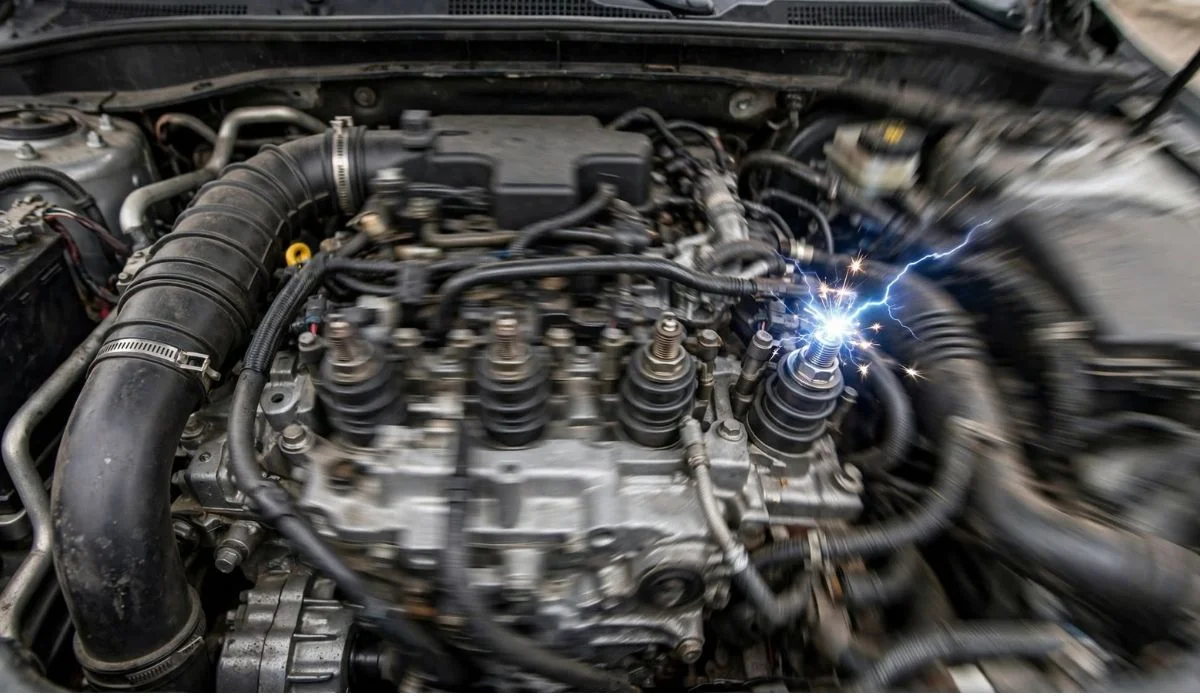
One of the most common reasons a car shakes while stopped is an engine misfire. An engine relies on the correct combination of fuel, air, compression, and ignition to operate smoothly.
When one or more cylinders does not burn its air-fuel mixture properly, the engine can run unevenly. The vibration may be particularly noticeable at idle.
Common Signs of a Misfire
A misfire may cause:
- Rough idling
- Shaking or trembling
- Reduced acceleration
- Poor fuel economy
- Engine hesitation
- A check-engine light
- In severe cases, stalling
A flashing check-engine light combined with severe shaking can indicate a serious misfire that may damage the catalytic converter. Avoid unnecessary driving and have the vehicle diagnosed promptly.
Worn or Damaged Spark Plugs
Spark plugs ignite the air-fuel mixture inside gasoline engines. If a spark plug is worn, fouled, damaged, or incorrectly gapped, combustion may become inconsistent.
Because an engine spends significant time at idle, a weak ignition system can make the resulting vibration particularly obvious when the vehicle is stopped.
Ignition Coils Can Also Be Responsible
Modern gasoline vehicles commonly use ignition coils to provide the high voltage needed by spark plugs. A failing ignition coil can cause one cylinder to misfire.
If the shaking began suddenly and the engine also feels weak or hesitant when accelerating, an ignition problem is worth investigating.
Dirty or Faulty Fuel Injectors:

Fuel injectors deliver fuel into the engine in carefully controlled amounts. Deposits or injector problems can interfere with the fuel supply to a cylinder.
An uneven fuel supply can cause rough idle and vibration.
Other Fuel-System Problems
A shaking engine can also be associated with problems involving:
- Fuel pressure
- Fuel pump performance
- Restricted fuel filters where applicable
- Injector operation
- Poor-quality or contaminated fuel
The symptoms can overlap with ignition and air-intake problems, so proper diagnosis is important rather than replacing parts based only on symptoms.
Dirty or Faulty Air Intake Components
An engine needs a precise amount of air to maintain a stable idle. Problems with the air intake system can disrupt that balance.
A dirty throttle body, malfunctioning idle-control system on vehicles equipped with one, or a faulty mass airflow sensor can contribute to unstable idle behavior.
Vacuum Leaks Can Make the Engine Shake
A vacuum leak allows air into the engine that the engine-management system may not have properly accounted for.
This can create an incorrect air-fuel mixture and cause rough idling.
Possible clues include:
- Uneven idle speed
- Hissing sounds
- Engine hesitation
- Higher or unstable idle speed
- Check-engine light
- Poor fuel economy
Engine Mounts May Be Worn Out
Engine mounts secure the engine to the vehicle while reducing the amount of vibration transferred into the cabin.
When a mount becomes cracked, damaged, or excessively worn, normal engine vibrations can become much more noticeable.
How Bad Engine Mounts Feel
A vehicle with worn engine mounts may:
- Shake more while stopped
- Vibrate noticeably in Drive
- Produce a clunk when shifting between Reverse and Drive
- Feel smoother when placed in Neutral
- Transfer engine vibration into the steering wheel or seats
Unlike an engine misfire, a damaged mount may allow the engine to run normally while making the cabin feel unusually rough.
Why Does My Car Shake When Stopped in Drive?
If the shaking is stronger when you are stopped in Drive but improves when you shift into Neutral or Park, the transmission and engine-mount system deserve attention.
An automatic transmission places a load on the engine when the vehicle is held stationary in Drive. A marginal engine or transmission mount may make that additional load much more noticeable.
Is It Always a Transmission Problem?
No. A vibration that occurs in Drive does not automatically mean the transmission is failing.
Engine idle quality, mounts, transmission operation, and other components can produce similar symptoms. A professional diagnosis is the best way to identify the source.
Low or Unstable Engine Idle
Sometimes the issue is related to the engine’s idle speed rather than a specific damaged component.
If the engine is idling too low or constantly changing speed, the vehicle may shake because the engine is struggling to maintain a stable operating condition.
What Can Cause an Unstable Idle?
Potential causes include:
- Air leaks
- Dirty throttle body
- Ignition problems
- Fuel-delivery problems
- Sensor faults
- Carbon buildup
- Engine-management issues
The appropriate repair depends on the underlying cause.
A Dirty Throttle Body
The throttle body controls the amount of air entering the engine. Over time, deposits can build up around the throttle plate and affect airflow.
In some vehicles, this can contribute to rough or unstable idle behavior.
Don’t Assume Cleaning Will Fix Everything
Throttle-body cleaning can sometimes help, but shaking at idle has many possible causes. If the problem is caused by a misfire, vacuum leak, engine mount, or fuel-system fault, cleaning the throttle body alone will not solve it.
The Air Conditioner Can Make Shaking More Noticeable
You may notice the vibration primarily when the air conditioner is running.
The A/C compressor places an additional load on the engine. A healthy engine-management system generally compensates for that load, but a weak idle condition may become more noticeable when the compressor engages.
Read Next: Why Does My Car Smoke When It Rains? Causes & What to Do
When A/C-Related Shaking Needs Attention
If the car only shakes slightly when the A/C turns on and otherwise runs smoothly, the additional load may simply make a small existing vibration more noticeable.
If the engine shakes heavily, nearly stalls, or makes unusual noises whenever the A/C engages, have the system inspected.
Transmission Problems Can Cause Vibration:
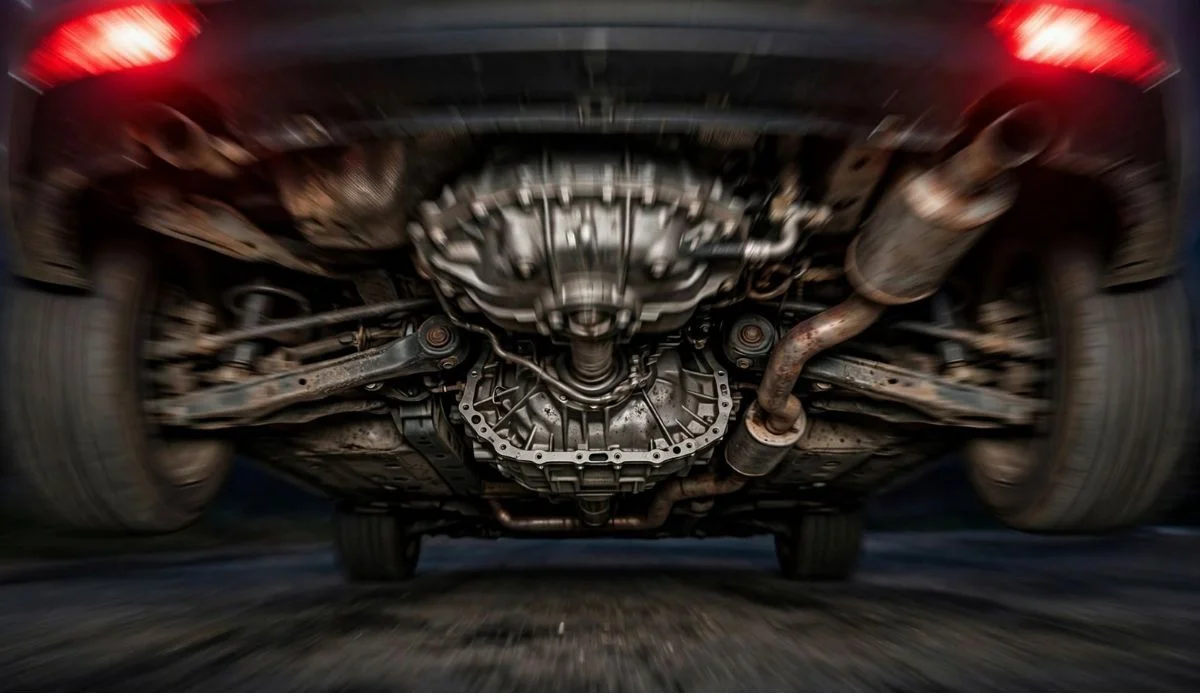
Automatic and manual transmissions can both contribute to driveline vibration, although the symptoms vary.
Low or incorrect transmission fluid, worn components, or other transmission-related problems can sometimes produce vibrations or harsh engagement.
Look for Other Transmission Symptoms
Pay attention to:
- Delayed engagement
- Hard shifting
- Slipping
- Clunking
- Difficulty selecting gears
- Unusual noises
- Burning smells
If shaking occurs alongside these symptoms, professional diagnosis is recommended.
Brake-Related Vibration Is Usually Different
Brake problems commonly cause shaking while braking rather than while simply sitting at a stop.
For example, a brake issue can cause steering-wheel vibration when slowing down. That is different from an engine-related rough idle that continues while the car is stationary.
Compare the Two Situations
If the car shakes while you are stopped with your foot on the brake and the engine is idling, consider the engine and mounts first.
If the steering wheel shakes mainly while braking from speed, the braking system deserves attention.
Could a Low Battery or Charging Problem Cause Shaking?
Electrical problems can sometimes affect engine operation, particularly if the charging system is not maintaining the correct voltage.
A weak alternator or charging-system fault can create multiple electrical symptoms, although it is not one of the first things to assume when a car shakes at idle.
Look for Other Electrical Warning Signs
Check whether you also notice:
- Battery warning light
- Dimming headlights
- Difficulty starting
- Electrical accessories behaving unusually
- Engine stalling
These symptoms warrant a charging-system inspection.
Why Does My Car Shake but Not Have a Check-Engine Light?
A check-engine light is helpful, but its absence does not prove that everything is working correctly.
Some mechanical problems, especially worn engine mounts, may not trigger an engine-management warning.
A Smooth Dashboard Doesn’t Always Mean a Smooth Engine
A vehicle can have noticeable vibration caused by physical components even when the computer has not detected a fault that requires the check-engine light.
If the shaking is persistent or getting worse, an inspection can still be worthwhile.
What Should I Do If My Car Is Shaking While Stopped?
Start by observing the pattern rather than immediately replacing parts.
Notice whether the shaking changes when you:
- Shift from Drive to Neutral
- Turn the A/C on or off
- Increase engine speed
- Start the car
- Turn the steering wheel
- Apply or release the brake
Also check for warning lights, unusual smells, strange sounds, fluid leaks, or changes in engine performance.
When to Stop Driving
Avoid continuing to drive if the shaking is severe or accompanied by:
- A flashing check-engine light
- Significant loss of power
- Engine overheating
- Heavy smoke
- Strong fuel smell
- Loud knocking
- Repeated stalling
- Severe transmission problems
These symptoms can indicate a condition that could become more expensive or unsafe if ignored.
How a Mechanic Diagnoses Rough Idle Shaking
A professional technician will usually start by identifying when the vibration occurs and checking for obvious symptoms.
The diagnostic process may include scanning for trouble codes, inspecting ignition components, checking engine mounts, evaluating fuel and air systems, and examining idle speed.
Why Guessing Parts Can Get Expensive
Several different problems can create nearly identical symptoms. Replacing spark plugs, coils, injectors, mounts, or sensors without confirming the cause can quickly become expensive.
A proper diagnosis helps identify the actual source before repairs are made.
Can Regular Maintenance Prevent Car Shaking?
Routine maintenance can reduce the likelihood of several causes of rough idle.
Follow the vehicle manufacturer’s recommended service schedule and replace maintenance items at the appropriate intervals.
Maintenance Items Worth Watching
Depending on the vehicle, this may include:
- Spark plugs
- Engine air filter
- Fuel-system service when recommended
- Engine oil and filter
- Cooling-system maintenance
- Throttle and intake inspection
- Engine-mount inspection
- Transmission maintenance
Keeping up with maintenance does not prevent every mechanical failure, but it can help catch developing problems earlier.
Final Thoughts
If you are asking, “why is my car shaking when I’m stopped?” there are several possible answers. A rough idle can come from something as straightforward as worn spark plugs or a dirty throttle body, while damaged engine mounts, vacuum leaks, fuel problems, ignition faults, or transmission issues can also create noticeable vibration.
The most useful clue is the pattern. If the shaking changes in Drive, Neutral, or when the A/C turns on, or if it occurs alongside warning lights, unusual noises, poor acceleration, or stalling, those details can help narrow down the cause.
A brief, mild vibration may not indicate a major failure, but persistent or worsening shaking deserves a proper inspection before it develops into a larger problem.
FAQs
Why is my car shaking when stopped but runs fine while driving?
A rough idle, worn engine mount, ignition problem, vacuum leak, or fuel-delivery issue can cause shaking primarily at low engine speed. The vibration may become less noticeable as engine speed increases.
Why does my car shake when stopped in Drive but not Neutral?
The engine experiences additional load when an automatic transmission is engaged in Drive. A marginal idle condition or worn engine mount can make that vibration more noticeable. It does not automatically mean the transmission is failing.
Can bad spark plugs make my car shake at idle?
Yes. Worn or fouled spark plugs can cause incomplete or inconsistent combustion, resulting in an engine misfire and noticeable shaking while idling.
Can low transmission fluid cause a car to shake while stopped?
Transmission problems can contribute to vibration, particularly when accompanied by harsh engagement, slipping, delayed shifting, or unusual noises. However, engine and mount problems are also common causes.
Why does my car shake when stopped with the AC on?
The A/C compressor adds load to the engine. If the engine has an underlying idle, ignition, air, or fuel problem, that additional load can make the vibration more noticeable.
Can a bad engine mount cause shaking at idle?
Yes. Engine mounts are designed to isolate normal engine vibration from the vehicle body. When they become worn or damaged, more vibration can reach the cabin.
Is it safe to drive a car that shakes when stopped?
It depends on the severity and cause. Mild vibration without other symptoms may not require an emergency stop, but severe shaking, a flashing check-engine light, overheating, stalling, or major power loss should be addressed promptly.
Why does my car shake but the check-engine light is off?
Not every mechanical problem triggers a warning light. Worn engine mounts, for example, can cause substantial vibration without producing an engine fault code.
Why does my car shake before it stalls?
The engine may be struggling to maintain idle speed because of an ignition, fuel, air-intake, sensor, or other engine-management problem. Repeated stalling should be diagnosed rather than ignored.
How much does it cost to fix a shaking car?
The cost depends entirely on the cause. A simple maintenance item may be relatively inexpensive, while engine mounts, fuel-system components, transmission repairs, or internal engine problems can cost considerably more. A diagnosis should come before estimating the repair.