
How To Start a Hybrid Car With Dead Battery | A Step-by-Step Guide
 ByAliza
Learning how to start a hybrid car with a dead battery can be confusing because hybrid vehicles typically have two separate battery systems: a high-voltage hybrid battery and a 12-volt auxiliary battery.
In many situations, when a hybrid car will not start, the problem is actually a weak or dead 12-volt battery rather than the large hybrid battery. The 12-volt system powers computers, relays, locks, displays, and other electronics needed to bring the vehicle into its ready state.
The correct jump-start procedure varies by make and model, so always check the owner’s manual before connecting cables.
Why a Hybrid Car May Not Start?
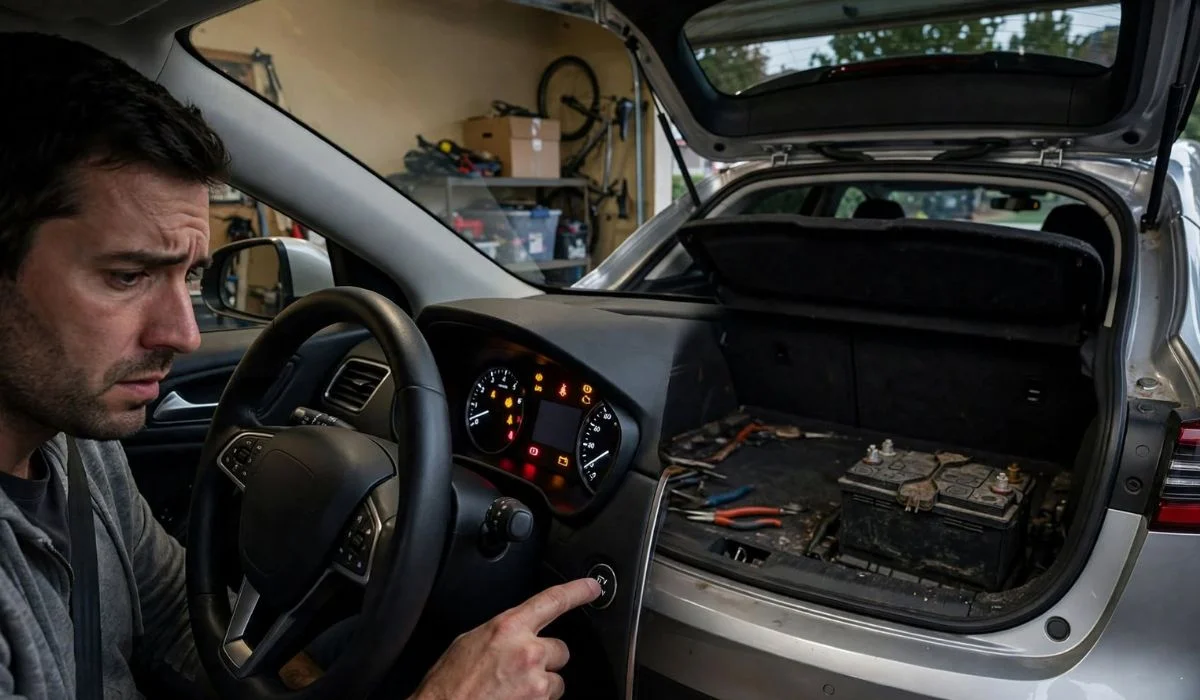
A hybrid vehicle can fail to start for several different reasons.
Dead 12-Volt Battery
The 12-volt battery is usually responsible for powering the vehicle’s low-voltage electronics.
If it becomes discharged, you may notice:
- No dashboard lights
- Weak or flickering interior lights
- Remote locks not working
- Clicking sounds
- Warning messages
- The vehicle failing to enter READY mode
A dead 12-volt battery does not necessarily mean that the hybrid traction battery is empty.
Low Hybrid Battery
The high-voltage traction battery stores energy used by the electric motor and hybrid system.
The procedure for dealing with a depleted traction battery is different from jump-starting a 12-volt battery. Do not attempt to access or jump the high-voltage battery yourself.
High-voltage hybrid systems can be dangerous even when the vehicle appears to be switched off.
How to Start a Hybrid Car With a Dead 12-Volt Battery:

If the owner’s manual confirms that your hybrid can be jump-started through its designated 12-volt connection, the process is generally similar to jump-starting a conventional vehicle.
Find the Correct Jump-Start Point
Many hybrids have a designated positive jump terminal under the hood rather than requiring you to connect directly to the 12-volt battery.
The location varies by vehicle.
Some models place the auxiliary battery in the trunk or another compartment while providing a remote positive terminal in the engine compartment.
Use the connection points specified in the owner’s manual.
Use a Suitable Power Source
You can use an appropriate 12-volt jump starter or another vehicle with a compatible 12-volt electrical system, provided the manufacturer allows this method.
Do not use a high-voltage source or attempt to connect directly to hybrid battery terminals.
How to Jump-Start a Hybrid Safely
Once you have confirmed the correct procedure for your particular vehicle, follow the manufacturer’s connection order.
Step 1: Turn Everything Off
Turn off headlights, climate control, audio equipment, and other electrical accessories.
Put the hybrid in Park (P) and engage the parking brake.
Keep the assisting vehicle switched off initially if using another vehicle, unless its manufacturer specifically instructs otherwise.
Step 2: Connect the Positive Cable
Connect the red positive (+) cable to the designated positive jump terminal on the hybrid vehicle.
Connect the other end to the positive (+) terminal of the donor battery or approved jump starter.
Do not allow the positive clamp to touch metal components that could create a short circuit.
Step 3: Connect the Negative Cable
Connect the black negative (-) cable to the appropriate negative point specified by the vehicle manufacturer.
Some manufacturers recommend connecting the negative cable to a designated unpainted metal ground point rather than directly to the discharged battery’s negative terminal.
Follow your owner’s manual.
Step 4: Allow the 12-Volt System to Recover
Give the discharged vehicle a short period to receive power.
The amount of time required can vary depending on the battery condition and the equipment being used.
Do not repeatedly attempt to start the vehicle if the electronics remain completely inactive.
Step 5: Start the Hybrid System
With the connections made correctly, press the brake pedal and use the vehicle’s normal power/start procedure.
For many hybrids, the goal is not to hear a traditional engine start.
Instead, look for the READY indicator or equivalent message.
When READY appears, the hybrid system has entered its operating state.
Why the READY Light Matters
A hybrid car can be confusing because the gasoline engine may remain silent after you successfully start the vehicle.
READY Does Not Always Mean the Engine Is Running
In many hybrid vehicles, the gasoline engine automatically turns on and off depending on driving conditions and battery state.
Therefore, hearing no engine noise does not necessarily mean the vehicle failed to start.
The important indicator is the manufacturer’s READY or operating-status indicator.
Once the vehicle is confirmed to be in READY mode, follow the manufacturer’s instructions for disconnecting the jump cables.
How to Disconnect the Jumper Cables?

Disconnect the cables in the reverse order recommended by the vehicle manufacturer.
Generally, this means carefully removing the negative connection first and then the positive connection, but always follow the specific instructions for your model.
Keep the clamps from touching each other or exposed metal while they remain connected to a power source.
What to Do After the Hybrid Starts
Getting the hybrid into READY mode is only the first step.
Let the Vehicle Recharge the 12-Volt Battery
In many hybrids, once the vehicle is in READY mode, the high-voltage system can operate a DC-to-DC converter that maintains the 12-volt electrical system.
This is different from simply leaving a conventional gasoline engine idling.
Follow the manufacturer’s instructions regarding how long the vehicle should remain in READY mode or whether it should be driven.
Have the 12-Volt Battery Tested
A battery that has gone completely dead may have reached the end of its useful life.
Ask a qualified technician to test:
- Battery voltage
- Battery condition
- Charging system operation
- Electrical connections
- Parasitic electrical drain if appropriate
If the battery repeatedly goes flat, replacing it without finding the underlying cause may not solve the problem.
Can You Push-Start a Hybrid Car?
Generally, do not attempt to push-start a hybrid vehicle unless the manufacturer specifically states that the procedure is permitted.
Hybrid transmissions and electric drive systems are different from conventional manual-transmission vehicles.
Trying to push-start the vehicle could cause damage or simply fail to work.
Using the manufacturer’s designated jump-start procedure is the safer approach when the 12-volt battery is discharged.
Can You Jump-Start the Hybrid Battery?
No. The high-voltage traction battery should not be jump-started like a conventional 12-volt battery.
Never Work on the High-Voltage System Yourself
Hybrid traction batteries can operate at hundreds of volts depending on the vehicle.
The high-voltage cables and components may be identified with special markings or bright colors, but visual identification alone should not be treated as permission to handle them.
If you suspect the high-voltage battery has a problem, contact the manufacturer, roadside assistance, or a qualified hybrid technician.
What If the Hybrid Still Won’t Start?
If the vehicle does not enter READY mode after correctly supplying power to the 12-volt system, another issue may be present.
Check the Simple Things First
Confirm that:
- The transmission is in Park
- The brake pedal is firmly pressed
- The key fob is recognized
- The jump connections are correct
- The 12-volt battery is receiving adequate power
- No major warning messages are displayed
A discharged key-fob battery can also cause starting difficulties in some vehicles, although many models provide a backup method for recognizing the key.
Check for Corroded Battery Connections
Corrosion or a loose battery terminal can prevent sufficient electrical current from reaching the vehicle’s electronics.
Do not work around electrical connections unless you know the correct procedure for your vehicle.
What If the Car Starts but Dies Again?
If the hybrid enters READY mode but later has another dead 12-volt battery, the problem should be investigated.
Possible causes include:
- An aging 12-volt battery
- Poor battery connections
- A charging-system fault
- An electrical component remaining active
- Parasitic electrical drain
- Another vehicle electrical problem
Repeatedly jump-starting the vehicle is not a substitute for diagnosing the underlying issue.
Can a Hybrid Car Run With a Dead 12-Volt Battery?
A hybrid generally cannot operate normally if its 12-volt system is completely discharged.
Even though the large traction battery may have plenty of stored energy, the vehicle’s low-voltage electronics may need the 12-volt system to activate the computers, relays, control modules, and other systems required to bring the vehicle into READY mode.
This is why a hybrid can appear completely dead even when its main battery still contains energy.
How to Prevent a Hybrid Battery From Going Dead
A few habits can help reduce the chance of being stranded by a weak 12-volt battery.
Avoid Leaving Accessories On
Turn off lights and accessories when leaving the vehicle.
Some vehicles automatically shut down certain systems, but it is still good practice not to rely entirely on automatic protection.
Watch for Warning Signs
A weak 12-volt battery may produce subtle symptoms before it fails completely.
Pay attention to:
- Slower electronic operation
- Strange dashboard behavior
- Difficulty unlocking the vehicle
- Repeated low-battery warnings
- Intermittent starting problems
- Electrical accessories behaving unusually
Test an Aging Battery
12-volt battery life varies with climate, usage, vehicle design, and battery type.
If the battery is older or the vehicle has experienced repeated discharge events, have it tested as part of routine maintenance.
When Should You Call Roadside Assistance?
If you cannot confidently identify the correct jump-start terminals or procedure, roadside assistance is a good option.
You should also seek professional help if:
- The vehicle will not enter READY mode
- The 12-volt battery becomes dead repeatedly
- High-voltage warning messages appear
- There is visible damage to battery wiring
- You smell burning or see smoke
- The vehicle has been involved in an accident
- You are unsure whether the problem involves the 12-volt or high-voltage system
Do not experiment with high-voltage components.
Final Thoughts
Knowing how to start a hybrid car with a dead battery starts with understanding that a hybrid normally has both a 12-volt electrical system and a high-voltage traction battery. A completely dead hybrid does not automatically mean the main hybrid battery is defective.
If the 12-volt battery is discharged, many hybrids can be brought into READY mode using the manufacturer’s approved jump-start procedure. Use the designated terminals, follow the correct cable sequence, and never attempt to jump or repair the high-voltage battery yourself.
If the vehicle repeatedly loses 12-volt power or refuses to enter READY mode after a proper jump-start, have it professionally diagnosed rather than repeatedly attempting to restart it.
FAQs
Can you jump-start a hybrid car with a dead battery?
Yes, many hybrids can be jump-started when the 12-volt auxiliary battery is discharged. The exact procedure and connection points vary by model, so consult the owner’s manual first.
Does a hybrid car have two batteries?
Most hybrids have a high-voltage traction battery and a separate low-voltage 12-volt battery. They perform different functions within the vehicle.
Can I jump-start the big hybrid battery?
No. The high-voltage traction battery should not be jump-started like a conventional 12-volt battery. High-voltage hybrid systems require specialized equipment and trained technicians.
Where do I connect jumper cables on a hybrid?
Many hybrids provide a designated positive jump terminal under the hood and a specified ground point. The exact location varies, so use the connection points shown in the owner’s manual.
How do I know if my hybrid has started?
Look for the READY indicator or equivalent operating-status message. The gasoline engine may remain off because the hybrid system can use electric power without continuously running the engine.
Can I push-start a hybrid car?
Do not push-start a hybrid unless the manufacturer specifically approves that procedure for your model. Many hybrid vehicles are not designed to be started this way.
How long should I leave a hybrid running after a jump-start?
The appropriate procedure varies by vehicle. Once the car enters READY mode, follow the manufacturer’s guidance for allowing the 12-volt battery to recover rather than relying on a generic time recommendation.
Why won’t my hybrid start after a jump?
Possible reasons include an extremely weak 12-volt battery, incorrect cable connections, poor battery terminals, a key-recognition issue, or another electrical or hybrid-system fault.
Can a dead 12-volt battery damage a hybrid car?
A discharged 12-volt battery does not automatically mean the hybrid system has been damaged. However, repeatedly allowing a battery to become completely discharged can indicate an underlying battery or electrical problem that should be investigated.
Can I use a portable jump starter on a hybrid?
Many hybrids can use a suitable 12-volt portable jump starter through the manufacturer’s designated connection points. Confirm that your vehicle manufacturer permits this and follow its instructions.
What should I do if my hybrid battery warning light comes on?
Do not assume a battery warning refers to the 12-volt battery. Read the vehicle’s warning message and consult the owner’s manual. If a high-voltage system warning appears, have the vehicle inspected by a qualified hybrid technician.
Why is my hybrid completely dead even though the main battery is charged?
The 12-volt system may be discharged. A hybrid’s computers and control systems generally need low-voltage power to activate the vehicle and bring it into READY mode, even when the high-voltage battery has energy.