Why Is My Car Steaming In The Rain? Causes, Risks & What to Do
 ByAliza
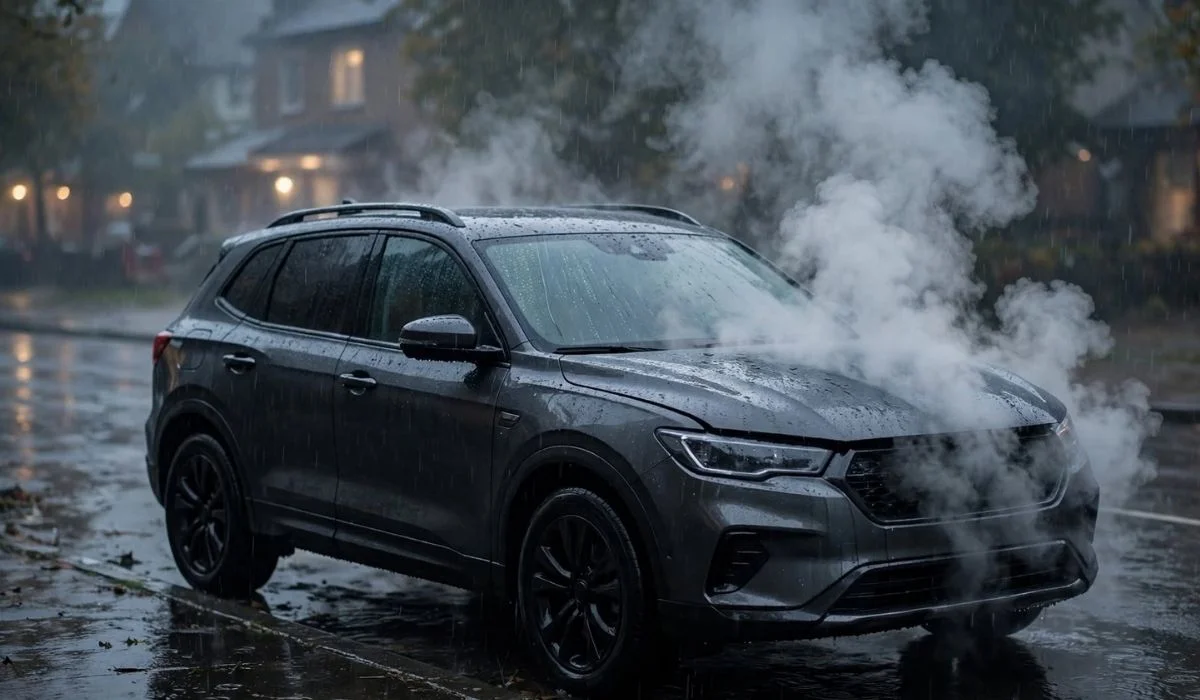
Seeing steam rise from your car when it is raining can be alarming, especially if the vapor appears to come from underneath the hood. However, car steaming in the rain is not always a sign of an engine problem. In many cases, rainwater lands on hot components such as the exhaust system, engine, or brakes and quickly evaporates.
The important part is learning to distinguish normal rainwater evaporation from genuine overheating, coolant leakage, or another mechanical problem. This guide explains why your car may steam in the rain, what different types of steam can indicate, when you should stop driving, and how to check the situation safely.
Why Does My Car Steam in the Rain?
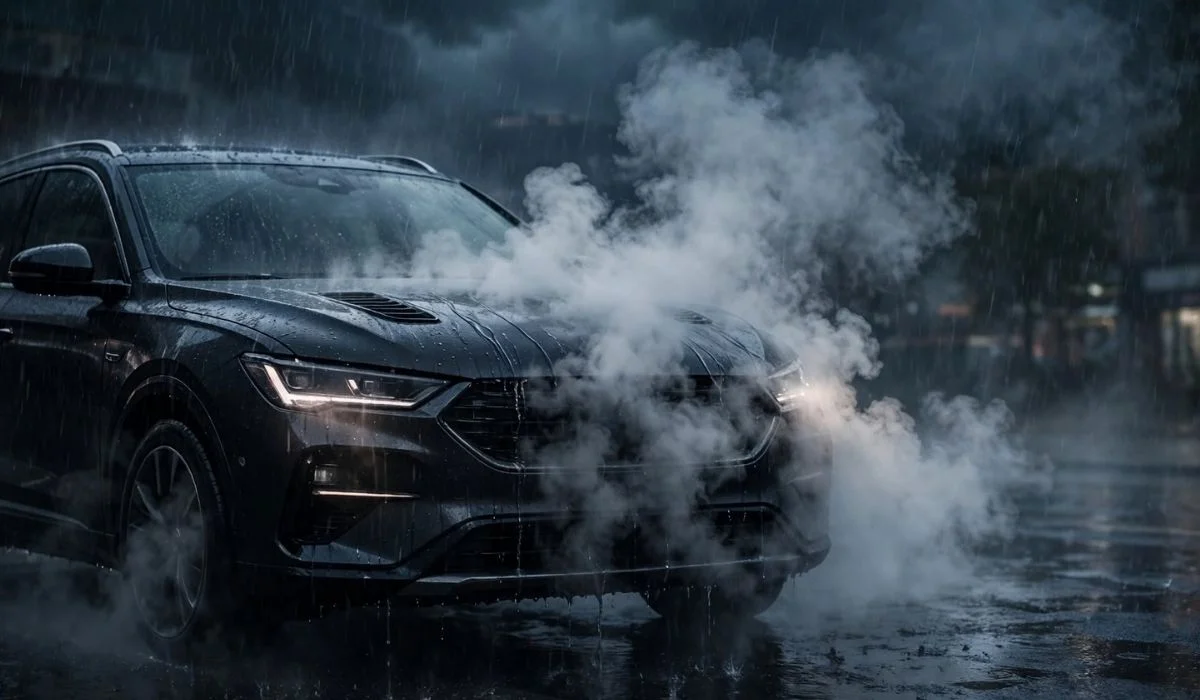
The most common explanation is simple: hot vehicle components come into contact with cool rainwater.
When rain reaches a sufficiently hot surface, the water rapidly changes into water vapor. You may see white or light-colored vapor rising from underneath the vehicle or around the wheel wells.
Common hot components include:
- Exhaust manifold
- Exhaust pipes
- Catalytic converter
- Engine components
- Brake rotors
- Wheels and tires
- Underbody components
- Radiator and surrounding components
Fact: Water evaporates more quickly from a hot surface than from a cool one. That is why rain can appear to create steam when it reaches hot parts of a recently driven vehicle.
Why Does It Look Worse During Heavy Rain?
Heavy rain provides more water for hot components to evaporate.
You may notice:
- More visible vapor
- Steam around the front of the vehicle
- Vapor from underneath the car
- Steam around the wheel area
- Temporary clouds after driving through puddles
Cooler outside temperatures can also make water vapor easier to see.
Normal Steam vs. Problematic Steam
Not every cloud coming from your car means the engine is overheating.
Normal Rainwater Steam
Rain-related steam is generally less concerning when:
- The car is operating normally.
- The temperature gauge remains in its normal range.
- There are no warning lights.
- The vapor appears after driving through rain or puddles.
- The vapor disappears relatively quickly.
- There is no unusual smell.
- No fluid is visibly leaking.
- The engine performance feels normal.
This type of vapor is usually caused by water contacting hot components.
Steam That May Indicate a Problem
Take the situation more seriously if the steam:
- Continues after the car has dried.
- Comes from the engine bay continuously.
- Appears even without rain.
- Is accompanied by an overheating temperature gauge.
- Has a sweet coolant-like smell.
- Appears with visible fluid leakage.
- Comes with warning lights.
- Is accompanied by rough engine operation.
- Gets progressively heavier.
These signs can point toward a cooling-system or mechanical problem rather than ordinary rainwater evaporation.
Common Reasons Your Car Steams in the Rain
Rainwater Hitting the Exhaust
The exhaust system becomes extremely hot during normal driving.
When rainwater reaches hot exhaust components, it can instantly evaporate.
You may see steam:
- Under the center of the vehicle
- Around the front exhaust area
- Near the rear exhaust
- After driving through standing water
This is often completely normal if there are no other symptoms.
Water Hitting the Engine
The engine and surrounding components can become hot during normal operation.
Rain entering the engine bay may contact these surfaces and create visible vapor.
This is more noticeable when:
- The engine is hot.
- Rain is heavy.
- The vehicle has been driven for a long period.
- The hood area is relatively exposed to water.
Hot Brake Rotors and Rain
Brakes generate substantial heat during repeated braking.
Rainwater can reach hot brake components and produce temporary steam.
This may be especially noticeable after:
- Long downhill driving
- Stop-and-go traffic
- Heavy braking
- Towing
- Mountain driving
Steam around a wheel does not automatically mean the brake is failing.
Driving Through a Puddle
A puddle can splash water onto hot components underneath the vehicle.
When that water reaches hot metal, it can rapidly evaporate.
You might see a sudden cloud immediately after driving through deep or standing water.
Fact: A brief burst of vapor after water contacts a hot exhaust or brake component can occur without indicating an engine overheating condition.
Read Next: How To Replace Windshield Wiper Blades Rubber Toyota Corolla | Step-by-Step DIY
Could It Be Engine Overheating?
Yes, but you need to look for additional evidence.
Rain itself does not normally cause an engine to overheat. However, an existing cooling-system problem may become noticeable while you’re driving in wet conditions.
Signs of Possible Overheating
Watch for:
- Temperature gauge moving into the hot zone
- Temperature warning light
- Persistent steam from the engine compartment
- Coolant smell
- Coolant leaking underneath the vehicle
- Reduced engine performance
- Unusual engine noises
- Repeated overheating
- Warning messages on the dashboard
If the temperature gauge indicates overheating, don’t assume the steam is simply rainwater.
What to Do If the Engine Is Overheating
Pull over somewhere safe as soon as practical.
Then:
- Turn off the engine.
- Keep away from heavy traffic.
- Allow the engine to cool.
- Do not open a hot radiator cap.
- Look for obvious leaks from a safe distance.
- Arrange professional assistance if the overheating continues.
Safety fact: A pressurized cooling system can contain extremely hot coolant and steam. Never remove a radiator or coolant-system pressure cap while the system is hot.
Could a Coolant Leak Cause Steam in the Rain?
A coolant leak can create steam, particularly when coolant reaches hot engine or exhaust components.
Signs of a Coolant Leak
Look for:
- Colored or unusual fluid under the car
- Sweet-smelling vapor
- Low coolant level
- Repeated overheating
- Wet areas around hoses
- Wet areas around the radiator
- Coolant residue around engine components
- Temperature gauge running hotter than normal
The exact color of coolant varies by formulation, so don’t rely only on fluid color to identify it.
Why Coolant Can Create More Persistent Steam
Rainwater usually produces temporary vapor as it evaporates from a hot surface.
Coolant leaking onto a hot component can continue producing vapor as long as the leak persists and the component remains hot.
That makes persistent steam more concerning.
Why Is White Steam Coming From Under My Car?
White-looking vapor underneath the car can have several explanations.
Rainwater Evaporation
If the vapor appears shortly after rain contacts hot components and quickly disappears, rainwater evaporation is a common explanation.
Coolant or Other Fluid
If the vapor keeps appearing and you notice a smell, fluid loss, or overheating, investigate further.
Exhaust Condensation
Water naturally forms as a combustion byproduct and can condense inside the exhaust system.
A small amount of white vapor from the exhaust can be normal, particularly during cold starts.
Persistent thick white exhaust smoke, however, may require further diagnosis.
Why Is My Car Steaming From Under the Hood?
Steam from under the hood deserves closer attention because several components are located there.
Possible causes include:
- Rainwater contacting hot engine components
- Hot exhaust components
- Coolant leakage
- Radiator problems
- Cooling fan problems
- Damaged coolant hoses
- Thermostat problems
- Water pump problems
- Engine overheating
How to Check Without Touching Hot Components
You can safely observe the vehicle from a distance.
Check:
- Dashboard temperature gauge
- Warning lights
- Where the vapor originates
- Whether the vapor stops after several minutes
- Whether there is visible fluid underneath
- Whether there is an unusual smell
Avoid reaching into a hot engine bay.
Why Does My Car Steam After Driving in Heavy Rain?
Heavy rain creates more opportunities for water to contact hot surfaces.
You may notice steam after:
- Highway driving
- Long trips
- Stop-and-go traffic
- Driving through puddles
- Braking frequently
- Parking immediately after a long drive
The effect can be especially visible when the air is cool.
Does Rain Cause Engine Steam?
Rain can create visible vapor, but it does not automatically mean the engine is generating excessive heat.
The distinction is important:
Rain + hot surface + temporary vapor + normal temperature gauge = often normal.
Steam + overheating + fluid leak or warning light = possible mechanical problem.
Why Does My Car Steam From the Wheels in the Rain?
If steam appears around the wheels, hot brakes may be responsible.
Hot Brakes and Rainwater
Brake rotors can become very hot during heavy braking.
When rainwater reaches them, it may rapidly evaporate.
This can produce a brief cloud around the wheel.
When Wheel Steam Is Concerning
Pay attention if the steam is accompanied by:
- Burning smell
- One wheel becoming unusually hot
- Grinding noises
- Brake pedal changes
- Vehicle pulling to one side
- Persistent smoke
- Reduced braking performance
Those symptoms can indicate a brake-related problem rather than ordinary rainwater evaporation.
Is It Safe to Drive When Your Car Steams in the Rain?
It depends on what is causing the vapor.
If the car is running normally, the temperature gauge is normal, there are no warning lights, and the vapor quickly disappears, it may simply be rainwater evaporating from hot components.
However, don’t continue driving if you suspect overheating.
Stop and investigate safely if you notice:
- Temperature warning
- Hot temperature gauge
- Persistent steam
- Coolant leakage
- Strong unusual smell
- Severe engine symptoms
What Should I Do When My Car Starts Steaming?
Follow a simple process rather than immediately assuming the worst.
Quick Safety Checklist
- Stay calm: Steam isn’t automatically evidence of engine failure.
- Check the temperature gauge: Look for overheating.
- Check dashboard warnings: Look for temperature or engine-related warnings.
- Observe the vapor: Note where it comes from.
- Watch its duration: Temporary vapor is generally less concerning than persistent steam.
- Look underneath: Check for obvious fluid leakage without touching anything hot.
- Avoid opening the radiator cap: Wait until the system is completely cool.
- Stop driving if overheating occurs: Continuing can cause serious engine damage.
Rain Steam vs. Engine Overheating: Quick Comparison
| Sign | Rainwater Steam | Possible Overheating |
|---|---|---|
| Appears during rain | Common | Possible |
| Short-lived | Usually | Less likely |
| Temperature gauge normal | Usually | Not typical |
| Coolant smell | No | Possible |
| Visible coolant leak | No | Possible |
| Temperature warning | No | Possible |
| Appears after puddles | Common | Not necessarily |
| Continues in dry weather | Unlikely | Possible |
| Engine performance normal | Usually | May change |
How Weather Affects Visible Steam
Temperature and humidity can change how easily you see water vapor.
Cool Air
Cooler air can make vapor more noticeable because water vapor condenses more readily into visible droplets.
High Humidity
Humid conditions can also make atmospheric moisture and vehicle-generated vapor appear more pronounced.
Heavy Rain
Heavy rainfall increases the amount of water reaching hot vehicle components.
This can make an otherwise harmless evaporation effect look dramatic.
Common Mistakes People Make
Assuming Every Steam Cloud Means an Overheated Engine
This can cause unnecessary panic.
First check the temperature gauge and other symptoms.
Ignoring Persistent Steam
The opposite mistake is equally important.
If steam continues or comes with overheating or fluid loss, don’t dismiss it as rain.
Opening the Radiator Cap Immediately
Never do this while the engine is hot.
Touching the Engine or Exhaust
Hot metal can cause serious burns even after the vehicle has stopped.
Continuing to Drive an Overheating Vehicle
An overheating engine can suffer expensive damage if you continue operating it.
When Should You Have the Car Inspected?
Have the vehicle checked if:
- Steam occurs repeatedly without rain.
- The temperature gauge rises unusually high.
- Coolant levels repeatedly drop.
- You find coolant underneath the car.
- The engine overheats.
- Steam continues for an extended period.
- You smell coolant or burning fluid.
- The vehicle loses power.
- A warning light appears.
A mechanic can inspect the cooling system, hoses, radiator, thermostat, water pump, cooling fan, and other relevant components.
Final Takeaway
So, why is my car steaming in the rain? In many situations, the answer is simply that rainwater is hitting hot parts of the vehicle and turning into visible water vapor. Exhaust components, brakes, and hot engine parts can all produce temporary steam when exposed to rain.
The key is to look at the whole picture. Brief vapor with a normal temperature gauge and no unusual smell or fluid leakage is usually less concerning. Persistent steam, overheating, coolant loss, warning lights, or unusual smells should be treated as potential mechanical problems.
When in doubt, prioritize safety: pull over if the vehicle is overheating, avoid touching hot components, and never open a pressurized cooling-system cap while the engine is hot.
FAQs
Is it normal for a car to steam when it rains?
Yes. Rainwater can land on hot exhaust, brake, or engine components and rapidly evaporate. Brief steam with normal vehicle operation is often harmless.
Why does my car steam after driving in the rain?
Hot components underneath the car can evaporate rainwater after or during wet-weather driving. Puddles can also splash water onto hot exhaust and brake components.
Is steam from under the hood always bad?
No. Rainwater contacting hot components can create temporary vapor. However, persistent steam accompanied by overheating, coolant smell, or fluid leakage may indicate a mechanical problem.
Why is my car steaming but not overheating?
If the temperature gauge remains normal and the steam disappears quickly, rainwater evaporating from hot components is a likely explanation.
Can rain cause a car to overheat?
Rain itself normally doesn’t cause an engine to overheat. If overheating occurs during rain, an underlying cooling-system or mechanical issue may be responsible.
Why does my car steam around the wheels when it rains?
Hot brake components can cause rainwater to evaporate and produce temporary steam around the wheels, especially after heavy braking.
Why does white steam come from my exhaust in rainy weather?
Water vapor and condensation can be visible from the exhaust, particularly when conditions are cool or humid. Persistent thick exhaust smoke accompanied by other engine symptoms should be investigated.
Should I stop driving if my car is steaming?
If the temperature gauge is normal and the vapor is brief, it may not require an immediate stop. If the vehicle is overheating or steam is persistent, pull over safely and allow the vehicle to cool.
Can a coolant leak look like steam?
Yes. Leaking coolant can reach hot engine or exhaust components and produce steam. Coolant loss, unusual smells, wet areas, and overheating make this possibility more concerning.
How can I tell rain steam from overheating?
Check the temperature gauge, warning lights, duration of the vapor, smells, and evidence of fluid leakage. Temporary vapor with normal temperatures is more consistent with rainwater evaporation, while persistent steam plus overheating or coolant loss requires attention.