
How Long Are Tires Good For After Manufacture Date | Tire Age Guide

Tires do not have a simple expiration date printed on them, but their age still matters. Even if a tire has been sitting unused in a warehouse or garage, the rubber and internal materials gradually age from the date it was manufactured.
So, how long are tires good for after the manufacture date? There is no single number that applies to every tire. Many major tire manufacturers recommend replacing tires around 10 years from the date of manufacture, regardless of remaining tread, while recommending regular professional inspections once tires are about 5 years old. Specific recommendations can vary by manufacturer and tire type.
A tire’s actual condition is also important. Climate, storage, sunlight, inflation, usage, and maintenance can all influence how quickly a tire deteriorates.
Does a Tire’s Age Start at the Manufacture Date?
Yes. When discussing tire age, the manufacturing date is generally the reference point rather than the date the tire was purchased or installed.
For example, if a tire was manufactured in 2021 but installed on a vehicle in 2023, it is still considered a tire manufactured in 2021.
Why the Manufacture Date Matters
Rubber compounds and other tire materials gradually change over time. This aging process occurs whether the tire is being driven or stored.
That means a tire that has traveled only a few thousand miles may still require replacement based on age and condition.
How Many Years Are Tires Good for?
There is no universal expiration date for all tires. However, many tire manufacturers recommend replacing tires at approximately 10 years from their manufacturing date.
That recommendation applies even when the tire still appears to have usable tread.
The Five-Year Inspection Guideline
Many manufacturers recommend that tires be professionally inspected regularly after about five years.
This does not mean a tire automatically becomes unsafe on its fifth birthday. Instead, it is a point at which age-related deterioration deserves increased attention.
The condition of the tire should be evaluated along with its age.
Is a 10-Year-Old Tire Automatically Unsafe?
A tire reaching 10 years of age is generally considered past the service period recommended by many major tire manufacturers.
Even if the tread looks good, aging can affect rubber compounds and internal components that are not easily evaluated by looking at tread depth alone.
Why Tread Can Be Misleading
Tread depth tells you how much tread remains. It does not provide a complete assessment of the tire’s age-related condition.
An old tire may have excellent tread because it has been driven very little, yet still be unsuitable for continued use according to the manufacturer’s age recommendation.
How to Find the Manufacture Date on a Tire:
You can determine a tire’s age by locating the Tire Identification Number on its sidewall.
Look for a code beginning with DOT.
How to Read the Four-Digit Date Code
The final four digits of the Tire Identification Number generally indicate the week and year of manufacture.
For example:
- 1522 = 15th week of 2022
- 4020 = 40th week of 2020
- 0824 = 8th week of 2024
The first two digits represent the production week, while the last two identify the production year.
Use the complete code when checking a tire’s manufacturing information.
How Old Is Too Old for Unused Tires?

An unused tire is not necessarily a new tire simply because it has never been installed.
If it has spent several years in storage, its manufacturing date still determines its age.
Does Storage Stop Tire Aging?
No. Proper storage can help protect tires from environmental damage, but it does not completely stop the natural aging process.
A tire stored correctly may remain in better physical condition than one exposed to extreme heat and sunlight, but both continue to age with time.
Are 3-Year-Old Tires Still Good?
A three-year-old tire is not automatically too old.
If it has been properly stored and shows no significant damage, cracking, deformation, or other problems, it may still be suitable for service.
Check More Than the Date
Before installing an older tire, consider:
- Manufacturing date
- Storage history
- Visible cracking
- Tread condition
- Sidewall condition
- Any deformation
- Tire pressure history
- Manufacturer recommendations
If you are buying older stock, ask the seller for the tire’s manufacturing date and inspect the tire carefully.
Are 5-Year-Old Tires Still Good?
A five-year-old tire may still be usable, but it deserves closer inspection.
Many tire manufacturers recommend regular inspections beginning around this age.
Why Five Years Is Important
At five years, age-related changes may become more relevant even if the tire has not reached the commonly referenced 10-year replacement point.
The tire should be examined for cracking, uneven wear, damage, bulges, and other signs of deterioration.
Are 7-Year-Old Tires Safe?
Seven-year-old tires are not automatically unsafe, but they are old enough that age should be treated as an important safety consideration.
The tire manufacturer’s service-life recommendation should be checked, and the tires should be professionally inspected.
Look for Age-Related Damage
Pay particular attention to:
- Sidewall cracking
- Cracks between tread blocks
- Hardened or brittle rubber
- Bulges
- Uneven wear
- Tread separation
- Repeated air loss
If significant deterioration is present, replacement may be necessary regardless of tread depth.
Do Tires Age Faster in Hot Weather?
Heat can accelerate the aging of rubber materials.
Tires exposed to high temperatures for long periods may experience more environmental stress than tires kept under moderate conditions.
Sunlight Can Add More Stress
Ultraviolet radiation can contribute to rubber degradation.
A vehicle parked outdoors under direct sunlight for years may therefore experience different tire aging than one kept in covered or indoor parking.
This does not mean garage-kept tires are immune to aging. Time remains a factor.
Does Tire Mileage Affect How Long It Lasts?
Mileage matters, but it is only one part of tire life.
A tire can wear out because of mileage before it reaches its age limit. Conversely, a lightly driven tire can become old while retaining substantial tread.
The Difference Between Wear and Aging
Think of tire lifespan as having two separate concerns:
Wear: The tread gradually disappears as the tire is driven.
Aging: Rubber and internal materials gradually deteriorate with time and environmental exposure.
A tire needs to be evaluated for both.
Read Next: How Many Years Do Tires Last Before Dry Rot | Signs & Tips
Can Proper Storage Extend Tire Life?
Proper storage can help protect tires from unnecessary environmental exposure.
Unused tires should generally be stored in a clean, cool, dry environment away from direct sunlight, ozone-producing equipment, chemicals, and other damaging conditions.
Storage Helps, but Does Not Reset the Clock
A tire that was manufactured several years ago does not become “new” again because it was stored indoors.
The manufacturing date remains the starting point for calculating tire age.
Can Old Tires Look Perfectly Fine?
Yes. This is one reason tire age is important.
Some aging processes occur internally or may not be obvious during a quick visual inspection.
Why Visual Inspection Has Limits
You may not be able to identify every structural issue simply by looking at the tread.
A qualified tire professional can inspect the tire for signs of damage and deterioration and advise whether it should remain in service.
What Happens to Tires as They Age?
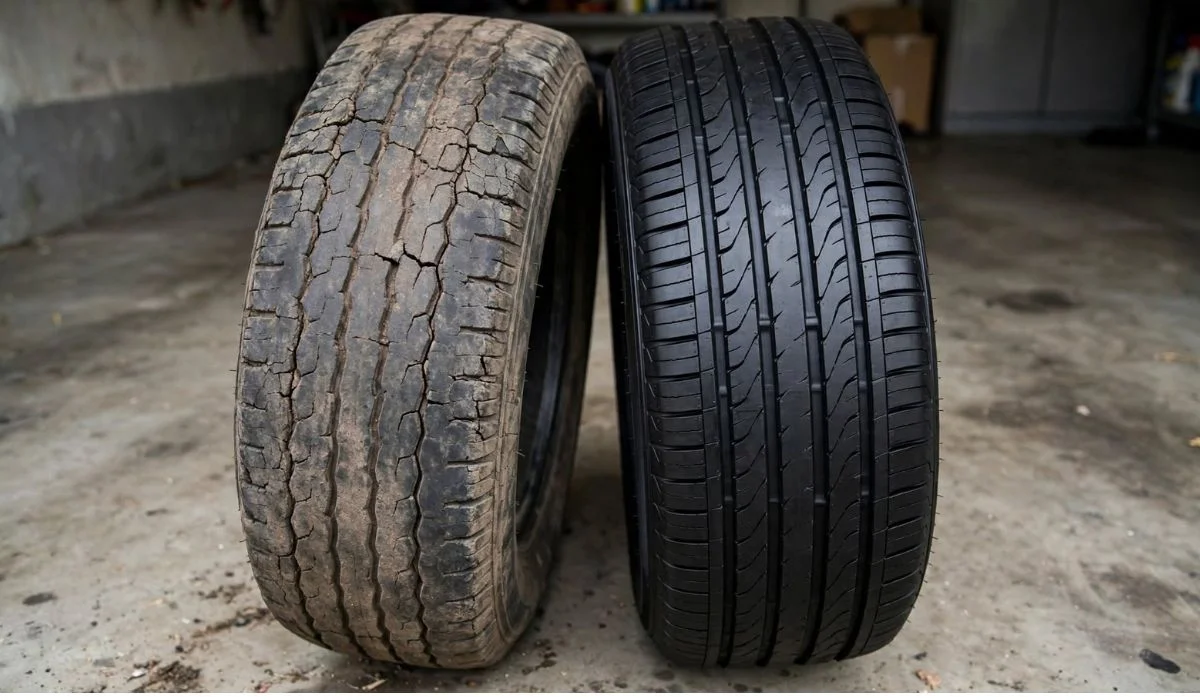
As tires age, their rubber compounds can gradually lose some of their original properties.
Environmental exposure can contribute to cracking and other forms of deterioration.
Common Signs of Aging
Older tires may develop:
- Fine surface cracks
- Sidewall weathering
- Tread-area cracking
- Hardened rubber
- Reduced flexibility
- Bulges or deformation
Not every sign has the same level of severity, so questionable tires should be professionally assessed.
Should You Buy Tires That Were Manufactured Years Ago?
A tire that was manufactured earlier is not necessarily unusable simply because it has spent some time in storage.
However, when buying tires, it is reasonable to check the manufacturing date and make sure the tires are being sold and stored appropriately.
Ask About Older Tire Stock
If a tire is several years old, find out:
- When it was manufactured
- How it was stored
- Whether it has been exposed to sunlight
- Whether it shows cracking or damage
- What the manufacturer recommends for service life
Do not confuse the purchase date with the tire’s actual age.
When Should You Replace Tires Based on Age?

The safest approach is to combine tire age with physical condition and manufacturer recommendations.
Many major manufacturers recommend replacement at approximately 10 years from manufacture, while recommending regular inspections beginning around five years.
Replace Sooner If the Tire Is Damaged
Age is not the only reason to replace a tire.
A tire may require replacement much earlier because of:
- Severe cracking
- Sidewall damage
- Bulges
- Puncture damage that cannot be safely repaired
- Tread separation
- Severe uneven wear
- Exposed cords
- Repeated unexplained air loss
Never wait until a tire reaches 10 years if its condition has already become unsafe.
What About Spare Tires?
Spare tires are often overlooked because they may spend most of their lives unused.
However, they age just like the tires mounted on the vehicle.
Check Your Spare Tire’s Date
Inspect the spare periodically and check its manufacturing date.
An old spare may not be a reliable emergency solution if it has been stored for many years.
This is particularly important for vehicles where the spare is rarely inspected.
How to Make Your Tires Last as Long as Possible
Good maintenance can help you get the most appropriate service life from your tires.
Keep tire pressure at the vehicle manufacturer’s recommended level, inspect the tires regularly, maintain proper alignment, rotate tires as recommended, and avoid unnecessary exposure to extreme environmental conditions.
Don’t Ignore Small Changes
Pay attention if your vehicle develops:
- New vibrations
- Uneven handling
- Repeated pressure loss
- Visible cracking
- Unusual tread wear
- Changes in ride quality
These symptoms can indicate a tire or vehicle problem that should be checked.
Final Thoughts
So, how long are tires good for after the manufacture date? There is no universal expiration date, but many tire manufacturers recommend regular inspection after approximately five years and replacement around ten years from the date of manufacture, regardless of remaining tread. Always check the specific recommendations from the tire manufacturer because service-life guidance can differ.
Remember that tire age begins with the manufacturing date, not the date you purchased or installed the tire. A low-mileage or unused tire can still become too old for safe service.
Check the DOT date code, inspect the sidewalls and tread, maintain correct tire pressure, and have older tires professionally evaluated. If you see serious cracking, bulges, exposed cords, tread separation, or other structural damage, replacement may be necessary well before the tire reaches its maximum recommended age.
FAQs
How long are tires good for after the manufacture date?
Many major tire manufacturers recommend replacing tires at approximately 10 years from the manufacturing date, regardless of remaining tread. Many also recommend regular inspection after about five years.
Does tire age start when it is manufactured or installed?
Tire age is generally calculated from the manufacturing date. A tire manufactured in 2020 but installed in 2022 is still considered a 2020 tire.
Are 2-year-old tires still good?
Generally, age alone does not make a two-year-old tire unusable. Its condition, storage history, mileage, and manufacturer recommendations should also be considered.
Is a 5-year-old tire too old?
Not necessarily. Many manufacturers recommend increased inspection around five years rather than automatic replacement. The tire’s physical condition should be evaluated.
Can I use 8-year-old tires?
An eight-year-old tire may still have tread, but it is approaching the upper end of the service life recommended by many manufacturers. Have it carefully inspected and follow the tire maker’s guidance.
Should 10-year-old tires be replaced even with good tread?
Many major tire manufacturers recommend replacement at around 10 years from manufacture even if the tread remains usable.
Do unused tires expire?
Unused tires still age. Storage can influence their condition, but simply keeping a tire unused does not stop the aging process.
Can tires last 15 years?
Some tires may physically remain intact for longer, but many manufacturers recommend replacement around 10 years from manufacture. Tires that reach 15 years should not be assumed safe simply because they look good.
How can I tell how old my tires are?
Find the DOT Tire Identification Number on the sidewall. The final four digits generally show the week and year the tire was manufactured.
Are older tires with low mileage safe?
Low mileage does not eliminate age-related deterioration. An older tire with little tread wear can still require replacement based on age and condition.
Does storing tires in a garage make them last longer?
Proper indoor storage can reduce exposure to sunlight, heat, ozone, and other environmental stresses. However, it does not stop the tire from aging.
Do tires get harder as they age?
Tire rubber can change as it ages and may become less flexible. Environmental exposure and time contribute to these changes.
What is more important, tire age or tread depth?
Both matter. Tread depth indicates wear, while age provides information about potential deterioration of the rubber and internal materials. A safe tire assessment considers both factors.
Can I buy tires that are 3 years old?
A three-year-old tire is not automatically unusable. Check its condition, storage history, manufacturing date, and the manufacturer’s recommendations before purchasing or installing it.
How often should tires older than five years be inspected?
Many manufacturers recommend regular professional inspections once tires reach about five years old. Follow the specific inspection guidance provided by the tire manufacturer.