What Household Products Can I Use To Clean The Inside Of My Car?
 ByAliza
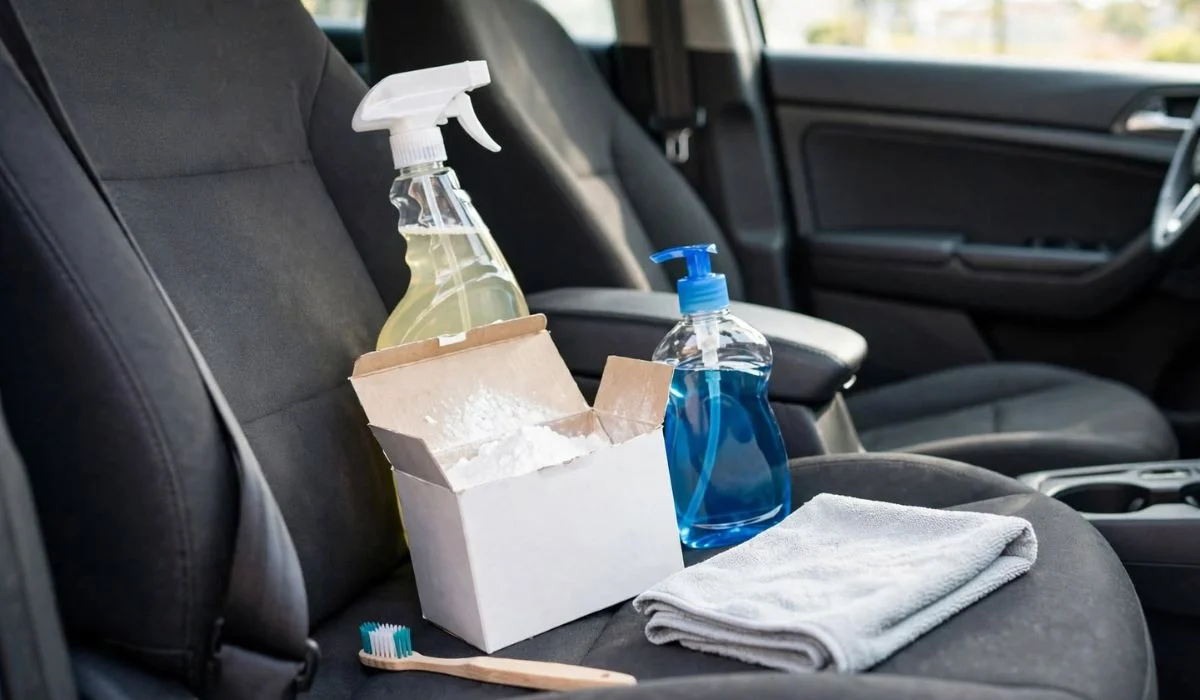
You do not need an expensive collection of automotive cleaners to keep your car interior fresh and clean. Many household products can be used to clean the inside of a car, especially for routine dust, dirt, fingerprints, stains, and unpleasant odors.
The key is choosing the right product for the right material. Household cleaners that are safe for glass or hard surfaces may damage leather, vinyl, fabric, plastic, or electronic displays. Using too much liquid can also create problems because moisture can seep into switches, seams, and electrical components.
Household Products That Can Clean a Car Interior:
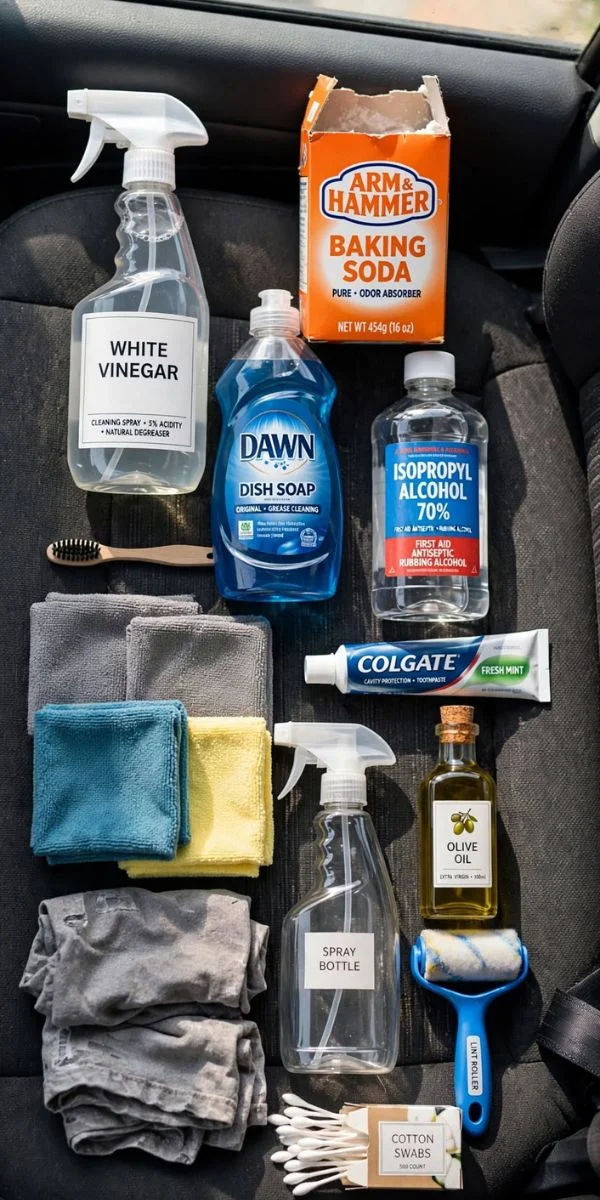
Several common household items can be useful for interior cleaning:
- Mild dish soap
- White vinegar
- Baking soda
- Water
- Microfiber cloths
- Soft toothbrushes
- Cotton swabs
- Vacuum cleaner
- Mild laundry detergent
- Isopropyl alcohol
- Cornstarch
- Small cleaning brushes
- Glass cleaner
- Paper towels for limited applications
Not every product should be used on every surface. Always test a cleaning solution on a small, hidden area first.
Mild Dish Soap for Plastic and Vinyl
A small amount of mild dish soap diluted with water can be useful for cleaning many hard interior surfaces.
It can help remove:
- Dust
- Fingerprints
- Light grease
- Food residue
- Sticky spots
- General dirt
How to Use Dish Soap Safely
Mix a small amount of mild dish soap with water. Dampen a microfiber cloth rather than soaking the surface.
Wipe the dashboard, door panels, plastic trim, and other compatible hard surfaces. Follow with a clean, slightly damp cloth to remove soap residue.
Avoid flooding buttons, switches, vents, and electronic controls.
White Vinegar for Certain Interior Cleaning Jobs:
White vinegar is a common household cleaning ingredient that can help with some odors and grime.
A diluted vinegar solution can be useful for certain hard surfaces and glass, but it should not automatically be used on every material inside the vehicle.
Where Vinegar Can Help
Diluted white vinegar may be useful for:
- Removing some odors
- Cleaning certain glass surfaces
- Light residue on compatible hard surfaces
- General household-style cleaning
Do not use vinegar indiscriminately on leather, delicate finishes, touchscreens, or materials where the vehicle manufacturer advises against acidic cleaners.
Never mix vinegar with bleach or other cleaning chemicals.
Baking Soda for Car Odors:
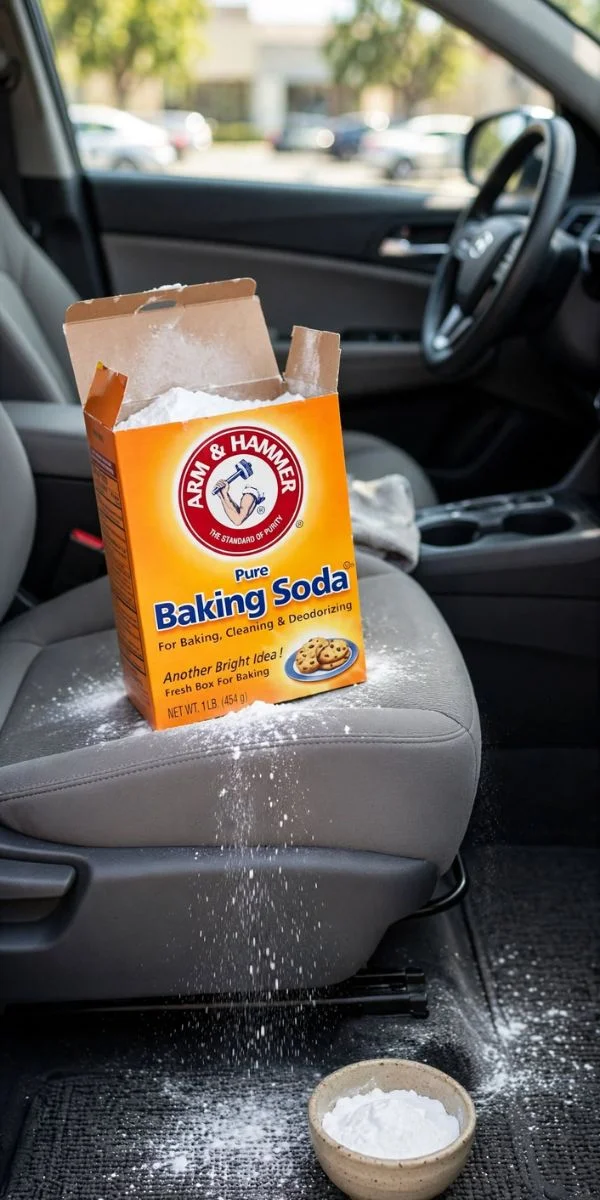
Baking soda is particularly useful when your main problem is odor rather than visible dirt.
It can help absorb some unwanted smells from fabric and carpet.
How to Use Baking Soda on Carpet
Lightly sprinkle baking soda over a dry carpet or floor-mat surface. Leave it for several hours or overnight if practical, then vacuum it thoroughly.
Do not leave large amounts of powder where it can enter vents, switches, or electrical components.
Baking soda can reduce some odors, but it does not eliminate the source of a persistent smell. Spilled food, mold, moisture, or other contamination may require deeper cleaning.
Water and Microfiber Cloths
Sometimes the simplest combination is the safest.
A slightly damp microfiber cloth can remove everyday dust and fingerprints from many interior surfaces without introducing unnecessary chemicals.
This approach works especially well for routine maintenance.
Why Microfiber Is Useful
Microfiber cloths have fine fibers that can pick up dust and dirt effectively while reducing the chance of scratching many smooth surfaces.
Use separate cloths for:
- Dashboard
- Glass
- Seats
- Door panels
- Dirty floor areas
This prevents dirt and cleaning products from being transferred between surfaces.
Isopropyl Alcohol for Certain Hard Surfaces:
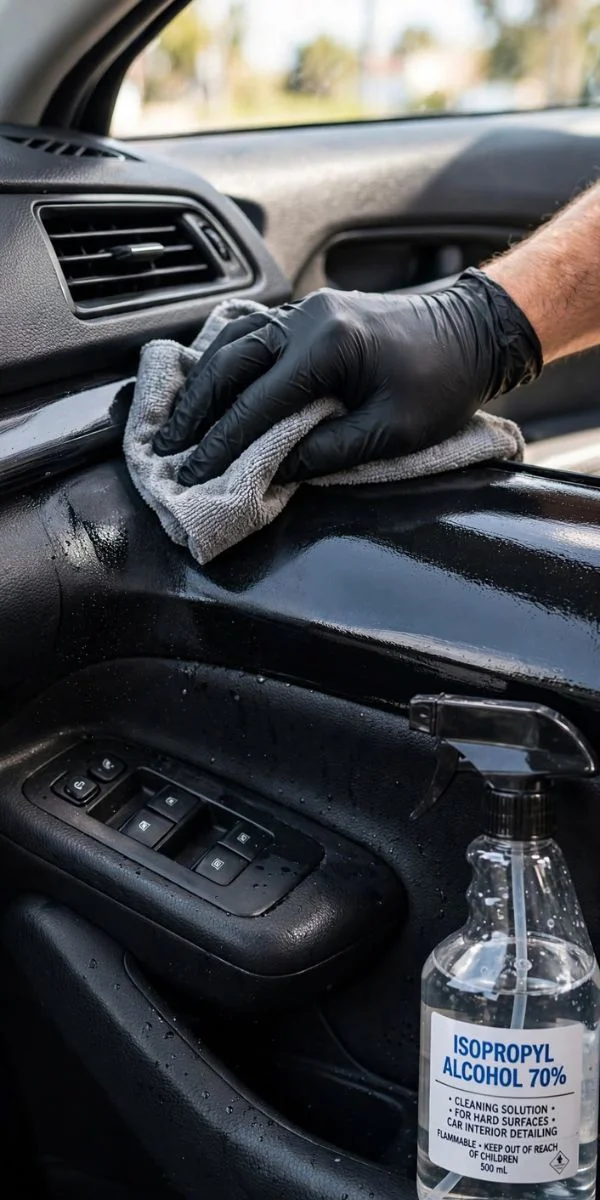
Isopropyl alcohol can be useful for removing certain sticky residues, ink marks, and grime from compatible hard surfaces.
However, it should be used carefully.
Use It Sparingly
Apply a small amount to a cloth rather than pouring or spraying it directly onto the dashboard.
Test an inconspicuous area first. Alcohol can affect some coatings, plastics, paints, leather finishes, and soft-touch materials.
It is particularly important to be cautious around touchscreens and instrument-panel displays.
Read next: Why Is My Car Steaming But Not Overheating? Causes & Fixes
Laundry Detergent for Fabric Seats and Carpets:
A very small amount of mild laundry detergent can sometimes be used to clean fabric upholstery and carpets.
The main concern is using too much.
How to Clean Fabric Safely
Dilute a small amount of mild detergent with water. Apply the solution lightly to a cloth or suitable upholstery brush.
Gently work on the stained area, then wipe away residue with a clean, damp cloth.
Avoid saturating the seat.
Excess moisture can soak into the padding and create lingering moisture or odor problems.
Cornstarch for Greasy Fabric Stains
Cornstarch can be useful as an absorbent household powder for certain fresh greasy stains on fabric.
Apply a small amount to the affected area and allow it time to absorb some of the oil. Vacuum it thoroughly afterward.
This method is most useful for fresh, surface-level grease rather than old or deeply embedded stains.
Toothbrushes for Small Interior Crevices
An old, clean, soft toothbrush can become a surprisingly useful car-cleaning tool.
It can help loosen dust and debris around:
- Air vents
- Button edges
- Seams
- Cup holders
- Dashboard gaps
- Gear-selector areas
- Door-handle recesses
Use gentle pressure, especially around electronic controls.
Cotton Swabs for Tight Spaces
Cotton swabs can reach areas where a normal cloth cannot.
They can be helpful around small gaps and edges, including:
- Buttons
- Air-vent controls
- Console seams
- Door switches
- Trim details
Do not push debris deeper into switches or openings.
Vacuum Cleaner for Dust and Debris
A household vacuum cleaner can be extremely useful for car interiors.
Vacuuming should usually come before wet cleaning because removing loose dirt first reduces the chance of turning dust into muddy residue.
Areas to Vacuum
Pay attention to:
- Floor carpets
- Floor mats
- Under the seats
- Seat seams
- Trunk carpeting
- Cup holders
- Door pockets
- Around the center console
Use a crevice attachment for narrow spaces when available.
Household Glass Cleaner for Car Windows
A suitable household glass cleaner may work on some interior glass surfaces, but check the product and vehicle instructions first.
Apply cleaner to a microfiber cloth rather than spraying heavily around the dashboard.
Be Careful With Window Tint
Some automotive window films can be damaged or affected by harsh cleaning chemicals.
If your vehicle has aftermarket tint, check the tint manufacturer’s cleaning recommendations before using household glass cleaner.
How to Clean a Car Dashboard With Household Products
For routine dashboard cleaning, start with a dry microfiber cloth to remove loose dust.
If more cleaning is needed, use a small amount of mild soap diluted in water and apply it to the cloth.
Gently wipe the dashboard and then dry it with another microfiber cloth.
Avoid Excess Moisture
The dashboard contains or sits near numerous electrical components.
Do not spray cleaning solution directly into:
- Instrument clusters
- Air vents
- Buttons
- Speakers
- Switches
- Touchscreens
Controlled application is much safer than soaking the surface.
How to Clean Fabric Car Seats at Home
Fabric seats can usually be cleaned with a gentle approach.
Start by vacuuming thoroughly. Treat visible stains with a small amount of diluted mild detergent.
Gently agitate the stain using a soft brush or microfiber cloth. Remove leftover cleaner with a clean damp cloth.
Allow the upholstery to dry completely.
Why Over-Wetting Is a Problem
Car seats contain padding beneath the fabric. Excess water can penetrate deeper than expected and may take a long time to dry.
A damp-cleaning approach is generally preferable to soaking the upholstery.
How to Clean Leather Car Seats With Household Products
Leather requires more caution than fabric.
Some household products that are excellent for other surfaces can dry out, discolor, or damage leather finishes.
For light dirt, a clean, slightly damp microfiber cloth may be the safest household option.
Avoid Harsh DIY Leather Cleaners
Do not assume that vinegar, alcohol, baking soda, or strong detergents are suitable for automotive leather.
Modern automotive leather may have protective coatings that react differently to household chemicals.
For valuable or delicate leather, a cleaner specifically formulated for automotive leather is the safer choice.
How to Remove Food and Drink Stains
Deal with spills as soon as possible.
First remove solid debris with a cloth or vacuum. Blot liquid rather than aggressively rubbing it into the fabric.
For compatible fabric surfaces, a small amount of diluted mild detergent can help loosen residue.
For Sticky Drink Spills
Use a damp microfiber cloth to loosen the sticky residue. Repeat with clean water on the cloth until the residue is removed.
Dry the area afterward.
Sugar-containing drinks can remain sticky even after the visible liquid disappears, so thorough residue removal matters.
How to Remove Bad Smells From a Car
Cleaning the source is more effective than simply covering the smell.
Start by removing:
- Food wrappers
- Empty bottles
- Damp clothing
- Old trash
- Spilled food
- Dirty floor mats
Vacuum the interior and clean visible contamination.
Use Baking Soda for Mild Fabric Odors
Baking soda can be sprinkled lightly on dry carpets or fabric mats and vacuumed later.
For persistent odors, look for the source. A recurring musty smell can be associated with moisture or a problem within the vehicle’s ventilation system.
Household Products You Should Avoid
Not every household cleaner belongs inside a car.
Avoid experimenting with strong chemicals, abrasive powders, or products that are not designed for the surface being cleaned.
Avoid Bleach
Bleach can discolor fabrics and damage various interior materials. It can also create hazardous fumes when mixed with other cleaning products.
Avoid Strong Abrasive Cleaners
Abrasive powders can scratch plastic, glossy trim, displays, and other surfaces.
Be Careful With Ammonia
Ammonia-containing cleaners may be unsuitable for certain automotive surfaces and window films. Check the product and vehicle manufacturer’s recommendations.
Avoid Excessive Water
Water can enter electrical components, seat padding, carpet backing, and other areas where it can create longer-term problems.
Can You Use Vinegar and Baking Soda Together?
Mixing vinegar and baking soda causes an acid-base reaction that produces carbon dioxide and reduces the cleaning properties of the individual ingredients.
There is generally little reason to mix them for routine car-interior cleaning.
Using the appropriate product separately for a specific task is usually more practical.
A Simple DIY Car Interior Cleaning Routine
You can clean most of the interior systematically instead of trying to clean everything at once.
Step 1: Remove Trash
Take out bottles, wrappers, papers, and other loose items.
Step 2: Remove the Floor Mats
Shake or vacuum them separately.
Step 3: Vacuum the Interior
Work from the upper surfaces toward the floor and pay attention to seams and hidden areas.
Step 4: Wipe Hard Surfaces
Use a microfiber cloth with a small amount of appropriate diluted cleaner.
Step 5: Clean the Glass
Use a suitable glass cleaner sparingly and wipe with a clean microfiber cloth.
Step 6: Treat Upholstery
Clean fabric stains with a small amount of diluted mild detergent where appropriate.
Step 7: Deodorize
Use baking soda on suitable dry fabric or carpet areas if odors remain.
Step 8: Let Everything Dry
Leave doors or windows open when conditions allow and ensure damp upholstery and carpets are thoroughly dry before using the vehicle normally.
How Often Should You Clean the Inside of Your Car?
The ideal cleaning frequency depends on how often the vehicle is used.
A quick interior cleanup once a week can prevent dirt and trash from accumulating. A more thorough cleaning every few weeks or once a month may be sufficient for many drivers.
High-traffic vehicles, family cars, and vehicles used for pets or food may require more frequent cleaning.
Final Thoughts
The best household products to clean the inside of a car are often simple ones: mild dish soap, water, microfiber cloths, baking soda, a vacuum cleaner, and carefully selected products for specific surfaces.
The most important rule is to match the cleaner to the material. Plastic, fabric, glass, vinyl, leather, and electronic displays do not all tolerate the same products.
Use small amounts of cleaner, avoid excessive moisture, test unfamiliar solutions in an inconspicuous spot, and never mix cleaning chemicals. With the right approach, you can keep your car interior clean without buying a large collection of specialized products.
FAQs
What is the best household cleaner for a car interior?
Mild dish soap diluted with water can be useful for many hard plastic and vinyl surfaces. Always use a small amount and check that the material is compatible.
Can I use Dawn dish soap to clean my car interior?
A small amount of mild dish soap can be diluted with water for some hard interior surfaces. Do not use concentrated dish soap directly on the surface, and avoid using it as a routine leather cleaner.
Can I use vinegar to clean my car dashboard?
It is better to avoid using vinegar routinely on dashboards because interior materials and coatings vary. A mild soap-and-water solution is generally a simpler option for compatible hard surfaces.
Can I use baking soda to clean car seats?
Baking soda can help absorb odors from suitable dry fabric surfaces. Vacuum it thoroughly afterward. For stains, a compatible upholstery-cleaning method is more appropriate.
Can I use household glass cleaner inside my car?
A suitable glass cleaner can work on some interior windows, but check compatibility with window tint and the vehicle manufacturer’s recommendations first.
What can I use to clean fabric car seats?
A small amount of mild detergent diluted with water can be used on many fabric seats. Avoid soaking the upholstery and allow it to dry completely.
Can I use rubbing alcohol on my car interior?
Isopropyl alcohol can remove certain residues from compatible hard surfaces, but it can damage some plastics, coatings, leather finishes, and soft-touch materials. Always test first.
What household product removes car odors?
Baking soda can help absorb some odors from dry carpets and fabric. However, persistent odors usually require finding and cleaning the underlying source.
How do I clean my car interior without expensive products?
Start with a vacuum, microfiber cloths, water, and a small amount of mild dish soap. Baking soda can be useful for certain fabric odors, while a soft toothbrush can clean small crevices.
What should I never use to clean my car interior?
Avoid bleach, harsh abrasive cleaners, excessive water, and untested chemicals. Be especially careful around leather, touchscreens, electronics, and window tint.
How can I clean my car interior without damaging it?
Use the least aggressive cleaning method that works. Vacuum first, apply cleaner to a cloth instead of directly to surfaces, use minimal moisture, and test unfamiliar products in a hidden area before cleaning the entire surface.