How To Replace Windshield Wiper Blades Rubber | A Simple Step-by-Step Guide to Replacing Wiper Rubber Safely and Easily

Knowing how to replace windshield wiper blades rubber can save time and money while helping keep your windshield clear during rain. Wiper blades gradually wear out because they are exposed to sunlight, heat, cold, dirt, road grime, and repeated movement across the glass.
When the rubber becomes cracked, split, hardened, or damaged, the wipers may leave streaks, skip across the windshield, or fail to remove water properly.
In many cases, you do not need to replace the entire wiper blade assembly. Some windshield wipers are designed with replaceable rubber inserts, allowing you to remove the old rubber and install a new refill. However, not every wiper blade supports this option.
When Should You Replace Windshield Wiper Rubber?

There is no single replacement interval that works for every vehicle. Wiper life depends on climate, parking conditions, windshield contamination, and how frequently the blades are used.
Common signs that the rubber needs replacement include:
- Streaks across the windshield
- Skipping or chattering
- Uneven wiping
- Cracked rubber
- Split edges
- Hardened rubber
- Wipers leaving water behind
- Squeaking during operation
- Visible gaps between the rubber and glass
Check the Rubber Edge
Lift the wiper arm carefully and inspect the rubber blade.
Look for:
- Small cracks
- Tears
- Brittle sections
- Missing pieces
- Uneven edges
- Deformation
If the wiping edge is damaged, replacing the rubber insert may restore proper contact with the windshield.
Can You Replace Only the Wiper Blade Rubber?
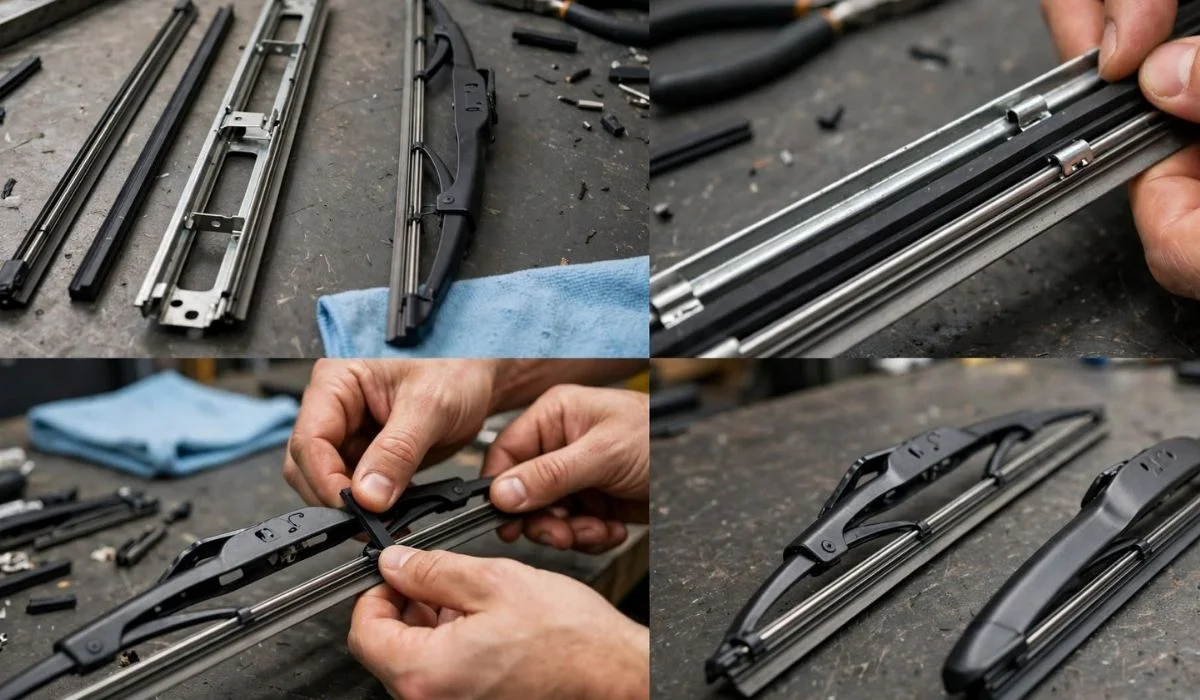
Sometimes, yes.
Many conventional wiper blades have a replaceable rubber refill that slides into a metal or plastic frame. However, some modern beam-style or integrated wiper blades are designed as complete assemblies and may not have a separately replaceable rubber insert.
Before purchasing a refill, check:
- Vehicle make
- Vehicle model
- Model year
- Wiper size
- Blade design
- Manufacturer specifications
Rubber Refill vs Complete Wiper Blade
A rubber refill replaces only the flexible wiping element.
A complete wiper blade replaces the rubber plus the supporting structure or assembly.
Replacing only the rubber can be less expensive when the existing frame is still in good condition.
What You Need to Replace Windshield Wiper Rubber?
The job usually requires only a few items:
- Correct replacement wiper rubber
- Clean cloth
- Small pliers, if required by the blade design
- Measuring tool, if the correct length is uncertain
- Towel or protective cloth
You generally do not need specialized automotive equipment.
Match the Replacement Rubber Correctly
The replacement rubber should be compatible with the original blade.
Check:
- Length
- Width
- Profile
- Retaining groove
- End-lock design
- Manufacturer compatibility
Do not assume two wiper refills with the same length are automatically interchangeable.
How to Remove the Wiper Blade Safely?
Before replacing the rubber, place a soft towel over the windshield.
This provides protection if the spring-loaded wiper arm accidentally falls.
Lift the Wiper Arm
Gently lift the wiper arm away from the glass.
Do not force it beyond its normal range of movement.
Keep one hand supporting the arm if necessary.
Protect the Windshield
Never allow an unsupported metal wiper arm to snap directly against the windshield.
The arm can be spring-loaded and may hit the glass with enough force to chip or crack it.
How to Remove the Old Wiper Rubber
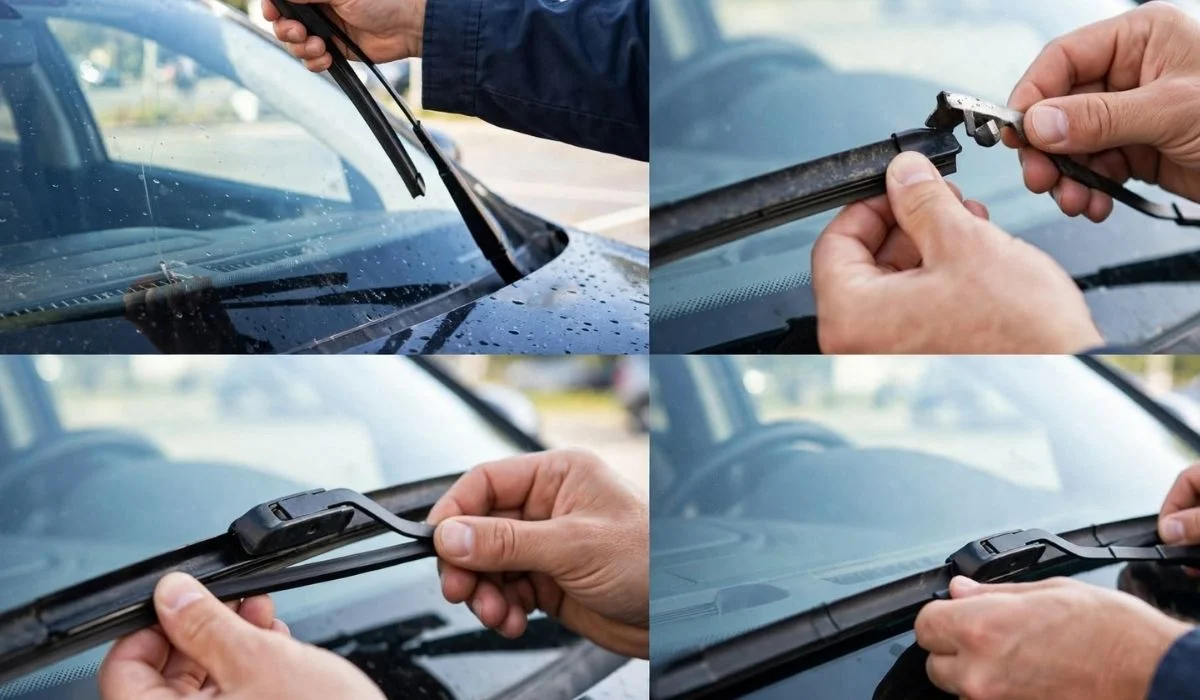
The exact process varies depending on the blade design, but many traditional blades follow a similar process.
Find the Retaining End
Inspect both ends of the wiper blade.
One end may have:
- A locking tab
- A crimp
- A plastic cap
- A retaining clip
- A closed channel
The rubber refill is usually held inside a channel along the blade.
Release the Retainer
If the blade has a removable end cap or retaining clip, release it carefully.
Avoid bending the metal rails excessively.
The retaining mechanism is what keeps the rubber insert from sliding out during normal operation.
Slide Out the Old Rubber
Once the retainer is released, gently pull the old rubber insert along the blade channel.
If it does not move easily, stop and inspect the blade for another locking point.
Do not force it.
How to Remove the Metal Support Rails
Some wiper refills contain or use metal support rails that help maintain the rubber’s shape.
Depending on the replacement design, you may need to transfer these rails to the new rubber.
Pay Attention to the Rail Position
If the old refill has metal strips, observe exactly how they are positioned before removing them.
Keep track of:
- Rail orientation
- Curvature
- Notches
- End positions
- Groove placement
Installing the rails incorrectly can prevent the rubber from moving smoothly across the windshield.
How to Install New Windshield Wiper Rubber
Once the old insert has been removed, compare the new refill with it.
Make sure the replacement is:
- The correct length
- The correct width
- Properly shaped
- Compatible with the blade frame
Slide the New Rubber Into the Channel
Insert one end of the replacement rubber into the blade’s retaining channel.
Gently slide it through the frame.
Do not twist the rubber.
Keep the wiping edge oriented in the same direction as the original.
Reinstall the Retaining Clip
Once the new rubber is fully positioned, secure the end retainer.
The rubber should not slide freely out of the frame.
Check both ends before reinstalling the blade on the vehicle.
How to Make Sure the Rubber Is Installed Correctly
Before lowering the wiper onto the windshield, inspect the entire blade.
Look for:
- Even rubber alignment
- Secure end connection
- Properly positioned support rails
- No twists
- No sections sticking out
- No loose components
Run your fingers carefully along the blade structure to confirm that the refill is seated correctly.
Reinstall the Wiper Blade
Attach the completed wiper blade to the wiper arm using the correct connector.
Depending on the vehicle, you may have a:
- Hook-style connection
- Push-button connector
- Pin-style connection
- Side-lock connector
- Other manufacturer-specific fitting
Confirm the Lock
Do not assume the blade is attached simply because it appears to fit.
Check that the connector has fully locked into place.
A poorly secured wiper blade can detach while driving.
Test the New Wiper Rubber
Testing should be done with adequate windshield washer fluid or a wet windshield.
Never repeatedly operate a dry wiper across a dusty windshield just to test it.
Look for These Results
A properly installed blade should:
- Sweep smoothly
- Remove water evenly
- Stay in contact with the glass
- Produce minimal noise
- Leave little or no streaking
If it skips or leaves large untreated areas, inspect the installation.
Read next: How to Wash a Car Properly | Clean, Spotless, and Shiny Vehicle
Why New Wiper Rubber May Still Streak?
Replacing the rubber does not guarantee perfect wiping if another problem exists.
Possible causes include:
- Dirty windshield
- Contaminated glass
- Damaged wiper frame
- Bent wiper arm
- Incorrect replacement rubber
- Poor installation
- Extremely dirty or chemically contaminated glass
Clean the Windshield First
Road film can accumulate on the windshield and interfere with wiping.
Clean the glass with an appropriate automotive glass cleaner and a clean microfiber towel.
Pay attention to areas where oily road residue is visible.
Can You Replace Windshield Wiper Rubber Without Removing the Blade?
On some designs, yes.
However, removing the blade often makes the process easier because you can inspect the retaining mechanism and install the refill more accurately.
If the blade is difficult to work with while attached to the vehicle, remove it according to the manufacturer’s design.
Always protect the windshield from the spring-loaded arm.
How Long Does It Take to Replace Wiper Rubber?
For a straightforward refill-style blade, the job may take approximately 10–20 minutes for both front wipers, depending on your experience and the blade design.
The first replacement may take longer because you need to understand how the retaining mechanism works.
How Much Does Windshield Wiper Rubber Cost?
Replacement rubber refills are often less expensive than complete wiper assemblies, but prices vary considerably by:
- Vehicle
- Blade type
- Brand
- Rubber material
- Length
- Design
- Retailer
Always prioritize correct fit and quality over choosing the cheapest available refill.
Silicone vs Natural Rubber Wiper Blades
Replacement wipers can be made from different materials or use different rubber formulations.
Natural Rubber
Traditional rubber wipers are widely used and can provide effective wiping performance.
Their service life can be affected by:
- UV exposure
- Heat
- Cold
- Ozone
- Dirt
- Repeated use
Silicone-Based Wipers
Some premium wiper products use silicone or silicone-based materials.
These may offer different durability and water-beading characteristics depending on the specific product.
The material alone does not guarantee better performance; design and compatibility also matter.
What Causes Windshield Wiper Rubber to Wear Out?
Wiper rubber experiences repeated friction and environmental exposure.
Common factors include:
- Sunlight
- UV radiation
- High temperatures
- Freezing temperatures
- Dust
- Road salt
- Dirt
- Windshield contamination
- Frequent use
- Long periods of inactivity
Heat Can Accelerate Aging
Vehicles parked outside in hot climates can expose wiper rubber to elevated temperatures for long periods.
Over time, this can contribute to hardening and cracking.
How to Make Wiper Rubber Last Longer
Good maintenance can extend the useful life of wipers.
Keep the Windshield Clean
Dirt and grit increase friction.
Regularly clean the windshield to reduce contamination.
Clean the Wiper Rubber
Use a clean, damp microfiber cloth to gently wipe the rubber edge.
If the cloth becomes dirty, rinse or replace it before continuing.
Don’t Use Wipers to Remove Heavy Dirt
Wipers are designed primarily to move water and light contamination.
If the windshield is covered in mud, bird droppings, or heavy dirt, clean it first.
Can You Wash Wiper Blades?
Yes, gentle cleaning can remove surface dirt from the rubber.
Use clean water and a soft cloth.
Avoid harsh household chemicals unless the wiper manufacturer specifically recommends them.
Don’t Scrub Aggressively
The wiping edge is delicate.
Excessive rubbing can damage the rubber rather than improve it.
Why Are My New Wipers Squeaking?
New wipers can squeak for several reasons.
Potential causes include:
- Dirty glass
- Dry windshield
- Incorrect installation
- Poor blade contact
- Contamination
- Incorrect blade size
- Worn or damaged wiper arm
If the noise continues after cleaning the glass and checking the installation, inspect the blade and wiper arm.
Why Does My Wiper Skip Across the Windshield?
Skipping can occur when the blade cannot maintain consistent contact with the glass.
Possible reasons include:
- Hardened rubber
- Bent wiper arm
- Contaminated glass
- Incorrect blade installation
- Damaged blade frame
- Poor-quality replacement
- Incorrect wiper size
Replacing the rubber may solve the problem only if worn rubber was the actual cause.
Should You Replace Both Wiper Blades at the Same Time?
It is usually practical to inspect both front wipers together.
If both have been exposed to the same weather and usage conditions, they may have similar levels of wear.
However, replacement should be based on condition and compatibility rather than automatically replacing both.
When Should You Replace the Entire Wiper Blade?
A complete blade replacement may be better when:
- The frame is bent
- The connector is damaged
- The blade has excessive corrosion
- The support rails are damaged
- The rubber refill is not available
- The blade no longer maintains proper contact
- The assembly is designed as a sealed unit
Don’t Force a Refill Into an Incompatible Blade
If the replacement rubber does not fit correctly, don’t modify it aggressively just to make it work.
A properly matched complete blade may be the safer solution.
Common Mistakes When Replacing Wiper Rubber
Choosing the Wrong Size
Length alone does not guarantee compatibility.
The profile and retaining design must also match.
Forgetting the Retaining Clip
If the end retainer is not secured, the refill can move or come out.
Installing the Rubber Backward
The wiping edge must face the correct direction.
Dropping the Wiper Arm
Always protect the windshield while the blade is removed.
Testing on a Dry Windshield
Dry operation creates unnecessary friction.
Use washer fluid or water when testing.
Reusing Damaged Support Rails
Bent or corroded rails can prevent the new rubber from working correctly.
A Quick Wiper Rubber Replacement Checklist
Before starting:
- Confirm the correct wiper refill.
- Check the blade design.
- Prepare a clean workspace.
- Place a towel over the windshield.
During installation:
- Remove the retaining mechanism carefully.
- Observe the original rail orientation.
- Slide out the old rubber.
- Install the replacement without twisting.
- Secure the end retainer.
- Confirm the refill is fully seated.
After installation:
- Attach the blade securely.
- Check the connector.
- Wet the windshield.
- Test the wiper.
- Look for streaks, skips, or gaps.
When Should You Ask a Professional?
Replacing a simple rubber refill is generally a straightforward maintenance task, but professional help may be worthwhile if:
- The wiper arm is bent.
- The connector is damaged.
- The blade cannot be removed safely.
- The windshield is cracked.
- The replacement does not fit correctly.
- The wiper still performs poorly after replacement.
- You suspect a mechanical problem with the wiper system.
A technician can inspect the entire wiper mechanism rather than just the rubber.
Final Thoughts
Learning how to replace windshield wiper blades rubber can be a simple way to maintain clear visibility without automatically purchasing an entirely new wiper assembly. If your blade uses a replaceable refill, carefully removing the old rubber and installing a correctly matched replacement can restore smooth contact with the windshield.
The key is to choose the correct refill, protect the glass while the wiper arm is lifted, preserve the orientation of any support rails, secure the retaining mechanism, and test the finished blade with a wet windshield.
If the new rubber still streaks, skips, or chatters, don’t assume the replacement is defective. Dirty glass, a damaged frame, a bent wiper arm, or an incompatible refill can produce similar symptoms.
Good wiper performance is ultimately about clear glass, healthy rubber, correct installation, and proper contact with the windshield.
FAQs
Can I replace only the rubber on my windshield wipers?
Yes, if your wiper design uses a replaceable rubber refill. Some integrated or beam-style blades require complete replacement instead.
How do I know what size wiper rubber to buy?
Check your vehicle’s owner’s manual, the wiper manufacturer’s specifications, or a reliable vehicle-parts catalog. Both length and refill design need to be compatible.
How often should windshield wiper rubber be replaced?
There is no universal replacement schedule. Inspect the blades regularly and replace them when you notice cracking, splitting, streaking, skipping, or poor water removal.
Can I replace wiper rubber without changing the metal frame?
Yes. That is the purpose of a replacement refill. However, the existing frame and support rails must still be in good condition.
Why are my wipers streaking after replacing the rubber?
The windshield may be dirty or contaminated, the rubber may be incorrectly installed, or the blade frame or wiper arm may be damaged. Clean the glass and inspect the installation first.
Why do new wiper blades skip?
Skipping can result from contaminated glass, improper installation, an unsuitable blade, a damaged wiper arm, or poor contact between the blade and windshield.
Can I clean old wiper rubber instead of replacing it?
Cleaning can remove surface dirt and may temporarily improve performance if contamination is the problem. It will not repair cracked, hardened, torn, or deteriorated rubber.
Should I replace front wiper blades together?
You should inspect both at the same time. If both show similar wear, replacing them together is practical, but a blade does not need replacement solely because the other one was replaced.
Can I use dish soap to clean wiper rubber?
It is better to use clean water or a product recommended for automotive use. Harsh or unsuitable chemicals may affect rubber over time.
Is it difficult to replace windshield wiper rubber?
For many refill-style blades, the process is relatively simple. The most challenging part is identifying the retaining mechanism and installing the replacement correctly.
Can a wiper arm damage the windshield?
Yes. A spring-loaded wiper arm can strike the windshield if it is released while the blade is removed. Always place a protective towel over the glass and control the arm carefully.
Should I test new wiper rubber on a dry windshield?
No. Test it with water or windshield-washer fluid. Running a wiper over dry, dirty glass creates unnecessary friction and can produce misleading results.
What if the new rubber does not slide into the blade?
Stop rather than forcing it. Check the refill profile, rail orientation, retaining clips, and blade compatibility. The replacement may not be designed for that particular blade.
Is it better to replace the whole wiper blade or just the rubber?
Replacing only the rubber can be economical when the frame is still in good condition. Replace the complete blade when the frame, connector, rails, or assembly is damaged or when the design does not support a refill.